Magic: Puzzle Quest
- 18.99K
- 4.3
- Installs
- 1.00M
- Price
- Free

Screenshots



Analysis by Reviewed
I came to Magic: Puzzle Quest expecting a simple match-three game with a fantasy skin, but its appeal is more specific than that. It combines tile matching with the card-battle identity of Magic: The Gathering, so each move is part puzzle, part resource decision, and part preparation for the next turn. That mixture gives it more staying power than a standard match-three game, although it also creates a steeper learning curve and more opportunities for frustration.
This is a free role-playing game from 505 Go Inc., available for players who enjoy building a strategy around cards rather than simply clearing colorful pieces as quickly as possible. It is aimed at a Teen audience, and the free entry point makes it easy to test without committing money immediately. In my experience, the important question is not whether the basic idea works—it does—but whether you enjoy learning a layered system where a poor early decision can make the rest of a battle feel unnecessarily difficult.
Getting past the early friction
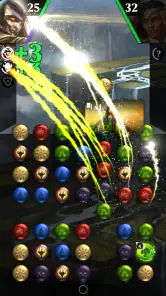
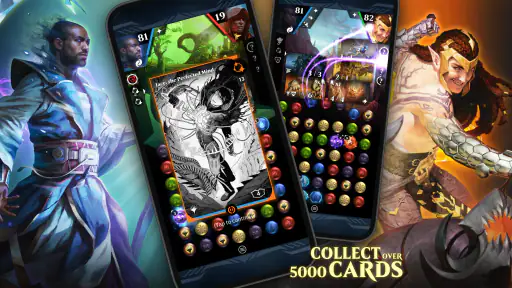
The first battles are where many players will decide whether to continue. The board looks familiar, but the goal is not always “make the biggest match.” You are trying to create useful mana, prepare spells, protect your position, and avoid leaving the opponent an easy opportunity. If you approach every turn like a traditional match-three puzzle, the game can feel strangely unresponsive because the best move is often the one that improves your next turn rather than the one that produces the most immediate action.
I found it helpful to slow down during the opening matches and read what each available move is likely to enable. A small match that places a useful color in position can be better than a flashy combination that leaves the board awkward. This is one of the first non-obvious lessons: board position matters as much as the number of tiles cleared. That principle becomes more valuable as battles become less forgiving.
Another common sticking point is the relationship between the puzzle board and the card side of the game. Players familiar with Magic: The Gathering may expect the digital adaptation to behave exactly like a tabletop match. It does not. The familiar themes and card concepts are present, but the puzzle layer changes the rhythm. You are not only choosing a card; you are choosing when to generate the resources that make that card relevant.
For someone new to both card games and match-three strategy, I would resist the temptation to judge the game after the first few minutes. The opening interface has several ideas competing for attention, and the value of a spell or creature is easier to understand after seeing it work in a real battle. On the other hand, if you want an instantly readable casual game with almost no explanation, this is probably not the right fit.
What to check before blaming the game
Because this is an online-oriented mobile game with progression and purchases, a smooth start depends on ordinary setup details. I recommend installing it through the official store on a stable connection, leaving enough free storage for the installation and later updates, and keeping the device software reasonably current. The listed minimum operating system is Android 7.1, but meeting a minimum does not guarantee the same comfort as using a newer device.
If the game pauses during loading, my first check would be the connection rather than the puzzle itself. Switching between mobile data and Wi-Fi, closing other demanding apps, and restarting the game are sensible first steps. I would also avoid repeatedly tapping the screen while a battle or menu is still loading. That can make a delayed response look like a broken control when the app is simply catching up.
The current version is 8.1.0, so keeping the installation updated is worthwhile when a problem appears after a long period without opening the game. Updates can also change the feel of menus or progression, which means an older installation may not behave like the current service. I would restart the device after a major update if the game begins stuttering or fails to move cleanly between screens.
There is another practical check that is easy to overlook: make sure the correct store account is active before making any purchase. The game is free to install, but its optional in-app items range from $0.99 to $119.99 per item. That wide range makes it especially important to treat purchases as a deliberate choice, not as a quick way to solve a difficult battle. I prefer to play several sessions first, learn what progression feels like without spending, and only then decide whether an optional purchase genuinely improves my experience.
Parents should also pay attention to the Teen content rating and the purchase settings on the device. The rating is not a substitute for personal judgment, particularly when a younger player is using a shared phone or tablet. Setting purchase approval before handing over the device is more useful than trying to undo an accidental transaction later.
Recovering a stalled session or a bad run
When a battle behaves strangely, I separate a temporary app problem from a strategic mistake. If buttons stop responding, the board does not update, or the game remains stuck between screens, I close and reopen it once, then check the connection. If the same issue continues, I would avoid immediately deleting the app, because removing a game can complicate access to local progress or settings. A restart and an update check are safer first moves.
When the game opens normally but a match keeps going badly, the solution is usually not technical. I used to spend too much effort trying to force a particular card into play, even when the board did not support it. A better recovery habit is to return to the basic loop: create the needed resources, make a safe match, and preserve future options. This makes a losing position more manageable and teaches more than restarting every time the first plan fails.
One useful workflow is to study the board before activating a spell. A spell may look powerful in isolation, but using it immediately can consume the resources needed for a more important response. I now ask myself three questions: what does this move produce, what does it leave for the opponent, and will I still have a useful option after the board changes? That short pause has improved my results more than chasing large combinations.
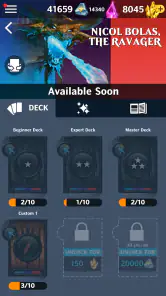
Deck or card choices also deserve a practical approach. Instead of changing everything after one defeat, I change one part of the setup and observe the result across several battles. This makes it easier to identify whether the problem is a weak card, an awkward resource balance, or simply poor timing. Constantly replacing the whole setup can feel active, but it removes the chance to learn why a particular strategy succeeded or failed.
For players who lose progress after a reinstall, device change, or account switch, I would first return to the same sign-in method and store account used previously. I would not assume that reinstalling alone will restore everything. If progress still appears missing, the sensible next step is the developer’s official support route, with purchase records or relevant account details kept available. That is a better recovery path than repeatedly starting new games and potentially making the account situation harder to understand.
When the problem is really the device or the connection
Not every pause, crash, or delayed response is caused by the game’s design. Mobile devices with limited free storage, many background apps, or an aging battery can struggle with games that combine animated battles, menus, and online activity. Closing unused applications and restarting the device can reveal whether the issue is temporary system pressure. If other games and streaming apps are also slow, I would investigate the phone before blaming this one title.
Connection quality can be deceptive too. A web page loading successfully does not always mean a game session will remain stable. Short interruptions may be enough to delay a battle transition or make a menu appear frozen. If the game works reliably on one network but not another, that comparison is more useful than repeatedly reinstalling it.
Heat is another clue. If performance worsens after a long session while the phone feels unusually warm, I take a break and let the device cool rather than continuing to tap through delays. Lowering general device strain, removing a thick case temporarily, or playing in shorter sessions can help identify whether the problem is sustained load. I would not promise that these steps fix every issue, but they are safe ways to narrow down the cause.
Notifications and incoming calls can also interrupt a battle at an inconvenient moment. For a focused session, I prefer using a stable connection and reducing avoidable interruptions. This is particularly useful when learning the game, because losing track of a turn after a notification can make a strategic mistake look like a control problem.
How it compares with ordinary match-three and card games
Against a conventional match-three title, this game offers more decisions and more reasons to think ahead. A typical puzzle game may reward quick pattern recognition and repeated short rounds. Here, the same visual action is tied to a broader plan involving cards, resources, and battle timing. That gives each move more meaning, but it also means the game is less relaxing when I only want to make matches without considering consequences.
Against a traditional digital card game, the puzzle board makes the experience more tactile and less dependent on selecting commands from menus. The trade-off is reduced direct control. In a card game, I may know exactly which resource I need and choose how to spend it. Here, the board can limit what is immediately available, so a strong plan may need to wait for the right arrangement. Players who enjoy adapting to imperfect draws and changing boards will appreciate that tension; players who want precise control may find it irritating.
The role-playing element also changes the long-term feel. Progress is not only about winning one match; it is about understanding a collection, refining a strategy, and becoming more comfortable with the game’s particular rhythm. That makes it a better choice for someone who likes returning to the same system over time than for someone looking for a self-contained puzzle with a clear ending.
The audience is substantial, with over a million installs and an average rating of 4.3 from around 110 thousand ratings. Those figures suggest that the hybrid formula has found a durable audience, while the roughly 19 thousand written reviews show that many players have had enough experience to form a detailed opinion. I would still treat popularity as a starting point rather than a guarantee: the combination is distinctive, and distinctive games can be especially personal in their appeal.
Who should play, and who should skip it
I would recommend it to a player who likes fantasy card systems, enjoys planning several moves ahead, and does not mind learning through losses. It works especially well in short everyday sessions: I can play a few battles while waiting for an appointment, then return later with a clearer idea of which cards or moves I want to test. The match-three layer makes it more hands-on than a purely menu-driven role-playing game, while the card layer gives the puzzle enough depth to avoid feeling disposable.
It is also a good choice for someone who enjoys experimenting. Rather than searching for one supposedly perfect approach, I get more value from trying a different resource priority, changing the timing of a spell, or using a safer board move. The game rewards curiosity because the same basic puzzle action can have different consequences depending on the battle context.
I would advise skipping it if you want a completely offline-feeling experience, dislike progression systems that may encourage optional spending, or become annoyed when a puzzle game asks you to read rules and think about a collection. It is not my first recommendation for a child using an unrestricted device because of the Teen rating and the available in-app purchases. It is also a poor match for anyone who prefers fast, consequence-free matching with no card-game learning curve.
My practical verdict after spending time with it
What keeps me coming back is the way a familiar match-three board becomes a tactical problem. The best turns are not always spectacular; sometimes they are quiet setup moves that leave me with better resources and fewer risks on the following turn. That sense of preparation is the game’s strongest quality, and it is what separates it from a standard puzzle app.
The main friction is equally clear. New players need patience, technical problems can be confused with slow loading or unstable connectivity, and the free-to-play structure deserves careful spending habits. I would install it without paying first, complete enough battles to understand the card-and-board relationship, and decide afterward whether the progression suits me. My recommendation is to treat it as a thoughtful card RPG with match-three controls, not as a casual match-three game with decorative cards.
After its release on Dec 9, 2015, the game has remained available through its continuing version history, and the current 8.1.0 release gives newcomers a clear starting point. For me, it earns a place on the phone when I want a strategy game that can fit into short sessions but still reward careful decisions. Just keep the setup sensible, recover methodically when something stalls, and remember that the most expensive shortcut is rarely the best way to learn the board.
Pros
- Combines deck-building strategy with match-three puzzle battles.
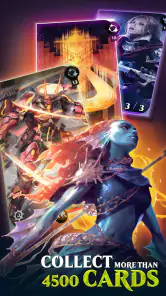
- Features cards and characters from the Magic: The Gathering universe.
- Offers varied modes
- events
- and challenges for ongoing play.
- Strategic depth rewards thoughtful team and spell combinations.
- Playable in short sessions without requiring constant attention.
Cons
- Progress can feel slow without spending money on premium resources.
- The large card pool may overwhelm newcomers to Magic: The Gathering.
- Competitive events can favor players with stronger upgraded collections.
- Energy and timers may limit extended play sessions.
- Requires an internet connection for most features and battles.

- Category
- Role Playing
- Version
- 8.1.0