Loop Hero
- 1.04K
- 4.7
- Installs
- 1.00M
- Price
- Free

Screenshots
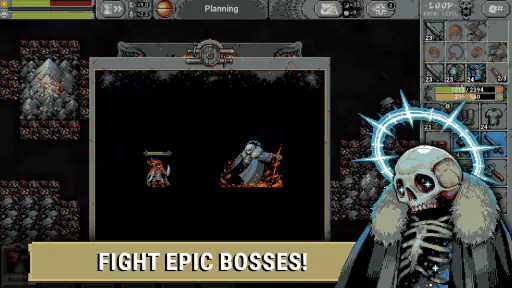
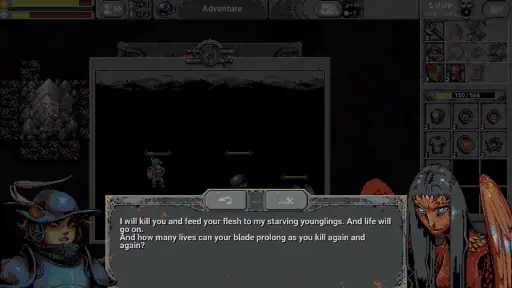
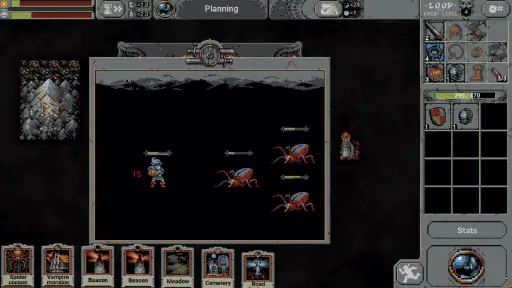
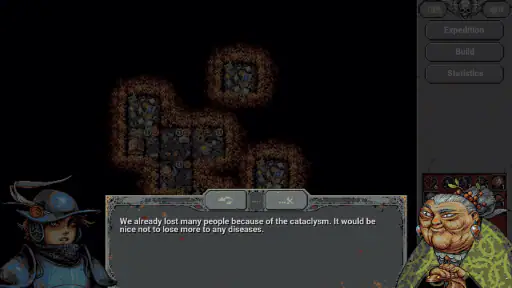
Analysis by Reviewed
Loop Hero is the kind of role-playing game I would recommend to someone who wants meaningful decisions without having to control every second of a battle. You do not move a hero around in the usual way. Instead, the character travels through a repeating path, fights automatically, and leaves you to shape the route, equipment, and growing settlement around each expedition. That unusual split between automatic action and manual planning is the reason it feels so different from most mobile RPGs.
My first impression was that it looks simple until the separate systems begin interacting. A short expedition can involve choosing which cards to place, deciding when to return, comparing equipment, managing health, and judging whether one more loop is worth the risk. The game is free to start, and its store summary, “Save the forgotten world,” gives the right general mood, but it does not explain how much of the experience comes from learning when not to push forward.
What the first expedition is really asking you to do
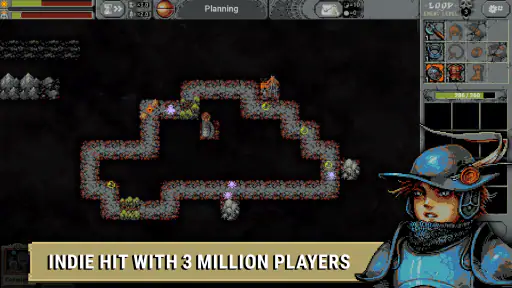
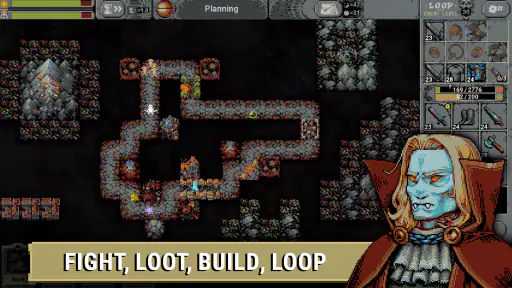
At its heart, this is a game about rebuilding a world one expedition at a time. Your hero follows a loop, encounters enemies, collects equipment, and gathers cards that can change the landscape. You are not simply trying to win individual fights. You are arranging a chain of manageable encounters so that the hero becomes strong enough to survive the increasingly dangerous return journey.
That distinction matters for new players. If you approach it like a conventional action RPG, you may expect precise attacks, a large inventory to sort manually, or constant movement controls. Those expectations will make the opening feel strangely passive. The better way to think about it is as a planning game with RPG rewards: your main input is deciding what kind of journey the hero will have.
The automatic combat is not a shortcut that removes strategy. It changes where the strategy happens. Before and during a run, I found myself asking whether a new card would create useful rewards or merely add another threat, whether a piece of equipment improved the current build or only looked stronger at first glance, and whether the hero had enough health to complete another circuit.
Playdigious handles the mobile version, and the format suits short sessions surprisingly well. I can begin a run when I have a little time, make a few decisions, and stop at a natural point rather than needing to complete a long story chapter. At the same time, the loop structure makes it easy to say “one more round,” so it is worth starting an expedition when you can spare more than a couple of minutes.
The game is listed as a free role-playing title, with optional in-app purchases ranging from $0.49 to $3.89 per item. I would treat the free entry as a chance to discover whether the unusual design suits you, not as a promise that every player will enjoy the same pace. The Teen content rating also fits the darker atmosphere and the way the world presents danger without turning the game into a bright, lightweight fantasy adventure.
More From Our News Desk

Clash of Clans Is Won Between the Battles

Android Auto Makes the Case for Quieter Car Software

MobiOffice: Transforming Mobile Productivity with Seamless Integration

EA SPORTS FC™ Mobile Soccer: Redefining Mobile Sports Gaming

How Microsoft OneDrive Became a Mobile Productivity Giant

How Google Translate Breaks Language Barriers Effortlessly
Why the loop feels active even when battles are automatic
The most satisfying part is the relationship between preparation and consequence. A card that seems harmless in isolation can change the rhythm of an entire run. Placing things in one area may produce useful rewards, while placing them carelessly can make later encounters harder than expected. I learned to consider the next several fights rather than reacting only to the enemy currently on screen.
Equipment creates a second layer of quick decisions. New items arrive often enough that stopping to compare every detail can interrupt the flow, but ignoring upgrades is just as costly. My practical approach was to replace clearly weaker gear immediately, then pause for closer comparisons when two items supported different priorities. That kept the run moving without treating every drop as an emergency.
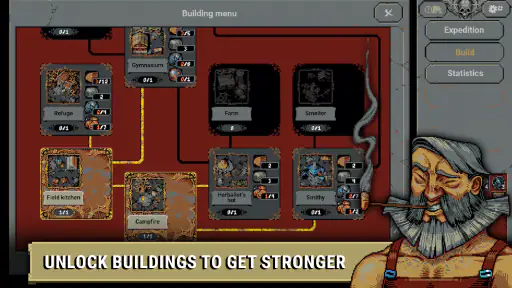
The settlement adds a longer-term reason to return after a failed expedition. Resources gathered in the field help improve what becomes available between runs, so an unsuccessful attempt is not automatically wasted. This is important emotionally: the game expects experimentation, and progress is often measured by what you bring back rather than by reaching the furthest possible point every time.
Installing it and getting comfortable with the opening
The game requires Android 9 or later, and the current version is 1.0.5. After installation, I would suggest starting with the tutorial and resisting the urge to treat the first expedition as a test you must perfect. The opening is better understood as a guided lesson in the game’s vocabulary: loops, cards, encounters, equipment, resources, and retreat.
Before launching, make sure you are ready to read tooltips and watch the battlefield for a while. The first minutes are not about reflexes, so there is no benefit in tapping repeatedly. Use that time to notice how the hero moves, when battles begin, how rewards appear, and what changes when you place a card. These observations make later decisions much easier.
I also recommend checking the game in a quiet moment rather than while distracted by messages or a commute. Its controls are not demanding, but the important choices are easy to miss if you are only glancing at the screen. A short, attentive first session will teach you more than a longer session spent tapping through prompts.
One practical habit is to treat every new card as a question instead of an automatic instruction. Ask what it will do to the route, which encounters it might create, and whether the hero is ready for that additional pressure. This habit prevents one of the most common beginner mistakes: filling the world as quickly as possible because empty spaces feel unfinished.
The first meaningful success is usually a safe return
For a first-time player, the first meaningful success should not be defeating the strongest enemy available. It is completing a useful expedition and returning with enough resources to improve the settlement. That outcome teaches the central rhythm more clearly than an ambitious defeat does.
To reach it, I would begin conservatively. Place cards that support the hero’s immediate survival, pay attention to how quickly health changes, and avoid adding several difficult encounters just because the rewards look attractive. The goal is to build a route that the character can repeat consistently. Once the hero is surviving comfortably, you can increase the challenge with more confidence.
Retreat is one of the most important actions to understand early. Leaving before the hero falls may preserve more of what was collected, while waiting too long can turn a successful run into a costly failure. The exact best moment changes with the route and the hero’s condition, so I learned to watch trends rather than one isolated health value. If each circuit is becoming harder and the equipment is no longer improving, that is a warning to leave.
This is also where the game separates patient players from impatient ones. A run can feel successful because the hero is still alive, yet the next loop may contain a combination of enemies that exposes a weak build. Returning with a modest haul gives you another chance to strengthen the overall system. Returning empty-handed after chasing an extra reward feels much worse.
After the first safe return, spend the recovered resources thoughtfully. Improvements between expeditions can change what you are able to do in future runs, but the benefit is not always immediate or obvious. I found it useful to select upgrades that made the next expedition easier to understand, rather than choosing only the option that sounded most powerful.
Common confusion that can make the game seem unfair
The biggest source of confusion is the difference between control and influence. You influence the hero’s situation, but you do not directly command every attack. If a battle goes badly, the answer is usually not to tap faster. It is to reconsider the route, the card placement, the equipment choices, or the timing of the retreat.
Another early misunderstanding is assuming that more enemies always mean better progress. Additional encounters can provide valuable rewards, but they also consume health and may create a difficult sequence later in the loop. I began placing threats with a purpose: to improve the quality of drops, test whether the current build was ready, or prepare the route for a specific kind of challenge.
New equipment can also be misleading. A higher-looking value does not automatically make an item the right choice if another attribute better supports the current situation. Rather than comparing items in isolation, I considered what the hero was failing to do. If fights were taking too long, I valued a different improvement than I would after repeated defeats caused by poor survivability.
Players may also wonder why a run that seemed strong suddenly collapses. The answer is often cumulative pressure. Small losses across several circuits can leave the hero vulnerable when a tougher encounter arrives. This is why I recommend checking the route after each loop and noticing whether the character is recovering faster than the enemies are wearing them down.
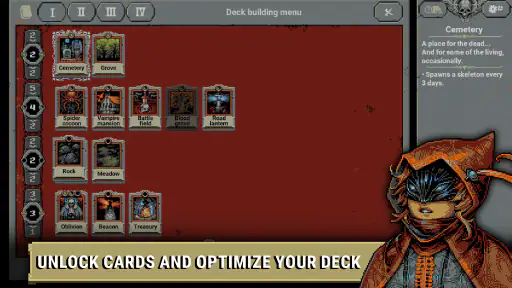
The card system can feel opaque at first because its consequences are both immediate and long-term. I found it helpful to make one deliberate change at a time whenever possible. If you place several new cards and the run becomes unstable, you will not know which decision caused the problem. A slower learning process gives you a much clearer understanding of the world-building rules.
How to turn short sessions into steady progress
Loop Hero works well in an everyday situation where I have enough time for a focused break but do not want a game that demands constant manual control. For example, I might start an expedition after finishing a task, watch the first encounters while planning card placement, and then return when the route reaches a sensible stopping point. The game gives me decisions to make without requiring the rapid reactions of an action RPG.
For longer sessions, I would use a simple cycle: prepare, launch, observe the first loop, adjust the route, and decide early whether the run is promising. This avoids spending most of the session on autopilot. The game is at its best when I am actively reading the results of my choices rather than waiting passively for rewards.
One useful advanced habit is to separate experimentation runs from resource runs. During an experimentation run, I might test a risky card placement or a different equipment priority and accept that the hero may retreat early. During a resource run, I would choose safer combinations and focus on bringing materials home. Mixing both goals can make a failed test feel disappointing, even though it taught something valuable.
Another practical insight is to judge a build by consistency, not by its best possible battle. A setup that occasionally destroys enemies quickly but regularly collapses later is less useful than one that wins ordinary encounters reliably. This matters especially when deciding whether to add another threat for better rewards. The stronger choice is often the one that keeps the whole loop stable.
I also recommend taking screenshots or mentally noting which card combinations caused trouble, especially during the first few sessions. The game’s lessons become clearer when you remember the sequence that led to a defeat. That memory turns frustration into a plan for the next attempt instead of encouraging random changes.
Who will enjoy it and who should choose something else
I think this is a strong match for players who enjoy systems, gradual discovery, and making decisions with incomplete information. If you like watching a plan develop, adjusting it after a setback, and seeing a settlement grow because of repeated attempts, the structure has a lot to offer. It is also a good fit for people who want an RPG that can be played in sections rather than requiring constant manual movement.
On the other hand, I would not choose it for someone looking for direct character control, cinematic dialogue, or immediate action. The battles are intentionally hands-off, and the pleasure comes from preparation rather than performance during the fight. Players who prefer a traditional turn-based RPG may find the limited direct commands frustrating, while players who want a fast action game may find the pacing too deliberate.
It is also not ideal if you dislike repeating routes. The loop is the core of the experience, not a temporary structure that disappears after the tutorial. Repetition becomes interesting because the decisions and results change, but anyone who needs constant new scenery may lose patience.
Compared with more conventional mobile RPGs, this game spends less time on character choreography and more on managing the conditions around the character. Compared with an idle game, it gives me considerably more responsibility: the hero may fight automatically, but the route, threats, rewards, and retreat decisions still demand attention. That middle ground is its main appeal and its main limitation.
What to expect from the free version and long-term play
The free price makes trying the unusual design straightforward, while the optional purchases give players a way to spend more if they choose. I would not install it expecting a simple, disposable freebie, though. The systems are layered enough that the real question is whether you enjoy its planning loop, not whether the opening minutes look impressive.
The game has an average rating of 4.7 from around 28 thousand ratings, and it has passed one million installs. Those figures suggest that the concept has found a broad audience, but they do not remove the personal taste issue. A popular game can still be the wrong choice if automatic combat and repeated expeditions are not what you want from an RPG.
Long-term enjoyment depends on setting the right goal for each session. Trying to maximize every run can make the game feel punishing. Trying to learn one interaction, bring home useful resources, or improve one weak part of a build makes progress feel more manageable. I found that the game became more rewarding once I stopped measuring success only by how far the hero traveled.
My recommendation after learning its rhythm
Loop Hero is a thoughtful mobile role-playing game built around a rare idea: the hero handles the fighting, while I handle the world that makes those fights possible. That arrangement takes a little adjustment, but it creates satisfying decisions once the first safe return makes the structure clear.
My advice to a new player is simple: take the opening expedition slowly, place cards with a reason, compare equipment according to the problem you are trying to solve, and retreat before a promising run becomes a desperate one. Treat early failures as information, especially when they reveal that a route was too ambitious or a build lacked consistency.
With its Teen rating, Android 9 requirement, free entry, and current version 1.0.5, it is easy to try if your device is compatible. I would recommend it to anyone who enjoys strategic planning disguised as an RPG, particularly players who want meaningful progress during focused short sessions. I would skip it only if direct combat control or constant novelty matters more to you than careful preparation.
After spending time with it, I see the best part of Loop Hero in the moment just before committing to another circuit. The hero is ready, the route is promising, and I have to decide whether confidence is justified. That small pause captures the whole game: success comes less from reacting to danger than from creating a journey where danger can be survived.
Loop Hero Frequently Asked Questions
Does Loop Hero offer a story, or is it mainly about repeated gameplay runs?
Loop Hero has a story premise centered on saving a forgotten world, and its looping expeditions give that goal context. The repeated runs are also where much of the strategy unfolds: you place cards, face changing risks, collect resources, and make decisions about whether to press on or return to camp. Its narrative and replay-focused structure work together rather than competing.
What kind of game is Loop Hero, and who might enjoy it?
Loop Hero is a role-playing game that combines roguelike runs, strategic choices, and a distinctive pixel-art presentation. It may appeal to players who like planning ahead, experimenting with combinations, and gradually learning a game’s systems. Since the hero moves and fights automatically, it is less about fast reflexes and more about managing the route, equipment, resources, and timing.
What is Loop Hero, and how does its gameplay work?
Loop Hero is a strategic roguelike game built around an automatically moving hero who repeatedly travels along a dangerous loop. You do not control every attack directly; instead, you shape the adventure by placing cards that create enemies, buildings, resources, and environmental effects. The main challenge is balancing risk and reward, improving your equipment, and returning to camp before losing too much progress.
Who developed Loop Hero, and what is its story premise?
Loop Hero is a role-playing game developed by Playdigious. Its central premise is reflected in the goal of saving a forgotten world, while its looping journeys and card-based choices shape how each expedition unfolds. If you enjoy games where you gradually uncover a setting through repeated runs, this premise gives the strategy a clear purpose without requiring you to control every moment of combat.
Can I play Loop Hero offline on Android or iOS?
Loop Hero is designed as a single-player experience, so its core gameplay does not depend on online multiplayer or constant social interaction. However, offline availability can vary depending on the platform version, store requirements, and how the game was installed. Before downloading, check the official Google Play or App Store listing for the current internet requirements and supported devices.
Pros
- Engaging roguelike loop makes short play sessions feel rewarding.
- Deep card combinations encourage experimentation and strategic planning.
- Pixel-art visuals and atmospheric music create a memorable retro style.
- Offline play makes it convenient for travel or areas without internet.
- Gradual progression keeps new classes
- buildings
- and abilities unlocking.
Cons
- Runs can become repetitive once familiar strategies dominate.
- The interface may feel cramped on smaller phone screens.
- Some mechanics are poorly explained without consulting outside guides.
- Later upgrades require considerable grinding and repeated runs.
- Randomized outcomes can make carefully planned runs frustrating.

- Category
- Role Playing
- Version
- 1.0.5