Dead Cells
- 5.67K
- 4.8
- Installs
- 1.00M
- Price
- $8.99

Screenshots

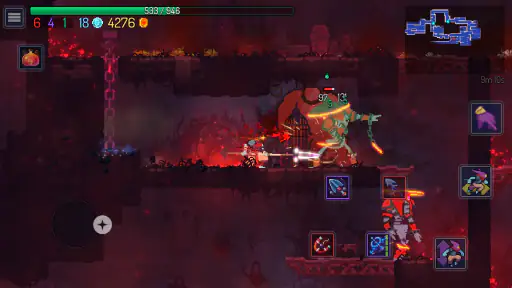
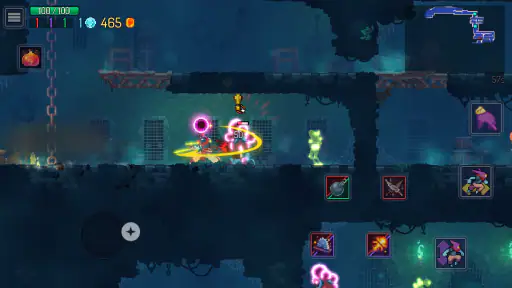
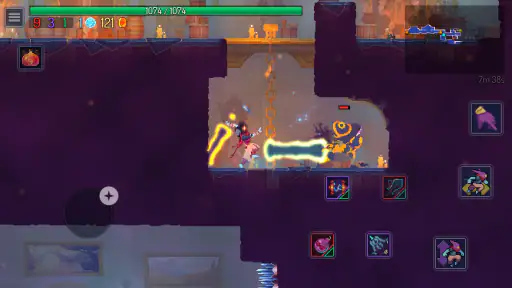
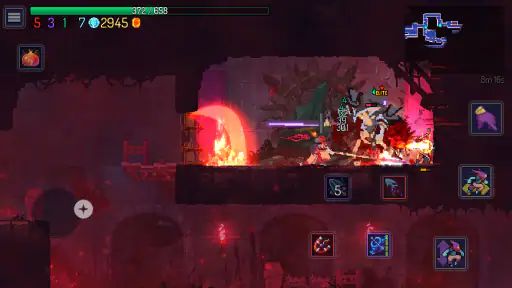

Analysis by Reviewed
If you’re a fan of action-packed roguelike games, then you’ve probably heard whispers about Dead Cells. This game has been making waves in the gaming community, and I decided to dive in and see what all the fuss was about. Spoiler alert: it’s as good as they say!
A run that makes every decision matter
What keeps pulling me back is the run-based structure: a failed attempt doesn’t simply erase the time I spent playing. It gives me another chance to read enemy patterns, try a different weapon combination, and make a better call when a fight gets messy. That cycle is the game’s central appeal, but it also sets a clear expectation: progress depends on learning and persistence, not on breezing through a story at a steady pace.
For a practical mobile session, I’d treat each run as a self-contained attempt rather than assume I can stop at any moment without consequence. A short break between runs is a natural place to put the phone down; starting a fight just before an interruption is less appealing. I also found it useful to focus on one lesson after a defeat—such as whether I rushed an enemy or chose a weapon that did not suit my habits—instead of changing everything at once. That makes each restart feel informative rather than merely punishing.
Reading each run instead of chasing a perfect build
The most useful habit I picked up was to judge equipment by what it lets me do consistently, not by what looks strongest on paper. A fast weapon can suit me better than a heavy hit if I keep missing openings, while a ranged option may help me handle a room more patiently. This is not a promise that one setup will carry every run: the appeal is precisely that I have to respond to what I find and to the enemies in front of me.
I also try not to treat every new item as an obligation to rebuild my whole approach. When I swap weapons midway through a run, I pay attention to whether the change makes my timing easier or makes me hesitate. That small check prevents a common mistake: taking a supposedly powerful choice and then fighting against its rhythm. For a game built around quick decisions, comfort with a weapon matters as much as excitement about its potential.
That focus makes the repeated structure more useful than it first appears. I can identify one cause of a failure—poor timing, a risky approach, or a mismatched tool—and carry that observation into the next attempt. I do not need to master every system at once. Players who enjoy gradually improving through deliberate practice will find more to hold onto here than people who only want a clear sequence of missions and a guaranteed win at the end of each session.
Unveiling the Mysteries
Dead Cells throws you into the thick of things right away. You’re a nameless, faceless protagonist—just a blob of cells, really—tasked with navigating a sprawling, ever-changing dungeon. The goal? To uncover the secrets of the island while hacking and slashing your way through hordes of enemies. Sounds simple, right? Well, not quite.
More From Our News Desk

Clash of Clans Is Won Between the Battles

Android Auto Makes the Case for Quieter Car Software

MobiOffice: Transforming Mobile Productivity with Seamless Integration

EA SPORTS FC™ Mobile Soccer: Redefining Mobile Sports Gaming

How Microsoft OneDrive Became a Mobile Productivity Giant

How Google Translate Breaks Language Barriers Effortlessly
The Gameplay Experience
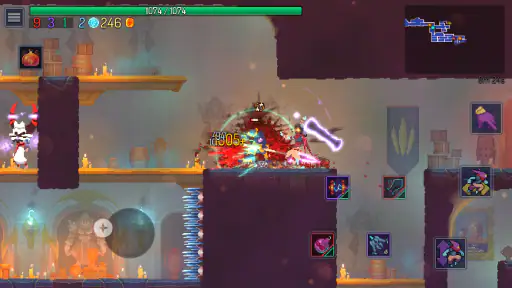
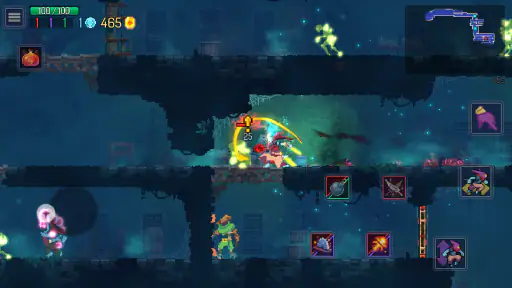
From the get-go, Dead Cells is a roller-coaster of a game. The combat is fluid and satisfying, with a variety of weapons and abilities to choose from. I found myself constantly experimenting with different setups, trying to find the perfect combination of sword, bow, and special powers. The roguelike element means that every death sends you back to the beginning, but with each run, you unlock new weapons and abilities, making you stronger and more resilient.
The enemies are varied and challenging, requiring you to think on your feet and adapt your strategy on the fly. The level design is also top-notch, with each environment packed with secrets and hidden paths waiting to be discovered. I’ve spent countless hours exploring every nook and cranny, and I’m still finding new things!
Making the mobile version work for you
The touch controls make this a reasonable choice when I want a substantial action game without carrying a separate controller, but precision matters here. I’d start by learning the basic rhythm of attacking, avoiding danger, and using abilities before trying to move quickly through unfamiliar rooms. If a touchscreen layout feels uncomfortable, that can turn a demanding encounter into a frustrating one; players who strongly prefer physical controls may be happier playing an action game on a platform where their preferred setup feels natural.
It also suits an ordinary evening better than a distracted commute: I can settle in, concentrate on a run, and enjoy the repeated discovery without expecting the game to provide a relaxed, low-attention diversion. Compared with simpler mobile action games that focus on brief, predictable stages, Dead Cells asks for more adaptation and accepts that a run can end abruptly. That depth is rewarding if I want to improve, but it is not the better choice when I only want something gentle or forgiving.
A realistic session, from first room to restart
For example, if I have a free stretch after dinner, I can start a run with the intention of learning rather than completing a particular amount of content. I give myself time to get used to the controls, watch how enemies telegraph danger, and explore without rushing toward every fight. If the attempt ends, I can use the pause afterward to decide whether I was too aggressive or simply unfamiliar with the encounter. That makes the game workable in ordinary life, provided I choose a moment when I can pay attention rather than trying to play while juggling messages or conversation.
When time is short, I would not begin a run just because I have a spare minute. The action demands enough concentration that interruptions can break my timing, and a sudden stop in the middle of a tense section is a poor fit for the game’s rhythm. I prefer to use a brief window between activities for something less demanding, then return when I can focus. The distinction is practical: the game can be played in mobile sessions, but that does not mean every mobile moment is a good time to play it.
One small approach that helps is to set a narrow goal for a session: try a weapon type I usually avoid, pay closer attention to a particular enemy, or explore more carefully instead of rushing. I am less likely to feel that a run was wasted if I leave with one concrete lesson. It also keeps experimentation manageable. Changing my weapon choices, pace, and risk-taking all at once makes it harder to understand why a run went better or worse.
Graphics and Sound
Visually, Dead Cells is a treat. The pixel art style is vibrant and detailed, bringing the dungeon and its denizens to life. The animations are smooth, and the game runs like a dream on both Android and iOS devices. And let’s not forget about the soundtrack—it’s a perfect blend of atmospheric tunes and adrenaline-pumping tracks that keep you engaged from start to finish.
One of my favorite aspects of the game is how well it plays on mobile. The touch controls are intuitive and responsive, making it easy to execute complex combos and maneuvers. Whether you’re a seasoned gamer or a newcomer to the genre, you’ll find that Dead Cells is both accessible and challenging in equal measure.
Where it sits among mobile action games
Compared with a straightforward action game that gives each stage a fixed route and a predictable finish, this one puts more weight on adaptation. That can make a single attempt feel less tidy, but it gives me a reason to pay attention to the choices I make instead of simply repeating a memorized sequence. It is also a different proposition from a relaxed game designed for half-attention: here, reacting to threats is part of the pleasure, and divided attention is likely to make the challenge feel harsher.
I would choose a simpler action title if I wanted short, low-pressure play with little penalty for losing focus. I would choose this instead when I want combat that rewards observation and a structure that gives failure a purpose. Players who already enjoy learning through repeated attempts are likely to understand the appeal quickly; those who prefer a story-led adventure with steady forward progress may find the resets more tiring than exciting.
Price, audience, and the catch
There is a meaningful upfront commitment: the game costs $8.99, and in-app purchases are listed at $2.99 to $7.99 per item. I’d weigh that against how much I enjoy replaying action games, rather than expecting a one-and-done campaign. Its Teen age rating is also useful context for families deciding whether its tone fits their household. Playdigious is the developer behind this mobile release, and the current version is 3.3.15; the game requires Android 7.0 or later.
It has a 4.8 average from around 98,000 ratings, with over a million installs, which suggests a large audience has taken to it. Those figures cannot tell me whether its difficulty will suit a particular player, though. If repeated setbacks make me lose interest, I would choose a more forgiving action game instead. If I enjoy learning patterns and testing different approaches, the restart loop is much more likely to feel motivating than discouraging.
Who is likely to get the most from it?
I’d recommend it most readily to someone who likes action games but does not mind learning by trial and error. It suits players who enjoy trying different weapons, noticing how enemies behave, and making small improvements across attempts. It can also work well for someone who wants one substantial mobile game to return to over time, rather than a string of tiny diversions. The satisfaction comes less from checking off a fixed set of tasks and more from feeling that I handled a difficult situation better than I did before.
I would be more cautious about recommending it to a player who dislikes losing progress, finds touch controls uncomfortable, or wants to relax without maintaining close attention. It is also not ideal for someone who needs every session to end with a neat sense of completion. A run can go badly even when I feel I made sensible choices, and persistence is part of the bargain. That does not make the game unfair by default, but it does mean the right temperament matters.
For families, the Teen rating offers a useful starting point when deciding whether the game’s action and tone suit the player. I would still make that decision with the particular player in mind rather than relying on the label alone. For anyone considering the purchase, the key question is not simply whether the game has a lot to explore; it is whether repeating a challenge to improve sounds enjoyable. If the answer is yes, its structure has a strong chance of holding attention. If not, a more forgiving game is likely to be better value for that person.
Final Thoughts
In a world full of mobile games vying for your attention, Dead Cells stands out as a must-play experience. It’s a game that rewards skill and persistence, with a rich world to explore and master. Whether you’re playing in short bursts or settling in for a long session, there’s always something new to discover.
If you haven’t yet taken the plunge, I highly recommend giving Dead Cells a try. It’s a thrilling adventure that you won’t soon forget. So, what are you waiting for? Grab your sword and get ready to dive into the depths of this incredible game!
Dead Cells Frequently Asked Questions
Can I play Dead Cells on a device running an older version of Android?
Dead Cells requires Android 7.0 or later. Before downloading, check your device’s operating system in its settings and make sure it meets that requirement. The game is built around quick movement and combat, so it is also worth considering how comfortably your phone handles touchscreen action. Meeting the operating-system requirement is the first step to checking compatibility.
Who developed Dead Cells, and is it a full game or a free trial?
Dead Cells is an action game developed by Playdigious and is sold as a paid game rather than a free trial. Its mobile version brings the core combat and exploration experience to phones, with optional purchases available for players who want additional content. If you are comparing versions or platforms, check the purchase details shown for the specific store you plan to use.
What is Dead Cells’ age rating, and what should parents consider?
Dead Cells has a Teen content rating. Its gameplay centers on fast-paced combat, defeating enemies, and repeating challenging runs, so parents may want to consider both the action and the level of difficulty when deciding whether it suits a younger player. The rating is a useful starting point, but a parent or guardian can also review the game’s style and decide what fits their household.
What are Dead Cells’ controls like on a phone?
Dead Cells brings fast action-platforming to mobile, so precise movement and quick reactions matter throughout a run. Its touchscreen controls let you move, jump, dodge, and attack, while the game’s combat rewards learning enemy patterns and choosing your actions carefully. If you prefer physical controls, check whether your device and preferred controller are supported before downloading.
How much does Dead Cells cost, and are there optional purchases?
Dead Cells is a paid game, priced at $8.99, with optional in-app purchases ranging from $2.99 to $7.99 per item. The base game offers a complete action-platforming experience, while optional content can add more for players who want to extend their time with it. Check the purchase details on your platform before buying, especially if you want to avoid additional spending.
Pros
- Innovative combat mechanics
- Diverse range of weapons
- Challenging roguelike gameplay
- Beautiful pixel art graphics
- Frequent updates and new content
Cons
- High difficulty level
- Limited storyline
- Repetitive gameplay over time
- Requires constant internet connection
- In-app purchases can be expensive

- Category
- Action
- Version
- 3.3.15