Line 'Em Up®: Strategy Board
- 69.00
- 3.7
- Installs
- 10.00K
- Version
- 2.0.25

Screenshots
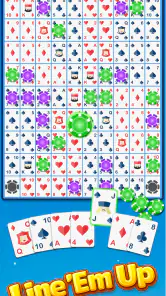





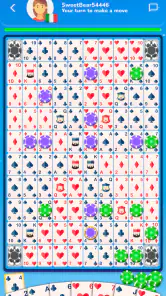
Analysis by Reviewed
I approached Line 'Em Up®: Strategy Board as the kind of game you open when you want a proper contest without committing to a long session. It is a free board game from Schultz Development ApS, built around the simple idea of arranging play so that you can outthink another person rather than merely react quickly. That makes it appealing for short breaks, friendly rivalries, and players who enjoy planning several moves ahead.
Its most interesting promise is flexibility. You can play live when both people are available, or use a slower turn-based approach with up to a day between turns. In practice, that changes the personality of the game. A live match feels like a focused duel, while the longer-turn option fits around work, school, travel, or different time zones. I found that distinction more important than it might sound at first, because the best way to enjoy a strategy board game is usually to choose a pace that matches the people playing it.
What the game feels like once you start playing
The rules are easy to understand at a glance, but that does not mean every decision is obvious. The central challenge is to recognize useful lines, notice what the other player is preparing, and avoid making a move that looks harmless but gives away control. I like this type of design because it rewards attention rather than complicated memorization. You can begin casually, then discover that experienced opponents see threats much earlier than you do.
That learning curve is also where much of the replay value comes from. In a typical opening, I might concentrate on building my own position, only to realize that the opponent has quietly created two possible continuations. The lesson is not simply to play faster or place pieces wherever space is available. It is to keep checking what my move allows next. That habit makes the game more thoughtful than its compact presentation suggests.
New players should resist the temptation to judge a move only by its immediate result. A placement that creates a promising line can still be poor if it blocks your future choices or leaves an obvious response. I recommend taking the first few matches as practice in reading the board. Instead of trying to win every turn, look for the point where the position changes from open to constrained. That is usually where the real strategic decision is hiding.
The live mode is best for people who enjoy momentum. When both players are looking at the board at the same time, small pauses feel meaningful and a match can become a friendly test of concentration. It works particularly well with someone sitting nearby or with a friend who is already ready to play. The slower option serves a different purpose: it lets each person return when convenient, which is useful when a real-time match would be difficult to schedule.
There is a trade-off with asynchronous play. A turn that remains open for a while can make the game feel relaxed, but it can also weaken the sense of a continuous contest if players respond irregularly. I would choose live play for a planned evening and the longer-turn format for an ongoing rivalry. Mixing those expectations can lead to disappointment, especially if one person wants a quick duel while the other treats the match as something to check occasionally.
Where players commonly get stuck
The first point of friction is often not the strategy itself but the transition from opening the game to joining the intended match. If a friend is waiting and the board does not appear as expected, I would first check whether both players are using the same mode and whether the invitation or match action was completed rather than merely started. A simple mismatch between live and turn-based play can make the experience feel broken even when the game is behaving normally.
Another common stumbling block is assuming that every quiet moment means the app has stopped responding. In a turn-based match, waiting may simply mean that the other player has not taken the next turn. I find it useful to distinguish between a board that accepts no input at all and a match that is simply waiting for its opponent. Those are very different situations, and restarting repeatedly will not make another person take a turn.
Players can also get stuck because they focus on their own intended line and overlook the opponent's immediate threat. When that happens, the game may seem unfair or unpredictable, but the problem is usually a reading habit rather than a hidden rule. Before confirming a move, I scan for three things: whether it completes an opponent's opportunity, whether it blocks one of my own useful routes, and whether it leaves the next response obvious. This quick check has improved my results more than trying to invent elaborate openings.
A less obvious source of frustration is playing against someone whose experience level is very different. A beginner may expect the early turns to be exploratory, while a practiced player may already be setting traps several moves in advance. I would not use a first match as a final judgment of the game. Play a few rounds with the same opponent, switch roles in how seriously you analyze each turn, and see whether the board starts making more sense. The game becomes more enjoyable once the basic patterns stop feeling random.
Setup checks before blaming the board
Before starting a match, I recommend confirming the basics that affect the whole session: the app is installed on a supported device, the game is updated to its current version, and both players understand whether the match is intended to be live or delayed. The current release is version 2.0.25, and the game supports Android 7.0 or later. That makes it accessible on many older devices, but an older operating system or an incomplete update can still create avoidable compatibility trouble.
It is also worth checking the device's connection before beginning a live game. A weak or changing connection can make an action appear late, which encourages a player to tap again or assume the first attempt failed. My practical rule is to wait briefly after a move instead of repeating it immediately. Duplicate attempts are rarely helpful in an online match and can make it harder to tell whether the issue is input delay, a screen refresh, or the connection itself.
If you are playing with a friend, agree on the intended rhythm beforehand. For a live game, both people should be ready to stay with the match. For the slower format, decide how often you are likely to check in. This sounds like a social detail rather than a technical one, but it prevents many complaints about missed turns or an apparently inactive game. A board game that allows a full day between turns naturally needs clearer expectations than a game played face to face.
On a smaller phone, I would also pay attention to how comfortably the board can be read. Strategy depends on seeing relationships between positions, not just identifying the latest move. If the display feels cramped, use the device in the orientation and viewing setup that makes the whole board easiest to inspect, and avoid rushing while the screen is changing. The goal is not to make the game faster; it is to reduce accidental moves caused by trying to interpret a crowded layout.
The game is rated Everyone, which suits its straightforward board-game presentation. That does not mean every match will feel equally suitable for every child, though. Younger players may need someone to explain the goal and help them understand why a defensive move matters. Families looking for a calm, turn-based activity may appreciate it, while children expecting bright action, constant rewards, or a story-driven adventure may find the experience too restrained.
Recovering a match when the workflow breaks
When something goes wrong, I prefer a staged recovery rather than immediately deleting and reinstalling the game. First, I note what actually happened: did the board fail to load, did a move seem unregistered, did the opponent's turn remain pending, or did the app close? Then I return to the match once, check whether the state has refreshed, and avoid making another move until I can see the current position clearly.
If the app has become unresponsive, closing and reopening it is a reasonable general step. After reopening, I would look for the existing match rather than creating a duplicate immediately. Duplicate matches make it difficult to know which board is current and can create unnecessary confusion between friends. If the problem affects only one match, the issue may be tied to that session; if every screen behaves strangely, the device, connection, or installation deserves more attention.
For a delayed match, patience is part of the workflow. A player may have taken a turn that has not yet become obvious on your screen, or the other person may simply be away. I would give the game a moment to refresh, then check again later instead of repeatedly sending invitations or starting replacement games. This approach preserves the original context and makes it easier to tell whether the delay is normal turn-taking or a genuine technical problem.
One useful habit is to keep communication with the opponent separate from the board itself. If a move looks missing, ask the other player what they see before assuming the match has reset. Two people looking at the same position can quickly identify whether the issue is a delayed display or a misunderstanding about whose turn it is. This is especially valuable in asynchronous play, where the game does not provide the same immediate feedback as a live session.
In-app purchases range from $1.99 to $99.99 per item, so I would review any purchase prompt carefully and decide in advance whether you want to spend anything. The game is free to start, which makes it easy to try with a friend, but free access and optional purchases are not the same as a completely purchase-free experience. If you are setting it up for a child, I would supervise the first launch and make sure the device's purchase controls match your household preferences.
When the app may not be the cause
Not every failed match points to a defect in the game. Live play is sensitive to timing and connection quality, while delayed play is sensitive to player availability. If one person can see the board and the other cannot, compare the exact symptoms before deciding that the app is at fault. A single device having trouble suggests a local issue; both devices showing the same stalled state may point toward the match or connection instead.
The device itself can also affect the experience. Older hardware may handle a board game perfectly well but still struggle when storage is nearly full, several apps are active, or the operating system has been left without recent maintenance. I would close unnecessary apps, make sure there is reasonable free space, and restart the device if the problem appears beyond this game. These are ordinary checks, but they often separate a temporary device slowdown from a problem specific to the board.
Input mistakes deserve attention too. A player who taps quickly while the screen is updating may believe that a move was ignored, when the real issue is that the intended position was not selected. Slow down for one turn and watch the board after each action. If the behavior becomes reliable, the game may have been receiving hurried or repeated input rather than failing to respond.
There is also a social cause that technical troubleshooting cannot fix: incompatible expectations. Someone who wants a fast, competitive session may interpret a delayed response as poor design, while someone who enjoys checking a board between daily tasks may see that same pace as the main attraction. I would choose an opponent who wants the same style of play. The best feature in this game is its ability to support different rhythms, but that only helps when both people agree on the rhythm.
How it compares with familiar board-game alternatives
Compared with a traditional physical board game, this one removes the need to carry pieces, set up a table, or remember whose turn it is while apart. That convenience is its clearest advantage. You can maintain a match with a friend who is not in the same room, and the slower format makes the game fit around ordinary schedules. The cost is that the experience depends on a screen and an app workflow instead of the tactile satisfaction of moving physical pieces.
Compared with quick puzzle games, it asks more of the opponent relationship. A solo puzzle can be picked up and abandoned without affecting anyone else, but a match here has a social commitment. That makes it more rewarding when both players are engaged and less suitable when you want an entirely private, consequence-free activity. If your main goal is relaxation without waiting, a solo alternative may be a better fit.
Compared with action-heavy multiplayer games, the appeal is restraint. There is no need to learn a large world or react at high speed; the focus stays on board position and anticipation. Players who enjoy careful decisions may prefer that clarity. On the other hand, anyone looking for dramatic audiovisual feedback, constant unlocks, or a broad collection of modes should look elsewhere. This is a focused board-game experience, not an all-purpose entertainment package.
The free entry point makes it easy to test with a friend, especially if you already know you both enjoy strategic board games. Still, the average rating is 3.7 from around 636 ratings, with 69 written reviews, so I would treat it as a specialized choice rather than assuming it will satisfy everyone. Its audience is likely to be happiest when the simple rules, competitive thinking, and flexible pace are exactly what they want.
Who should try it, and who should skip it
I would recommend it to friends who like turning a small ruleset into a serious contest. It is also a good match for people who want to keep one game going during the day instead of scheduling a complete session. Families can use it as a low-pressure way to introduce planning and defensive thinking, provided younger players receive a little guidance and adults keep the purchase side under control.
I would be more cautious about recommending it to someone who dislikes asynchronous communication or becomes annoyed when an opponent does not respond quickly. The day-long turn window is useful, but it cannot manufacture an active opponent. I would also skip it if your priority is a rich solo campaign, a large variety of boards, or a highly animated presentation. The compact strategy is the point, and that focus will feel limiting if you want a broader game.
For a realistic everyday use case, imagine two coworkers who want a friendly contest but rarely share a free half-hour. They can play live during a break when schedules align, then use the slower pace on busier days. I would suggest agreeing not to analyze every move through chat, because that can turn a casual match into a debate. Instead, let the board provide the challenge and use conversation only to clarify a genuine display or turn issue.
My practical verdict after using it
Line 'Em Up®: Strategy Board works best when you treat it as a focused two-person strategy habit rather than a large mobile game. Its strength is the combination of an approachable board format and two useful tempos: immediate play for a shared moment and delayed turns for an ongoing rivalry. I especially like that the slower option can fit around real life, although it requires both players to communicate their expectations and accept that a match may pause.
The main friction is not learning the basic idea; it is managing the details around a match. Choose the right pace, confirm the board state before repeating an action, give the app a moment to refresh, and check the device or connection before assuming the game is responsible. Those small habits make the experience considerably smoother and help preserve the strategic part of the game instead of letting setup confusion take over.
With more than 10K installs and a free starting price, it is an easy game to try with a willing opponent. The in-app purchase range means I would still approach the first launch thoughtfully, especially on a shared family device. Overall, I would recommend it to players who enjoy quiet competition and incremental improvement. I would not choose it for fast entertainment or a content-heavy adventure, but for a compact board duel that can happen live or unfold across the day, it earns a place on my shortlist.
Pros
- Simple rules make it easy to start playing quickly.
- Short matches fit well into brief gaming sessions.
- Strategic positioning gives each move meaningful impact.
- Clean board design keeps the focus on gameplay.
- Suitable for players who enjoy thoughtful
- turn-based challenges.
Cons
- Limited variety may make the experience feel repetitive over time.
- Some matches can feel slow for players who prefer fast action.
- The learning curve may seem steep when facing experienced opponents.
- Few distractions or side features may reduce long-term appeal.
- Strategic mistakes can be difficult to recover from during a match.