Let Them In?
- 577.00
- 4.1
- Installs
- 1.00M
- Price
- Free

Screenshots


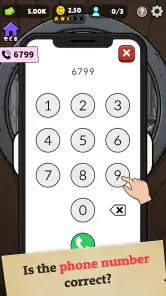




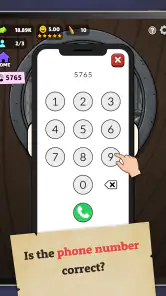
Analysis by Reviewed
Some simulation games ask me to build, manage, or optimize. Let Them In? takes a much narrower route: it puts me in the position of deciding whether a suspicious person should be allowed inside. That simple question gives the game an immediate mood. I am not juggling a large city or arranging a complicated production chain; I am reading situations, weighing clues, and living with the tension of each choice.
That makes it an unusual fit for players who enjoy short, decision-focused experiences rather than traditional management games. Developed by FTY LLC., it is a free simulation game for Android, with a Teen content rating and support for devices running Android 6.0 or later. Its current version is 1.0.22, and the game has already passed the one-million-install mark while holding an average rating of 4.1 from around thirty thousand ratings.
I found the central idea easy to understand almost immediately, but the appeal is not only the question itself. The presentation, the uneasy setting, and the way the game spaces decisions create a playable mood. It feels designed around suspicion: look carefully, decide quickly enough, and accept that a safe-looking answer may not always be the correct one.
A tense first impression built around one question
The opening concept is strong because it does not bury the player under instructions. The store summary describes it as a choice-based simulation, and that is exactly the useful way to approach it. The game wants me to focus on the person in front of me and ask whether the details make sense. There is no need to learn a broad control scheme before the main idea becomes clear.
That accessibility is one of its best qualities. I can imagine playing it during a short break, completing a few decisions, and putting it down without feeling that I have abandoned a large unfinished project. At the same time, the premise gives each encounter more weight than a normal tap-through activity. The question “Let Them In?” is not just a menu prompt; it becomes the rhythm of the entire experience.
My first impression was therefore more about tone than scale. This is not trying to compete with expansive life simulators or detailed construction games. It is closer to a compact interactive test of attention and judgement. If you prefer games where the purpose is obvious within moments, that directness works in its favor. If you need deep customization, open-ended building, or a large system to master, the narrow structure may feel limiting.
The free entry point also makes it easy to try without committing money immediately. There are in-app purchases ranging from $0.99 to $12.99 per item, so I would approach it as a free experience first and decide later whether any optional spending improves the way I play. The important point is that the basic attraction comes from the decision loop, not from collecting a large set of unrelated features.
What the setting communicates without long explanations
The game’s setting works because it turns an ordinary threshold into a place of uncertainty. A doorway normally suggests welcome, privacy, or protection. Here, it becomes a checkpoint where every visitor can change the mood. That is a smart foundation for a simulation game: the environment gives the decision a reason to matter before the player knows every detail.
I also like how the visual direction appears to support the role rather than distract from it. The presentation is not simply decoration placed around a choice menu. The framing encourages me to inspect the person and the situation, while the limited space keeps attention on the immediate problem. This supports the game’s central fiction: I am responsible for deciding who belongs on the other side of the entrance.
One useful way to play is to treat every scene as a small investigation instead of rushing toward the most dramatic-looking answer. I look for inconsistencies, consider whether the explanation fits the situation, and avoid assuming that suspicious presentation automatically means guilt. That habit makes the game more interesting because it turns visual and narrative details into things I actively process.
This is also where the Teen rating makes sense as a practical expectation. The premise deals with suspicion, danger, and the consequences of admitting the wrong person. Someone looking for a completely relaxed, child-friendly simulation should choose something gentler. The age rating is not a minor label here; it helps explain the darker emotional direction of the game.
Art direction that keeps the player close to the decision
The strongest artistic choice is restraint. A game about deciding who may enter does not need a huge world to create pressure. By keeping the focus close to the visitor and the entrance, it makes small details feel important. A pause, a strange appearance, or an answer that does not fit can carry more weight than it would in a crowded environment.
That focused framing also helps the game avoid a common problem in choice-based titles: scenes that look attractive but do not affect how I play. Here, the visual language encourages attention. I am not only watching an animation; I am searching the scene for a reason to accept or reject someone. The art direction therefore supports the mechanic instead of competing with it.
There is a trade-off, though. A concentrated visual style can become repetitive for players who want constant environmental change. The same basic situation remains the center of the experience, and that is both the source of its identity and the boundary of its variety. I would recommend it more readily to someone who enjoys atmosphere and interpretation than to someone who judges a simulation mainly by the number of locations or activities it contains.
Sound, pacing, and the shape of a decision
Sound matters especially in a game this focused. When there are only a few actions to consider, audio helps determine whether a moment feels routine, uncomfortable, or urgent. The setting needs room for hesitation, and the sound design contributes to that feeling by making the player aware of the pause before a choice.
I would not treat the audio as background filler. In a game built around suspicion, a quiet interval can be as useful as a dramatic cue. Silence gives me time to inspect what is happening and makes my eventual answer feel deliberate. When the rhythm becomes more urgent, the pressure comes from the contrast: the game has allowed me to think, then reminds me that I cannot remain undecided forever.
This pacing is one of the more coherent parts of the experience. The game does not need constant action to hold attention. Instead, it alternates between observation and commitment. That makes it suitable for players who enjoy suspense created through small decisions rather than combat or fast reflexes.
There is a practical tip here: I get more from the game when I avoid treating every encounter as a race. I pause long enough to understand the situation, but I do not overanalyze every visual detail as though there must always be a hidden trick. The best rhythm sits between those extremes. Rushing makes the choices feel random; excessive suspicion can make the process feel mechanical.
Why the short-loop structure works for everyday play
A realistic use case is a short evening session after work or school. I can open the game, make a handful of decisions, and stop when I want a break without needing to remember a complicated building plan or a long chain of objectives. That makes it more convenient than many conventional simulation games, which often ask for extended sessions to make meaningful progress.
The same structure is useful for sharing the experience with a friend. One person can inspect the situation while the other argues for letting the visitor in or keeping them out. Because the core question is easy to explain, the game can create conversation quickly. It is not a multiplayer feature claim; it is simply a natural way to discuss a choice-based scenario while one person plays.
The downside is that the compact loop may not satisfy someone looking for a long-term hobby. Traditional management simulations reward planning across several connected systems, while this game concentrates its satisfaction into individual judgements. If your favorite part of simulation games is expanding a settlement, balancing resources, or watching a complex economy develop, a city builder or management title will probably offer more depth.
Players should also understand that the game’s tension depends on their willingness to engage with uncertainty. If I only want clearly marked correct answers, the premise can become frustrating. The experience is more enjoyable when I accept that the point is not merely to tap the safe option, but to interpret the information presented and take responsibility for the decision.
How the mechanics support the mood
The central mechanic and the atmosphere fit each other unusually well. The choice to admit or reject someone naturally creates suspense, while the visual and audio presentation gives that suspense a setting. Neither side has to carry the whole game. The mechanics provide purpose to the mood, and the mood gives emotional weight to the mechanics.
That balance is important because choice-based games can easily become passive. If the player is only reading or tapping without feeling involved, the experience loses energy. Here, the threshold creates a clear role. I am not watching a character make the decision; I am the person who has to make it. That small shift makes the game feel more personal than a simple branching story.
One of the more useful approaches is to separate immediate appearance from context. A visitor may look suspicious, but the surrounding circumstances determine whether that suspicion is meaningful. I found that considering the whole situation rather than relying on one striking detail makes the game feel less like guessing and more like judgement. It also helps prevent the repeated loop from becoming a reflex.
Another trade-off is that the game’s focus can make mistakes feel more prominent. In a large simulation, one poor decision may disappear among dozens of systems. Here, the decision is the system, so a wrong call is much harder to ignore. That is good for tension but less appealing for players who prefer forgiving experimentation.
Who will enjoy it, and who should choose something else
I would recommend this game to players who like suspenseful choices, compact simulations, and situations where observation matters more than dexterity. It is particularly suitable if you enjoy discussing whether a character seems trustworthy, noticing inconsistencies, and replaying a moment in your head after choosing an answer.
It is also a good match for people who find large simulations intimidating. There is no need to learn an elaborate economy before the game becomes playable. The premise is immediate, and the interaction stays centered on the visitor at the entrance. That clarity makes it approachable even if you do not normally spend time with simulation games.
I would skip it if you want a detailed sandbox, extensive personalization, or a story that always explains its rules directly. I would also be cautious if moral uncertainty irritates you. The game’s appeal comes from not knowing everything at once, so players who dislike ambiguity may experience the same quality as frustration.
Compared with a typical management simulation, this is lighter on construction and heavier on atmosphere. Compared with a narrative choice game, it gives the player a more defined job and a repeated decision framework. Compared with a puzzle game, it relies less on fixed logic and more on reading context. Those distinctions help explain why it may feel refreshing to one player and too narrow to another.
Final thoughts on the atmosphere and its staying power
After spending time with it, I see Let Them In? as a focused mood-driven simulation rather than a broad management game. Its best achievement is the way the art direction, setting, sound, and pacing all point toward the same emotional task: decide whether someone is safe to admit. The mechanics remain simple enough to understand, but the atmosphere encourages me to take each choice seriously.
FTY LLC. has chosen a premise that is easy to describe and surprisingly effective in play. The doorway gives the game a strong visual identity, the suspicious visitor creates an immediate question, and the compact rhythm makes it convenient for short sessions. The result is not endlessly varied, but it is coherent. Every major part of the experience serves the same narrow idea.
The game has attracted over one million installs, and its 4.1 average suggests that the concept has found a substantial audience. I would not use that alone as a reason to play, but it does match my impression that the premise is accessible. The free price makes trying it straightforward, while the in-app purchase range means I would keep an eye on spending if I were tempted to buy extras during a longer session.
My strongest recommendation is to play slowly enough to notice the relationship between presentation and decision-making. Pay attention to the setting, listen for changes in the rhythm, and resist choosing purely because someone looks suspicious. The game becomes more satisfying when I treat the entrance as a place with rules and consequences, not merely a screen with two buttons.
It is not the right substitute for a deep city builder, a resource-heavy management game, or a long-form adventure. It does not need to be. Its value comes from doing one thing with a clear identity: turning admission into a tense judgement. For a player who wants a short, atmospheric simulation with a slightly uneasy edge, I think it is worth trying. For someone seeking scale and freedom, another category will be a better home.
Overall, the mood is the reason I would recommend it. The mechanics are straightforward, but the setting gives them meaning, and the pacing leaves enough space for doubt to grow before I commit. That combination makes the game memorable beyond its simple premise. It asks one small question repeatedly, then uses art, sound, and timing to make the answer feel important.
Pros
- Simple controls make the game easy to pick up quickly.
- Short sessions suit casual play and quick breaks.
- The unusual premise gives the game a distinctive atmosphere.
- Progression encourages repeated attempts and gradual improvement.
- Works well for players who enjoy suspenseful decision-making.
Cons
- Some situations may feel repetitive after extended play.
- The difficulty can rise sharply without much warning.
- Limited variety may reduce long-term appeal for some players.
- The eerie presentation may not suit younger or sensitive players.
- Performance and loading can vary depending on the device.

- Category
- Simulation
- Version
- 1.0.22