LAST CLOUDIA
- 4.02K
- 4.7
- Installs
- 1.00M
- Price
- Free

Screenshots


Analysis by Reviewed
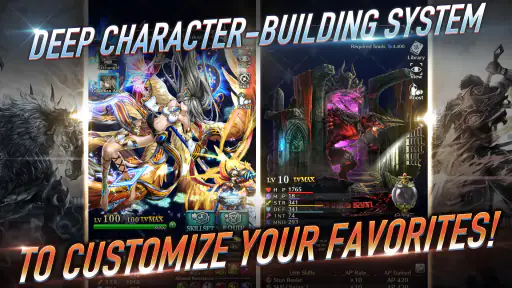
I spent time with LAST CLOUDIA as a role-playing game built around one especially important idea: training characters in a flexible way instead of treating every hero as a fixed package. That approach gives the game its identity. Rather than simply selecting the strongest-looking character and following an obvious upgrade path, I had to think about how each unit should develop, what role I wanted it to fill, and whether a short-term improvement was worth giving up a more useful long-term direction.
That freedom is also why this is not the easiest mobile RPG to understand in a few minutes. The game comes from AIDIS Inc., is free to start, and is rated Teen, but its appeal is less about instant simplicity and more about gradually shaping a team. The store summary talks about custom training super characters, and in practice that concept matters because progression feels like a set of decisions rather than a single button marked “make stronger.”
My overall impression is positive. The average rating sits at 4.7 from around 26 thousand ratings, and the game has passed one million installs, which matches the feeling that it has found a committed audience. Still, I would not recommend it automatically to everyone who enjoys mobile role-playing games. Players who want a quick, low-maintenance experience may find the amount of planning tiring. Players who enjoy experimenting with builds and revisiting their choices will get much more from it.
Why the training system is the real hook
The most interesting part of LAST CLOUDIA is not simply collecting characters. It is deciding what those characters should become. That distinction changes how I approached battles and upgrades. In a more rigid role-playing game, a character usually arrives with a clear job: damage dealer, healer, tank, or support. Here, the flexible training concept encourages me to look at a character as a starting point rather than a finished answer.
That creates room for personal priorities. I can favor survivability when a character keeps falling before the end of a fight, lean toward damage when ordinary encounters drag on, or build around a narrower purpose for a difficult stage. The useful question is not only “Which character is best?” but also “What does my current team need?” That makes progression feel more connected to actual play.
The key benefit is meaningful adjustment. A character is not valuable only because of a ranking or a rare label. The way I train that character can determine whether it fits my habits. Someone who prefers safe, controlled battles may value a different development path from someone who wants aggressive damage and is comfortable taking risks.
This also gives the game more staying power than a simple collection loop. If every character performed in one predetermined way, the discovery process would end quickly. Flexible development gives me a reason to revisit units, compare possible roles, and consider whether a character I initially ignored might work better after a different investment.
What I actually do with that freedom
In practice, I treat training as a planning exercise. Before spending resources, I first ask what problem I am trying to solve. If a stage is overwhelming my front line, I do not automatically pour everything into attack. I look for a way to make the team last longer. If the group survives comfortably but takes too long to finish opponents, I shift my attention toward offensive improvement.
This sounds obvious, but it is an important habit because flexible systems can tempt players into upgrading whatever is immediately available. I found it more satisfying to pause and decide on a role first. That small delay prevents random development and makes each improvement easier to judge.
Another useful approach is to keep the main team focused while using other characters as experiments. I would rather test an unusual training direction on a secondary unit than weaken the group I depend on for regular progress. This is one of the less obvious strengths of the system: it rewards curiosity, but it also makes careless spending noticeable.
The trade-off is that the game asks me to understand my own goals. A player cannot rely entirely on a universal recommendation because the best choice depends on the team, the stage, and the preferred style of play. That is rewarding once the basics settle in, but it can feel like homework when I only have a few minutes to play.
How the system affects ordinary battles
Flexible training matters most when a battle exposes a weakness. A character who looks impressive in a general comparison may not solve the specific issue in front of me. Maybe the team lacks endurance, maybe the damage is too spread out, or maybe one unit is not contributing in the way I expected. The training system lets me respond to those problems instead of accepting the original design as unchangeable.
I noticed that this made victories feel more personal. When a difficult encounter finally worked, the satisfaction came not only from having stronger characters, but from understanding why the team had failed before and changing the plan. That is a better loop for me than simply waiting until a numerical power threshold is reached.
At the same time, training cannot remove every frustration. A poor strategic choice still costs time and resources, and flexible progression can make mistakes more expensive because there are more ways to spend attention. New players should expect to learn through trial and error rather than immediately producing an ideal build.
I recommend keeping notes mentally, or even writing down a simple goal for each important character. I found that a short description such as “durable front-line role” or “focused damage role” was enough to stop me from making scattered upgrades. This is a small workflow, but it makes the central feature much easier to manage on a phone.
The best everyday scenario for the game
The game works particularly well for a player who enjoys returning to the same roster over time. Imagine having a short evening session after work or school. You do not necessarily want to begin a completely new game, but you do want progress that feels thoughtful. LAST CLOUDIA gives that session a clear purpose: review a character, decide what the team lacks, make a training choice, and then see whether the next battle feels better.
That loop is more engaging than mindlessly collecting rewards because the result is visible in play. A character may become more useful in the exact situation that caused trouble earlier. Even when the session is brief, I can leave with a concrete decision made rather than merely filling a progress bar.
It is also a good fit for players who enjoy discussing builds with friends. The flexible system naturally creates questions: Why did you train that character in this direction? Did you prioritize safety or speed? Would the same choice work for a different team? Those conversations are more interesting than comparing identical preset roles.
However, I would skip it if my ideal mobile game is something I can open, tap through quickly, and understand without reading or thinking about development choices. The training freedom is the reason to play, but it is also the reason the game can feel demanding. Someone seeking a purely casual distraction may prefer a simpler role-playing title with fewer decisions.
Where the trade-offs become noticeable
The first trade-off is complexity. Customization sounds universally positive, but every additional choice adds mental overhead. I sometimes wanted the game to tell me the obvious next step, especially when I was playing on a small screen or during a short break. Instead, the system encouraged me to consider alternatives, and that is not always what I want from a mobile session.
The second trade-off is commitment. Because training choices shape how a character functions, I became more cautious about spending resources without a plan. That caution is healthy, but it slows the feeling of instant progress. A player who enjoys constant upgrades may find the system less satisfying than a game where every reward can be applied immediately with little consequence.
The third trade-off is that free entry does not mean the entire experience has no spending pressure. LAST CLOUDIA includes in-app purchases ranging from $0.99 to $99.99 per item. I would approach those purchases carefully. The flexible training system already gives me a reason to think about resource use, so adding real-money decisions makes it even more important to understand what I am investing in before committing.
I do not see that as a reason to dismiss the game, but it changes how I recommend it. If you are comfortable treating optional purchases as something to evaluate slowly, the free starting point lets you decide whether the core loop suits you. If you dislike any game that presents a wide range of paid items, this may not be the most comfortable choice, even if the training itself interests you.
The current version is 7.4.0, and the minimum operating system is Android 7.1. For someone deciding whether to install it on an older Android phone, those requirements are useful practical details. I would still leave enough storage and battery headroom for a substantial role-playing game, but I would not assume that owning a recent flagship is necessary simply to try it.
How it compares with simpler role-playing alternatives
Compared with a more straightforward mobile RPG, LAST CLOUDIA gives me more ownership over character direction. In a simpler alternative, I might spend most of my time following recommended upgrades, equipping obvious improvements, and moving through battles with limited planning. That can be smoother and more relaxing, but it also means my decisions have less personality.
Compared with a heavily collection-focused game, this one places greater emphasis on what I do with a character after obtaining it. Collecting can still be appealing, but the training idea gives the roster more depth because the same unit can serve different purposes depending on development choices. The downside is that the game asks me to learn more instead of delivering immediate certainty.
Compared with a competitive role-playing game, I prefer this style when I want to experiment without feeling that every decision must match a public ranking. Still, players who mainly want fast competitive optimization may find the flexible system slower than a game built around clear meta roles and short matches.
My practical advice is simple: choose LAST CLOUDIA when customization itself sounds fun. Choose a simpler alternative when you want effortless progression. Choose a more direct action game when your priority is moment-to-moment combat rather than developing a roster over time.
Who gets the most from custom development
The strongest audience is made up of patient role-playing fans who enjoy improving a team through observation. You do not need to be an expert, but you should be willing to ask why a battle went badly and make a deliberate adjustment. The game rewards that mindset more than blind repetition.
It is also a good match for players who like having several possible answers to a problem. If you enjoy trying a different build instead of abandoning a character after one disappointing performance, the flexible training system gives you a reason to keep experimenting. That is the feature I would use as the deciding factor when recommending it.
Newcomers should begin conservatively. I would focus on understanding one main team before spreading attention across every available character. Give each important unit a clear purpose, test that purpose in actual battles, and only then start branching into more unusual choices. This approach makes the system less intimidating and reduces the chance of wasting resources through random upgrades.
Players who prefer a low-commitment experience should think carefully before installing. The game is free, but the role-playing structure asks for time and attention, while the in-app purchase range means spending decisions deserve restraint. It is not the right choice if I want every session to be frictionless or if I dislike managing long-term progression.
The Teen rating is another reason to consider the intended audience before handing the game to a younger player. I would treat that rating as a prompt to check whether its tone and content fit the person using the device, rather than assuming that a mobile format automatically makes it suitable for everyone.
My final recommendation
LAST CLOUDIA succeeds because its flexible training system changes the meaning of progression. I am not only collecting characters and watching numbers rise; I am deciding what those characters should contribute and adjusting them when the team falls short. That makes victories more satisfying and gives the roster a personal quality that many mobile RPGs do not achieve.
The same feature creates the main friction. Training requires patience, planning, and a willingness to accept that the first idea may not be the best one. The game can feel slower than a simpler alternative, and players should approach purchases thoughtfully rather than treating every upgrade as an automatic improvement.
After playing it, I would recommend it to anyone who enjoys experimenting with character roles and solving battles through preparation. I would not recommend it to someone looking for a quick, uncomplicated game that explains every decision for them. For me, the deciding question is whether custom development sounds like the fun part. If it does, this free role-playing game from AIDIS Inc. is worth trying; if it sounds like extra work, the same flexibility may become the reason you stop playing.
Pros
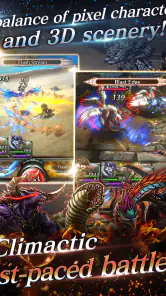
- Deep real-time combat with satisfying skill-based controls.
- Large roster of unique heroes
- guardians
- and customizable builds.
- Cinematic story scenes with fully voiced character moments.
- Frequent events provide extra rewards and new challenges.
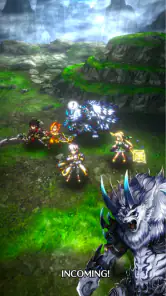
- Pixel-art visuals give the game a distinctive retro-inspired style.
Cons
- Energy limits can slow progress during longer play sessions.
- Duplicate units and materials are often needed for upgrades.
- Gacha rates may make specific characters difficult to obtain.
- Many menus and systems can feel overwhelming for new players.
- Some late-game content strongly favors optimized team compositions.

- Category
- Role Playing
- Version
- 7.4.0