Kuroko's Basketball SR
- 288.00
- 4.6
- Installs
- 50.00K
- Price
- Free

Screenshots
Analysis by Reviewed
I approached Kuroko's Basketball SR as the sort of game that might live on a shared household phone: something one person opens for a quick basketball session, then hands over to someone else who wants to try a different style of play. That perspective matters here because this is not simply a casual sports app. It is a licensed competitive basketball game based on Kuroko's Basketball, developed by Quick Magic AI, and its appeal depends heavily on how much the player enjoys character-driven competition rather than straightforward arcade shooting.
My first impression was that the game is most interesting when treated as a focused basketball experience instead of a general time-killer. The free entry point makes it easy to try, and the store page places it in the Sports category with a Teen content rating. I would recommend giving it a proper first session rather than judging it after a few taps, because the value comes from understanding how the competitive loop, team choices, and anime identity fit together.
How it fits into a shared household
On a shared device, the biggest practical question is not whether two people can enjoy the same basketball theme. It is whether each person can keep a clear boundary around their own progress, preferences, and spending decisions. I would not treat a shared phone as automatically equivalent to separate player profiles. Before anyone invests serious time, I would check how the game handles sign-in, saved progress, and switching users on the device. That is a sensible precaution for any competitive title, especially one that includes purchases.
A realistic household scenario would be a teenager playing after school while a parent uses the same device later in the evening. The teenager may care about collecting or improving favorite characters, while the parent may only want a few matches. Those are very different expectations. I found that the game makes more sense for the first player when they are willing to learn its competitive rhythm, whereas the second player may prefer a simpler sports game that can be opened and understood immediately.
The shared-device angle also changes how I judge convenience. A game can be enjoyable but still awkward if another person needs the phone for a call, navigation, or messaging. I would keep sessions organized by finishing a match before handing over the device, rather than leaving the app in the middle of a competitive sequence. That sounds minor, but it avoids confusion when more than one person is using the same screen and helps prevent accidental actions under the wrong player context.
One useful habit is to agree on a simple handoff routine: identify who is playing, confirm the active account or save state, and check whether a purchase screen or other confirmation prompt is open. This is not a special feature of the game; it is a practical way to reduce mistakes on a shared phone. With that routine, the game can work well as a household entertainment option, but I would be more cautious if several people expect independent long-term progress from one device.
What the basketball experience feels like
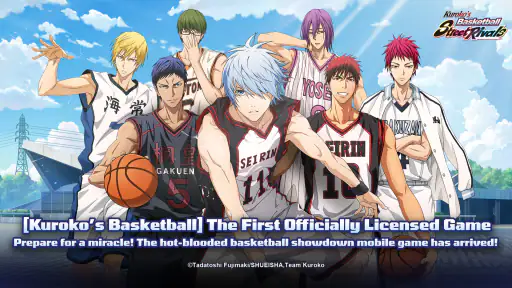
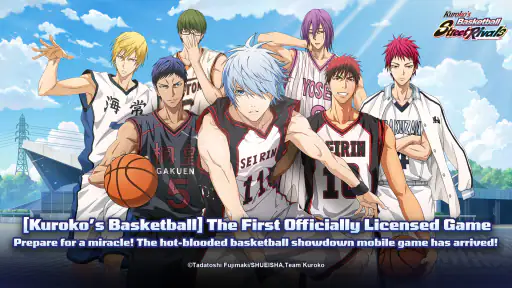
The strongest part of the package is its identity. Kuroko's Basketball gives the game a clear personality that ordinary basketball alternatives do not have. Instead of presenting itself as a neutral simulation of the sport, it is built around the appeal of a recognizable fictional basketball world. That makes it particularly suitable for fans who want their matches to feel connected to the characters and atmosphere of the series.
I would not choose it as my first recommendation for someone looking for a realistic coaching simulator or a pure recreation of professional basketball. The attraction is more stylized and character-focused. Players who already know the series will likely understand the appeal faster, while newcomers may need time to decide whether the licensed setting adds enough value to justify learning another competitive mobile game.
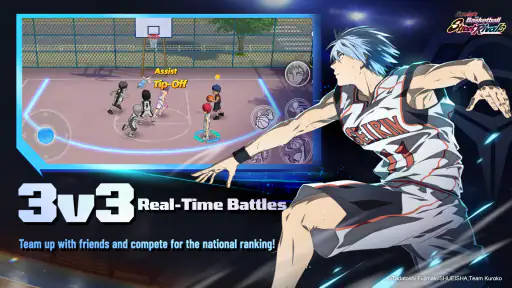
The competitive label is important. I approached each match with more attention than I would give a purely idle sports title, because decisions have consequences and the opponent is part of the experience. That creates a satisfying sense of improvement when a player begins to recognize patterns, but it also means the game may feel demanding when someone only wants a relaxed five-minute distraction.
My practical advice is to separate learning sessions from serious sessions. Early on, use matches to understand how the game expects you to think, rather than chasing a perfect result. Once the controls and team behavior feel familiar, competition becomes more enjoyable. This approach is especially helpful for a younger player sharing the game with an older family member, since both can play at their own pace without turning the first few sessions into a test of reflexes.
Setting boundaries before someone starts playing
The game is free to install, which lowers the barrier for trying it on Android or iOS. However, free access should not be confused with a completely cost-free experience. In-app items range from $0.29 to $299.99 per item, so I would establish a household rule before anyone begins. A shared device should never be treated as permission for every user to make purchases, even if the game itself was installed casually.
I would also avoid storing payment access on a device used by several people unless the account holder is comfortable with the risk of an unintended transaction. The safest household arrangement is clear permission: one adult decides whether purchases are allowed, and every other player knows that asking first is required. This is more important here than in a game with no paid items because competitive enthusiasm can make a limited-time decision feel urgent.
The price range also affects how I would compare the game with alternatives. A traditional premium basketball game may cost more at the beginning but offer a more predictable spending model. A free competitive game may be easier to try but can create more pressure around optional purchases. Kuroko's Basketball SR sits in the middle of that decision: it is accessible at the start, but families should evaluate the purchase structure before treating it as a regular shared activity.
Another boundary concerns time. Competitive games can encourage one more match after a disappointing result, and that pattern is easy to miss when several people take turns. I would set a session limit based on the household schedule rather than on the game’s momentum. For a school-night routine, a short planned session is more sensible than playing until someone finally gets the result they want.
There is also a difference between sharing a device and sharing an account. I would keep those ideas separate. A family can use one phone without assuming that every player should use one identity, and a player should not assume that progress, purchases, or preferences will remain neatly separated unless the game clearly supports that arrangement. Checking the available account options at the beginning is one of the most valuable setup steps.
Coordinating different kinds of players
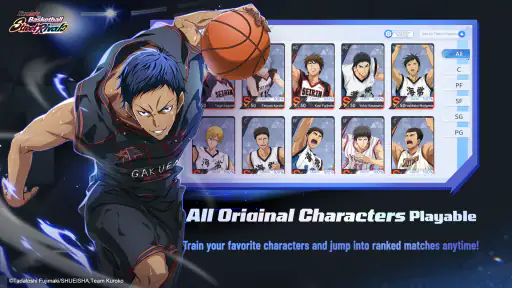
Households rarely have one uniform type of player. One person may be a dedicated Kuroko's Basketball fan, another may enjoy competitive sports games, and a third may only want to experiment with the controls. I think the game works best when everyone agrees on what they want from it. The fan can focus on the licensed world, the competitor can focus on improving results, and the casual player can treat it as a short trial rather than being pushed into a long commitment.
For coordination, I would suggest a rotation that does not measure success only by winning. A new player could first watch a short session, then play a low-pressure match, while the experienced player explains the important decisions without taking over the device. That makes the learning process less frustrating and gives the newcomer a chance to decide whether the game is genuinely enjoyable.
A less obvious trade-off is that coaching another player can reveal whether the game’s systems are understandable. If an experienced user cannot explain why a particular choice matters without relying on guesswork, the game may have a steeper learning curve than its sports category suggests. I would use that as a test: after several matches, can the player describe what they are trying to improve, or are they only repeating actions and hoping for a better result?
Another useful approach is to keep competitive comparison friendly. The game’s appeal can make people want to prove who is better, but a shared device is not an ideal place for arguments over progress or purchases. I would compare decisions and improvement rather than demanding identical results. This is particularly important when one person already knows the source material and another is encountering the characters for the first time.
If the household wants direct, face-to-face competition above all else, a console or local multiplayer basketball game may be a better fit. This title is more suitable when players are comfortable taking turns and building their own relationship with a mobile competitive game. The distinction matters: the app can support shared interest, but that does not mean it replaces a dedicated multiplayer setup.
Teen rating, trust, and the right audience
The Teen content rating should be part of the household decision, not a detail to ignore. I would consider the individual player’s maturity, spending judgment, and ability to handle competitive frustration rather than relying on age alone. A teenager who understands account boundaries and can stop after a planned session is a different case from a younger child using an adult’s device without supervision.
Trust is also about communication. I would explain that the game contains optional paid items and that installing it for free does not grant permission to buy anything. I would also make sure the player knows which account is active before starting. These conversations may feel unnecessary for a small mobile game, but they become worthwhile when a shared device combines personal progress, competitive pressure, and purchases.
For an adult fan, the Teen rating is unlikely to be a concern by itself, but the game may still not be the right match. Someone seeking a deep basketball simulation, extensive offline play, or a completely predictable paid experience should look elsewhere. I would also skip it if the main motivation is simply to pass a few seconds with no learning curve. The licensed setting is a reason to try it, not a guarantee that every basketball fan will enjoy its competitive structure.
On the other hand, it is a promising choice for a player who likes anime-based sports games and wants more involvement than passive viewing. The combination of basketball competition and Kuroko's Basketball identity gives it a clear audience. It is also a reasonable trial for someone curious about the series, provided they are willing to judge the game on its own play rather than expecting it to function like an interactive episode.
The release date is February 14, 2026, and the current version is 201. I would keep the app updated through the normal platform process, particularly on a shared device where different users may assume they are seeing the same game state. The minimum operating system is Android 7.0, which makes it accessible to many older Android devices, although compatibility on paper does not tell me how comfortable every older phone will feel during competitive play.
How it compares with familiar sports alternatives
Compared with a conventional basketball simulation, this game’s main advantage is its fictional identity. A simulation is usually the better choice for players who want authentic teams, realistic tactics, or a sport-first presentation. Kuroko's Basketball SR is the better choice when the characters and licensed universe are central to the fun.
Compared with a simple arcade basketball game, it asks for more attention. An arcade alternative may deliver instant scoring and quick repetition, while this game is more attractive to someone who wants a competitive progression to learn. The trade-off is convenience: the more carefully I approach the match, the less suitable it becomes for completely mindless play.
Compared with a collectible character game that only uses basketball as decoration, the sports setting gives this title a clearer reason to exist. The important question for a prospective player is whether the basketball decisions remain enjoyable after the initial excitement of seeing familiar characters. If the answer is yes, the game has staying power for that player. If not, another anime title with a simpler loop may be a better use of time.
One concrete decision rule helped me place it. Choose this game if you would still want to play a competitive mobile basketball match after removing the novelty of the license. Choose a different option if the license is the only attraction and you have little interest in learning the game itself. That rule prevents expectations from getting ahead of the actual experience.
What the audience response suggests
The game holds a 4.6 average from around 1.7 thousand ratings, with roughly 288 written reviews and over 50 thousand installs. Those figures suggest that it has attracted a meaningful early audience, but I would not use them as a substitute for personal fit. A strong average can reflect enthusiasm from dedicated fans, while a player unfamiliar with the series may respond differently.
I read that kind of response as encouragement to try, not a promise that every household will enjoy it. The size of the audience is large enough to show that the concept has found interest, yet the more useful question remains whether the competitive loop suits the person holding the phone. Ratings are most helpful when combined with the player’s expectations about anime, basketball, and optional spending.
The developer, Quick Magic AI, has positioned the title around official licensed basketball competition rather than an unrelated sports theme. That distinction gives the game a focused identity. It also means the experience will be judged by two standards at once: how well it works as a mobile basketball game and how convincingly it serves fans of Kuroko's Basketball.
My household verdict
I would recommend Kuroko's Basketball SR to a teen or adult fan who wants a competitive mobile basketball game with a strong anime connection, provided the household agrees on account use, time limits, and purchases first. The free starting point makes trying it straightforward, and the Teen rating gives families a clear reason to discuss whether it suits the intended player.
I would be more cautious about putting it on a device used by several people without a handoff routine. The combination of individual progress and in-app items means that shared use needs clear boundaries. I would also avoid recommending it to a child who cannot reliably ask before spending, or to a player who wants a completely relaxed game with no competitive learning curve.
For my own recommendation, the deciding factor is not the presence of the license alone. The best reason to install it is the combination of Kuroko's Basketball fandom and a genuine interest in competitive basketball play. When those two interests overlap, the game has a clear purpose and can become a rewarding shared topic, even if players take turns rather than playing together on one screen.
For everyone else, I would compare it carefully with a conventional basketball game before committing time or money. A different option may be better for realistic sports play, instant arcade action, or a fixed one-time purchase. But if the intended player wants to step into a stylized basketball world, learn its competitive rhythm, and use the game responsibly on a personal or shared device, this free release is worth trying. My final view is positive, with one condition: treat it as a competitive licensed game with optional spending, not as a harmless toy that needs no household rules.
Pros
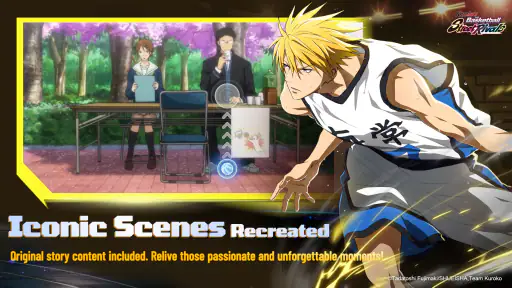
- Faithful characters and story scenes appeal to anime fans.
- Strategic team-building gives matches more depth than simple auto-play.
- Regular events provide additional rewards and limited content.
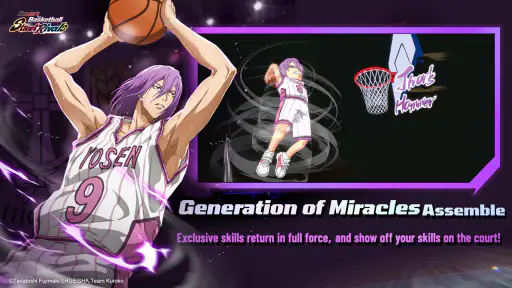
- Smooth animations make special moves exciting to watch.
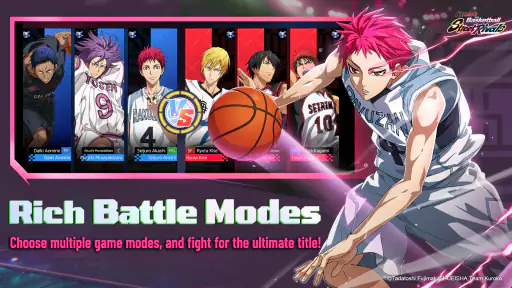
- Multiple game modes offer variety beyond the main campaign.
Cons
- Progress can become heavily dependent on upgrading rare players.
- Duplicate characters may be needed to reach higher upgrade levels.
- Combat may feel repetitive after extended play sessions.
- Event rewards often require frequent logins and consistent activity.
- Storage use and battery drain can be noticeable on older devices.

- Category
- Sports
- Version
- 201