Jungle Color By Number Games
- 25.00
- 4.9
- Installs
- 10.00K
- Version
- 1.0.4

Screenshots




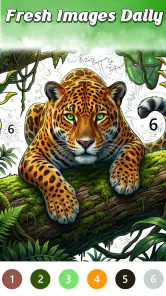
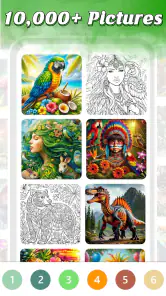


Analysis by Reviewed
I approached Jungle Color By Number Games expecting a simple board-style coloring activity, and that is exactly where its appeal begins. It does not ask me to learn a complicated rule set or compete against another player. Instead, it turns coloring into a gentle sequence of numbered choices, using jungle animals, dinosaurs, relics, and natural scenes as its visual material. After a few minutes with it, I found the experience best understood as a quiet puzzle with a coloring-book personality.
The game is free to start, suitable for everyone, and developed by LoveColoring Game. Its average rating is 4.9 from around 600 ratings, while its install count has passed 10K+. Those figures suggest that the straightforward idea has found an audience, but the more important question is whether the format fits the way you like to relax. In my experience, it works best when I want a low-pressure activity for a short break rather than a deep board game or a demanding creative tool.
A calm first impression built around small decisions
The first thing I noticed was how little mental preparation the game requires. A numbered coloring page gives me a clear task: identify the matching color and place it in the corresponding area. That structure removes the blank-page problem that can make ordinary digital drawing feel intimidating. I do not need to decide what to sketch, which brush to use, or whether my composition looks good. The picture already provides the framework.
That simplicity also controls the pace. I can complete a few areas and stop without feeling that I have abandoned a larger challenge. This makes the game a natural fit for a waiting room, a quiet evening, or a short pause between more demanding tasks. It is also accessible for someone who enjoys visual activities but does not consider themselves artistic. The numbered approach gives enough guidance to make progress immediately.
The jungle theme helps the opening mood. Animals, dinosaurs, old relics, and nature give the pages more personality than a collection of abstract shapes would have. Even before a picture is finished, the subject hints at an environment: leaves suggest a dense setting, an animal creates a focal point, and a relic adds a sense of discovery. The game is not telling a long story, but its subjects provide a loose visual journey.
There is a trade-off here. Because the basic action is intentionally easy, experienced puzzle players may find the early interaction familiar very quickly. The satisfaction comes from completing an image and watching it become coherent, not from solving a difficult problem. If you want strategy, competition, or a campaign with meaningful decisions, this is likely to feel too gentle.
Why the numbered format works for casual play
Numbered coloring is more than a convenience; it changes how I pay attention. Instead of scanning the whole image and choosing a personal interpretation, I move between small targets. That creates a rhythm of search, tap, and completion. The work is repetitive in a pleasant way when I am in the right mood, because each filled section gives a small sense of progress.
I also found that the format can suit shared situations without turning into a traditional multiplayer game. A child and an adult can look at the same picture and take turns finding areas, while someone who prefers independence can use it alone. The Everyone age rating supports that broad accessibility. Still, younger players may need help with the numbered matching process at first, particularly on detailed pictures or smaller sections.
One useful habit is to treat each image as a series of short sessions rather than something that must be finished in one sitting. Completing a whole picture at once can become tedious if the design contains many small regions. Working by color family or by a convenient section makes the activity feel more manageable. This is a small change, but it prevents the calm format from turning into a chore.
The jungle setting as a visual language
The art direction is strongest when the subject matter and the coloring process support each other. Jungle animals naturally provide recognizable silhouettes, while dinosaurs offer large bodies, scales, and dramatic shapes. Relics bring angular details and a different kind of visual interest. Nature scenes can connect those elements through foliage, ground, and surrounding space.
I like this variety because it gives the collection several moods without abandoning its identity. A dinosaur picture can feel playful or adventurous, an animal can feel friendly, and a relic can suggest exploration. The game remains a coloring activity, but the choice of subject affects how I approach the page. I am more patient with details when the finished image feels like a small scene rather than a random pattern.
The setting also helps the numbered mechanics feel less clinical. Without a theme, matching numbers and colors could resemble a worksheet. Here, the same action is framed as bringing a jungle image to life. That framing matters during longer sessions, because it gives me a reason to continue beyond the first few taps.
At the same time, the theme should not be mistaken for a fully developed adventure world. The jungle is communicated through the artwork and subject choices, not through a narrative journey that changes the rules or introduces exploration. I would recommend it to someone who wants a nature-inspired visual atmosphere, but not to someone looking for a story-driven dinosaur game or a traditional board game with tactical movement.
How to get more from each picture
A practical approach is to begin with the larger, easily identified regions. Filling those first gives the image a visible structure and makes the remaining small areas easier to locate. I then use the unfinished portions as a checklist, moving deliberately instead of tapping randomly. This is especially helpful on nature scenes where leaves or background details may blend together.
Another useful trick is to pause after a major section is complete and look at the overall balance. The visual change can reveal which areas still need attention more clearly than the original numbered outline. This turns the activity into a light observation exercise, not just a sequence of automatic taps. It is also a good way to keep the process relaxing rather than rushing toward completion.
For children, I would make the matching task part of the activity. Asking them to find every area associated with one number encourages visual scanning and color recognition. For adults, the same method can become a mindful routine: choose one color, finish its visible areas, and then move on. Neither approach adds a new game system, but both make the existing structure more engaging.
Sound, silence, and the rhythm of interaction
The central rhythm comes from the interaction itself. Each correct placement moves the image forward, so the game naturally alternates between searching and filling. That pattern is slower and softer than the rapid feedback of an action game. I found it suitable for moments when I wanted something to do with my hands without filling the room with intense visual urgency.
Sound matters in a coloring game because it can either support that calm or work against it. Here, I judge the experience primarily by its visual and tactile rhythm rather than by expecting a rich musical score or a dramatic soundscape. The jungle theme creates atmosphere through the pictures first. That makes it easier to imagine using the game quietly, including in places where I would not want an energetic soundtrack competing for attention.
The pacing is intentionally predictable. There are no sudden battles, countdowns, or high-pressure turns pushing me to react faster. That is a real strength for relaxation, accessibility, and casual family use. It is also the main limitation for anyone who needs constant novelty. Once I understand the coloring loop, the pleasure depends on whether I enjoy gradual completion and the changing artwork.
I would not choose this game when I want a strong audio-led experience. A rhythm game, an adventure title, or a more elaborate puzzle would offer greater variation in sound and tempo. Jungle Color By Number Games is better for the opposite purpose: it gives the eyes a themed task while allowing the rest of the experience to remain unhurried.
Where the mechanics fit and where they fall short
As a board-category game, it uses structure rather than competition. The numbered regions act like a simple board of decisions, and each completed area reduces the unfinished space. There is no need to memorize rules or plan several turns ahead. That makes the game welcoming, but it also means the “board” aspect is closer to organized visual problem-solving than to chess, checkers, or a conventional tile game.
The strongest mechanical fit is the connection between clarity and progress. Every correct color choice has an obvious purpose, and the finished picture provides a satisfying result. This is particularly effective for short sessions because I can see what I accomplished even if I only worked for a few minutes. The game does not require a long uninterrupted commitment to feel worthwhile.
The weaker fit is long-term challenge. Number matching can remain soothing, but it does not automatically create increasing strategic depth. If you usually play board games for bluffing, resource management, tactical planning, or competition with friends, this will feel like a different category of relaxation. I would keep it alongside those games, not replace them with it.
The free entry is another practical advantage. I can try the core idea without paying upfront, which makes it easy to see whether the pace suits me. In-app purchases range from $0.99 to $9.99 per item, so anyone who prefers a completely purchase-free experience should pay attention to the moments where optional spending may appear. The right approach is to decide beforehand whether the free selection is enough for you and avoid treating extra content as necessary for enjoying the basic activity.
The current version is 1.0.4, and the game runs on Android 8.0 or later. That makes compatibility an important check before installing, especially on an older device. On a supported phone or tablet, the larger screen of a tablet would likely make detailed areas more comfortable to inspect, while a phone is more convenient for quick sessions. I would choose the device based on how much small-region tapping I expect to do.
Everyday situations where it makes sense
Imagine having fifteen quiet minutes before an appointment. A competitive game might leave you wanting one more round, while a story game may be awkward to pause. This coloring format gives you a contained activity: open a picture, complete a few regions, and put the device away. The progress is visible, but the session does not depend on reaching a dramatic checkpoint.
It can also work as a wind-down option after work or study. The numbered process occupies enough attention to keep me from endlessly checking other apps, yet it does not demand the alertness required by a strategy game. The dinosaur and jungle subjects add a little imagination without forcing me to follow dialogue or remember plot details.
For families, the game offers a simple way to share screen time with a defined task. An adult can help a child locate matching numbers, while the child can decide which section to complete next. Because the activity is not built around winning, the interaction can stay cooperative. Even so, I would not present it as a substitute for hands-on drawing, outdoor play, or a board game played around a table. Its value is as a convenient digital activity, not as a complete creative curriculum.
Who should install it, and who should skip it
I would recommend it to people who enjoy coloring books, gentle puzzle loops, nature imagery, or short screen-based breaks. It is also a sensible choice for someone who wants a game with an Everyone age rating and an easy learning curve. The combination of animals, dinosaurs, relics, and natural scenes gives the simple mechanic enough visual variety to remain inviting.
I would be more cautious if you need a strong sense of progression, online competition, elaborate sound design, or a story with changing objectives. Traditional board-game apps are a better choice when you want meaningful decisions against an opponent. Digital drawing apps are better when you want full control over color, brushwork, and composition. And a more demanding puzzle game will serve you better if solving difficulty is the main reason you play.
There is also a personal tolerance question. Some people find repeated tapping meditative; others experience it as monotonous after a few minutes. The free price makes that distinction easy to test, but optional purchases can become less attractive if the basic loop already feels repetitive. I would spend time with the available experience first rather than assuming more pages will solve a pacing issue.
My atmosphere verdict
Jungle Color By Number Games succeeds because its parts point in the same direction. The jungle and prehistoric subjects provide a coherent visual identity, the numbered coloring keeps the mechanics understandable, and the unhurried rhythm supports relaxation. I never felt that the theme was asking the game to become an adventure title; it remains a focused coloring puzzle, and that restraint is part of its charm.
Its limitations are equally clear. The activity is not strategically deep, the pace can feel repetitive, and players seeking a rich audio or narrative experience should look elsewhere. The in-app purchase range also means that “free” should be treated as an invitation to try rather than a promise that every possible extra will be included without cost.
My final view is positive, with a specific recommendation: choose it when you want a calm, themed activity that turns small moments into visible progress. I would keep it for waiting, unwinding, or sharing a simple task with a child, and I would switch to a conventional board game or creative drawing app when I wanted competition or artistic freedom. For its intended mood, the game is focused and approachable, and its 4.9 average reflects why that straightforward approach can work so well.
Pros
- Relaxing coloring sessions suitable for all ages.
- Wide selection of jungle-themed illustrations.
- Simple controls make coloring easy on mobile screens.
- Helpful hints assist with difficult or hidden areas.
- Works well for short
- casual play sessions.
Cons
- Some pictures and tools may require in-app purchases.
- Frequent ads can interrupt the coloring experience.
- Limited creative freedom beyond the numbered color system.
- Small sections may be challenging to tap accurately.
- Progress may feel repetitive after extended play.