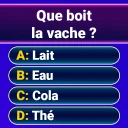
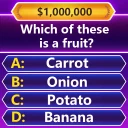
Jawabak Jawabahom
- 58.00
- 4.1
- Installs
- 1.00M
- Price
- Free

Screenshots








Analysis by Reviewed
I like trivia games that create a reason to talk, not just a reason to tap through a long list of questions. Jawabak Jawabahom, a free trivia game from Table Knight Games, takes that social idea as its starting point: the challenge is not only knowing an answer, but judging which answer other people are most likely to choose. That small change gives each round a different kind of tension.
After spending time with it, I see the game as a good fit for casual groups, family gatherings, and friends who enjoy arguing about what “most people” would say. It is less suited to someone looking for a deep solo quiz, a detailed learning tool, or a highly customizable competitive platform. Its appeal depends on the people around you and on how comfortable you are with quick reading, fast choices, and answers shaped by common opinion.
How Jawabak Jawabahom feels to use
Readable presentation and straightforward navigation
The first thing I noticed is that the game’s central idea is easy to understand. You are not simply trying to prove that your answer is correct. You are trying to identify the answer that will be popular. That distinction matters because it changes the way I read every prompt: instead of asking myself what I personally prefer, I start thinking about what a group is likely to agree on.
That makes the interface easier to approach than a trivia game built around complicated rules. A new player can usually understand the purpose after watching one round, especially if someone explains the social strategy aloud. I would still recommend showing the game to first-time players before starting a serious competition, because the difference between “my favorite answer” and “the answer most people choose” is where much of the fun lives.
The short description, “Jawabak Jawabahom,” is memorable but not especially informative by itself. The fuller store summary gives a better sense of the experience: challenge your friends and look for the most popular responses. In practical terms, that means the game works best when everyone treats the prompts as conversation starters rather than as a formal examination.
For me, the navigation is most comfortable when I can focus on the question without distractions. Trivia depends on reading a prompt accurately, holding its wording in mind, and making a decision before the discussion becomes too long. Any player who needs extra time should be allowed to take it without pressure from the group. The game’s social nature can make a relaxed house rule more important than speed.
A useful approach is to agree before playing that players will read each question aloud. This helps anyone who finds small text tiring, anyone playing in a noisy room, and anyone who processes spoken information more easily than written information. It also prevents one confident reader from quietly controlling the pace for everyone else.
More From Our News Desk

Weather by Xiaomi Review: Clear at a Glance, Less Clear Up Close

X Under Pressure: Can It Recover When Posting Goes Wrong?

Clash of Clans Is Won Between the Battles

Android Auto Makes the Case for Quieter Car Software

MobiOffice: Transforming Mobile Productivity with Seamless Integration

EA SPORTS FC™ Mobile Soccer: Redefining Mobile Sports Gaming
Why the popular-answer format changes the strategy
The strongest part of Jawabak Jawabahom is the mental switch it asks for. In ordinary quiz apps, I usually rely on memory. Here, memory may help, but social prediction can matter just as much. I might know my own answer immediately and still choose another response because I expect the group to favor it.
That creates a useful distinction between knowledge and judgment. A player who knows a lot about facts does not automatically dominate every round. Someone who understands the group’s habits may perform better, even when the subject is not their specialty. For mixed-age groups, this can make the competition feel less intimidating than a traditional knowledge quiz.
It also produces natural discussion after each result. Players can explain why they chose a response, challenge the group’s assumptions, or point out that a seemingly obvious answer depends on culture and personal experience. I found that this discussion is not a side effect; it is the main reason to choose this game over a silent question-and-answer app.
One practical tip is to avoid letting the most outspoken person answer first every time. If one player announces an opinion immediately, others may follow it rather than choose independently. Taking a short pause before discussion gives quieter players a fairer opportunity to form their own responses and makes the result more interesting.
Accessibility in ordinary group situations
Jawabak Jawabahom is rated for Everyone, which makes it approachable for a broad audience. That age classification does not guarantee that every player will find every screen or round equally comfortable, so I would still treat the group setup as part of the experience. The people playing, the room, and the way questions are read can make a noticeable difference.
For players with reading difficulties, the best adjustment is to have a designated reader speak clearly and avoid rushing. If several people need that support, rotate the reader between rounds so the responsibility does not become tiring. Reading the prompt twice can also help when a single word changes the meaning of the question.
Players with attention differences may benefit from keeping the session short and removing unrelated distractions. A phone notification, a busy television in the background, or several conversations at once can make a simple prompt harder to follow. I would rather play a few focused rounds than stretch the session until everyone is answering carelessly.
Players with hearing difficulties may find spoken discussion harder when several people respond together. A simple turn-taking rule helps: one person reads, everyone answers after a pause, and the group discusses the result one speaker at a time. If the game displays the prompt clearly, keeping the phone or tablet visible to everyone can also reduce dependence on hearing alone.
Motor and sensory considerations
Trivia games can look physically simple, but comfort still matters. Repeated tapping, holding a device for a long session, or trying to respond while people are urging you to hurry can create unnecessary strain. I recommend placing the device on a stable surface rather than passing it constantly, especially when several players are gathered around a table.
That arrangement also makes the game more inclusive for players who have limited hand movement or difficulty making quick, precise taps. The group can agree that a player may indicate an answer verbally while another person enters it, provided everyone trusts the process. In a social game, that kind of accommodation preserves the competition without turning physical speed into the deciding factor.
Visual comfort depends heavily on the device and the environment. A bright room, a larger screen, and a sensible viewing distance are better choices than playing in a dark room with the display close to the face. I would avoid assuming that every player can read the same text comfortably. Before starting, I would ask whether anyone wants the prompt read aloud or needs the device positioned differently.
Some players are sensitive to noise, interruptions, or rapid group reactions. The popular-answer format naturally invites laughter and debate, but that does not mean every round needs to become loud. A quieter mode of play, with written choices and orderly responses, can preserve the strategic part while reducing sensory overload.
There is also a social motor benefit to separating answer time from discussion time. First give everyone a calm moment to decide; then invite explanations. This prevents the fastest speaker or quickest tapper from shaping the group before slower processors have finished. It is one of the simplest ways to make the game feel fairer without changing its rules.
Situational access: where it works best
I think the ideal setting is a relaxed gathering where people already know one another. A family sitting together after dinner, a small group of friends waiting for food, or a casual evening with mixed trivia experience can all work well. The game gives people something concrete to discuss, and the question of what “everyone” would answer often leads to stories that a normal quiz would never produce.
It can also work as an icebreaker, but I would choose prompts carefully for a new group. People may not yet feel comfortable revealing personal preferences or defending an unusual answer. A friendly host can keep the tone light by treating surprising answers as conversation rather than evidence that someone played badly.
In a classroom or organized youth setting, the Everyone rating makes the game easier to consider for a broad age range, but supervision and local rules still matter. I would use it as a short discussion activity rather than as a formal assessment. The popular answer is not necessarily the most accurate or educational answer, and presenting it as a measure of intelligence would miss the point.
For remote play, the experience depends on how the group communicates. A video call or voice chat can supply the missing social energy, but overlapping voices may make the discussion difficult. A host who reads the prompt, gives everyone a countdown, and calls on players in order can make online sessions more manageable. Without that structure, the game may feel less clear than it does around one device.
It is less convincing as a private late-night game. If you want a solo trivia routine with detailed explanations, progress tracking, or a large personal knowledge challenge, a conventional quiz app will probably serve you better. Jawabak Jawabahom gets its identity from comparing viewpoints, so playing alone removes much of what makes it distinctive.
What the audience size and popularity suggest
The game has passed one million installs and holds a 4.1 average from around twelve thousand ratings. Those figures suggest that it has found a substantial audience, while the rating also feels consistent with a game that depends on personal taste and group context rather than delivering the same experience to everyone.
Table Knight Games has kept the title available as a free download, which lowers the barrier to trying it with friends. There are in-app purchases ranging from $0.99 to $59.99 per item, so I would check the purchase flow carefully if children use the device or if the game is being introduced at a family event. Free entry is useful, but it does not mean every optional element is included without cost.
The current version is 2.5.26, and the game requires Android 6.0 or later. That makes device compatibility worth checking before planning a group session, particularly if someone is bringing an older phone or tablet. I would test the game on the actual device and network setup beforehand rather than discovering a compatibility problem after everyone has arrived.
Remaining barriers and honest limitations
The biggest limitation is that the game’s enjoyment is tied to the group. If the players have very different cultural references, ages, or expectations, the idea of a “popular” answer can become confusing rather than exciting. That does not make the game unfair in a strict sense, but it can make results feel disconnected from a player’s experience.
Language nuance may also matter. A question that seems obvious to one person can be interpreted differently by another, especially when a word has several everyday meanings. Reading the prompt slowly and allowing clarification before answering is important. Otherwise, the game may reward familiarity with phrasing more than social prediction.
Another friction point is pressure. Some groups enjoy fast decisions and noisy reactions; others need more time. Players with anxiety, slower processing, or limited confidence may withdraw if every answer is treated as a performance. I would set a no-ridicule rule from the beginning and remind everyone that an unexpected answer can be more interesting than a popular one.
The free-to-start model also deserves attention. In-app purchases can be acceptable for adults who understand the payment choices, but shared devices need sensible purchase controls. I would not hand the phone to a child without first checking the account settings and explaining that tapping through a screen can have financial consequences.
Finally, the game should not be treated as a replacement for factual learning. Its central skill is predicting group opinion, not verifying truth. That makes it entertaining and socially useful, but it also means a player looking for explanations, reliable reference material, or structured study should choose a different kind of trivia app.
Who should try it, and who should skip it
I would recommend Jawabak Jawabahom to friends who enjoy debate, playful disagreement, and questions with more than one defensible response. It is especially suitable for a group where not everyone has the same trivia background. The format gives socially observant players a chance to compete with fact-focused players, which keeps the outcome from being predictable.
I would also suggest it to hosts who need a low-preparation activity. You do not need to build a quiz, prepare answer sheets, or divide the group into complicated teams. The main preparation is social: choose a comfortable device position, decide how answers will be entered, and agree on a pace that does not exclude anyone.
I would skip it if my main goal were solo progression or serious knowledge testing. I would also look elsewhere if I wanted extensive accessibility controls, detailed customization, or a quiet experience that does not rely on conversation. The game can be adapted by the group, but those adaptations are not the same as built-in tools.
My inclusive verdict
My overall impression is positive, with one important qualification: Jawabak Jawabahom is best understood as a social prediction game wrapped in trivia, not as a standard quiz. That makes it more welcoming for players who are not confident fact experts, but it also makes the surrounding group responsible for setting a fair pace and explaining unclear wording.
I appreciate that the core concept gives different kinds of players a way to contribute. A person with strong general knowledge can do well, but so can someone who notices patterns in the group, understands everyday preferences, or simply has a good feel for how people think. With a reader, turn-taking, a stable device position, and a little patience, the game can work across a wider range of abilities and situations.
The trade-off is that those inclusive improvements mostly come from the way people play rather than from the game alone. Loud groups, rushed rounds, small text, or uncontrolled purchasing can create barriers. That is why I would introduce it thoughtfully instead of assuming that an Everyone rating makes every session automatically accessible.
For a free trivia game by Table Knight Games, it offers a clear reason to gather people around the same challenge. I would download it for a casual group that enjoys discovering how differently—or surprisingly similarly—everyone thinks. I would not choose it as my primary solo quiz or learning tool. If your group values conversation as much as winning, this is where Jawabak Jawabahom makes the strongest case for itself.
Jawabak Jawabahom Frequently Asked Questions
What kind of questions and gameplay can I expect from Jawabak Jawabahom?
Jawabak Jawabahom is a trivia game from Table Knight Games, built around the idea of challenging friends and finding the most popular answers. Its central appeal is social, competitive play rather than simply answering questions in isolation, making it a natural fit for players who enjoy comparing their responses with other people.
What is Jawabak Jawabahom and how does it work?
Jawabak Jawabahom is an entertainment and knowledge-based application centered on questions, answers, and interactive challenges. After opening the app, users can browse available content, answer questions, and explore different categories or game modes. The experience is designed to be simple enough for casual users while still offering a competitive or educational element for people who enjoy testing their knowledge.
Is Jawabak Jawabahom free to download and use?
Jawabak Jawabahom can generally be downloaded without an upfront charge, although the exact availability of free features may depend on the version installed and the platform used. Some sections, bonuses, advertisements, or optional items may require additional payment. Before downloading, users should review the store listing for current pricing, in-app purchase details, and any limitations applied to the free version. The game is free to download, with optional in-app purchases ranging from $0.99 to $59.99 per item.
Does Jawabak Jawabahom require an internet connection?
An internet connection may be needed for important functions such as loading questions, updating content, synchronizing progress, displaying advertisements, or participating in online challenges. Certain parts of the application might remain accessible offline, but users should not assume that every feature will work without connectivity. A stable Wi-Fi or mobile-data connection is recommended for the smoothest experience.
Is Jawabak Jawabahom suitable for children and families?
Jawabak Jawabahom may be enjoyable for families and younger users because its main experience is based on questions and interactive answers. However, suitability depends on the content categories, language, advertising, and any social or online features included in the current release. Parents should check the official age rating, review the app’s permissions, and supervise younger children when necessary. Its content rating is Everyone, which makes it broadly suitable for a general audience.
Pros
- Simple interface makes browsing questions and answers easy.
- Supports Arabic content for users seeking culturally relevant discussions.
- Encourages community interaction through questions and replies.
- Useful for discovering different opinions on everyday topics.
- Lightweight design should work well on many Android devices.
Cons
- Answer quality may vary because content is user-generated.
- Some questions may receive few or no responses.
- Arabic-focused content may limit usefulness for non-Arabic speakers.
- Community activity can depend heavily on the number of active users.
- Privacy details should be reviewed before sharing personal information.
- Category
- Trivia
- Version
- 2.5.26