Iron Force
- 20.24K
- 3.0
- Installs
- 1.00M
- Price
- Free
Screenshots
Analysis by Reviewed
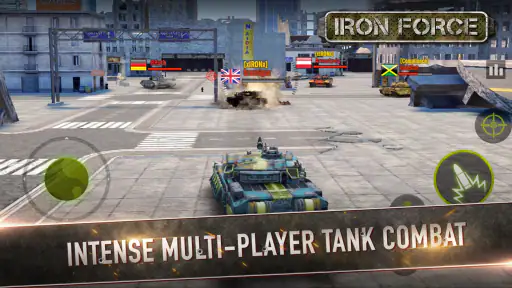
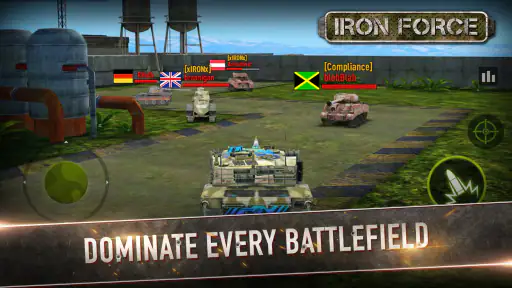
I spent time with Iron Force as an online action game built around tank battles, and my first impression was that it aims for quick decisions rather than a slow, highly technical simulation. You choose a tank, enter a match, and focus on movement, aiming, positioning, and staying useful while the fight develops around you. That straightforward loop makes it easy to understand, but the experience becomes more demanding once several players are moving and firing at the same time.
That distinction matters because this is not simply a tank-themed game that you can enjoy entirely at your own pace. Its main appeal comes from live multiplayer action. I found it most enjoyable when I had a short window for a focused match and wanted something more active than a puzzle or idle game. If you prefer carefully planned turns, a long single-player campaign, or a relaxed experience that never depends on other players, this may not be the best fit.
COOLFISH GAMES has kept the game available for a long time, and its presence on Android is substantial: it has passed one million installs, with an average rating of 3.0 from around 86 thousand ratings. That combination tells me to approach it with realistic expectations. There is clearly an audience for the formula, but the middle-of-the-road rating also suggests that the game will not satisfy everyone equally.
How Iron Force feels when the battle gets busy
Quick starts, but not a guaranteed smooth ride
The opening moments of a match feel designed to get me into the action without a lengthy setup. That is one of the strongest practical qualities here. I do not need to learn a complicated strategy system before understanding the immediate goal: move with purpose, aim carefully, and avoid becoming an easy target. The game’s speed comes less from constant frantic movement and more from the pressure to make useful choices before the opposing side gains control.
In a quiet match, the pace can feel comfortable. I have enough time to watch an angle, decide whether to advance, and think about where my tank is exposed. Once several tanks converge, however, the same simple controls demand more attention. A moment spent turning too widely or moving into an open area can leave me reacting instead of planning. That makes the action feel brisk even when the vehicles themselves are not racing across the battlefield.
Players looking for instant entertainment should appreciate this structure. A short session can still feel complete because the central action is available quickly. I would not describe the game as a deep simulation, though. Its satisfaction comes from reading the immediate situation and improving my decisions, not from managing a detailed military operation.
Why the first few matches can be misleading
My early impression of a tank game is usually shaped by controls, but Iron Force also asks me to understand spacing. New players may be tempted to push forward whenever they see an opponent. That is often the least useful response. A better habit is to pause near cover or a safer angle, watch how the opposing tanks move, and only commit when I can contribute without exposing the entire vehicle.
This is one of the less obvious lessons of the game: speed is not always about moving faster. It is about reducing wasted movement. Turning repeatedly, chasing a target that has already escaped, or crossing open ground without a clear reason can make a match feel slow because I spend time recovering from poor choices. When I use shorter movements and keep an exit route in mind, the battles feel much more responsive.
That approach also helps answer a common question: can someone enjoy the game without being an experienced multiplayer player? Yes, but the learning curve is more about battlefield awareness than complicated controls. I would recommend starting conservatively, learning how quickly the tank responds, and treating the first sessions as practice in positioning rather than trying to dominate every encounter.
What happens during heavy-use moments
The most demanding moments are naturally the crowded engagements. Several tanks may be moving, aiming, and attacking in the same area, and that is when perceived performance matters most. Even when the game launches quickly, a busy battle can feel less comfortable if the device or connection struggles. I found it useful to avoid unnecessary background activity before playing, especially on a phone that is already handling several apps.
I would also avoid judging the game solely from the calmest opening moments. The real test is what happens when the screen becomes visually busy and I need accurate control immediately. If the device starts to feel warm or the connection becomes inconsistent, the effect is more serious here than in a turn-based game. A delayed response can change whether I escape, land an attack, or remain exposed.
There is a practical trade-off between visual appeal and sustained comfort. Players using an older phone may prefer a less demanding setup if the available options allow it, while those on a newer device can concentrate more on tactics. I would not promise identical performance across all Android phones, because hardware, system condition, and network quality can change the experience considerably.
Managing a short everyday session
A realistic use case is a ten-minute break between errands or during a commute with a dependable connection. I can open the game, play a focused battle, and leave without needing to commit to a long story chapter. That makes it more convenient than many larger action games that require extended sessions before progress feels meaningful.
At the same time, online play is not ideal for every interruption-heavy situation. If I know I may need to put the phone down without warning, I would choose something that is designed around pausing. A multiplayer tank battle can punish an absence that lasts only a short while, and that is a limitation of the format rather than something I would try to overlook.
For a more reliable routine, I would play when I have stable reception, enough battery, and a few uninterrupted minutes. I would also keep the volume at a comfortable level and use headphones only when I can still stay aware of my surroundings. The game is easy to fit into spare time, but it is not completely frictionless spare-time entertainment.
Reliability and recovery after problems
Reliability in a game like this has two sides. The first is whether the app opens and remains usable on the phone. The second is whether the online match remains responsive once I am playing. A strong launch does not guarantee a good battle if the network is unstable, and a good connection cannot solve every problem caused by an aging device.
When an online session is interrupted, the most frustrating part is not simply returning to the menu. It is losing the rhythm of the battle. I prefer to treat recovery as a reason to restart calmly rather than immediately entering another match in frustration. Closing other demanding apps, checking the connection, and giving the phone a moment to settle are sensible steps before trying again.
I also recommend keeping expectations reasonable after an interruption. I would not assume that every interrupted match can be recovered exactly as it was. Multiplayer games depend on the state of the live session, so the safest approach is to reconnect, confirm that the game is responding normally, and then decide whether to continue playing. That small pause can prevent a second poor match caused by rushing back in.
The current version is 4.14.0, and the game supports Android 6.0 or later. Those details make it accessible to a broad range of Android users, but minimum compatibility should not be confused with a promise of identical comfort on every supported device. A phone that can install the game may still offer a less pleasant experience than a newer model with more room for demanding activity.
Device limits that can change the experience
I would be careful about installing Iron Force on a phone with very limited free storage, an aging battery, or a tendency to close apps under pressure. Tank battles are more sensitive to interruptions than a simple offline game. If the operating system is already managing memory aggressively, switching away and returning may be less dependable, and the phone may feel less responsive during a long session.
Battery condition matters for another reason: online action encourages repeated attempts. One match can turn into several, especially after a close defeat. On a phone that already loses charge quickly, the combination of screen time, network activity, and sustained play may make the game a poor choice away from a charger. I would use it more confidently on a device with a healthy battery and a stable connection.
Screen size is also worth considering. A larger display can make it easier to read the battlefield and keep control inputs separate from the action, while a smaller phone may feel crowded when I need to aim and move at once. That does not make the game unusable on compact devices, but it can affect comfort during longer sessions.
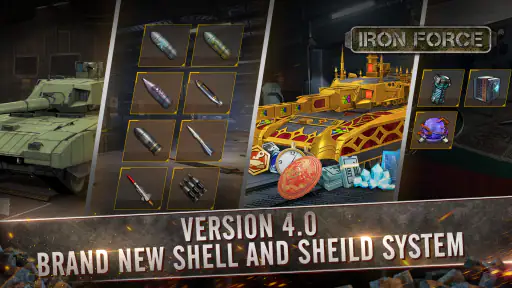
Players concerned about spending should know that the game is free to download and includes in-app purchases ranging from $0.99 to $99.99 per item. I would begin without buying anything and first decide whether the basic battle loop holds my attention. That is especially important because a purchase can improve convenience or progression without fixing the fundamental issues of an unstable connection, uncomfortable controls, or a phone that struggles under load.
How it compares with other action choices
Compared with a single-player tank game, Iron Force offers the unpredictability of human opponents, which is its clearest advantage. Every match can feel different because other players do not always attack in the same way. The trade-off is that I give up some control over pacing and depend more heavily on a functioning online session.
Compared with a large military shooter, the game is easier to approach. I am not required to learn a broad collection of weapons, maps, and movement systems before I can understand what I should do. That simplicity is welcome on a phone, particularly when I want a compact action experience. Players seeking a huge campaign, cinematic presentation, or a highly elaborate progression system may find it narrower than their preferred alternatives.
It also differs from turn-based tactics because mistakes happen in real time. I cannot stop to calculate every move while the opposing side waits. That makes the game more exciting, but it also makes it less suitable for anyone who wants complete control over the pace. In my view, its best audience is someone who wants accessible armored combat with enough decision-making to reward attention, without the complexity of a full simulation.
Small habits that improve the first week
My first useful habit would be to learn movement before chasing victories. I would spend early matches noticing how long it takes to turn, how exposed the tank feels while changing direction, and how quickly a bad position becomes difficult to escape. That knowledge is more valuable than charging forward simply because an opponent appears on screen.
My second habit would be to separate observation from commitment. I try to watch an engagement for a moment before entering it, especially when several tanks are close together. Joining too early can make me the easiest target, while waiting briefly may reveal which opponent is distracted or which route is safer. This is a simple tactic, but it produces a noticeable difference in how controlled the matches feel.
My third tip is to stop treating every defeat as proof that the game is unfair or that I need to spend money. I would first ask whether I moved into an open area, ignored an escape route, or continued playing while the connection felt unstable. Purchases cannot replace better timing, and a calmer review of the previous match often gives me a more useful adjustment than an impulsive upgrade.
Finally, I would set a session limit before starting. Multiplayer action can encourage a cycle of “one more match,” especially after a narrow loss. A short limit helps me keep the game entertaining instead of allowing repeated defeats, rising frustration, or unnecessary spending to define the experience.
Who should play and who should skip it
I think Iron Force is a reasonable choice for Android players who want a free action game centered on online tank battles and who enjoy improving through repeated short sessions. It suits someone who likes direct controls, competitive pressure, and the satisfaction of making better positioning decisions over time. The Teen content rating is also important for families deciding whether the game fits a younger player, so I would check the device’s existing family controls before handing it over.
I would skip it if my priority were offline play, a quiet pace, or a deep story. I would also be cautious if my phone is old enough to struggle with sustained games, if my connection is unreliable, or if I dislike the possibility of in-app purchases appearing in a free-to-play environment. Those are not minor details for this particular format; they directly affect whether the central battle loop remains enjoyable.
The rating of 3.0 does not make the game an automatic recommendation, but it does give me a useful signal to keep expectations balanced. The large number of reviews—around 20 thousand—shows that many players have formed strong opinions about it, both positive and negative. I would use the free entry point to test it on my own phone rather than assuming that its install count guarantees a perfect experience.
My performance verdict
After weighing the speed, busy moments, reliability concerns, and device demands, I see Iron Force as a focused multiplayer action game rather than an all-purpose tank experience. Its strongest quality is immediacy: I can understand the basic objective quickly and get into a battle without learning a huge system first. The human-versus-human format gives it more unpredictability than a conventional offline tank game, and careful positioning can make even a simple encounter feel satisfying.
Its weaknesses are equally clear. Online dependence makes interruptions more damaging, crowded fights place greater pressure on the phone and connection, and the free-to-play structure deserves a cautious approach. The game is also unlikely to satisfy players who want a substantial solo campaign or a realistic simulation. I would not recommend installing it blindly on a device that already has trouble with demanding apps.
For me, the right way to approach it is as a free trial with a practical checklist: use a stable connection, begin without purchases, learn movement before aggression, and judge performance during the busiest battles rather than only at launch. If those conditions work on your phone, the game can provide compact, repeatable action when you want a tank fight with real opponents.
My recommendation is conditional but positive: try it if quick online tank battles are exactly what you want, and give it a fair test over several sessions. I would recommend a different action game for offline reliability, a richer solo experience, or more predictable performance. For the right player, though, Iron Force remains an approachable way to spend a short break making tactical decisions behind the controls of a tank.
Pros
- Fast-paced naval battles are easy to pick up and play.
- A wide range of warships supports different combat styles.
- Short matches work well for quick gaming sessions.
- Online multiplayer adds variety and competitive excitement.
- Regular upgrades make progress feel rewarding over time.
Cons
- Progress can feel slow without spending money on upgrades.
- Matchmaking may place newer players against stronger opponents.
- The game requires a stable internet connection to play.
- Repeated battles can become monotonous after extended sessions.
- Ads and in-app purchases may interrupt the overall experience.
- Category
- Action
- Version
- 4.14.0