Invokers: Titan Legacy
- 21.00
- 4.9
- Installs
- 100.00K
- Price
- Free

Screenshots
Analysis by Reviewed
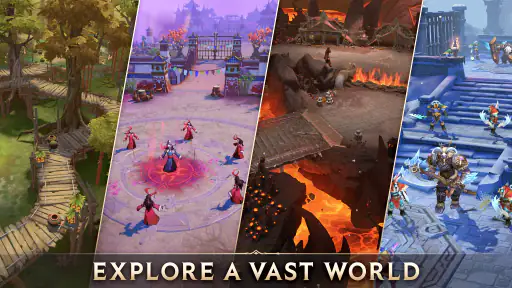
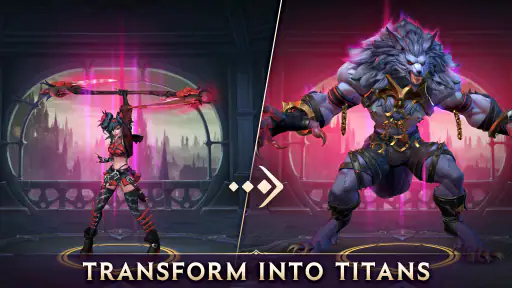
I’d make my first decision about Invokers: Titan Legacy by asking a simple question: do I enjoy working out which heroes belong together, or would I rather jump straight into action with a fixed character? That distinction matters more here than the fantasy setting alone. This role-playing game puts team building and dragon battles at the center, so its appeal depends on whether roster choices feel like fun planning to you.
My view is that this is best approached as a free-to-start hero-collection RPG, rather than as a guaranteed bargain or a game you can finish without spending. HitZone Games Inc. developed it, and it has a Teen age rating. The free entry point makes it easy to try, while the optional purchase range is broad enough that anyone who spends should decide on a personal limit before getting invested.
What a free start lets you test
The game is free to download, so there is no purchase decision required before you can see whether its fantasy setting and team-building hook suit you. That is useful for a genre where the feel of progression matters as much as the premise: a concept can sound appealing, but only hands-on play tells you whether you enjoy managing a roster and building a party around it.
Free access should not be confused with proof that every part of the experience is equally accessible without spending. In-app purchases range from $4.99 to $499.99 per item. Those figures tell me that paid options are present and that the upper end is substantial; they do not tell me what each purchase contains or whether any particular purchase is necessary. I would treat spending as optional, not as a shortcut I need to take just to begin.
For a practical first session, I’d focus on learning the combat and checking whether the roster decisions are enjoyable before considering a purchase. If a game’s core loop does not hold my attention while I’m playing for free, paying is unlikely to fix that. If it does click, I’d still take time to understand what a purchase offers before deciding whether it adds value for me.
How to judge the value for yourself
The strongest immediate value is simple: you can try a fantasy RPG centered on hero collection without paying an entry fee. The game has an average rating of 4.9 from around 280 ratings, alongside just over 20 written reviews. That reception is encouraging, but I would read it as a signal of interest rather than a guarantee that every player will enjoy the same things.
It has passed 100K installs, which suggests that it has found an audience, though popularity alone cannot tell me whether its pacing or purchase options will suit you. For someone who enjoys experimenting with a lineup and has patience for a free-to-play structure, the chance to explore before spending is a real advantage. For someone who wants one upfront price and a clearly bounded purchase, the broad in-app price range may make the model less appealing.
More From Our News Desk

Weather by Xiaomi Review: Clear at a Glance, Less Clear Up Close

X Under Pressure: Can It Recover When Posting Goes Wrong?

Clash of Clans Is Won Between the Battles

Android Auto Makes the Case for Quieter Car Software

MobiOffice: Transforming Mobile Productivity with Seamless Integration

EA SPORTS FC™ Mobile Soccer: Redefining Mobile Sports Gaming
The current version is 0.61.1506, and the minimum operating-system requirement is 7.1. Those details can help you check basic compatibility before setting aside time to play. I would still make the decision on fit, not version numbers: what matters most is whether you want a collection-focused RPG and are comfortable with optional purchases sitting alongside free access.
Where the game’s value comes from
I’d use the free starting point to judge whether team adjustments add to the fun or slow it down. One useful test is to notice whether you can explain why a lineup worked after a battle; if you can, the collection angle is giving you something to think about beyond simply winning. That distinction helps me assess the game’s value without treating a purchase as the measure of progress.
Team decisions are the central attraction
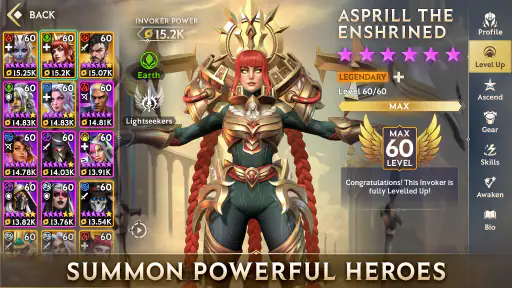
The hero-collection idea gives the game a more strategic angle than a role-playing game focused only on following a character through a story. When a battle becomes a problem, the useful question is not just “How do I hit harder?” but “Is this team the right answer?” That shift can make assembling a group feel like part of the play, rather than a separate collecting activity.
A tip I’d use in any game built around a roster is to make a small note of what each hero contributes as you learn them. Even a simple distinction—who seems suited to dealing damage, who helps keep a team going, and who fits a particular encounter—makes later choices easier. This is more useful than changing the whole lineup after every loss, because it helps you tell whether a fight exposed a real weakness or whether you simply need more practice.
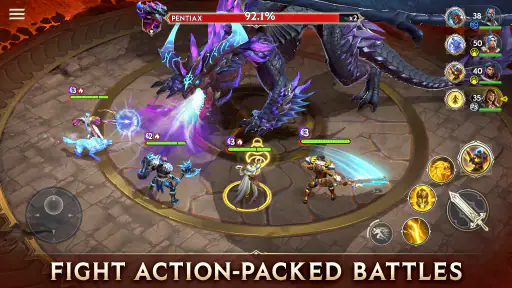
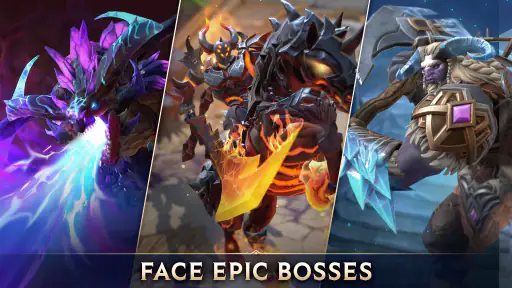
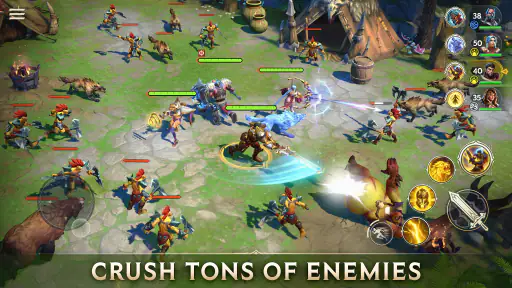
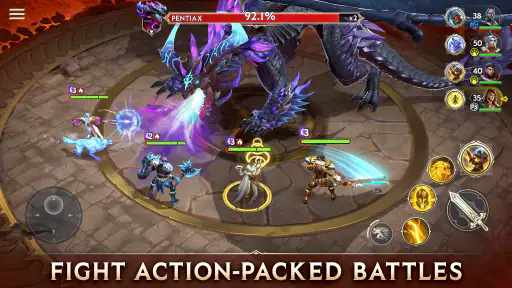
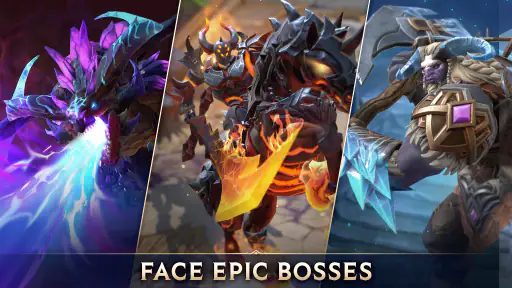
The dragon battles also give the fantasy premise a clear target. They provide a more specific image than an abstract invitation to “level up,” and they make team preparation feel connected to a recognizable challenge. I would not assume every dragon encounter requires a perfect counter-team; instead, I’d treat a difficult fight as a prompt to inspect the lineup and adjust deliberately.
A short-session routine that makes sense
A realistic everyday use case is a short break when you want a self-contained bit of fantasy combat rather than a long, uninterrupted story session. I’d open the game with one modest aim: try a battle, notice what worked, and make one roster adjustment if the result suggests a clear improvement. That keeps the session purposeful without turning it into a checklist of chores.
There is a trade-off here. Collection games can make each individual battle feel like one step in a larger progression, which is satisfying when I want to build toward a stronger team but less satisfying when I’m looking for a complete, carefully paced story in every sitting. If I want a role-playing game whose main draw is dialogue, exploration, or a fixed single-player campaign, I’d compare it with a more story-led option before committing my time.
Another useful approach is to avoid spending based on a single moment of frustration. If a boss or dragon stops your progress, first try changing the team, revisiting the role each hero plays, or approaching the fight with a clearer plan. That gives you a better sense of whether the challenge is part of the strategy you enjoy or a point where the game’s progression stops feeling rewarding.
Keep purchases separate from progress decisions
One practical way to evaluate a free-to-start game is to separate two questions: “Am I enjoying this?” and “Would this specific purchase improve something I care about?” The first is about the play itself; the second needs a clear answer about what an item offers. I would not use a purchase to test whether the game becomes enjoyable, because that makes it harder to judge the free experience on its own terms.
If you share a device or payment account, it is worth agreeing on a spending boundary before play begins. That is especially sensible for a game rated Teen with optional items spanning a wide price range. A household rule can be as straightforward as requiring a conversation before any purchase; the useful part is making the rule clear before an exciting moment or frustrating battle affects the decision.
The trade-offs to consider before settling in
Before settling in, I’d consider not only the listed purchase range but also how I prefer to make spending decisions in games. The range alone doesn’t show what an item provides, so I’d pause to understand a specific offer rather than assume it will solve a difficult encounter. That keeps the trade-off focused on what I actually enjoy: planning a team or getting through battles with less friction.
Free access sits beside a wide spending range
The main caution is not that paid items exist; it is that their listed range runs from a modest purchase to a very high one. I would not treat the largest amount as a suggested spend, nor infer that paying that much is needed to enjoy the game. Still, seeing that range makes it sensible to decide in advance how you want to handle optional purchases, especially if you share a device or payment account with someone younger.
The game’s Teen rating is another practical point for families. It gives parents a reason to check the game themselves and discuss spending expectations before handing over a device. I would not rely on the age label alone to answer every household’s questions; the purchase model is worth reviewing with the player so that free play and paid choices are not blurred together.
There is also a genre-specific patience cost. A hero-collection RPG asks you to care about how a team comes together, and that will not appeal to everyone. If you dislike comparing characters, revisiting a lineup, or building toward future encounters, the core attraction may feel like administration between fights rather than meaningful strategy. In that case, a more direct action game with a stable protagonist may be a better use of your time.
It is not the right match for every RPG fan
I would skip it if you want a fully self-contained role-playing experience with a clear upfront price and no purchase prompts to consider. I would also look elsewhere if your priority is a deep narrative, extensive exploration, or a game you can judge mainly by its writing. The central promise here is about heroes, teams, and fantasy battles; those are the reasons to try it, not a guarantee that it will satisfy every RPG preference.
On the other hand, if you enjoy collecting characters and making tactical adjustments, the team focus gives you a concrete reason to keep engaging with the game. The best test is whether you find yourself curious about how a different combination might handle the next challenge. If that question feels fun rather than like homework, the free start gives you room to find out.
Who is likely to get the most from it?
I think the best fit is someone who enjoys trying a different lineup when a fantasy battle proves challenging, and who is comfortable exploring a free-to-start game at their own pace. A practical way to tell is to play without spending and see whether you naturally want to refine your team after a setback. If that feels like an engaging puzzle, it may suit you; if it feels like busywork, a more direct RPG is likely a better match.
Good fit for collectors who like to experiment
I’d recommend giving it a try to players who enjoy fantasy settings, building a group from a hero roster, and learning through battles. It is especially suited to someone who likes the planning before a fight as much as the action itself. The premise is focused enough that you can decide fairly early whether the collection-and-combat loop is what you want, without having to commit to an upfront purchase.
It may also suit a player who prefers to sample a game gradually. Begin without spending, learn which parts you actually enjoy, and only then consider whether any paid item has a clear purpose for you. That approach puts the free entry point to practical use and avoids treating purchases as an automatic part of progression.
For a more casual player, I’d suggest keeping each visit simple: choose a battle or a team-building goal, then stop when the session feels complete. That can make a roster-focused game easier to fit into a busy day. It also reduces the chance of playing on autopilot, where collecting and upgrading become tasks you perform without enjoying the reason behind them.
Better alternatives for different priorities
If you want a single upfront payment and a fixed scope, a premium RPG is the more straightforward comparison. If you want a direct, immediate combat loop and little interest in collecting heroes, an action game centered on one character may fit better. And if story is your main reason for playing, a narrative-first RPG is likely to deliver a more suitable experience than a game whose identity begins with assembling a team.
Those alternatives are not inherently better; they serve different tastes. What matters is whether Invokers: Titan Legacy’s focus lines up with yours. The free start is a meaningful advantage for testing that fit, but it does not erase the need to be comfortable with a game that includes in-app purchases.
My verdict on the value
I see it as a reasonable game to try for free if hero collection, team choices, and battles against dragons sound appealing. Its value is clearest for players who enjoy shaping a roster and are happy to explore the game before making any purchase decision. A strong average rating and more than 100K installs show a positive audience response, but my recommendation still comes down to whether that particular play style feels satisfying to you.
I would start without spending, set a personal purchase boundary, and judge the game by how much I enjoy preparing a team—not by how quickly I can move through it. If experimenting with heroes makes a difficult encounter feel like a puzzle, it is worth giving the free version a fair try. If you want a traditional story-led RPG, a one-time-price game, or a purchase model you never have to think about, I’d choose another option instead.
Invokers: Titan Legacy Frequently Asked Questions
What kind of game is Invokers: Titan Legacy?
Invokers: Titan Legacy is a fantasy role-playing game built around collecting and upgrading heroes, forming a team, and taking on battles. Players can progress through its available campaign and other game modes while improving their roster and equipment. The exact mix of features may vary by version, so check the current store listing and in-game information before downloading if you are looking for a particular mode or style of play.
Is Invokers: Titan Legacy free to download, and does it include in-app purchases?
The game may be available to download without an upfront purchase, but free-to-play mobile games commonly offer optional in-app purchases. These can include currencies, character-related items, progression boosts, or other content, depending on the current version. Before installing, review the app-store listing for its purchase disclosures and consider setting purchase controls, especially if children may use the device. Availability and pricing can differ by region.
Can I play Invokers: Titan Legacy offline?
Do not assume that Invokers: Titan Legacy works fully offline. Games with account features, downloadable content, online events, or server-based progression generally require an internet connection for at least some functions, and connectivity may be needed at launch. Check the store description and any publisher guidance for the current requirements. If you expect to play while travelling or without reliable mobile data, verify offline support before downloading.
Will Invokers: Titan Legacy run on my Android or iOS device?
Compatibility depends on your device, operating-system version, available storage, and the game’s current technical requirements. Check the app’s page in Google Play or the Apple App Store using the device you plan to play on; the listing should indicate whether it is compatible and show any minimum requirements. Also leave room for updates and additional game data, since the initial download size may not reflect the total space used after installation.
Is Invokers: Titan Legacy suitable for children, and what should I check before installing it?
Suitability depends on the game’s content, its age rating, online features, and any purchase options available in your region. Review the rating and content information shown on the relevant app store, and check whether the game includes chat, social interaction, advertising, or in-app purchases. For younger players, use parental controls and discuss spending limits. Privacy details and permissions can also be reviewed on the store page before installation.
Pros
- Quick matches make it easy to play in short sessions.
- Distinct hero abilities give battles plenty of tactical variety.
- Team composition choices add depth beyond simply picking the strongest units.
- The fantasy setting and character designs create a cohesive visual style.
- Progression offers goals to work toward between battles.
Cons
- Some upgrades may require considerable time or repeated play.
- Match outcomes can feel frustrating when facing stronger opponents.
- Learning hero synergies may take time for new players.
- Frequent battles can make progression feel repetitive.
- A stable internet connection is needed for online play.
- Category
- Role Playing
- Version
- 0.61.1506