Injustice: Gods Among Us
- 226.51K
- 4.3
- Installs
- 10.00M
- Price
- Free

Screenshots
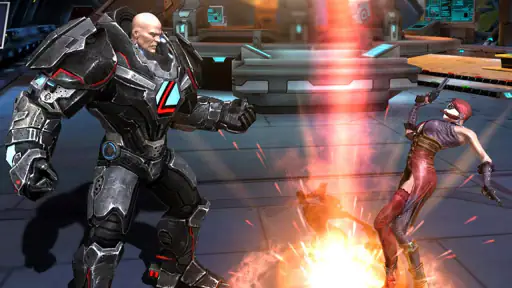
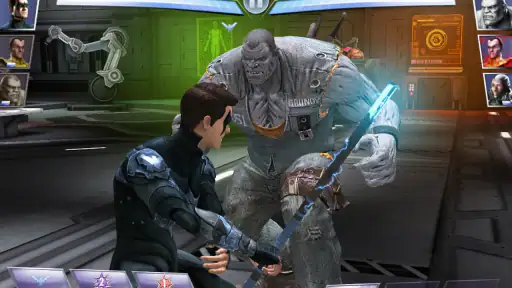
Analysis by Reviewed
Some mobile action games are easy to open and forget, while others give you a reason to return whenever you have a few spare minutes. Injustice: Gods Among Us belongs to the second group for me. It turns DC characters into a collection-driven fighting game, so the appeal is not only winning a match. It is also choosing a team, improving familiar heroes and villains, and deciding which fighters deserve your limited attention.
I approached it as a game for short sessions rather than a replacement for a console fighting game. That distinction matters. The mobile version is built around accessible touch controls, roster building, and repeated battles. It is free to download, but optional purchases range from $0.99 to $99.99 per item, so the real question is not simply whether you can start playing without paying. It is whether the progression rhythm feels comfortable without spending.
Developed by Warner Bros. International Enterprises, this action game has remained visible for a long time. Its average rating is 4.3 from around 2.5 million ratings, and it has passed 10 million installs. Those figures suggest a broad audience, but they do not automatically make it the right choice for every player. I would choose it for someone who enjoys DC characters and gradual team development; I would be more cautious recommending it to someone looking for a deep, traditional fighter with immediate competitive precision.
What to consider before choosing it
The first decision is about the kind of fighting you enjoy
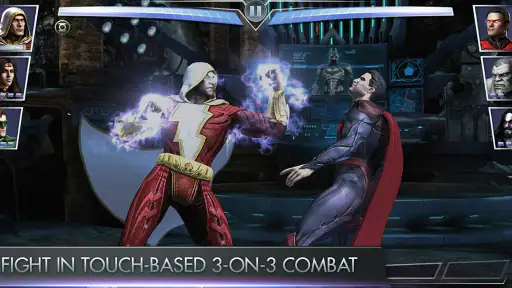
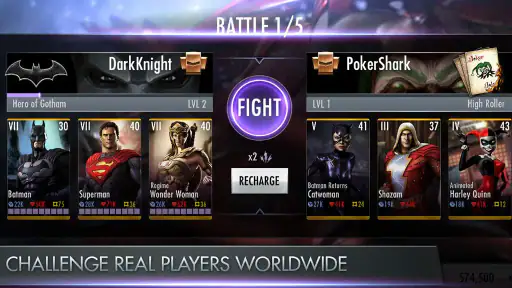
The most important thing to understand is that this is a roster-management action game with fighting at its center. You select characters, enter battles, use attacks through touch interaction, and work toward a stronger collection. That creates a satisfying loop: play a little, improve your lineup, try a different combination, and return when another character or challenge gives you a reason.
It is not the same experience as sitting down with a dedicated fighting game and practicing long input strings. The mobile design makes individual battles approachable, which is useful when I want something I can play without a controller. At the same time, the simpler input style means players who measure enjoyment through frame-perfect execution or elaborate combo practice may find the action less demanding than expected.
I also think about session length. A good mobile game should work when I am waiting for an appointment, taking a short break, or relaxing before bed. Injustice fits that pattern because a battle can be treated as a small task rather than a major commitment. The danger is that the collection loop can make “one more match” turn into a longer routine, especially when I am trying to strengthen a favorite team.
The roster is more important than the opening battles
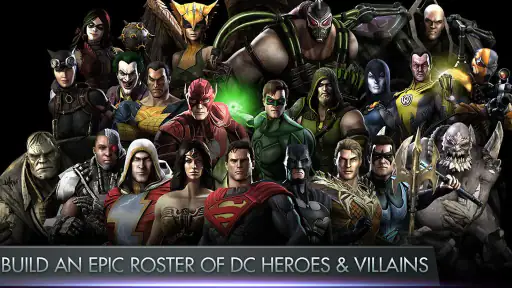
The recognizable DC cast gives the game its strongest personal hook. I am more willing to repeat a battle when the team contains characters I actually like, and the roster-building structure lets me approach that attachment in different ways. One player may build around favorites, while another may care more about assembling a balanced group that handles different encounters.
That choice creates a useful trade-off. A favorite character can make the game feel rewarding even when progress slows, but focusing too narrowly can leave the rest of the collection underdeveloped. I found it more enjoyable to keep a main group while still giving occasional attention to other fighters. That prevents the whole experience from becoming dependent on one lineup and makes new battles feel less predictable.
A practical tip is to avoid treating every new character as an automatic upgrade. A larger roster is attractive, but a team you understand is often more useful than a scattered collection of underdeveloped fighters. I recommend deciding early whether your priority is a favorite-character team, a flexible roster, or simply experimenting. That decision helps prevent resources and play time from being spread too thin.
Touch controls keep it approachable, with a clear compromise
The touch-focused design is one of the reasons I can recommend the game to casual action players. You do not need to learn a complicated control scheme before the first battle feels active. Attacks are easy to begin, and the presentation gives each encounter enough energy to make ordinary matches feel more like superhero clashes than menu navigation.
However, accessibility comes with less precision. Touch input does not offer the same physical feedback as buttons, and repeated gestures can feel less satisfying to players who want every action to be deliberate. I would not choose this as my main fighting game if my priority were technical mastery. I would choose it when convenience, characters, and collection progress matter as much as mechanical depth.
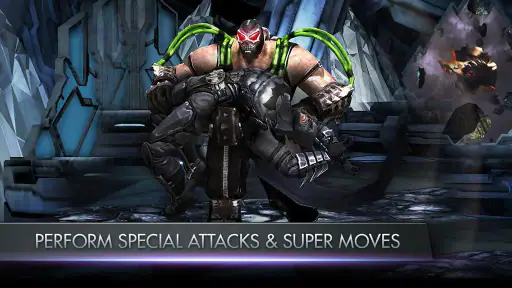
Another small but meaningful tip is to pay attention to the rhythm of a battle instead of tapping without a plan. Even in an accessible system, rushing every action can make stronger opponents feel unfair. I get better results when I treat attacks, defensive moments, and special abilities as parts of a sequence rather than pressing whatever is available. That mindset makes the fights feel more intentional without turning the game into a demanding simulation.
Progression is enjoyable when you set your own limits
The collection structure gives the game a long tail. There is always a reason to improve a character, test another team, or revisit the game after a break. For me, that is more compelling than a mobile fighter that offers only isolated matches with no sense of accumulation.
The downside is that progression can become the main source of friction. When a team stops advancing quickly, the player may feel pushed toward repetition or optional purchases. The game is free, but the in-app purchase range is wide enough that I would advise setting a personal spending rule before getting deeply invested. Even a simple decision—play without buying, buy only occasionally, or stop when progress feels too slow—can keep the experience from becoming frustrating.
I also recommend treating purchases as convenience rather than a requirement for enjoyment. If you are comfortable progressing gradually, the free entry point is meaningful. If you expect to unlock and strengthen everything quickly, the game may feel less generous. That difference in expectations is more important than the download price itself.
How it fits into an ordinary day
Imagine having fifteen minutes between errands. A traditional console fighter may be inconvenient to set up, while a large role-playing game may ask you to remember too many objectives. Injustice works better in that gap: I can open it, complete a few battles, make a roster decision, and leave without losing the thread of what I was doing.
It also suits a commute or a quiet evening when I want action without a long story commitment. The DC theme provides immediate context, and the team-building loop gives short sessions a sense of purpose. I would be more hesitant to use it as a constant background game during work or study, though. The repeated reward cycle is designed to invite continued play, and it is easy to spend more time than planned.
For parents or younger players, the content rating is Teen, so I would check whether that fits the intended player before installing it. The rating is a useful reminder that the comic-book presentation does not necessarily make the game suitable for every age group.
Where this game wins, and where another choice may fit better
Its strongest advantage is the combination of identity and convenience
Many mobile action games have competent combat, but fewer give me an immediate reason to care about the team on screen. Here, the DC identity does real work. Choosing a character is not an abstract menu decision; it is part of the fantasy of building a personal lineup of heroes and villains.
The game also wins when I want a middle ground between a simple arcade experience and a heavy role-playing game. There is enough collection planning to make progress meaningful, but I do not need to commit to a large open world or a lengthy narrative session. That makes it particularly suitable for fans who want recognizable characters in a format designed for phones and tablets.
Its long presence on mobile is another practical advantage. The current version is 3.5.1, and the minimum operating-system requirement is Android 6.0. That makes the compatibility threshold relatively approachable for many older Android devices, although actual comfort will still depend on the phone’s hardware and available space. I would check the device before installing if storage or performance is already a concern.
A traditional fighting game may be better for technical players
If your ideal match involves precise timing, complex commands, and a high ceiling based almost entirely on execution, I would look elsewhere. Injustice offers action, but its mobile structure places equal weight on collecting and improving characters. That means a player can enjoy it without becoming a specialist in fighting-game mechanics, while a competitive purist may feel that the combat is not the whole point.
A conventional arcade fighter is also a better fit if you want to choose a character and immediately experience a self-contained match without worrying about long-term roster development. In this game, the larger loop is part of the attraction. Removing that loop would remove much of what makes it distinctive.
A story-first superhero game may suit a different mood
I would not recommend this to someone whose main reason for playing is a deep, guided superhero story. The game’s appeal is the repeated interaction between battles and collection decisions, not a cinematic campaign that carries the entire experience. A narrative-focused alternative would be preferable when plot, exploration, and character development in a traditional story sense matter more than team optimization.
Likewise, players who dislike repeating encounters should think carefully before installing. The game asks you to return to familiar activities as part of building a stronger roster. That repetition can feel rewarding when I am invested in a team, but it can feel like work when I am not.
The cost of switching is mostly emotional investment
Moving away from the game is not difficult in the way leaving a complicated strategy title can be. The harder part is giving up a roster you have spent time developing and a routine built around checking in for another battle. If you enjoy collecting DC characters, that attachment can be stronger than the mechanics alone would suggest.
Before switching to another mobile action game, I would ask what is actually bothering me. If the issue is touch precision, a controller-friendly fighting game may solve it. If the issue is slow progression, a more direct arcade game may be a better match. If the issue is wanting a story, a narrative adventure is likely to satisfy more quickly. Changing games makes sense when the problem is structural, not merely because one difficult battle went badly.
I would also avoid spending simply to justify time already invested. The fact that you have built a team does not mean you must keep paying or playing. A good mobile routine should remain enjoyable on its current terms. If the collection has become an obligation, taking a break is a sensible decision rather than a failure.
Who should install it
I recommend it to DC fans who enjoy building a personalized roster, players who want action in short sessions, and mobile gamers who like gradual improvement more than one-off matches. It is especially appealing if you enjoy switching between favorite characters and experimenting with team choices.
I would skip it if you want a pure competitive fighter, dislike collection-driven progression, or expect every important character and upgrade to arrive quickly without repetition. I would also choose another game if your phone is older and you are unwilling to check whether it meets the Android 6.0 requirement or handles the current version comfortably.
The free price makes trying it straightforward, but I would begin with a clear approach: play for several sessions, see whether the roster loop is genuinely fun, and decide how you feel about the pace before considering any optional purchase. That small test tells you more than the character list alone.
My recommendation is to try Injustice: Gods Among Us when the DC roster is the main attraction and you want convenient, repeatable mobile battles. I would not present it as a substitute for a deep controller-based fighting game. Its best quality is the way it turns superhero fandom into a manageable team-building routine, while its main weakness is that the same routine can become repetitive or financially uncomfortable if you chase progress too aggressively.
After spending time with Injustice: Gods Among Us, I see it as a dependable choice for short action sessions rather than an all-purpose game for every fighting fan. Warner Bros. International Enterprises has built a mobile experience with a clear identity, a substantial audience, and enough roster planning to keep interested players returning. Go in expecting collection, repetition, and gradual improvement, and the free starting point is easy to appreciate. Go in expecting tournament-level combat or a story-led superhero adventure, and a different category will serve you better.
Pros
- Large roster featuring DC heroes and villains
- Simple controls make battles easy to learn
- Story mode offers plenty of single-player content
- Regular challenges provide additional objectives
- Distinct character abilities encourage team experimentation
Cons
- Progress can feel slow without frequent grinding
- Energy limits restrict how often battles can be played
- Some powerful characters are difficult to unlock
- Online battles may favor players with upgraded teams
- The app requires considerable storage space

- Category
- Action
- Version
- 3.5.1