Injustice 2
- 72.16K
- 4.3
- Installs
- 10.00M
- Price
- Free

Screenshots

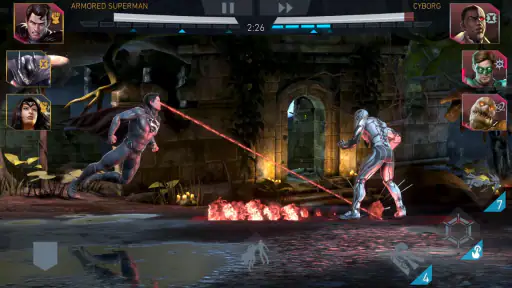
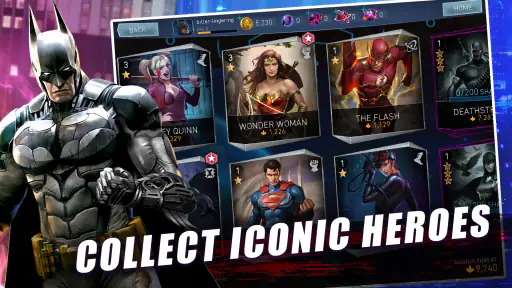
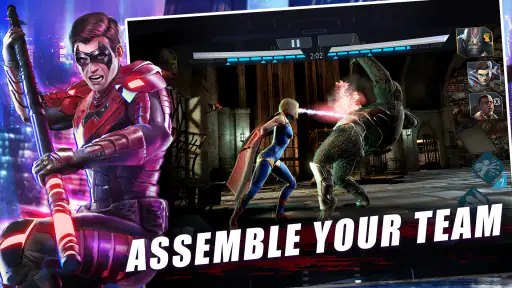
Analysis by Reviewed
I approached Injustice 2 as both a fighting game and a mobile game I might actually keep on my phone. That distinction matters. A title can look impressive in short sessions yet become tiring when menus, combat prompts, upgrades, and repeated battles compete for attention. Warner Bros. International Enterprises has built this action game around DC Super Heroes and Super-Villains, but my interest here is how comfortably it works for different players and everyday situations, not just how recognizable its cast is.
It is free to download, rated Teen, and available for Android devices running Android 7.0 or later. The current version is 6.7.1, and in the store it has passed the ten-million-install mark with an average rating of 4.3 from roughly 930,000 ratings. Those figures suggest a large, established audience, although popularity does not remove the need to decide whether its touch controls, visual density, and progression style suit you personally.
After spending time with it, I see a game that is most enjoyable when I treat each session as a focused burst: a few fights, some character management, then a pause. It is less convincing as a completely relaxed game for someone who wants a quiet, low-pressure experience. The quick combat is approachable, but the surrounding systems ask for attention, and the Teen rating is worth taking seriously for younger players or families choosing games together.
How clearly the game communicates what is happening
Readability begins with the fight itself
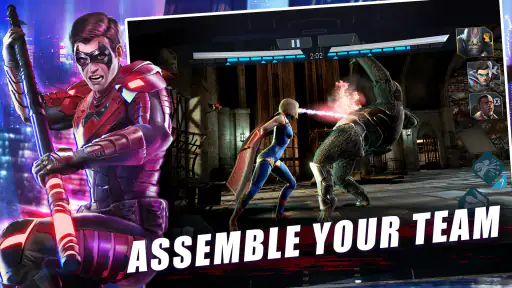
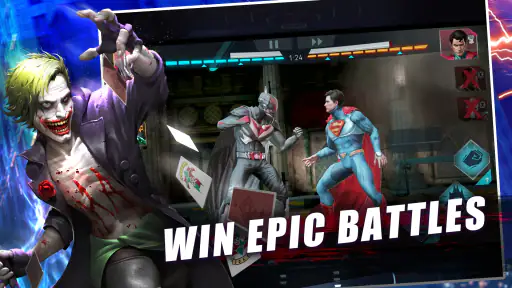
The strongest part of the presentation is that the central action is easy to understand once a battle begins. Opponents are placed clearly on the screen, and the superhero-versus-villain format gives each encounter an immediate visual identity. I can usually tell who is active, where the threat is, and when I need to respond without studying a complicated battlefield. That clarity is useful for players who find large strategy interfaces overwhelming.
At the same time, the screen can become busy. Character models, effects, health information, attack prompts, and other interface elements compete for space during a dramatic move. This is exciting on a larger phone, but less comfortable on a compact display. I found myself paying more attention when the action became especially bright or fast, because visual spectacle can briefly obscure the practical question of what I should do next.
That creates an important difference between recognizing the action and reacting perfectly to it. The first comes fairly naturally; the second takes practice. Players with reduced visual attention, sensitivity to flashing effects, or difficulty tracking several moving elements may prefer shorter sessions and lower visual stimulation elsewhere on the device. I would not describe the presentation as inaccessible by default, but I also would not call it effortless for every sensory profile.
Menus require patience rather than guesswork
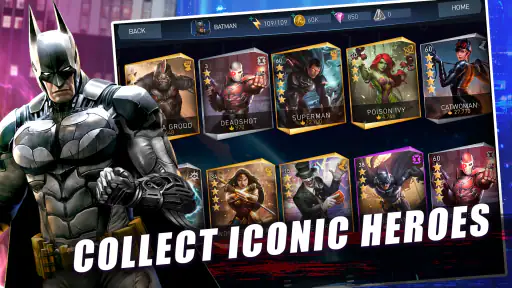
Outside combat, the experience becomes more layered. Building a roster, checking available improvements, and deciding what to do next involves moving through several screens and interpreting game-specific information. I appreciate having meaningful choices, but I do not think the interface is ideal for someone who wants to open the game and understand everything immediately.
More From Our News Desk
Weather by Xiaomi Review: Clear at a Glance, Less Clear Up Close

X Under Pressure: Can It Recover When Posting Goes Wrong?

Clash of Clans Is Won Between the Battles

Android Auto Makes the Case for Quieter Car Software

MobiOffice: Transforming Mobile Productivity with Seamless Integration

EA SPORTS FC™ Mobile Soccer: Redefining Mobile Sports Gaming
My practical advice is to avoid making upgrade decisions while distracted. If I am waiting for transport or listening to someone talk, I can handle a quick fight, but I am more likely to overlook a useful detail in the management screens. A player who benefits from predictable routines may find it helpful to separate play into two habits: combat during short breaks, and roster or progression decisions when there is enough time to read carefully.
The game’s familiar DC identity does help navigation in an indirect way. I am not learning an entirely abstract set of icons because the characters and their roles provide context. Still, recognition should not be confused with simplicity. A fan may understand the cast instantly and still need time to learn how the game organizes its choices.
Text, contrast, and attention demands
Small-screen readability depends heavily on the phone. On a bright, spacious display, the interface feels easier to inspect. On an older or smaller handset, fine text and compact controls demand more concentration. I would recommend increasing the device’s text size only if the operating system and game continue to present the layout cleanly; enlarging system text does not guarantee that every game label will change in the same way.
Players who use screen magnification or other phone-level tools should test them before committing to longer sessions. Magnification can help with a menu, but it may also reduce the amount of combat visible at once. That is a real trade-off rather than a flaw with one universal solution. In my experience, the game is clearest when I keep the phone close enough to read comfortably without holding it at an awkward angle.
Learning the controls without unnecessary pressure
The fighting is designed around touch interaction rather than a physical controller being required. That lowers the entry barrier for many people, because there is no separate accessory to learn before the first match. I could begin with basic gestures and gradually pay attention to timing, defense, and more deliberate attacks.
However, touch input is not equally comfortable for all hands. Players with limited dexterity, tremors, joint pain, or difficulty maintaining a steady grip may find repeated swipes and taps tiring. Even when the game accepts a gesture, the question is whether the player can perform it consistently during a busy exchange. This is where a console or PC fighting game with a preferred controller can be a better choice for someone who needs physical precision and stable, tactile buttons.
I also noticed that phone placement affects control quality. Holding the device in one hand while tapping with the other can work briefly, but it becomes less comfortable as sessions stretch. Resting the phone on a stable surface helps some players, although it can make the viewing angle less natural. A small adjustment in posture may do more for comfort than trying to play through fatigue.
What the game asks from hearing and sound awareness
Sound can make a fight feel more dramatic, but I do not consider audio the only way to understand the game. That is helpful when I am playing in a quiet public place, at home while someone else is sleeping, or in an environment where headphones are not practical. I can lower the volume and still follow the broad visual flow.
That does not mean every sound-related cue becomes irrelevant. Audio can reinforce impact, timing, and atmosphere, so a player with limited hearing may lose some feedback even when the main action remains visible. Conversely, a player who is sensitive to sudden sound can keep the volume low and use visual attention instead. I would test the game in the exact audio conditions where it will normally be played rather than assuming the best experience requires loud sound.
Playing across different bodies, places, and routines
A realistic everyday session
Imagine I have ten minutes before an appointment. I can open the game, complete a small amount of combat, and stop without needing to arrange a long uninterrupted evening. That makes it a reasonable companion for short breaks. The superhero theme also gives those minutes a clear sense of occasion: I am not merely clearing a neutral puzzle board; I am sending a known character into a stylized fight.
The same scenario exposes a limitation. If I am already mentally tired, the visual movement and decision-making can feel more demanding than a quiet puzzle or turn-based game. If I am standing on a crowded train, keeping a firm grip and making accurate touch gestures becomes harder. For that situation, I would choose a game that tolerates interruptions more gracefully, or I would wait until I can sit down.
Short sessions are possible, but progression invites longer ones
The game works well when I define my own stopping point. A couple of battles can feel complete, especially when I am using it as a break rather than a main evening activity. The danger is that character development and the desire to improve a roster can encourage me to continue after my attention has started to fade.
This matters for players managing fatigue, concentration, or limited screen time. I recommend deciding in advance whether the goal is combat practice, a quick daily check-in, or progression work. Those are different activities with different attention costs. Treating them separately makes the game easier to fit around work, study, family responsibilities, or fluctuating energy.
Free entry and the cost of staying engaged
The download is free, but the game includes in-app purchases ranging from $0.99 to $99.99 per item. That range is important for families and for anyone who prefers a predictable entertainment budget. I would not hand the phone to a child without discussing purchases and using the device’s purchase protections, particularly because the Teen rating already signals that this is not positioned as a simple children’s game.
For me, the key question is not whether spending exists, but whether I can enjoy the core loop without feeling pushed toward it. A player who likes collecting, strengthening, and optimizing a roster may find purchases tempting because they appear alongside long-term goals. Someone who wants a fixed-price experience may feel more comfortable with a premium fighting game that charges once and avoids item-based spending.
This is also where the usual alternatives differ. A console fighting game generally offers more precise physical control and a more stable purchase model, while a simpler mobile action game may be easier to understand at a glance. Injustice 2 sits between those options: more ambitious and character-driven than a basic tap game, but more dependent on touch input and ongoing progression than a traditional controller-based fighter.
Motor needs and the value of changing how you hold the phone
One practical improvement is to treat grip as part of the control setup. I get better results when the phone is supported rather than suspended in one hand. A stand, a table, or a comfortable two-handed position can reduce strain, though the best arrangement depends on the player’s reach and mobility.
It is also sensible to stop when gestures become sloppy. In a fighting game, continuing through hand fatigue can turn a manageable control scheme into a frustrating one. Shorter rounds with deliberate pauses are more sustainable than forcing a long session. This is a small but meaningful accessibility habit because it changes the physical demand without pretending the game offers specialized control options that have not been established.
Playing with interruptions and changing attention
Mobile games are often played in imperfect conditions, and this one is no exception. Notifications, conversations, movement, and changing network conditions can break concentration. I would avoid starting a serious progression task when I know I may need to put the phone down suddenly. Combat can be entertaining in a brief window, but an interrupted sequence is still more disruptive than a turn-based activity designed around pauses.
For players with attention differences, I suggest reducing the number of goals in a session. Choose one character-related task or one combat objective rather than trying to inspect every available option. This keeps the game from becoming a wall of competing prompts. The approach also helps new players learn the systems gradually instead of treating the whole roster and every menu as homework.
Who will appreciate the game most
I think it is a strong match for DC fans who enjoy touch-based action and like seeing a roster develop over time. It also suits players who want something more involved than a one-button arcade experience but do not want to carry a controller. People who enjoy experimenting with teams and returning to familiar characters will probably get more from it than players who only want a quick, isolated match.
It is less suitable for someone who needs large, highly simplified interfaces, cannot comfortably perform repeated touch gestures, or is easily affected by busy visual effects. It may also be the wrong choice for a player seeking a completely offline-feeling, fixed-price game with no purchase decisions. In those cases, a simpler action title or a controller-based fighter may offer a calmer and more predictable experience.
Remaining barriers I would consider before installing
The first barrier is device comfort. The minimum operating system is Android 7.0 or later, but technical compatibility alone does not tell me whether a particular phone has a screen size, responsiveness, or battery condition suitable for extended play. I would judge the experience on the actual device rather than assuming that an older compatible phone will feel equally comfortable.
The second is cognitive load. The fight may be easy to enter, yet the broader game asks me to remember characters, improvements, and choices across sessions. That is enjoyable for players who like layered progression, but it can feel cluttered for anyone who wants a direct start-and-finish arcade match.
The third is age and household context. The Teen rating means parents and guardians should make their own decision about whether the tone and action suit a particular player. The presence of optional purchases adds another reason to supervise younger users, even when the initial download costs nothing.
The fourth is control precision. Touch controls are convenient, but convenience is not the same as ergonomic neutrality. Players with limited hand movement may manage short sessions comfortably and still find longer play difficult. I would test basic combat before investing time in the progression systems, because control comfort is more important than the appeal of the characters.
My inclusive verdict
After using it as a mobile action game rather than judging it only as a DC product, I find Injustice 2 engaging, visually clear in its main combat, and flexible enough for short personal sessions. Its biggest strengths for varied contexts are the direct touch entry, recognizable presentation, and ability to enjoy a little action without setting up a separate gaming system.
Its weaknesses are equally practical: busy moments can challenge visual tracking, menus require focused reading, touch gestures may not suit every hand, and the free structure includes purchases from $0.99 to $99.99 per item. None of those points automatically rules it out, but they should shape how and where it is played.
The game has earned a substantial audience, with more than ten million installs and roughly 930,000 ratings, yet I would still recommend a personal trial rather than relying on its popularity. If your phone is comfortable to hold, you enjoy superhero combat, and you can set clear limits around sessions and spending, it is an entertaining choice. If you need tactile controls, quiet visuals, or a fully predictable purchase model, I would look elsewhere.
My final recommendation is to begin with a short session in a calm setting, check whether the text and effects are comfortable, and see how your hands feel after several fights. That simple test answers more than the character list does. For the right player, this is a lively and rewarding mobile fighter; for someone with specific sensory, motor, or attention needs, its appeal depends on whether the surrounding demands can be managed without turning play into work.
Injustice 2 Frequently Asked Questions
Can I play Injustice 2 on both Android and iOS?
Injustice 2 is available for Android and iOS, so you can look for it in the app store used by your device. Before downloading, check that your phone’s operating system is supported and that you have enough free space. The Android version requires Android 7.0 or later. Availability and compatibility can vary by device, so use the store page on your phone to confirm it can be installed.
What is the age rating for Injustice 2, and what should parents consider?
Injustice 2 has a Teen content rating. Its superhero battles feature frequent comic-book fighting, and the game also includes online features and optional in-app purchases. Parents may want to consider whether the combat and connected play are suitable for a younger player, and review purchase settings before handing over a device. The controls are approachable, though learning the game’s teams and upgrade systems takes practice.
Does Injustice 2 offer single-player content, or is it mainly multiplayer?
Injustice 2 includes a story campaign as well as online modes, so it is not limited to multiplayer battles. The campaign and other activities give players ways to fight and develop characters, while connected modes add competition and events. Some important features rely on an internet connection, making the game best suited to players who are comfortable playing online, even if they are mainly interested in its solo content.
How much storage space should I have available before downloading Injustice 2?
It is sensible to check the space available on your phone before installing Injustice 2, especially if you keep many games, photos, or videos on the device. The game may need additional room for updates and downloaded content after installation, so leaving some free space can help avoid interruptions. You can check the app store on your device for its current download requirements.
What is Injustice 2 and what kind of game is it?
Injustice 2 is a superhero fighting game based on the DC universe. You can battle with characters such as Batman, Superman, Wonder Woman, The Flash, and many others in one-on-one matches. Alongside its fighting mechanics, the game includes a story campaign, character upgrades, equipment collection, special abilities, and several online modes. It is designed for quick mobile matches but also offers enough progression to keep regular players engaged.
Pros
- Impressive console-quality graphics and detailed superhero animations.
- Large roster featuring DC heroes and villains with varied fighting styles.
- Frequent events and challenges provide additional rewards and goals.
- Gear customization lets players improve stats and personalize character appearances.
- Simple controls make the combat system accessible for new players.
Cons
- Progress can feel slow without regular play or resource spending.
- Many upgrades and currencies may overwhelm newcomers at first.
- Online battles can be affected by matchmaking and connection issues.
- Some powerful characters and gear require considerable time to unlock.
- The game uses substantial storage and may drain battery during long sessions.
- Category
- Action
- Version
- 6.7.1