Infantry Attack: War 3D FPS
- 6.55K
- 4.6
- Installs
- 10.00M
- Price
- Free

Screenshots
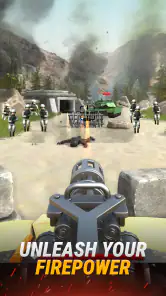
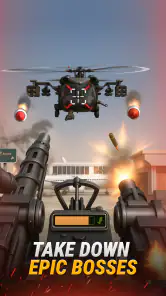
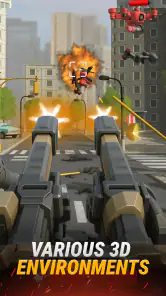
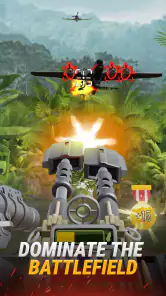
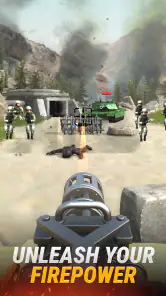
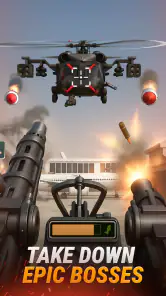
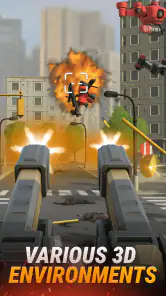
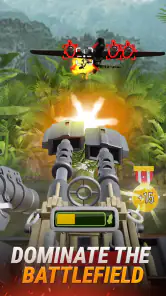
Analysis by Reviewed
Infantry Attack: War 3D FPS is the kind of action game I open when I want a quick battlefield encounter rather than a long, story-heavy campaign. Its central appeal is simple: I take control of a soldier, aim a machine gun, and try to break through enemy resistance in a compact 3D combat setting. That focused idea gives the game an immediate rhythm, but it also means the experience depends heavily on whether you enjoy repeated shooting scenarios more than deep tactical planning.
Developed by VOODOO, this free game has built a sizeable audience, with a 4.6 average from around 112 thousand ratings and over 10 million installs. I can understand that reach. The controls and objective are easy to grasp, so I do not need a tutorial-heavy introduction before getting into the action. At the same time, the Teen content rating is worth taking seriously: this is a combat game built around firearms and battlefield conflict, not a relaxed arcade title for younger children.
What the machine-gun focus changes
The most important capability here is the ability to attack enemy soldiers from a first-person viewpoint with a machine gun. That sounds straightforward, but it changes how I play compared with a typical third-person shooter. I am not mainly watching a character move across a large map; I am concentrating on the sightline in front of me, identifying threats, and deciding when to keep firing or adjust my aim.
This narrow focus makes each encounter feel readable. I can quickly understand what matters: locate the opposing soldiers, keep the weapon pointed where it needs to be, and avoid wasting attention on decorative details. For short sessions, that is a real strength. The game works best when I want immediate action with very little preparation.
It also creates a particular limitation. A machine gun is powerful and satisfying, but relying on one main combat idea can make the experience feel less varied than a larger action game with several weapon classes, elaborate objectives, or a broader campaign structure. I would not choose this as my only shooter if I wanted extensive character development or a complex battlefield simulation.
The first-person perspective is especially useful on a phone because it keeps the screen focused on the confrontation. Instead of dividing my attention between a distant avatar and the environment, I can concentrate on the target area. That makes the game approachable during a short break, although players who prefer a wider view of their surroundings may find the perspective more restrictive.
How the shooting feels in practice
In use, the game asks for a balance between speed and control. My first instinct is to hold the weapon on a visible target and fire, but that is not always the most comfortable approach. I get better results when I pause for a moment, place the aim deliberately, and then commit to the attack. This is one of the first practical lessons I took from playing: fast reactions help, but careless movement of the aim can make a simple encounter feel messy.
The battlefield presentation supports that direct approach. I am not spending most of the session managing equipment screens or studying a large strategic map. The attention stays on the immediate fight. That makes the game easy to pick up after a few days away because I do not have to remember a complicated control scheme or a large number of interconnected systems.
For touch-screen play, I recommend using smaller, controlled movements rather than dragging aggressively across the display. A large swipe can move the view farther than expected, particularly when several enemies appear close together. I found it more reliable to make short corrections, settle the crosshair, and then fire. This is a small habit, but it improves consistency more than simply trying to react faster.
Another useful approach is to treat the center of the screen as a preparation zone rather than waiting until an enemy is already at the edge of view. When I keep my attention near likely threat areas, I spend less time making emergency corrections. The game’s uncomplicated structure rewards this kind of visual discipline, even though it does not present itself as a deep tactical simulator.
That simplicity also answers a practical question many players have: can someone who rarely plays shooters enjoy it? I think so, provided they are comfortable with touch aiming. The objective is easy to understand, and there is not a large amount of genre knowledge required before the action becomes playable. However, players who dislike first-person aiming on a phone may still find the controls tiring, no matter how simple the battlefield is.
A realistic short-session scenario
Imagine having ten minutes before a train arrives or while waiting for a friend. This is where I see the clearest use case. I can launch the game, enter a combat situation, and focus on the immediate objective without needing to recall a long narrative or rebuild a complicated loadout. The session feels purposeful even when I do not have time for a full console-style gaming evening.
I would not recommend starting it in a situation where interruptions are constant and losing concentration would be frustrating. A phone call, a crowded commute, or a bright outdoor screen can make aiming less comfortable. The game is accessible, but the shooting still benefits from a little attention. It is better suited to a short, focused pause than to playing while doing several other things at once.
For a longer session, I look for a different kind of value. The repeated battlefield format can be enjoyable when I am in the mood for direct action, but it may not provide enough variety for someone seeking a substantial progression journey. My own preference is to use it as a compact action option rather than expecting it to replace a full-scale shooter.
Where it differs from usual action alternatives
Compared with a story-driven first-person shooter, Infantry Attack: War 3D FPS is much more immediate. I do not approach it for cinematic storytelling, character relationships, or a carefully paced campaign. Its advantage is that it gets to the combat quickly. If my priority is firing at enemy soldiers in a straightforward battlefield setting, that directness is more convenient than the extra structure found in larger games.
Compared with a competitive online shooter, it is also a different proposition. I am not choosing it for team communication, ranked matches, or the unpredictable behavior of human opponents. That makes the experience less socially demanding and potentially less stressful. On the other hand, players who enjoy adapting to real people, coordinating with teammates, or building a long-term competitive identity will probably find a dedicated multiplayer alternative more rewarding.
Compared with a tactical strategy game, this title puts me inside the action instead of above it. I am making moment-to-moment aiming decisions rather than arranging units or planning a large operation. That is the right choice when I want physical involvement and quick reactions. It is the wrong choice when the pleasure comes from careful resource management and seeing a plan unfold across a wider battlefield.
This distinction is important because the store’s brief description can make the game sound like a broad war experience. In practice, I see it more as a focused mobile shooter built around infantry combat. That is not a criticism by itself; it simply sets a better expectation. The closer my expectations are to that compact design, the more enjoyable the game becomes.
Tradeoffs that matter before installing
The biggest tradeoff is simplicity versus variety. The clear machine-gun combat is the reason I can start playing quickly, but it is also the feature most likely to feel repetitive for experienced shooter fans. If I need a large arsenal, intricate objectives, or a deep progression system, I should look elsewhere rather than hoping this game will gradually turn into a different kind of experience.
Another consideration is the free-to-play model. The game is free to download, while optional in-app purchases range from $0.99 to $47.99 per item. I would approach those purchases carefully and decide in advance whether I am comfortable spending anything. The free entry point is useful for testing the core action, but the existence of a wide purchase range means players should keep an eye on their spending habits, especially when playing in short, repeated sessions.
I also pay attention to the age guidance. The Teen rating fits the game’s military shooting theme, and I would not treat it as a child-friendly action game simply because the controls are easy. Parents choosing games for a shared device should consider whether firearm-based combat is appropriate for the person using it.
Device compatibility is reasonably broad: the current version is 1.36.6 and requires Android 8.0 or later. That makes it accessible to many Android users, but compatibility alone does not guarantee an ideal experience on every phone. Screen size, touch responsiveness, and general performance can affect how comfortable aiming feels. On a smaller display, targets and visual details may feel more crowded, so I would test the controls before deciding whether it deserves regular play.
The game’s rating and audience size suggest that the basic formula connects with many players, but popularity does not remove the personal question of repetition. I would use the first few sessions to judge whether the machine-gun encounters remain engaging for me. If I enjoy the simple loop, the game can become a convenient action break. If I am already looking for more strategic depth, a high rating will not change that mismatch.
Small habits that improve the experience
My first tip is to avoid treating every target as a reason to swing the aim immediately. I get cleaner results by moving the view in short steps and keeping the weapon near the area where enemies are likely to appear. This reduces overcorrection and makes the action feel less frantic without slowing the game down.
Second, I would play with the phone held steadily rather than shifting grip during an encounter. Touch shooters are sensitive to accidental contact, and a changing grip can turn a controlled aim adjustment into an unwanted camera movement. A stable position is more valuable here than trying to play with one hand while walking or multitasking.
Third, I would separate “quick entertainment” from “long-term shooter commitment.” The game is excellent at removing barriers between opening the app and entering combat. That makes it a strong companion for brief breaks. But if I want a game that rewards learning maps, coordinating with friends, or mastering several weapon roles, I would pair it with a more expansive alternative instead of demanding that this one provide everything.
Finally, I would make purchase decisions outside the excitement of a combat session. Because the game is free to start and offers optional items, setting a personal limit before playing keeps the focus on whether the core action is enjoyable on its own. If I only enjoy it after considering purchases, that is a sign the free experience may not be the right fit for me.
Who will get the most from it
I think the best audience is a player who wants a straightforward mobile action game with a military setting, first-person aiming, and short bursts of combat. It suits someone who does not want to learn a complicated system before having fun. It is also a good match for players who prefer predictable solo-style action over the pressure and coordination of competitive multiplayer.
It is less suitable for someone seeking a detailed war simulation. The game’s appeal comes from immediacy, not from reproducing every part of battlefield decision-making. Likewise, fans of narrative shooters may miss the sense of character and story that gives longer campaigns their momentum. I would also steer players who dislike repeated shooting encounters toward another genre, because the central loop is not a minor feature that can be ignored.
For me, the strongest reason to keep it installed is convenience. I can reach the action quickly, focus on one clear combat task, and stop without feeling that I have abandoned a complicated storyline. That makes it a useful secondary game, especially when I want something more active than a puzzle but less demanding than a full competitive shooter.
My final take after using it
Infantry Attack: War 3D FPS succeeds by committing to one clear idea: direct machine-gun combat against enemy soldiers from a first-person view. I appreciate that focus because it makes the game easy to understand and convenient for short sessions. The 4.6 average and broad install base are consistent with that accessible appeal, although they should not be mistaken for proof that every shooter fan will enjoy its limited scope.
I recommend trying it if you want free, quick battlefield action and are comfortable with touch aiming. I would skip it if your priority is a rich campaign, competitive teamwork, or detailed strategy. The game is at its best when I accept it as a compact action experience rather than expecting a complete war game. With that expectation, its directness feels like a strength; without it, the repetition and optional purchase structure may become more noticeable.
Pros
- Fast-paced FPS matches with straightforward controls.
- 3D battlefield environments make firefights feel more immersive.
- Multiple weapons offer variety in combat situations.
- Easy to pick up for players new to first-person shooters.
- Short battles suit quick gaming sessions on mobile.
Cons
- May become repetitive after extended play sessions.
- Some weapons or upgrades may require significant grinding.
- Touch controls can feel less precise during intense firefights.
- Visual quality may vary across older or budget devices.
- Online features may depend heavily on a stable connection.

- Category
- Action
- Version
- 1.36.6