Immortal Diaries
- 2.40K
- 4.3
- Installs
- 1.00M
- Price
- Free

Screenshots






Analysis by Reviewed
I went into Immortal Diaries expecting a light role-playing game built around visual makeovers, and that is exactly where it makes its best impression. Developed by HaoPlay Limited, it turns appearance changes into the main source of momentum: you experiment, watch a character’s look shift, and use that transformation as a reason to keep moving through the game. My overall view is positive, but specific. This is a good choice for players who enjoy character presentation, relaxed progression, and the satisfaction of seeing a design come together. It is less convincing for anyone looking for demanding combat, deep tactical systems, or a role-playing adventure where the story and battles clearly take priority.
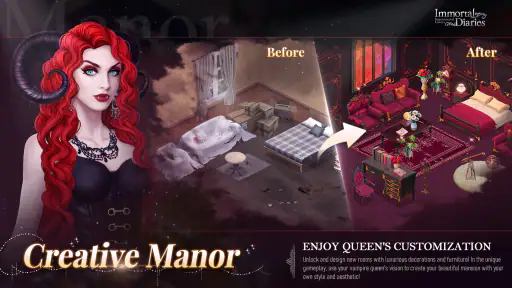
The game is free to start and aimed at a Teen audience, so I would treat it as a casual mobile RPG rather than a traditional, mechanics-heavy role-playing experience. Its store summary focuses on experimenting with makeovers and witnessing transformations, and that focus is important: the appeal is not simply collecting another character or clearing another screen. The enjoyable part is making choices that visibly change how a character feels. That gives the game a distinctive identity, even when the surrounding progression feels familiar.
How the makeover-centered RPG loop feels in practice
The strongest part of my time with Immortal Diaries was the way it gives cosmetic decisions a sense of purpose. In many mobile role-playing games, appearance is an afterthought placed behind a menu. Here, the transformation itself is the hook. I found myself paying more attention to combinations and presentation because the game frames a makeover as an event rather than a minor adjustment. That makes short sessions feel productive, especially when I only wanted something easy to play for a few minutes.
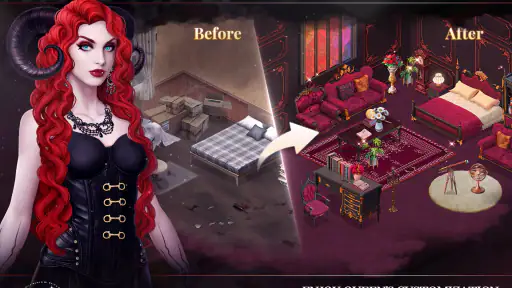
This structure works well for players who like visual progress. A conventional RPG often asks me to care about a new weapon because its numbers are higher. Immortal Diaries is more interested in the feeling of a before-and-after result. That difference may sound small, but it changes the rhythm. Instead of chasing only power, I was also judging whether a change suited the character and whether the final look felt coherent. The best reason to play is the transformation process, not the promise of complex role-playing systems.
That focus also makes the game approachable. I did not need to commit to a long session to enjoy it. A short visit can involve checking available choices, making a visual adjustment, and seeing how the result fits into the broader presentation. For a phone game, that is a practical strength. It suits moments such as waiting for an appointment, taking a break from work, or relaxing before bed when I want interaction without the pressure of a competitive match.
There is a useful creative decision hidden in this loop: I would not rush every makeover simply because the game presents a new opportunity. Taking a moment to compare the overall style makes the result more satisfying. I found that treating each change as part of a complete look worked better than selecting items one at a time with no plan. That approach is especially helpful for players who enjoy fashion games but still want a light RPG framework around them.
Why the presentation gives it a clear identity
Immortal Diaries stands out most when it lets visual change carry the emotional weight. The title suggests a larger fantasy setting, but the immediate pleasure comes from seeing characters become more expressive or polished through customization. I would describe the game as a makeover experience with role-playing decoration, rather than a conventional RPG that happens to include outfits.
That distinction matters when comparing it with the usual alternatives. A battle-focused mobile RPG generally rewards careful team building, timing, and resource planning. A pure dress-up game usually concentrates almost entirely on styling and may offer little reason to return beyond new looks. Immortal Diaries sits between those two formats. It gives makeover decisions a progression context, while keeping the activity more relaxed than a combat-first game. If you want a middle ground, that blend is appealing. If you want either extreme, it may feel diluted.
I also appreciate that the game can be enjoyed without treating every screen as a test of efficiency. There is room to make choices based on taste, not only on the strongest possible result. That is a meaningful difference for players who become tired of mobile RPGs that turn every decision into a calculation. At the same time, anyone who needs a clearly demanding strategic challenge may find the makeover emphasis too gentle.
One practical tip is to decide what kind of experience you want before spending time on progression. If your priority is creating attractive or memorable looks, slow down and compare choices. If your priority is moving through the RPG content quickly, make a simple style decision and continue. Mixing those goals can create frustration because the game’s creative side rewards attention while its progression side encourages forward movement.
Where the free-to-play design needs attention
The game is free, which makes it easy to try without committing money at the beginning. However, optional purchases range from $0.99 to $99.99 per item, so I would recommend setting a personal spending limit before getting deeply involved. The lower-priced options may feel harmless in isolation, but repeated small purchases can change the cost of a game that initially feels free. The high end is a reminder that the purchase system should be approached deliberately rather than casually.
This is not a criticism of the existence of purchases by itself. Mobile games need ways to support ongoing development, and some players are happy to pay for a favorite experience. My concern is more practical: makeover-driven games can make cosmetic rewards feel unusually tempting because the entire appeal is visual. When the central pleasure is changing a character’s appearance, a new item can feel more personal than a routine gameplay upgrade. I would avoid buying anything immediately after unlocking a desirable look and instead decide whether I still want it after closing the game.
Players should also consider the Teen content rating before installing it for younger users. That rating is a clear signal to check whether the tone and presentation fit the person who will play. I would not assume that a makeover-focused game is automatically suitable for children simply because the activity looks colorful or relaxed.
Another limitation is that the hybrid design may not satisfy specialists. Fans of deep role-playing games may find the character development too light, while dedicated dress-up players may wish the styling itself had even more control. This is the central trade-off: the game’s broad appeal comes from combining formats, but combining formats can also mean that neither side receives the depth of a specialized alternative.
Small-session use and a more thoughtful workflow
My favorite way to approach Immortal Diaries is in short, focused sessions. I would open it when I wanted a visual activity rather than a long battle sequence, make one or two meaningful changes, and stop before the choices started to feel repetitive. That keeps the makeover loop pleasant instead of turning it into a checklist.
A second useful workflow is to separate experimentation from commitment. First, I look at the available direction and imagine the finished appearance. Then I choose the pieces that support that direction instead of reacting to each item independently. This sounds obvious, but it prevents a common problem in customization games: collecting attractive parts that do not work together. The game is more rewarding when I treat a character’s appearance as a complete composition.
A third tip is to judge progress by enjoyment rather than by speed. The role-playing label may encourage players to push through content as efficiently as possible, but the game’s strongest moments come from noticing the transformation. If I rush through every decision, I reduce the feature that makes Immortal Diaries different from a standard mobile RPG. Players who enjoy taking screenshots or sharing character concepts with friends may get more from the experience than players who only want to maximize advancement.
For someone deciding whether to install it, the device requirement is also friendly: the game supports Android versions starting with 4.4. Its current version is 1.430.01, so I would still check that the phone has enough free space and performs comfortably with modern mobile games, but the stated operating-system floor makes it accessible to people using older Android hardware.
Who will enjoy it most
I would recommend Immortal Diaries to players who like character customization but want more context than a standalone dress-up app usually provides. It is also a good fit for people who prefer relaxed RPG sessions and enjoy seeing immediate visual results from their decisions. If you like experimenting with different styles, revisiting a character’s presentation, and playing in short bursts, the game has a clear reason to stay installed.
It may also suit players who are curious about mobile RPGs but feel intimidated by complicated combat systems. The makeover-centered approach offers a gentler entry point. You can engage with the game through visual choices first, then decide how much of the broader role-playing structure you want to explore. That makes it easier to sample than a game that begins with several layered systems and expects instant mastery.
The audience fit is supported by its popularity. Immortal Diaries has passed one million installs, with an average rating of 4.3 from around twenty-eight thousand ratings and roughly two thousand four hundred written reviews. Those figures do not make it perfect, but they suggest that the combination of role-playing and makeovers has found a substantial audience. I would read that as evidence of a clear appeal rather than proof that every player will enjoy the same balance.
I would skip it if your ideal RPG is built around difficult boss encounters, carefully optimized teams, or a long, intricate narrative. I would also look elsewhere if you want a completely purchase-free experience or if cosmetic customization does not interest you. In those cases, a dedicated strategy RPG or a pure fashion game would probably serve you better because it would focus more directly on the feature you value.
What to expect before installing
Immortal Diaries is free to download, but I would approach it as a game with optional spending rather than assuming the whole experience will remain entirely cost-free. The purchase range is wide, and the visual focus can make optional items especially persuasive. My advice is simple: play long enough to decide whether the core makeover loop is enjoyable on its own before considering any purchase.
The Teen rating is another point worth taking seriously. Parents should review the game themselves before allowing a younger player to use it, and adults who prefer very gentle, family-oriented content should keep the rating in mind. The game’s presentation may feel approachable, but the official age category is the better guide when making that decision.
As for longevity, I would expect the experience to depend heavily on whether you enjoy repeated experimentation. Players who can invent different style goals for themselves are likely to get more value from it. Players who need constant mechanical novelty may reach the limits sooner. That is not a flaw unique to this title; it is the natural consequence of making visual transformation the central attraction.
HaoPlay Limited has created something more specific than a generic fantasy RPG. The game’s identity comes from placing makeovers at the center and using role-playing structure to give those changes a reason to matter. That is why I would not recommend judging it by the standards of a battle-heavy alternative. Its success depends on whether the visual loop feels rewarding to you.
After spending time with it, my verdict is that Immortal Diaries is worth trying for the right player. I like its approachable rhythm, its emphasis on visible change, and the way it turns styling into a form of progression. I also think its limitations are easy to identify: it will not replace a deep strategy RPG, and the optional purchase range deserves restraint. If you want a relaxed role-playing game where experimenting with appearance is the main pleasure, this is a worthwhile free starting point; if you want demanding battles or a purely cosmetic sandbox, choose a more specialized alternative.
In the end, I would recommend installing it with modest expectations and a clear idea of what you want from it. Give the makeover decisions your attention, use short sessions to avoid turning them into chores, and set a spending boundary before the visual rewards become tempting. Approached that way, Immortal Diaries offers a pleasant middle ground between dress-up play and mobile role-playing, with enough personality to stand apart from both.
Pros
- Engaging supernatural story with frequent twists and character conflicts.
- Large cast offers varied personalities and relationship routes.
- Choice-based gameplay makes decisions feel meaningful and personal.
- Stylish character artwork enhances the visual-novel presentation.
- Regular chapters provide a reason to return and continue the story.
Cons
- Some story routes may require substantial time to unlock.
- Premium choices can interrupt the flow for free players.
- Pacing varies between dramatic chapters and slower dialogue sections.
- The large cast can make character relationships difficult to follow.
- Replay value depends heavily on how much you enjoy alternate choices.

- Category
- Role Playing
- Version
- 1.430.01