Immortal Destiny:Chosen Heirs
- 78.00
- 4.2
- Installs
- 100.00K
- Price
- Free

Screenshots
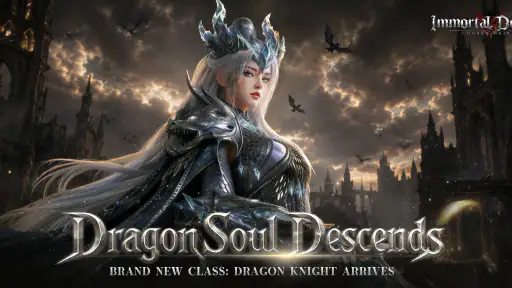
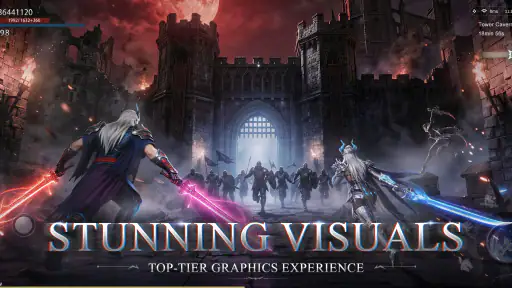
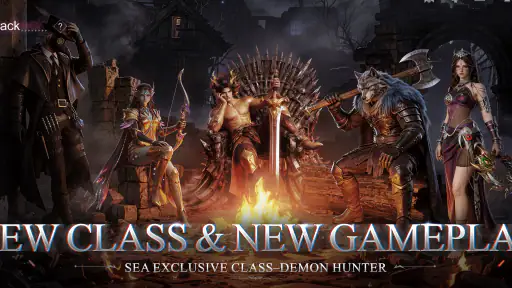
Analysis by Reviewed
Immortal Destiny: Chosen Heirs presents itself as a role-playing game built around a dark end-of-the-world mood, and that first impression is important because the game asks you to settle into its setting before its systems can make much of an impact. I found the atmosphere more memorable than the store summary suggests. The phrase “The End is Near” is not just a dramatic label; it gives the experience a sense of pressure, even during slower moments. The game’s short description, “Immortal Destiny,” points toward a larger fantasy about survival, inheritance, and power rather than a simple battle-focused adventure.
As a free game from KEY YO GAME, it is easy to try without making an immediate purchase. The current version is 11.0.19, and it runs on Android 9 or later. Its Teen content rating also gives a useful indication of the intended audience: this is better suited to players comfortable with serious fantasy themes than to younger children looking for a light, cheerful role-playing game. I would approach it as a mood-driven mobile RPG, not as a quick arcade diversion.
A dark opening that depends on the right expectations
My first useful piece of advice is to give Immortal Destiny: Chosen Heirs a proper first session instead of judging it after a few hurried minutes. The game’s appeal depends on how its visual direction, setting, and progression work together. If you only want instant action and constant rewards, the opening rhythm may feel too deliberate. If you enjoy stepping into a fantasy world and gradually understanding its stakes, the slower build has more value.
The game’s central identity comes from the contrast between immortality and collapse. That contrast creates a natural question for the player: what does it mean to inherit power when the surrounding world is already falling apart? Even without turning every scene into exposition, that idea gives the adventure a stronger emotional frame than a generic sequence of battles.
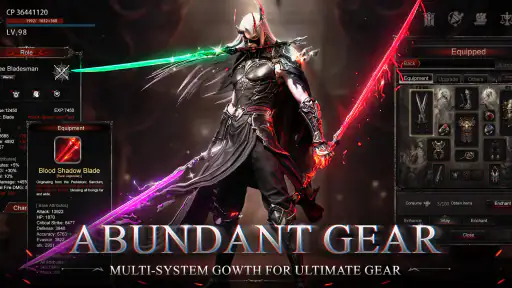
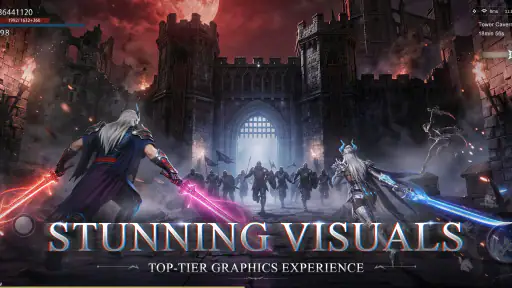
I also noticed that the setting does much of the work normally handled by long explanations. A threatening environment can make a modest objective feel meaningful, while a calmer location can provide a welcome pause before the next confrontation. This is where the game’s art direction matters. The visuals are not merely decoration around menus and combat; they help establish whether a moment feels dangerous, mysterious, or like a temporary refuge.
That approach will not suit everyone. Players who prefer bright character designs, humorous dialogue, or a relaxed fantasy tone may find the presentation heavier than expected. On the other hand, anyone who likes a game to maintain a consistent emotional color will probably appreciate the commitment to its darker premise.
The setting communicates through visual contrast
The strongest part of the presentation is the way the world’s mood can be understood through contrast. A threatening area feels more effective when it is placed beside a quieter one, and a powerful character feels more imposing when the surrounding environment is allowed to look fragile. I paid attention to those transitions because they affect how much weight the story seems to carry.
This is also where I think the title’s idea of “chosen heirs” becomes useful. The player is not simply moving through a collection of disconnected locations. The setting encourages you to read each new place as part of a larger succession of power, loss, and responsibility. That gives the role-playing framework a more personal edge than a straightforward hero-versus-monster structure.
A practical tip is to avoid rushing through every scene while multitasking. The game is easier to appreciate when you notice how the environment changes the emotional meaning of an encounter. A fight in a bleak location does not feel identical to a fight surrounded by signs of safety or civilization, even when the basic objective is similar.
The visual language also helps players who are not deeply invested in the lore. You do not need to memorize every name to understand that the world is unstable and that the characters are operating under pressure. That clarity is valuable on a phone, where a player may return after a short break and need to recover the mood quickly.
Sound gives the world room to breathe
Sound is easy to overlook in a mobile RPG because many people play with the volume low or muted. In my experience, Immortal Destiny: Chosen Heirs benefits from being heard, especially during the opening and during transitions between exploration and conflict. The audio helps separate moments that might otherwise blend together on a small screen.
The sound design works best when it supports restraint. A world approaching disaster should not sound permanently frantic. Quiet passages create room for the setting to feel lonely, while stronger effects can make a confrontation stand out. That rise and fall contributes to the game’s pacing more effectively than constant noise would.
I would not recommend judging the game’s atmosphere while listening to unrelated music. That may be fine if you are only interested in progression, but it removes one of the elements that makes the setting coherent. Playing with headphones for a short session is a simple way to decide whether the mood works for you without committing to a long play period.
There is a trade-off here. A consistent dark tone can become tiring if you want a cheerful game for short breaks. The audio and visual direction reinforce the same emotional space, so the game rarely feels like a casual, colorful distraction. That consistency is a strength for immersion, but it narrows the audience.
Where the pacing helps and where it may drag
The pacing is shaped by the game’s desire to establish a world rather than rush immediately from one reward to the next. I found that useful when the presentation was introducing a new location or clarifying the player’s role. It gives the setting time to settle, which makes later action feel more connected to the story.
However, deliberate pacing can create friction when you are replaying familiar activities or trying to make progress during a short break. This is a common dividing line for mobile role-playing games: some players want a compact routine they can complete quickly, while others enjoy a longer session with a stronger sense of buildup. Immortal Destiny: Chosen Heirs leans toward the second group.
My practical solution is to play it in planned sessions rather than opening it every time you have a spare minute. A longer uninterrupted session makes the atmosphere easier to follow and reduces the feeling that you are constantly stopping just as the game begins to establish momentum. For a commute or lunch break, a faster alternative may be more convenient.
The pacing also affects how you evaluate progression. I would not measure the game only by how quickly it delivers new content. The better question is whether each step makes your character feel more connected to the world. When that connection is working, a slower sequence feels purposeful. When it is not, the same sequence can feel like waiting between menus or encounters.
How the role-playing structure fits the mood
Immortal Destiny: Chosen Heirs works best when its role-playing mechanics support the feeling of being part of a threatened world. Character growth should feel like preparation for larger dangers, not merely a number climbing in the background. The game’s premise gives progression a natural dramatic purpose: power matters because the world cannot afford weakness.
That does not mean every player will enjoy the same structure. If you prefer highly tactical combat where every decision is visible and every victory depends on manual precision, you may find a mobile RPG with more direct control a better match. This game’s appeal is broader: it combines character development with presentation and setting, asking you to care about the journey as well as the individual encounter.
One non-obvious trade-off is that a strong atmosphere can make routine progression feel more noticeable. When the story suggests urgency but the player is spending time improving a character or preparing for the next challenge, the contrast may feel slightly artificial. I think this is worth accepting if you like long-form RPG progression, but it can bother players who want the narrative and mechanics to move at exactly the same speed.
Another useful approach is to treat character improvement as a planning decision rather than an automatic chore. Before spending resources, consider whether you are solving a current weakness or simply increasing a familiar strength. In a game built around heirs and destiny, it is tempting to follow the most obvious path. Taking a moment to think about what kind of role you want your character to play can make progression feel more personal.
The free entry point is helpful because it lets you test that relationship between story and mechanics without paying first. There are in-app purchases ranging from forty-nine cents to ninety-nine dollars and ninety-nine cents per item, so I would set a personal spending limit before becoming invested. The broad price range means the game can remain accessible to curious players while still requiring self-control from anyone tempted to accelerate progress or buy frequently.
I would especially recommend deciding in advance whether you want to play entirely for free. That choice can make the experience easier to judge. If you begin comparing every obstacle with something that could be purchased, the atmosphere loses some of its effect. A clear budget, or a decision not to spend, keeps your attention on the world and the progression choices rather than on the shop.
Who will enjoy this particular experience
This game is a good fit for players who want a serious fantasy RPG with a clear sense of impending disaster. It should appeal to people who notice art direction and sound, enjoy gradual character development, and prefer a setting that maintains a consistent mood. The fact that it has passed the hundred-thousand-install mark and holds a 4.2 average from around seventeen thousand ratings suggests that it has found an audience, though popularity alone should not decide whether its tone suits you.
I would also recommend it to someone who likes returning to a continuing role-playing world rather than finishing a short standalone story in one sitting. The title’s emphasis on destiny and heirs gives the experience a longer horizon. You are encouraged to think about what your character may become, not only what happens in the next encounter.
It is less suitable for players seeking a purely social game, a bright casual adventure, or a role-playing title focused almost entirely on fast manual combat. It may also be a poor choice if you dislike in-app purchases on principle. Although the game is free to start, the presence of optional items with a wide price range is something to consider before you commit emotionally or financially.
For a realistic everyday example, imagine playing after work when you have enough time to settle into a session but do not want the complexity of a large console RPG. This is where the game makes sense: the setting can provide an escape, the progression gives you a reason to return, and the darker presentation creates a stronger identity than a generic time-filler. If you only have five minutes and need an immediate, self-contained challenge, another genre will probably serve you better.
What to check before downloading
Before installing, I would check three things. First, make sure your device uses Android 9 or later. Second, decide whether a Teen-rated fantasy setting matches your preferences. Third, think about whether you are comfortable with optional purchases, particularly because the available item prices extend from small amounts to a much larger top tier.
I would also recommend checking how much you value sound and visual atmosphere. If you normally mute games and skip every story moment, you may still enjoy the progression, but you will be ignoring a major part of what makes this title distinctive. If presentation is important to you, give the opening a focused session with audio enabled before forming a final opinion.
The developer is KEY YO GAME, and the release date is listed as August 3, 2026. That places the current version, 11.0.19, in a relatively early stage of the game’s public life. For a player, the practical lesson is to approach it as an evolving mobile RPG rather than assuming that every part of the experience will already feel as established as a long-running genre leader.
That comparison matters. A familiar alternative in the role-playing category may offer a more predictable progression loop, a lighter tone, or a faster route into combat. Immortal Destiny: Chosen Heirs earns attention by combining its mechanics with a more deliberate atmosphere. I would choose it over a standard fantasy grinder when I want the world to influence my mood, but I would choose a more combat-focused option when I want immediate control and less narrative weight.
The atmosphere is the real deciding factor
After spending time with the game, I see its strongest quality as coherence. The setting, art direction, sound, and pacing generally point toward the same idea: a world under pressure in which inherited power carries consequences. That does not make every moment equally compelling, but it gives the experience a recognizable personality.
The most useful way to approach it is to let the mood work alongside the mechanics. Pay attention to how locations frame progression, listen during the quieter transitions, and avoid treating every slower section as wasted time. At the same time, keep your expectations realistic. This is not the right game for everyone, and the optional purchase structure means you should decide your spending boundaries early.
For me, Immortal Destiny: Chosen Heirs is worth trying because it offers more than a generic fantasy wrapper around progression. Its best moments come when the sense of impending collapse makes character growth feel necessary rather than decorative. Its weaker moments appear when that dramatic promise moves more slowly than the player’s desire for action.
My final recommendation is simple: try it if atmosphere matters as much to you as advancement. The free download makes that test straightforward, while the Teen rating, Android 9 requirement, and optional purchases help define the audience. I would recommend it to a friend who enjoys dark fantasy, patient pacing, and a role-playing journey with a strong visual and audio identity. I would point someone else toward a faster, lighter alternative if they want quick battles, minimal story, or a completely purchase-free experience.
Pros
- Large fantasy world with plenty of quests and areas to explore.
- Multiple character classes offer different combat styles.
- Guild features make teamwork and social play more engaging.
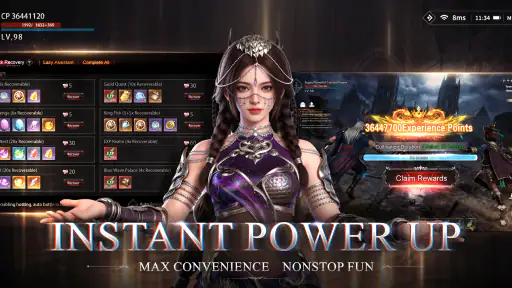
- Frequent rewards help new players progress during the early stages.
- Stylish character designs and flashy skill effects enhance battles.
Cons
- Auto-play can make combat feel less interactive for some players.
- Progression may become heavily dependent on daily tasks and grinding.
- Many menus and systems can feel overwhelming for new players.
- Competitive features may favor users who spend money regularly.
- The game requires a stable connection and can consume significant battery.

- Category
- Role Playing
- Version
- 11.0.19