Idle Weapon Shop
- 501.00
- 4.5
- Installs
- 1.00M
- Price
- Free

Screenshots

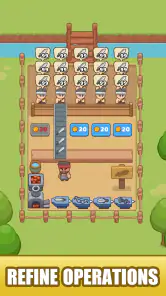





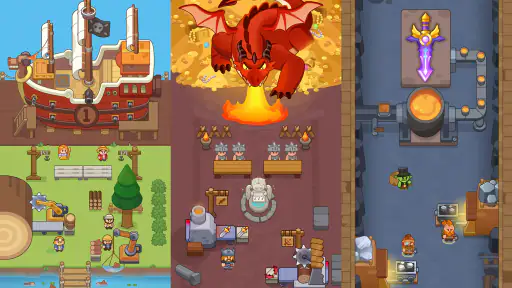
Analysis by Reviewed
I like simulation games that give a small, clear job to manage rather than burying me in menus, and Idle Weapon Shop has an immediately understandable premise: build a business serving people in an apocalypse. That setting gives its shopkeeping loop a sharper edge than an ordinary retail sim, although the appeal still rests on deciding how to grow a store, not on realistic weapons knowledge. I’d look at it as a casual management game with an unusual theme, not a detailed combat simulator.
Reading the shop and finding your way around
When I first tried it, the basic objective was easy to grasp: tend the shop, serve customers and work toward expansion. That quick orientation suits players who want to make progress without first learning a complicated control scheme. The game is a simulation title from Hello Games Team, and its idle format makes it approachable for short visits as well as longer sessions.
Readability matters in a management game because the player needs to understand what deserves attention next. Here, the shop theme gives the tasks a natural context: inventory and upgrades are tied to serving adventurers. I’d recommend taking a moment to check what the game is asking for before spending resources on an upgrade. In an idle loop, an improvement can feel appealing simply because it is available; pausing to consider whether it helps your current bottleneck makes each choice more deliberate.
Keeping play comfortable across different abilities
The straightforward premise is a plus for people who prefer familiar goals over elaborate tutorials. Still, ease of understanding is not the same as universal ease of use. Players who have difficulty reading small text, distinguishing visual details or making repeated precise taps may find a shop-management screen less comfortable than its simple concept suggests. I would try a brief session first and see whether the information is easy to pick out on your own device.
The idle structure can help if you do not want to stay focused on the game continuously, but it does not remove every demand on attention. Choosing what to stock or improve still calls for reading and decision-making. If rapid interaction, dense screens or bright visual effects are tiring for you, it is sensible to stop when the session becomes uncomfortable rather than push through just to keep the shop moving.
When an idle shop fits into the day
This is best suited to someone who enjoys small management decisions and likes returning to a growing operation. A realistic use might be opening the game during a quiet break, checking how the business is doing, deciding on one useful improvement and then putting the phone away. It is less suited to a commute or setting where you need to watch your surroundings: even a low-pressure game can distract when you are walking, crossing a street or handling a task that needs your attention.
Compared with idle games built around broad resource counters, this one gives its management a specific post-apocalyptic shop identity. That theme may be the hook if you like outfitting fictional survivors; if you would rather manage a farm, city or peaceful storefront, a different simulation will be a better fit. It is also not the right pick if you want hands-on action or a detailed story to carry the experience. The central pleasure is running the shop, so your interest in that loop matters more than the setting alone.
More From Our News Desk

Weather by Xiaomi Review: Clear at a Glance, Less Clear Up Close

X Under Pressure: Can It Recover When Posting Goes Wrong?

Clash of Clans Is Won Between the Battles

Android Auto Makes the Case for Quieter Car Software

MobiOffice: Transforming Mobile Productivity with Seamless Integration

EA SPORTS FC™ Mobile Soccer: Redefining Mobile Sports Gaming
What to weigh before settling in
One useful habit is to treat each return visit as a small review of priorities: identify what is slowing progress, then decide whether stocking or upgrading addresses it. That is more satisfying than tapping every available option without a plan, and it helps keep an idle game from becoming a string of routine check-ins. If you prefer games that reward continuous attention, the background-progress approach may feel too passive; if you want a game that makes no demand on attention at all, the management choices may still be more than you want.
There are practical reasons to check the fit before committing. It is free to start, with in-app purchases ranging from $0.99 to $99.99 per item, so I would decide in advance whether I want to spend anything rather than treating a purchase as necessary for progress. The game is rated Everyone 10+, has a 4.5 average from around 24,000 ratings, and has been installed over a million times. Those figures suggest a broad audience, but they cannot tell you whether its pace or presentation will suit you personally.
On Android, it requires version 6.0 or later. It launched on January 14, 2025, and version 1.3.0 is the current release. Those details make it easier to judge basic compatibility, while the best way to assess comfort is still to try the opening and see how the shop’s information feels on your screen. For players who want a low-pressure business sim with an apocalypse backdrop, that initial check is a sensible way to decide whether to keep going.
Getting Started: The Basics
When you first launch the game, you're greeted with a simple yet engaging interface. It doesn't take long to get the hang of things, which is great because let's face it, nobody likes spending hours just figuring out how to play. You start with a modest shop and a limited selection of weapons. The goal? To grow your business and become the ultimate weapon tycoon.
As you progress, you'll unlock new weapons and upgrades that help you attract more customers. The game is all about strategy—deciding which weapons to stock, when to upgrade your shop, and how to best please your clientele. It’s a balancing act that keeps you on your toes.
Graphics and Sound: A Visual and Auditory Delight
One of my favorite aspects of the game is its graphics. The visuals are sharp and colorful, making the game a pleasure to look at. Each weapon is intricately designed, adding a layer of authenticity to your virtual shop. The sound design complements the visuals perfectly, with satisfying clinks and clanks as you upgrade your arsenal.
Though it's primarily an idle game, the attention to detail in the graphics and sound makes it feel more immersive. It's like having a mini-arsenal right in your pocket!
Gameplay: A Unique Blend of Strategy and Idle Mechanics
What sets this game apart from other idle games is its unique blend of strategy and idle mechanics. While the game does run in the background, allowing you to earn money even when you're not playing, it also requires you to make smart decisions to maximize your profits. It's not just about sitting back and watching the money roll in; you have to actively manage your resources to succeed.
The game introduces new challenges as you progress, such as dealing with customer demands and keeping up with the competition. It's a satisfying loop that keeps you coming back for more. Plus, the sense of accomplishment you get from watching your shop grow is incredibly rewarding.
Making decisions without turning each visit into a chore
For me, the most useful way to approach a shop sim like this is to pick one objective for a session rather than trying to optimize everything at once. If customer demand is the immediate pressure, I would focus on the stock that answers it; if progress feels slow, I would compare available upgrades before spending. This keeps decisions connected to a visible need and makes the return visit feel purposeful, rather than simply tapping through every prompt.
That approach also helps set expectations about idle play. Background earnings can make a return feel rewarding, but they do not replace the choices that give the game its management element. If you enjoy checking a business, making a small adjustment and leaving it to run, the structure can suit a busy day. If you expect meaningful hands-off progress with no need to inspect or choose anything, the active shopkeeping may feel like an interruption.
Who will enjoy this particular kind of simulation
I’d point casual players toward it if they like watching a small operation grow and want a setting with more personality than a generic cash counter. The apocalypse backdrop gives the shop a clear reason to exist, while the focus remains on service and expansion. It can also work for someone new to management games because the central fantasy is easy to understand: keep a specialist shop useful to the people who visit it.
On the other hand, it is a poor match for players who want to aim, fight or explore directly. The theme involves weapons, but the appeal described by the game is running a shop, not taking part in combat. Likewise, someone looking for a deep economic sandbox may prefer a simulation with more emphasis on complex planning, while a player after a story-led adventure should choose a game built around narrative. The shop loop is the deciding factor, not the dramatic setting by itself.
Compared with a farming or town-building sim, this gives less comfort and pastoral routine and more of a survival-market identity. Compared with a conventional idle clicker, its inventory and customers provide a more concrete frame for thinking about upgrades. That distinction is useful when choosing: if you like the idea of serving fictional adventurers, the theme adds flavor; if the subject matter is unappealing, the underlying growth loop may not be enough to change your mind.
Small practical checks that make a difference
Before settling into longer play, I would check whether the text and item details remain legible at the size you normally use. That is a more useful test than judging screenshots on another device, especially if visual clarity is important to you. I would also notice whether the taps feel comfortable and whether the visual and sound presentation stays pleasant after repeated visits. A game can be easy to understand but still ask for a style of attention that does not suit every player.
For a short everyday session, a sensible routine is to open the shop somewhere you can pause safely, review what needs attention, make one considered change and close it when you are done. That gives the idle element room to feel convenient without turning the game into something you must monitor constantly. It is not a good choice while walking, driving, or doing work that requires concentration; its low-pressure pace does not make screen attention risk-free.
Purchases deserve a similarly deliberate approach. Since optional items span a wide price range, I would treat spending as a personal choice and avoid assuming that every offer is a necessary upgrade. If you are comfortable playing free games without making purchases, start that way and decide later whether anything genuinely improves your experience. If you prefer games with no in-app spending at all, this may not meet that preference even though there is no cost to begin.
Final Thoughts: Is It Worth Your Time?
If you're a fan of idle games and enjoy strategic management, then Idle Weapon Shop is definitely worth checking out. It strikes the perfect balance between idle gameplay and strategic decision-making, ensuring that there's always something to do. The graphics and sound design add to the overall experience, making it a standout title in the idle game genre.
So, if you’re looking for a new game to play during your downtime, why not give it a try? You might just find yourself hooked on the adventure of becoming a virtual arms dealer!
An inclusive verdict, with a realistic caveat
I find the game easiest to recommend to someone who can comfortably read its shop information, make occasional choices and enjoy a steady business-building loop. Its idle structure may fit players who need to divide their attention across the day, but “idle” should not be mistaken for completely effortless or universally accessible. The usefulness of that format depends on whether the screen, interaction and pace work for the person playing.
There is no single best way to enjoy it: some players will appreciate making a quick stock or upgrade decision and leaving the shop alone, while others will want a more active simulation with richer planning or more direct control. For anyone unsure, a brief try is the fairest test of both comfort and interest. I’d recommend it for its focused shop-management idea and distinctive setting, while being clear that players seeking action, a substantial story, a fully passive experience or a no-purchase environment should look elsewhere.
Idle Weapon Shop Frequently Asked Questions
How much storage space does Idle Weapon Shop need?
Before downloading, it is sensible to check that your device has enough free storage for the game and its updates. The amount of space required can vary by device and over time, so use the size shown on the app’s download page as your guide. Keeping some additional room available can also help avoid storage issues later.
Does Idle Weapon Shop need an internet connection?
An internet connection may be useful when downloading the game and accessing any features that depend on online services. If you prefer to play without constant connectivity, check how the game behaves on your device after installation. Your progress and access to particular features can depend on the way those features are designed to work.
Is Idle Weapon Shop suitable for casual players?
Idle Weapon Shop is designed around managing a shop and building its business, a premise that can appeal to players who enjoy gradual progress rather than direct combat. Its simulation and idle elements make it a natural choice for short check-ins as well as longer sessions. If you like crafting, upgrades, and steady shop management, its core idea may suit you.
What age is Idle Weapon Shop suitable for?
Idle Weapon Shop is a simulation game rated Everyone 10+, so it may suit players looking for a light management game with an apocalyptic weapon-shop setting. The premise centers on arming adventurers for survival, and the focus is on running the shop rather than directly taking part in battles. Parents can consider the age rating when deciding whether it is appropriate for their family.
What is Idle Weapon Shop about?
Idle Weapon Shop is a mobile simulation game where players manage a weapon store. The goal is to craft, upgrade, and sell various weapons to customers, all while expanding the business to become the ultimate weapon tycoon. The game combines elements of strategy and idle gameplay, allowing users to earn money even while offline.
Pros
- Engaging gameplay mechanics.
- Wide variety of weapons to collect.
- User-friendly interface.
- Minimal ads for free users.
- Regular content updates.
Cons
- Repetitive tasks can become tedious.
- Requires internet connection.
- Some features locked behind paywall.
- Occasional lag on older devices.
- Limited social interaction features.
- Category
- Simulation
- Version
- 1.3.0







