Idle Boxer
- 170.00
- 4.4
- Installs
- 100.00K
- Price
- Free

Screenshots
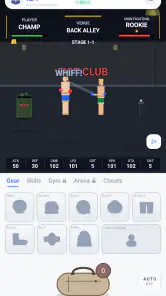
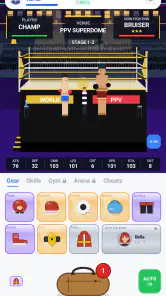


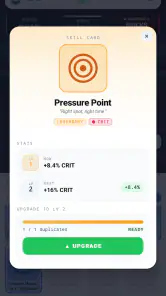

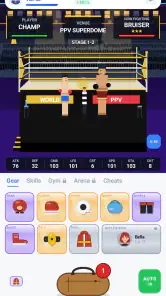
Analysis by Reviewed
Idle Boxer is a simulation game from Tap Nine that turns the long road from a street fighter into a boxing legend into a mostly hands-off progression experience. I approached it expecting short sessions rather than a full boxing simulator, and that is the right way to understand it. The appeal is not precise footwork, manual combinations, or recreating a complete bout round by round. Instead, it is about checking progress, making sensible upgrades, and watching a boxer gradually become more capable while you are away.
That format makes it easy to fit into spare moments. I can imagine opening it while waiting for a bus, checking what has improved, making a quick decision, and closing it again without losing the thread of the game. At the same time, the idle structure creates an important question: how satisfying is the progress when the player is not doing much of the fighting directly? My experience with this kind of design is that the answer depends heavily on whether you enjoy planning small improvements more than controlling every punch.
What the boxing journey feels like in practice
The store summary points toward a rise from street-level competition to boxing stardom, and the game’s identity is built around that upward journey. It is a simulation title rather than a traditional action fighter, so I would not install it expecting the timing-based challenge of a console boxing game or the move variety of a competitive fighting game. Its rhythm is calmer: return, review your situation, improve your boxer, and let the next stretch of progress unfold.
That distinction matters before downloading. Someone who wants to dodge, block, and land a counter personally may find the experience too indirect. Someone who likes watching numbers and milestones move forward can find the same simplicity relaxing. I see it as a game for the player who enjoys the management side of boxing more than the physical execution of a match.
The free entry point is useful here. You can try the basic loop without paying first, which makes it easier to decide whether idle boxing suits you. There are in-app purchases ranging from around five dollars to about one hundred dollars per item, so the free label should not be confused with a completely purchase-free experience. I would begin without spending anything and only consider a purchase after deciding whether the progression itself is enjoyable.
The age guidance is Everyone 10+, which places it in a broadly accessible range while still signaling that it is aimed beyond very young children. The game requires Android 8.0 or later, so owners of older Android devices should check compatibility before planning around it. On supported hardware, its short-session concept should make sense for casual play, especially for people who prefer a game that does not demand a long uninterrupted sitting.
Why the idle format can work
The strongest part of the concept is convenience. I do not need to reserve a full evening for a boxing session. A quick visit can be enough to see what changed and decide what deserves attention next. That makes the game a reasonable companion for repetitive daily routines, such as taking a break between work tasks or winding down before bed.
There is also a pleasant sense of continuity in an idle game when progress feels connected to previous choices. Even a small improvement can feel worthwhile if it helps the boxer move toward the next stage. The best way to play, in my view, is to treat each visit as a brief coaching appointment rather than expecting constant action.
One practical habit helps: I would avoid spending immediately after returning to the game. First, look at what the current progress already provides, then decide whether an upgrade solves a real bottleneck or merely makes the next few minutes feel faster. That pause is especially important in a free game with optional purchases, because excitement after a reward can make a purchase feel more necessary than it really is.
Where the simplicity becomes a limitation
Idle design naturally reduces direct control. If your enjoyment comes from learning a fighter’s moveset, reading an opponent, or improving through precise reactions, this will not replace a hands-on boxing game. The central satisfaction comes from progression decisions, not from mastering a detailed control scheme.
That also means the game may feel repetitive if you need constant novelty. Watching a boxer improve can be rewarding for a while, but the loop has to carry the experience between major milestones. I would be cautious about recommending it to anyone who quickly loses interest when the main activity is checking and upgrading rather than actively competing.
Another trade-off is attention. Idle games are easy to start, but their progress can encourage frequent checking. I find the healthiest approach is to set a simple routine: open it when you genuinely want a short break, make the useful decisions, and leave it alone. If you feel pushed to return repeatedly just to avoid falling behind, the convenience starts working against you.
Fairness, spending, and what I would watch
The purchase question deserves a calm approach
Tap Nine offers Idle Boxer for free, with individual in-app purchases priced from around five dollars up to about one hundred dollars. That is a wide range, and it changes how I evaluate the game. The important question is not simply whether purchases exist, but whether the free path remains enjoyable enough for a player who chooses not to buy.
I would not assume that a higher-priced item is good value merely because it promises faster progress. In an idle game, speed can remove part of the reason to return. If a purchase skips the waiting and decision-making that creates the game’s tension, it may provide convenience while also shortening the experience you downloaded to enjoy.
My recommendation is to play long enough to understand the normal rhythm before considering any transaction. Notice how often you feel blocked, whether the game gives you meaningful choices without paying, and whether a purchase would improve the experience or simply remove a delay. This is a more useful test than judging the biggest item by its price alone.
I also recommend checking the purchase confirmation carefully, particularly if the game is being used on a shared device. The presence of an expensive top-end item means accidental taps would be a serious concern for any household. I would use the platform’s purchase protections and keep spending separate from the moment-to-moment excitement of a new boxing milestone.
Can a non-spender enjoy the competition?
The available product details establish the purchase range, but they do not establish how paid progress interacts with competition. I therefore would not promise that the game is fully fair for competitive play, nor would I claim that spending is required. That is an important boundary: the existence of purchases tells me to pay attention, but it does not prove a pay-to-win system by itself.
If competitive rankings or player-versus-player goals matter to you, I would test that part personally before investing time or money. Compare what can be achieved through ordinary play with what appears behind purchases, and ask whether the contest still feels meaningful when players may progress at different speeds. For a relaxed solo player, this question may barely matter. For someone motivated by standing above other players, it could determine whether the game is worth keeping.
My own fairness standard is straightforward. I am comfortable with optional spending when it feels like a convenience rather than a requirement, and when a free player can still make steady progress. I become less enthusiastic when the game repeatedly creates pressure to pay before allowing the main loop to feel satisfying. Since the confirmed purchase information does not explain the exact benefits of each item, I would keep expectations measured until seeing those offers in context.
Three useful ways to manage progress
First, use the game as a small planning exercise instead of tapping every available improvement immediately. When more than one upgrade or progression choice is available, I would identify the one that supports the next clear obstacle rather than spreading attention across everything. In an idle system, focused improvement is usually easier to evaluate than a collection of impulsive taps.
Second, separate “I can afford this” from “this is worth buying.” Idle games often make a newly available improvement feel urgent. I would wait through at least one normal check-in and see whether the boxer continues advancing naturally. If progress still feels satisfying, there is no reason to spend simply because an offer appears at a convenient moment.
Third, keep track of why you are returning. If you are checking because you enjoy seeing the boxing career develop, the loop is probably working for you. If you are checking only because you fear losing progress or missing an advantage, that is a sign to reduce the frequency of visits. This is not a feature claim; it is a practical way to keep an idle game from taking more attention than its short-session design deserves.
Who should choose this over a traditional boxing game?
I would choose Idle Boxer over a conventional boxing title when I want a low-effort progression game with a clear sports theme. It fits a player who likes career growth, incremental improvement, and brief check-ins. It is also a better match for someone whose phone time is fragmented and who cannot reliably commit to a complete match.
I would choose a traditional boxing or fighting game instead when the important part is control. If you want to practice combinations, react to an opponent’s habits, or feel responsible for every exchange, an idle simulation will naturally feel limited. A management-focused player may see that simplicity as a strength, while an action-focused player may see it as the main weakness.
The same comparison applies to other idle games. Idle Boxer has a more focused identity than a general resource simulator because its theme gives the progression a recognizable direction. However, if you prefer a game with deeper building systems, broader customization, or more active decision-making, a different simulation may offer more variety. I would not recommend choosing this one solely because it is free; choose it because the boxing career theme makes the waiting and upgrading enjoyable.
What the rating and adoption suggest
The game currently holds a 4.4 average from around three thousand ratings, with roughly one hundred seventy written reviews. It has passed one hundred thousand installs, which tells me that the concept has found a real audience rather than existing only as a niche experiment. Those figures are encouraging, but they do not answer the questions that matter most to an individual player, such as how comfortable the free progression feels or how much variety remains after the initial novelty.
The current version is 1.21.1, so I would make sure the installed copy is up to date before judging performance or behavior. Updates can affect balance and usability, and an older build may not represent the experience intended by the developer. The release date is April 24, 2026, which also gives the game a relatively recent profile; I would expect the experience to be evaluated as an evolving product rather than a long-established classic.
Those details make me more interested in watching how the game develops, but they do not justify filling in gaps with assumptions. I would pay attention to future changes in progression, purchase presentation, and competitive systems. For a player deciding today, the sensible position is to enjoy the free starting experience while remaining cautious about committing money before understanding the long-term loop.
My final recommendation
Idle Boxer is best when you want boxing-flavored progress without boxing controls. I like the idea of checking in briefly, making a focused improvement, and letting the career continue in the background. The free download lowers the risk of trying it, and the 10+ age guidance makes it suitable for a broad audience that enjoys casual simulation games.
My reservation is the same feature that defines it: the idle structure can make the game feel passive. The purchase range also means I would approach spending carefully, especially because the exact role of each item is not clear from the basic product details. I would not pay simply to accelerate a wait until I knew that the purchase added lasting enjoyment rather than removing the game’s central rhythm.
For an everyday scenario, imagine having ten minutes between appointments. This is the kind of game I would open, review, make one or two sensible choices, and close without feeling that I had abandoned a complex match. If I wanted a demanding evening of active competition, I would choose something else. That difference is the key to deciding.
After trying it, I would keep it installed if the boxer’s gradual rise gave each short visit a purpose. I would skip it if the lack of direct fighting made the sport feel disconnected or if the progression began to feel like pressure to purchase. My trust verdict is cautiously positive: try the free path first, judge the fairness of the progress for yourself, and treat every purchase as optional until the game proves it deserves your money.
In that role, Idle Boxer has a clear audience. It is not trying to be a full boxing simulator, and I would not judge it by that standard. As a compact Android simulation from Tap Nine, it offers a focused career fantasy for players who enjoy incremental growth, short sessions, and a little strategic patience. If that sounds like your kind of game, it is worth a careful free trial; if you need every punch to be yours, look toward a more active alternative.
Pros
- Simple tap-based controls make it easy to start playing immediately.
- Offline progress lets you earn rewards without staying in the game.
- Frequent upgrades provide a steady sense of progression.
- Short matches suit quick gaming sessions on mobile.
- Colorful visuals and boxing effects make fights enjoyable to watch.
Cons
- Progress can slow considerably without watching ads or spending currency.
- Gameplay becomes repetitive once the initial novelty wears off.
- Limited strategic depth may disappoint experienced management-game players.
- Some upgrades require long waiting times at higher levels.
- Device performance may suffer during busy fights and visual effects.

- Category
- Simulation
- Version
- 1.21.1