I Am Dino
- 1.00
- 4.3
- Installs
- 500.00K
- Price
- Free

Screenshots
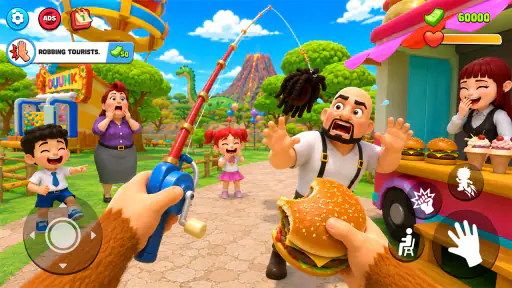
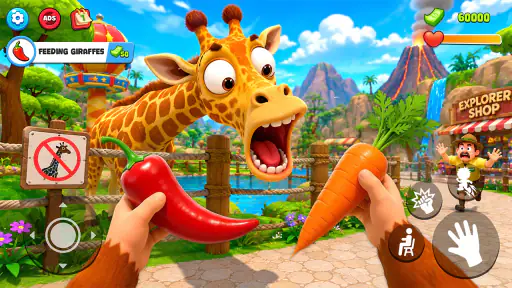
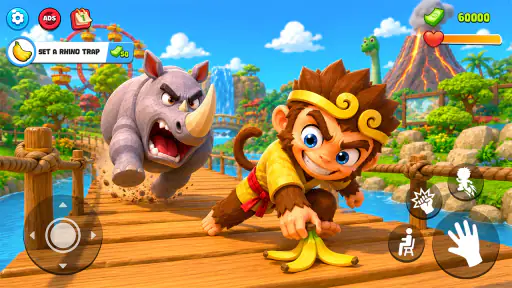
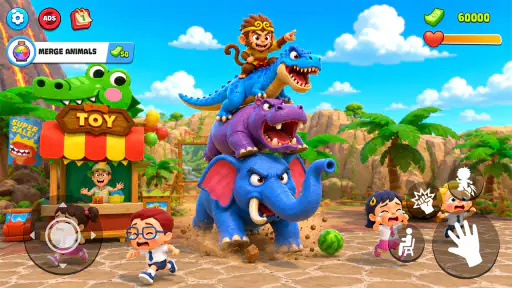
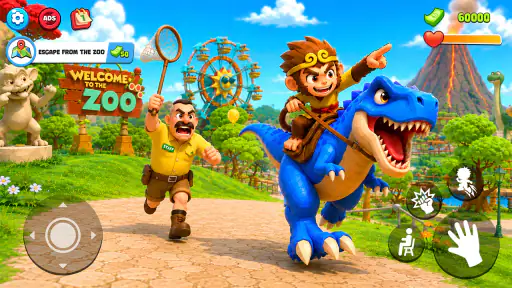
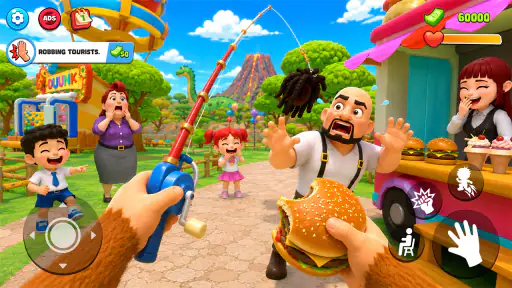
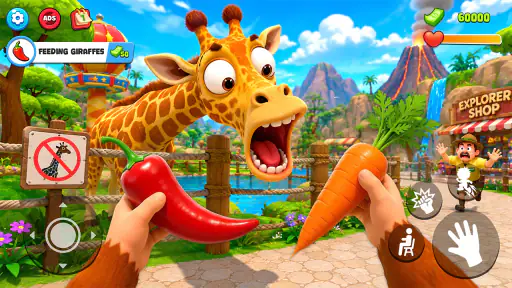
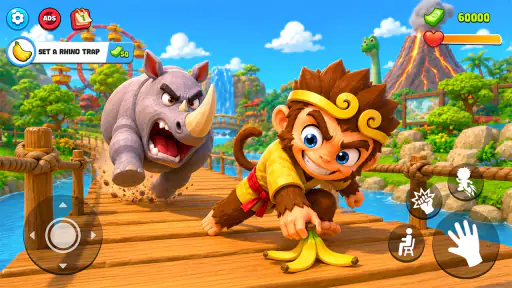
Analysis by Reviewed
I Am Dino is a small simulation game with an unusual identity problem: its store summary presents a mischievous monkey prankster, while the short description calls it “I Am Dino.” That mismatch is the first thing I noticed, and it matters because a game’s basic promise should be easy to understand before anyone installs it. Once I approached it as a light, playful experience rather than a deep simulation, the appeal became clearer. It is aimed at people who want a quick, harmless-feeling game built around playful troublemaking, not a serious management simulator or a long story-driven adventure.
My review focuses especially on how comfortably different people can understand and use it. That includes reading the interface, moving through the game, handling sensory demands, and playing in ordinary situations such as a short break or a shared room. I also looked at where the experience may become frustrating for players with different abilities. The game is free, rated for Everyone, and made by CozyTap Studio, so it has the broad, casual profile I would expect from something intended to be easy to try.
How the game presents its playful idea
The strongest part of the concept is its immediate mischievous tone. Playing as a prankster gives the experience a simple emotional hook: you are not being asked to master a complicated economy, build an elaborate city, or follow a heavy narrative. You are stepping into a playful role and seeing what kind of trouble that role creates. That makes it easier to recommend for a few minutes of relaxed experimentation than for someone looking for a demanding simulation with detailed long-term planning.
At the same time, the naming confusion weakens that first impression. A player searching for a dinosaur game could reasonably expect prehistoric creatures, while the summary points toward a monkey character. I would not treat that as a minor cosmetic issue. Clear identity helps children, parents, and players who rely on simple descriptions decide whether an app is suitable. If you are choosing it for someone else, I would explain the prankster premise before handing over the device rather than assuming the title says enough.
The game’s category also sets a useful expectation. As a simulation title, it is more likely to appeal to people who enjoy acting within a playful situation than to players who want reflex-heavy competition. That makes it a potentially comfortable choice for a casual session, especially when the goal is amusement rather than achievement. However, anyone expecting the layered systems of established simulation games should keep expectations modest.
Readability and navigation in everyday use
For me, readability begins before the first interaction. The title and summary should tell a player what kind of world they are entering, and here the conflicting monkey-and-dinosaur signals create unnecessary friction. This is particularly relevant for younger players or anyone who benefits from predictable labeling. A parent may need to clarify the premise, while a player with cognitive or language-related difficulties may find the mismatch confusing rather than charming.
Inside a game like this, clear navigation is more valuable than decorative complexity. I would look for obvious action prompts, consistent placement of controls, and a straightforward path back from any activity. Those choices reduce memory demands and make short sessions less tiring. I cannot treat any particular menu arrangement or text size as guaranteed, so my practical advice is to test the opening interaction personally before assuming it will suit a child, an older relative, or someone with low vision.
A useful way to evaluate it is to watch what happens when the player pauses. Can they quickly tell what they are meant to do next? Can they recognize the active option without reading every word? Can they recover from an accidental tap without losing progress? These questions are more important than whether the screen looks colorful. A playful simulation works best when the interface lets the joke or action remain the focus instead of making the player decode the controls.
I would also avoid judging accessibility from the age rating alone. Everyone indicates a broad content suitability, not a promise that every player will find the text, icons, timing, or navigation comfortable. Someone with dyslexia, limited vision, attention difficulties, or reduced familiarity with mobile games may need a slower introduction. If the first screen feels crowded or unclear, the game may be less welcoming than its simple premise suggests.
Motor demands and sensory comfort
The main physical question is how much precision and speed the game expects. A prankster game can work well with simple taps, but the actual comfort depends on whether actions require repeated quick input, accurate small targets, or rapid reactions. Players with tremors, limited dexterity, joint pain, or one-handed use may find a supposedly casual game demanding if the controls are unforgiving.
My recommendation is to begin with the device held in the most stable position available rather than playing while walking or standing. A larger grip, a table, or a supported forearm can make a meaningful difference during repeated interactions. This is a practical adjustment, not a claim that the game includes special motor-access options. If an action requires more precision than expected, a player may need to take breaks or use a different device size.
Sensory comfort deserves the same attention. Bright animation, sudden movement, sound effects, or repeated visual activity can be enjoyable for one player and tiring for another. In a shared room, a quiet approach is also more considerate than assuming everyone wants game audio. I would start at a low volume and increase it only if needed. Players sensitive to motion or flashing should stop if the presentation becomes uncomfortable, especially during longer sessions.
The game’s mischievous theme may be a good fit for people who enjoy playful surprises, but surprise itself can be a barrier. Some players prefer to know what will happen before an action is selected. A child with sensory sensitivities may want an adult nearby for the first session, not because the content is inappropriate, but because the pacing and presentation may be unfamiliar. That small amount of preparation can turn an uncertain first impression into a more comfortable trial.
Playing in real-life situations
I can see the game fitting naturally into short gaps: waiting for an appointment, relaxing after school, or taking a brief break from a more demanding task. Its free price lowers the barrier to trying it, and the Everyone rating makes it easier to consider for a mixed-age household. Still, free does not automatically mean frictionless. A player may encounter interruptions, unclear progression, or a session structure that does not match the time available, so I would test it during a low-pressure moment first.
For a child using a family device, I would set up the first session with the screen at a comfortable distance and check whether the child can understand the goal without constant help. The prankster role can encourage imaginative play, but it is worth discussing the difference between harmless in-game mischief and real-world behavior. That conversation is especially useful when a game’s central joke involves causing trouble, even in a fictional setting.
For an older player or someone new to mobile games, I would avoid presenting it as a test of skill. Let them explore at their own pace and observe whether the controls feel discoverable. A short demonstration may be more helpful than verbal instructions. If the player struggles with small targets or fast choices, the issue is not a lack of interest; the game may simply be asking for a type of input that does not suit them.
It may also work as a social pass-and-play curiosity, where one person experiments and another comments on the result. That is different from a game designed around deep cooperation, so I would not choose it when a group specifically wants shared progression or structured multiplayer interaction. Its better social use is informal: showing a funny moment, comparing approaches, or letting a younger player explain what they discovered.
Where the experience may still create barriers
The biggest barrier is uncertainty. The title, short description, and store summary do not point in exactly the same direction, which makes the product harder to evaluate quickly. People who depend on concise information may skip it simply because they cannot tell whether it matches their interests. That is a communication problem before it becomes a gameplay problem.
Another limitation is the gap between a playful premise and the expectations attached to the simulation label. If you want a game with detailed systems, meaningful resource decisions, or a substantial sense of progression, this may feel too light. Traditional simulation alternatives are usually better for planning-focused players, while a puzzle game may be a better choice for someone who wants clearly defined problems and measurable solutions. I would pick this one when the mood is improvisation, not optimization.
Players who need large text, strong contrast, reduced motion, remappable controls, captions, or carefully documented accessibility settings should investigate the opening experience directly before committing time. I would not assume those options exist merely because the game is simple or suitable for Everyone. The same caution applies to people who use screen readers or alternative input methods: a game built around visual tapping may not provide the feedback they need.
There is also a practical trade-off between simplicity and depth. A straightforward game is easier to explain, but it can run out of novelty sooner for players who want a long-term hobby. If you enjoy discovering elaborate systems, you may prefer a more established simulation title. If you mainly want a playful character and a low-stakes activity, the lighter design may be exactly what makes it approachable.
Who should try it, and who should choose something else?
I would recommend trying I Am Dino if you like casual simulation games, playful role-play, and short sessions that do not require a serious commitment. It is especially suitable for someone who enjoys the idea of being a cheeky character rather than managing a complex world. The free entry point makes experimentation easy, and the broad age rating supports considering it for family use, provided an adult checks the actual interaction and presentation first.
I would be more cautious about recommending it to players who need precise accessibility information before installing. The game’s public identity already requires clarification, and that makes it harder to predict whether the interface will meet a particular need. I would also steer competitive players, story-focused players, and deep simulation fans toward alternatives built specifically around their preferred style.
One useful tip is to treat the first session as an accessibility check rather than a commitment. Ask whether the player can identify the goal, select an action without strain, understand the result, and stop comfortably. If those four steps feel natural, the game has a good chance of working as a casual diversion. If any one of them causes repeated confusion, a different app may offer a better experience even if its theme is less appealing.
Another tip is to play with the surrounding environment in mind. Lower the volume in shared spaces, avoid playing while moving, and give the player enough time to inspect the screen. For children, explain the fictional nature of the pranks. For players with attention or sensory concerns, use shorter sessions and pause at the first sign of fatigue. These small choices cannot replace built-in accessibility features, but they can reduce avoidable discomfort.
My inclusive verdict
CozyTap Studio has a friendly, easy-to-grasp idea in I Am Dino: step into a mischievous role and enjoy a light simulation experience. I like its low-pressure personality and the fact that it can fit into a short break without demanding the commitment of a large management game. Its free price, Everyone rating, and current version 1.0.0 make it approachable for curious players, while its 7.1 minimum operating-system requirement keeps it compatible with older supported devices.
The game has also built a visible audience, with over 500 thousand installs and an average rating of 4.3 from around 991 ratings. Those figures suggest that the concept has found interest, but they do not answer the accessibility questions that matter to every player. I would use them as encouragement to try it, not as proof that it will suit a particular motor, sensory, visual, or cognitive profile.
My final view is positive but measured. The best reason to install it is its playful premise, not the promise of a deep simulation. I would recommend it to casual players who enjoy harmless mischief and are comfortable checking the interface for themselves. I would skip it, at least for now, if clear identity, documented accessibility support, or complex simulation systems are essential. With the right expectations and a considerate setup, it can be a pleasant little diversion; without those checks, its unclear presentation may make the first experience more frustrating than it needs to be.
Pros
- Simple controls make it easy for younger players to pick up.
- Bright dinosaur visuals are appealing and easy to understand.
- Short sessions work well for quick play on mobile devices.
- The prehistoric theme offers educational appeal for dinosaur fans.
- Progression gives players a reason to return and keep improving.
Cons
- Gameplay may feel repetitive after extended sessions.
- Some features can be limited without in-app purchases.
- Ads may interrupt play
- depending on the version and device.
- The challenge could be too easy for experienced players.
- Performance may vary on older phones or tablets.

- Category
- Simulation
- Version
- 1.0.0