Honey Panic: Bear My Heart
- 150.00
- 4.6
- Installs
- 100.00K
- Price
- Free

Screenshots


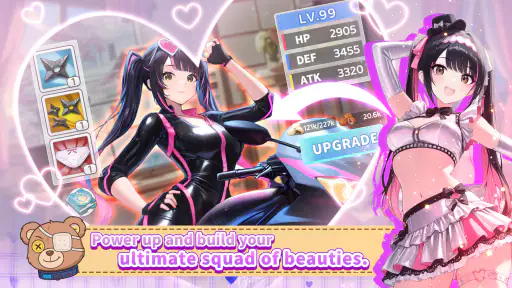
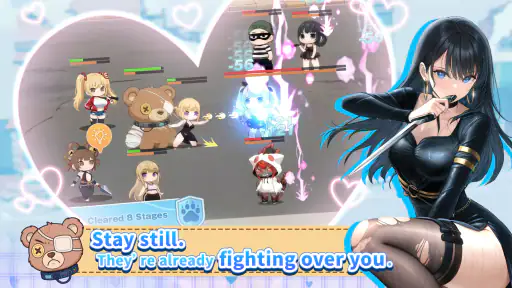




Analysis by Reviewed
Honey Panic: Bear My Heart caught my attention because it presents itself as a role-playing game with a very specific emotional identity rather than another interchangeable fantasy adventure. The idea behind it is easy to grasp: a magical journey centered on dolls, girls, and awakening power. That premise gives the game a softer, more character-focused starting point, but the Mature 17+ rating also signals that its tone is not simply childlike or decorative.
After spending time with it, my strongest impression is that the game wants its presentation to do as much work as its progression systems. The art direction, setting, and pacing are closely connected, so the experience is less about rushing from one reward to the next and more about settling into its particular mood. I would describe it as a good fit for players who enjoy stylized role-playing games with an unusual visual identity, especially when atmosphere matters as much as combat or collection.
It is free to start, which makes trying the opening portion an easy decision. The game comes from 6waves and has built a 4.6 average from around 1.3 thousand ratings, with more than 100 thousand installs. Those figures suggest a healthy audience without making the game feel like a mass-market substitute for every other mobile RPG. Its current version is 1.1.112, and it runs on devices using Android 8.0 or later.
How the opening establishes its unusual mood
The first impression depends heavily on contrast. The title and premise sound playful, even sweet, but the mature classification creates a more complicated expectation. I did not approach it as a simple comfort game, and that was the right mindset. The doll imagery gives the world a crafted, almost theatrical quality, while the role-playing structure asks me to pay attention to the people and powers inside that setting.
That contrast is one of the game’s most effective choices. A purely cheerful presentation would make the title feel lightweight, while an entirely grim treatment would lose the charm of the dolls and magical imagery. Instead, the game works best when those two sides sit next to each other. The result is a world that feels deliberately stylized rather than realistic, and that makes its atmosphere easier to recognize after only a short session.
I also found the pacing important during the opening. This is not an experience I would recommend judging only by the first few minutes or by the store summary. Its appeal comes from how the presentation gradually frames the adventure. The game needs room to establish its characters and visual language before the role-playing elements feel meaningful. Players who prefer immediate action may find that slower setup less rewarding, while anyone who enjoys being introduced to a fictional world should have more patience.
A useful way to play is to treat the early progress as orientation rather than a race. I paid closer attention when I stopped trying to optimize every small reward and instead watched how the scenes, character designs, and encounters were arranged. That approach revealed a practical strength: the game’s identity becomes clearer when I allow the story atmosphere to guide my attention instead of treating every screen as a menu between battles.
The free entry point helps here. I can test whether the visual tone and mature presentation suit me before considering any optional spending. Purchases range from $0.99 to $99.99 per item, so I would strongly advise deciding on a personal limit before becoming invested in progression. The low starting cost is welcoming, but the wide purchase range means the game is better approached as a free trial of a larger hobby, not as something that automatically stays cost-free for every player.
A setting built from visual language
The world communicates through its choice of imagery. Dolls are not merely a decorative theme in the background; they shape how I read the characters and the adventure itself. Their presence suggests fragility, design, performance, and control all at once. That gives the setting a different emotional texture from the usual medieval fantasy village or science-fiction battlefield.
The “girls within” idea also affects how I interpret the cast. The characters are presented as part of the world’s central mystery and power structure, rather than as interchangeable units placed on top of a generic map. Even when the role-playing framework encourages me to think about advancement and usefulness, the setting keeps pulling my attention back toward identity and transformation.
This is where the art direction earns its place. A less committed visual style would make the premise seem like a novelty, but the game’s mood depends on treating the doll concept seriously. I found myself looking for meaning in the contrast between polished designs and the more mature atmosphere. That tension gives the setting a distinctive voice, and it is the main reason the game stands out among mobile role-playing releases.
One tip I would give new players is to avoid judging characters only by their first visual impression. In a game built around dolls, awakening, and internal power, appearance is part of the storytelling language. I found it more useful to ask what each design says about the world than to decide immediately whether a character looked like a favorite. That habit makes the cast feel less like a gallery of costumes and more like pieces of the setting.
The trade-off is that this visual emphasis will not satisfy everyone. Players searching for a grounded adventure, naturalistic character art, or a clean competitive interface may find the presentation too stylized. The game’s personality is an advantage only if that personality appeals to you. If you want a neutral backdrop for statistics and fast optimization, a more conventional role-playing game may be a better choice.
Sound, silence, and the pace of play
Sound works best here as a support for the game’s mood rather than as a separate attraction. The setting asks for a balance between wonder and unease, and the audio presentation helps maintain that balance when the visuals could otherwise feel overly ornate. I noticed that the atmosphere became more coherent when I played with sound enabled, because the scenes felt less like isolated illustrations and more like parts of one continuous world.
The pacing is equally important. The game does not seem designed around constant intensity. Its rhythm benefits from pauses between moments of action, character-focused beats, and progression decisions. Those quieter intervals give the art direction time to register, but they also create friction for anyone who expects a mobile RPG to deliver a reward or confrontation every few seconds.
For everyday use, I would place it in the category of games that suit a deliberate evening session better than a distracted commute. I can imagine playing after work with headphones, giving the opening scenes enough attention to absorb the tone, then stopping at a natural break rather than forcing a long run. It can still fit shorter visits, but the experience loses some of its coherence when I repeatedly interrupt the story atmosphere.
That does not mean the game is slow in every sense. Role-playing progression gives the session a forward direction, and the awakening theme provides a clear reason to keep moving. The more accurate description is that the game alternates its energy. It asks me to shift between observing, deciding, and engaging, rather than keeping my attention locked on one repeated action.
A practical habit helped me enjoy that rhythm: I separated “story sessions” from “maintenance sessions.” When I had time, I focused on the world and characters. When I only had a few minutes, I handled straightforward progression tasks without expecting the same emotional impact. That distinction prevents the game from feeling disappointing when a short visit is mostly routine, and it makes the more atmospheric sections land better when I can give them proper attention.
Where the role-playing mechanics fit the presentation
The role-playing structure is most successful when it reinforces the game’s central ideas. Progression feels more interesting when I connect it to awakening and character identity, not just to larger numbers. That connection is important because the visual style invites emotional investment, while the genre naturally encourages efficiency and comparison.
There is a real tension between those two approaches. I can look at a character as part of a carefully designed world, then immediately start evaluating that character as a tool for progress. Neither perspective is wrong, but moving between them changes the feel of the game. I enjoyed it more when I allowed the setting to come first and optimization to follow, especially during the early stages.
One non-obvious strength is that the game’s unusual theme gives progression decisions more context than a standard fantasy roster might. Even when I am thinking practically, the doll concept makes upgrades feel connected to the fiction’s idea of power awakening. That does not remove the usual role-playing grind, but it gives the routine a clearer emotional frame.
The weakness is familiar to the genre: free-to-play progression can make it tempting to measure enjoyment through acceleration. Since individual purchases can reach $99.99, players who are sensitive to spending pressure should be cautious. I would not begin by buying anything. First, I would learn whether the normal pace feels satisfying, identify which parts of the game I genuinely enjoy, and only then decide whether a small purchase improves my experience rather than simply shortening it.
This is also where the Mature 17+ classification matters for choosing an audience. I would not hand it to a younger player simply because the dolls and magical elements look approachable. Parents should use the age guidance as a serious filter, and adults who dislike darker or more mature character themes should inspect the tone before investing time.
Compared with a conventional mobile RPG, this game offers a stronger sense of authored atmosphere but may provide less immediate comfort for players who already know exactly how they want to optimize a familiar system. Compared with a visual character-collection game, it puts more weight on the surrounding world and mood. Compared with a fast action title, it asks for more patience and attention to presentation. Those differences are not automatically advantages; they explain who is likely to connect with it.
Another useful trade-off is device age. Android 8.0 support makes the entry requirement reasonably approachable for many players, but compatibility alone does not guarantee an ideal experience on every older phone. If your device is modest, I would test the game during a normal session rather than assuming that the minimum operating system tells the whole story. Watch for heat, battery drain, or uncomfortable loading before committing to long play periods.
Who should make room for it, and who should skip it
I would recommend Honey Panic: Bear My Heart to adults who enjoy role-playing games with a strong visual premise, a carefully shaped mood, and characters that are meant to be read as part of the world rather than simple combat pieces. It is especially suitable for someone who likes discovering why a setting looks and feels the way it does. The game’s appeal is not limited to winning encounters; it comes from inhabiting its unusual atmosphere.
I would also suggest it to players who are tired of interchangeable fantasy settings. The doll-centered identity gives the adventure a memorable angle, and the awakening theme provides a natural emotional direction. If you enjoy discussing character design, symbolism, and the way sound changes a scene, you will probably get more from it than someone who skips every presentation element.
On the other hand, I would skip it if your priority is a completely free experience with no temptation to spend. The game can be started without an entry fee, but the in-app purchase range is broad enough that disciplined spending matters. I would also look elsewhere if you want a simple, lighthearted game for children, a purely competitive role-playing system, or nonstop action with minimal story atmosphere.
The most realistic use case is a player who has a few focused sessions each week and enjoys letting a game develop its personality. I would not choose it as background entertainment while watching another show. The art, sound, and pacing are too central to the experience. It rewards attention, even when that attention is modest and spread across several shorter sessions.
My atmosphere verdict
What stays with me is the coherence between the game’s subject, presentation, and role-playing framework. The dolls, magical awakening, mature tone, sound, and measured rhythm all point in the same direction. That does not make every moment equally exciting, and the free-to-play structure still demands sensible boundaries, but the game feels like it knows what kind of experience it wants to be.
6waves has made a game that is easier to appreciate on its own terms than through comparisons with the busiest mobile RPGs. Its strongest quality is not sheer speed or mechanical novelty; it is the way its art direction creates a recognizable emotional space and then asks the progression systems to operate inside it. When those elements align, the adventure feels distinctive rather than merely decorated.
My final advice is to try the free version slowly, keep the mature rating in mind, and resist spending until you understand the normal rhythm. Give the opening enough attention to decide whether the doll-centered world speaks to you. If it does, the atmosphere is a genuine reason to keep playing, not just a layer over routine mechanics. If it does not, the game’s unusual style will probably feel like a barrier rather than a benefit.
With its 4.6 average and growing audience, it has clearly found players who connect with that approach. I can see why. Honey Panic: Bear My Heart is not the right role-playing game for everyone, but for adults looking for a visually distinctive, mood-led magical adventure, it offers a memorable alternative to the usual mobile formula.
Pros
- Simple controls make it easy to start playing immediately.
- Cute bear-themed visuals give the game a charming personality.
- Short sessions suit quick breaks and casual play.
- Increasing challenges help keep the gameplay engaging.
- The lighthearted presentation is suitable for a broad audience.
Cons
- Gameplay may feel repetitive after extended play sessions.
- Progress can become difficult without careful timing and practice.
- Some players may find the overall experience too simple.
- Limited variety may reduce long-term replay value.
- Ads or optional purchases may interrupt the casual experience.

- Category
- Role Playing
- Version
- 1.1.112