Hockey All Stars 24
- 1.23K
- 4.5
- Installs
- 1.00M
- Price
- Free

Screenshots
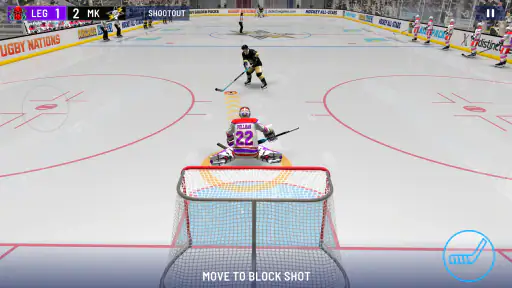
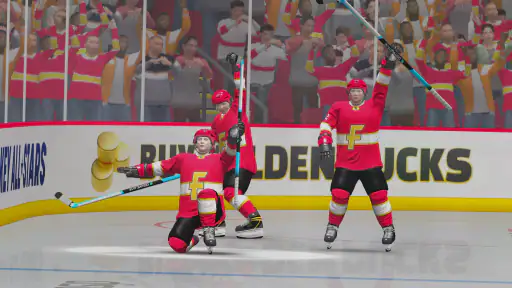
Analysis by Reviewed
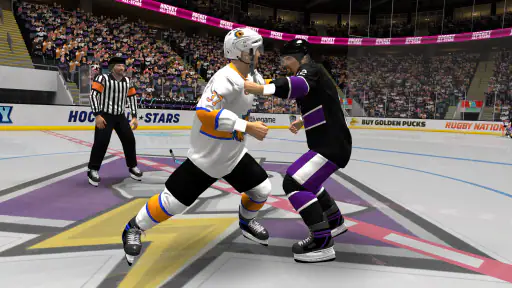
I went into Hockey All Stars 24 expecting a quick sports game for short sessions, but I found something with a little more commitment than a simple arcade match. It puts the focus on building a team, working through playoff-style competition, and chasing the excitement of winter hockey. That combination makes it easy to pick up for a few minutes, while also giving me a reason to return when I want a longer run of games.
This is a free sports game from Distinctive Games, aimed at players who enjoy hockey but do not necessarily want a full simulation. It has a Teen content rating, supports devices running Android 7.0 or later, and its current version is 2.3.0.448. The game has reached over a million installs and holds a 4.5 average from around twenty-six thousand ratings, which suggests that its accessible approach has found a sizeable audience.
How the game feels during an ordinary session
My first impression was that the game is built around momentum. Matches are easy to start, and the appeal comes from moving quickly from one contest to the next rather than spending a long time preparing every detail. The team-building layer gives the matches more meaning than isolated exhibition games, because decisions made outside the rink affect how I approached the next challenge.
The basic rhythm works especially well when I have a short break. I can play a match, make a few adjustments, and stop without feeling that I have abandoned a complicated management project. At the same time, the playoff direction gives longer sessions a clear purpose. When I had enough time, I could treat a run of games as a small campaign instead of repeatedly starting from nothing.
The best reason to try it is the balance between immediate hockey action and gradual team-building. It does not demand that I understand every aspect of the sport before I can enjoy it, but it also avoids feeling completely empty after the first few matches.
Speed expectations and the cost of a quick match
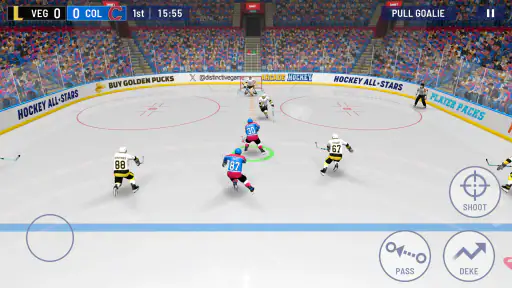
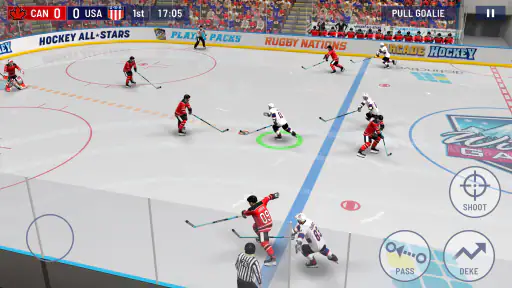
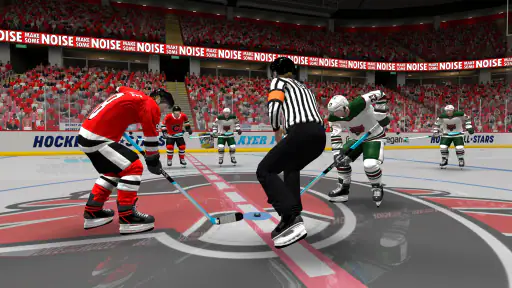
For a mobile sports game, the important question is not only whether a match feels fast. It is whether the speed remains readable. Hockey naturally creates crowded, rapid moments, so I paid attention to whether I could understand what was happening rather than simply reacting to movement on screen. The game is most enjoyable when I stay focused on positioning and timing instead of trying to control every second like a traditional console simulation.
That makes it a good fit for players who want energetic sessions without the slower preparation associated with more detailed sports management games. If you are looking for a highly technical hockey simulator with extensive tactical control, this probably will not replace it. The attraction here is the immediate contest and the broader sense of progress around it.
A useful habit is to avoid treating every possession as an emergency. When the action becomes busy, I found it more helpful to anticipate where the play was going and make a deliberate choice than to tap or steer constantly. That small change makes the game feel less chaotic and helps preserve energy during a longer playoff run.
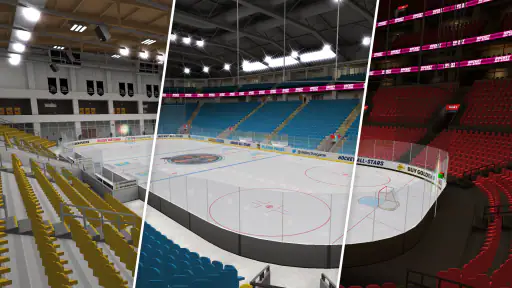
The winter sports theme also gives the game a seasonal identity without turning it into a novelty. I would not describe it as a realistic broadcast-style presentation first; I see it more as a mobile hockey experience designed around accessible competition. That distinction matters when deciding whether it suits you.
What happens when the team-building layer takes over
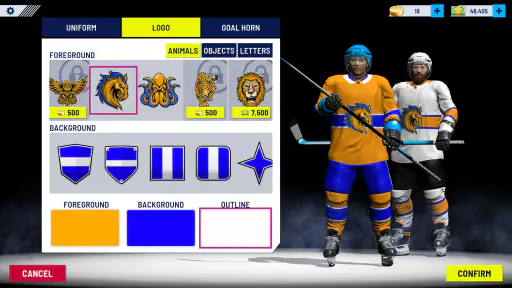
Building a team changes the way I value a match. A win is not only a result on the screen; it becomes part of a wider attempt to improve and compete more effectively. This is one of the game’s stronger ideas because it gives ordinary matches a reason to matter, especially after the initial excitement has settled.
The trade-off is that progression systems can make a free game feel less relaxed. A player who only wants instant matches may find the surrounding development layer distracting. I preferred it because it gave me something to think about between games, but I can see why someone seeking a pure pick-up-and-play arcade title might want fewer decisions outside the rink.
My practical advice is to establish a simple routine: play a match, review the team, then make only the changes that clearly support the next challenge. Constantly reorganizing everything can turn a fun session into maintenance. The game works better when the management side supports the hockey instead of becoming the whole activity.
Heavy-use moments: where the experience is tested
The most demanding periods are naturally the busiest stretches of a match and the longer sessions where several games are played back to back. Those are the moments when a player notices whether controls remain comfortable, whether the display stays responsive, and whether the device becomes warm or loses battery more quickly. I would not judge the game solely by a single short match, because short sessions can hide the friction that appears during extended play.
In a longer run, the mental demand matters as much as the technical demand. Hockey produces repeated bursts of attention, and playoff-style progression encourages me to continue even after a difficult game. That can be exciting, but it also means the game is not always ideal for playing while distracted. If I am commuting, waiting in a queue, or dealing with interruptions, I prefer a shorter commitment and a clear stopping point.
One non-obvious strength is that the team-building structure gives me a useful pause between intense matches. I can step away from the action, consider the next opponent or objective, and return with a plan. That makes the game feel less exhausting than a sequence of nonstop matches, even though the overall progression encourages continued play.
There is also a clear trade-off involving in-app purchases. The game is free to download, but individual purchases range from $2.99 to $99.99. I would approach those options cautiously. They may appeal to players who want to accelerate progress or invest heavily in the experience, but they are not a reason for me to assume that every player needs to spend money. I would first learn whether the normal progression is enjoyable before considering any purchase.
For families, the Teen rating is worth taking seriously. It is not presented as a children’s game, so parents should make their own decision based on the player’s age and comfort with the game’s competitive and purchase-related elements. The rating also reinforces my view that this is aimed at a more mature mobile audience than a very young sports title.
Reliability, stability, and returning to a session
Reliability is not only about whether a game launches. For me, it includes how confidently I can return to it, how well it handles repeated sessions, and whether its progression feels dependable. Hockey All Stars 24 benefits from having a clear loop: play, improve the team, and continue competing. That clarity makes it easier to resume after a day away because I know what kind of activity awaits me.
I would still keep expectations realistic. A free, progression-focused sports game can change in feel as the team becomes stronger and the competition becomes more demanding. Early matches are useful for learning the rhythm, but they may not represent the pressure of later play. I recommend judging the game after enough time to experience both the immediate hockey and the team-development side.
The current version is 2.3.0.448, so anyone installing it should make sure the device receives the current build available through the normal app store. I mention this because sports games often depend on a consistent version when progression and competition are central to the experience. Keeping the installation current is a sensible part of avoiding unnecessary compatibility or recovery headaches.
Recovery is also a practical concern when a session is interrupted. I would avoid beginning an important playoff run when the phone is nearly out of battery or when I know I may need to close the game suddenly. That is not a criticism unique to this title; it is simply more relevant here because the value of a session comes from building momentum across matches rather than playing one completely isolated round.
Another useful approach is to separate experimentation from serious progress. I like trying different team choices when I have time, but before an important contest I prefer to use the setup I already understand. This reduces the chance of blaming the game for a poor result that actually came from changing too many things at once.
Device constraints and who should be careful
The minimum operating-system requirement is Android 7.0, which makes the game available to a broad range of Android devices. That does not mean every compatible phone will offer the same experience. Age, available storage, background activity, screen size, and general hardware condition can all affect how comfortable a fast sports game feels.
On an older or heavily loaded phone, I would close unnecessary apps before playing and avoid judging performance while the device is already handling several demanding tasks. Those are simple steps, but they matter more during hockey than in a turn-based game because delays are easier to notice when a play develops quickly.
Screen size is another consideration. A larger display can make it easier to follow players and space, while a smaller phone may feel more portable but less comfortable during crowded action. I would choose a tablet or larger handset for longer sessions if available, and reserve a compact phone for quick matches. That is a practical distinction rather than a claim that the game requires a particular device.
Battery planning is equally important. Players who expect to spend a long time pursuing playoff progress should start with a reasonable charge and keep the phone cool. I would not recommend using it as a background activity while doing something else, because the game’s value comes from paying attention to the match and responding to what is happening.
Players should also think about their tolerance for free-to-play progression. If you dislike any game that presents optional purchases, even when you can begin without paying, this may not be the right choice. A paid sports game or a simpler offline arcade alternative could be a better fit for someone who wants a fixed experience with no temptation to accelerate progress.
How it compares with other mobile hockey choices
Compared with a pure arcade hockey game, this title offers more reason to continue because the team and playoff structure create a longer path. The cost is that it may feel less instantly disposable. An arcade alternative is better when I want a single quick burst with no concern for development, while Hockey All Stars 24 is stronger when I want each match to contribute to a broader run.
Compared with a serious sports simulation, it is easier to approach but less suited to someone who wants every tactical detail represented. A simulation may reward patience, deep planning, and precise control over a wide range of hockey decisions. This game is more attractive to me when I want the recognizable excitement of hockey without turning my phone into a full coaching workstation.
It also sits between casual and committed play. The free entry makes experimentation easy, and the mobile format supports short sessions. Yet the playoff goal and team-building layer can pull me into longer stretches. That middle position is its identity, not a flaw, but players should know which side they want before downloading it.
For a friend who already enjoys sports games with progression, I would recommend trying it. For someone who wants a completely relaxed game with no competitive pressure, I would suggest starting cautiously and seeing whether the playoff structure feels motivating or demanding. The right choice depends less on hockey knowledge than on how much ongoing progression you enjoy.
Who will get the most from it
I think the game is particularly suitable for players who like a clear sense of improvement. If you enjoy taking a team through competition, making occasional adjustments, and seeing a short session connect to a larger goal, the design has a good chance of holding your attention. It is also a sensible choice for hockey fans who want something more involved than a single quick match but less demanding than a detailed simulation.
A realistic everyday scenario would be playing one game during a lunch break, reviewing the team afterward, and leaving the next playoff step for the evening. That rhythm uses the mobile format well. It avoids rushing through several matches while still letting the game become part of a daily routine.
I would be less enthusiastic about recommending it to players who dislike progression gates, optional spending, or the possibility that a free game may ask for continued attention over time. It is also not my first choice for someone who wants local multiplayer, a deep management simulator, or a strictly fixed-price experience. Those players should look toward alternatives designed around those specific priorities.
New players can make the opening hours more enjoyable by learning the match flow before worrying about perfect team optimization. I would resist spending immediately, keep early decisions simple, and use the first sessions to identify which parts of team-building I actually enjoy. That approach gives a clearer idea of the game’s value than treating every purchase or upgrade as essential.
My performance verdict
Hockey All Stars 24 succeeds because it understands the appeal of a mobile sports game: quick access, recognizable competition, and enough progression to make another match feel worthwhile. Its strongest performance-related quality is not a technical specification I can reduce to a number; it is the way the game combines short bursts of action with a structure that supports longer play.
The experience is best when the device is prepared, the player can give the match proper attention, and the team-building layer is treated as a useful support rather than a chore. Heavy sessions may be less comfortable for players on older phones, smaller screens, or limited batteries, and anyone sensitive to free-to-play purchasing deserves to approach it with clear boundaries.
Distinctive Games has made a sports game that is easy to understand without being completely disposable. The winter competition theme, team-building focus, and playoff ambition give it more personality than a sequence of disconnected hockey matches. I also appreciate that it leaves room for different levels of commitment: I can play briefly, or I can settle in and pursue a longer run.
My final recommendation is positive, with conditions. Try it if you want accessible hockey with a developing team and a reason to return. Skip it if you need a deep simulation, a one-time purchase with no optional spending, or a game that asks almost nothing of your attention. For everyone in between, this is a convincing free sports game whose main challenge is not getting started, but deciding how much of the longer journey you want to take.
Pros
- Fast-paced matches are easy to learn but still reward skilled play.
- Team upgrades and progression give regular goals beyond individual matches.
- The game offers an entertaining arcade-style take on hockey.
- Short match sessions suit quick play on mobile devices.
- Different players and teams add variety to the overall experience.
Cons
- Progression can feel slow without spending money or playing frequently.
- Online performance may suffer when your connection is unstable.
- The free version may include frequent ads between or around matches.
- Advanced upgrades can make competition feel uneven between players.
- Some controls may feel imprecise during fast defensive situations.

- Category
- Sports
- Version
- 2.3.0.448