Good Knight Story
- 16.29K
- 4.5
- Installs
- 1.00M
- Version
- 1.0.12
Screenshots
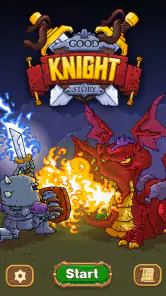
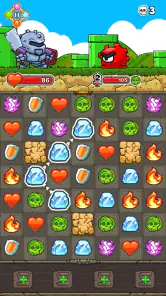
Analysis by Reviewed
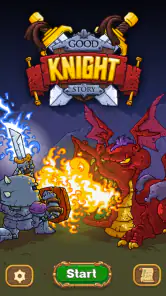
I went into Good Knight Story expecting a small match-style puzzle game with a fantasy coat of paint, but its appeal is more specific than that. It puts me in the role of an unlikely hero who works through puzzles while facing monsters, creating a compact loop that is easy to understand and surprisingly good at filling short breaks. The game comes from Turbo Chilli, belongs to the board-game category, and is free to start, with optional purchases ranging from $0.99 to $29.99 per item.
What makes it worth discussing is not simply that it combines puzzles and fantasy. Plenty of mobile games do that. The interesting question is whether the goals, unlocks, challenge, and pacing keep the experience moving after the first few sessions. In my experience, this game works best when I treat it as a focused bite-sized adventure rather than a huge role-playing game. It gives me a clear reason to play the next stage, but it also has limits that become more noticeable if I want deep strategy, long sessions, or a completely pressure-free free-to-play experience.
How the first goals pull you into the adventure
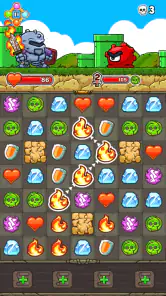
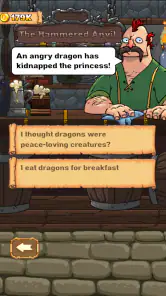
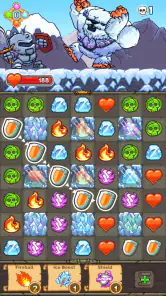
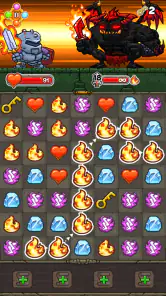
The early appeal comes from the clarity of the basic objective. I am not asked to learn an elaborate world before playing. The premise immediately connects the puzzle board with the fantasy situation: solving the board helps an unusual hero deal with monsters. That relationship gives ordinary puzzle moves a little more purpose than simply chasing a score.
This is important because the first few stages of a mobile puzzle game can otherwise feel like a tutorial stretched over too long a period. Here, the adventure framing gives me a simple mental target: solve the current problem, help the hero, and see what comes next. I can pick it up without preparing for a long session, which makes it a natural choice when I have a few spare minutes while waiting for an appointment or taking a short break.
I also like that the fantasy presentation does not require me to commit to a complicated character-building routine before the puzzle itself becomes enjoyable. The hero and monsters provide context, while the board remains the center of attention. That balance makes the game approachable for someone who enjoys fantasy themes but does not necessarily want a full-scale role-playing game.
One useful way to approach the opening is to avoid playing every move as quickly as possible. The game invites fast decisions because the board is visually immediate, but pausing briefly to look for a better sequence can make the difference between a comfortable win and a frustrating attempt. I found that the early stages are most enjoyable when I use them to learn the game’s visual language rather than treating them as disposable warm-up rounds.
The game’s free entry point also lowers the barrier to trying it. I can install it and decide for myself whether the puzzle-adventure mix suits me before spending anything. That is a meaningful advantage for casual players, especially those who are unsure whether they want a fantasy puzzle game or a more traditional board experience.
Progress feels clearest when each stage has a purpose
Good progression in this kind of game depends on visible movement. I want to feel that completing one puzzle has taken me somewhere, not merely reset the same activity with a different arrangement. The hero-versus-monster setup helps create that feeling because each solved challenge belongs to a larger adventure instead of existing as an isolated board.
My advice is to pay attention to the rhythm of the stages rather than judging the game from a single puzzle. The satisfaction comes from the sequence: I solve one challenge, adjust to the next, and gradually become more comfortable reading the board. That learning is itself a form of progression, even when the game is not asking me to manage a large collection of equipment or complicated statistics.
The strongest progress signal is the improvement in my own decision-making. At first, I can be tempted by the most obvious move. Later, I start considering what that move creates, what it removes, and whether it leaves a useful option for the following turn. In a puzzle game, that change in how I see the board can be more rewarding than a decorative unlock because it makes me feel genuinely more capable.
There is also a practical benefit to the stage-based structure. I can stop after a completed challenge without feeling that I have abandoned a long mission. That makes the game suitable for irregular play. I do not need to reserve an evening for it, and I can return after a day away without having to remember a complicated chain of events.
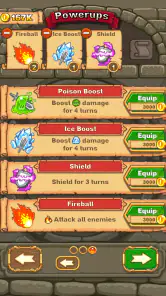
At the same time, players who need a large sense of customization may find the progression lighter than expected. This is not the right choice if your favorite part of a mobile adventure is building a detailed character, comparing extensive equipment, or planning a party. The game’s progress is centered on solving puzzles and moving through the adventure, not on turning the hero into a deeply configurable project.
The challenge curve rewards looking ahead, not just reacting
The difficulty is most satisfying when I stop treating the board as a series of isolated matches. A good move is not always the move that produces the biggest immediate result. Sometimes the better decision is the one that preserves a useful arrangement or creates a safer route through the next few actions. That makes the game feel more thoughtful than a purely reflex-driven puzzler.
I would not describe the challenge as demanding in the same way as a competitive strategy game. Its appeal is closer to controlled problem-solving. I can play casually, but careless choices eventually become noticeable. The game asks me to balance speed with observation, which gives the short sessions enough tension without turning every stage into a stressful examination.
A concrete habit helped me: before making the first move, I scan the whole board for possible chains or opportunities that may disappear after a simple match. This takes only a moment, yet it often reveals that the obvious action is not the best opening. I also try to think one move beyond the current match. That small adjustment makes the puzzles feel more deliberate and reduces the sense that success depends entirely on luck.
Another useful trade-off is knowing when to pursue a large combination and when to choose a modest, reliable move. Bigger-looking opportunities can be attractive, but they may leave the board in an awkward state. A smaller action that improves the next position can be more valuable. This is the kind of insight that a short store summary cannot communicate, and it is where the game earns much of its replay value for me.
The downside is that players who want a consistently relaxed experience may dislike the moments when a familiar pattern stops working. A casual puzzle game can feel less casual once the challenge asks for planning. That is not a flaw by itself, but it changes who will enjoy the later stages. If you prefer games where every round can be completed with quick instinctive moves, this may eventually feel more demanding than expected.
What keeps the loop moving between short sessions
The game’s retention strength comes from the compact promise of “one more puzzle.” Because the adventure is broken into manageable challenges, I can make progress without committing to a long play period. That structure is particularly effective on a phone, where I may have time for a few attempts but not for a lengthy story sequence.
The fantasy setting adds a reason to continue, but it does not overwhelm the puzzle loop. I am motivated by the next challenge and by the desire to see how the hero’s situation develops, while the actual play remains easy to resume. This combination is more inviting than a game that pauses me with too much dialogue or too many menus every time I return.
Still, the same short-session design can become repetitive for players who need constant novelty. If your ideal mobile game offers a broad world to explore, frequent mechanical changes, or a deep social layer, this board-focused adventure may feel narrow. Its strength is concentration, not variety across many unrelated activities.
The free-to-play structure is another part of the retention equation. I can begin without paying, but optional purchases are present, and individual items can cost from $0.99 to $29.99. I recommend deciding on a personal spending limit before getting invested. That simple rule keeps the game in its intended casual role and prevents a moment of impatience from turning into an unnecessary purchase.
For parents, the content rating is Teen, so I would not automatically treat it as a children’s game simply because it uses puzzles and a colorful fantasy premise. Anyone choosing it for a younger player should check whether that rating fits their household expectations. For adult players and older teenagers, the tone is easier to place: it is a light fantasy battle framework around puzzle solving rather than a realistic combat experience.
Where the pacing works and where it can lose momentum
The pacing is strongest when the game alternates between immediate puzzle decisions and a clear sense of forward movement. I rarely need a long explanation to understand what I am doing, so the game can get to the enjoyable part quickly. That makes it a good companion for commutes, waiting rooms, or the few minutes before going to sleep, provided I am comfortable with the Teen rating and the possibility of wanting another attempt.
My everyday use case is simple: I open it during a short wait, complete a stage, and stop at a natural break instead of beginning a longer console-style session. The board format makes that behavior feel natural. I do not need to remember a complicated control scheme, and the fantasy objective gives the session enough identity to feel like progress rather than a random time filler.
The pacing is less convincing when I want a substantial gaming session. Puzzle repetition becomes more visible over a longer stretch, and the focused format does not offer the same breadth as a larger adventure or a traditional board game with several distinct modes. I would choose a deeper strategy title for a planned evening of play, but I would choose this one when convenience matters more than scale.
The current version is 1.0.12, and the game supports devices running Android 7.0 or later. That makes the compatibility requirement worth checking before installation, especially if I am using an older phone or tablet. The game’s appeal depends heavily on being easy to pick up, so a device that struggles with it would undermine one of its main advantages.
Turbo Chilli has positioned the experience around a simple hook that remains understandable after the opening. The result is more focused than many mobile games that try to combine puzzles, combat, collecting, and broad exploration all at once. That focus can feel refreshing, but it also means I should not expect every feature associated with a large fantasy game.
How it compares with familiar board and puzzle alternatives
Compared with a traditional board game, this is more immediately accessible and better suited to solo play in short bursts. I do not need another person, a physical setup, or a table. The fantasy framing also gives the puzzles a sense of narrative direction that a purely abstract board may lack.
Compared with a standard match-style mobile puzzler, the monster-battling premise gives my actions more context. I am not only clearing pieces for a score; I am helping an unlikely hero move through an adventure. That difference may sound small, but it affects how I interpret failure and success. A difficult stage feels like an obstacle in the journey rather than just an inconvenient arrangement.
On the other hand, a dedicated puzzle game may be preferable if I want the cleanest possible focus on solving. The fantasy layer is useful motivation, but anyone who does not care about the hero’s adventure may see it as decoration around the board. Likewise, a full role-playing game will usually offer more character depth, exploration, and long-term customization than this compact format.
The best comparison is therefore about use rather than quality. I pick Good Knight Story when I want a self-contained puzzle session with a light adventure identity. I pick a traditional board game when I want social interaction. I pick a larger role-playing game when I want immersion and extended progression. Knowing that distinction prevents disappointment and makes the game easier to recommend honestly.
Who should try it, and who should pass
I would recommend it to players who enjoy fantasy themes, short puzzle sessions, and gradual improvement through better board reading. It is also a good fit for someone who wants a free game that can be tested casually before deciding whether optional purchases are worthwhile. The average rating is 4.5 from around 273 thousand ratings, and the game has passed one million installs, so it has clearly found a substantial audience beyond a tiny niche.
I would be more cautious recommending it to someone who dislikes free-to-play purchasing altogether. Even if I never buy anything, the presence of optional items can affect how I think about continuing, especially after a difficult stage. Players who want a completely fixed-price experience may be happier with a premium puzzle game that removes that concern from the beginning.
I would also steer away from it if your priority is multiplayer competition, extensive role-playing systems, or a wide range of board-game formats. The game’s identity is deliberately narrower. Its success depends on whether the central puzzle-and-monster loop is enough to keep you interested.
One final practical tip is to play in deliberate bursts rather than forcing a long marathon. Short sessions make the pacing feel purposeful and help preserve the satisfaction of solving each challenge. If I rush through too many stages at once, the individual puzzles start to blur together; if I return in smaller intervals, the next obstacle feels more distinct.
My verdict on the progression
Good Knight Story succeeds because its goals are easy to grasp, its puzzle challenges encourage observation, and its fantasy setup gives short sessions a sense of direction. I like that progress comes from both moving the hero forward and becoming better at seeing the board. The game does not need an oversized system of upgrades to make each stage matter.
Its limitations are just as clear. The focused format may feel repetitive during long sessions, the progression will not satisfy players looking for deep character management, and optional purchases mean I should approach the free-to-play model with a little discipline. The Teen rating is another reason to choose it thoughtfully rather than assuming every puzzle game is suitable for children.
After spending time with it, I see it as a solid recommendation for casual puzzle fans who want a little fantasy motivation around their matches. It is not a replacement for a full role-playing adventure or a social board game, but it does not need to be. The progression works best when I value steady, bite-sized problem solving over constant spectacle.
For me, that makes Good Knight Story an easy game to keep installed for spare moments. I would start with the free version, set a spending boundary, and judge it by whether the next puzzle still feels interesting after the novelty fades. If the answer is yes, Turbo Chilli’s compact hero-versus-monsters formula has enough pacing and challenge to earn a regular place in a mobile game rotation.
Pros
- Simple controls make it easy to start playing immediately.
- Charming cartoon visuals give the game a friendly atmosphere.
- Short levels fit well into quick gaming sessions.
- Different enemy types keep battles from feeling repetitive.
- Works well for players who enjoy casual fantasy adventures.
Cons
- Some stages may feel repetitive after extended play.
- Difficulty can increase suddenly in later sections.
- Progress may depend on repeating earlier levels.
- The small screen can make action details hard to follow.
- Not ideal for players seeking a deep
- story-driven RPG.