Gear Truck!
- 659.00
- 4.4
- Installs
- 1.00M
- Price
- Free

Screenshots







Analysis by Reviewed
Gear Truck! presents itself as a small, focused strategy game built around a simple survival question: how long can I keep moving when the road is full of zombies? After spending time with it, I found that its strongest quality is not complexity for its own sake, but the way it turns a familiar undead setting into a compact defensive routine. I am constantly deciding what deserves attention first, which improvement will help immediately, and whether a short-term rescue is worth weakening my next position.
The game is free to download and is suitable for Everyone, which makes it easy to recommend as a low-commitment option for players who enjoy zombie themes without wanting a frightening or graphic experience. It belongs to the strategy category, and that label matters: the appeal comes from making quick, practical choices rather than simply watching a truck travel through a story. TREEPLLA has aimed for an accessible game that can be understood quickly, while still giving each encounter enough pressure to make careless decisions feel costly.
A moving survival game with a clear visual identity
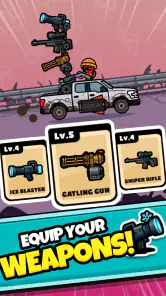
My first impression was shaped by the contrast between the cheerful, compact presentation and the underlying danger. The truck is the natural focus of the screen, so the setting feels less like an enormous open world and more like a moving survival stage. That choice gives the game a readable identity. I am not trying to memorize a huge map or absorb a long backstory; I am watching the vehicle, the threat around it, and the equipment that can help it keep going.
That restraint works well for mobile play. The visual language communicates the premise without asking me to study every corner of the screen. The zombie setting is recognizable immediately, but the tone remains approachable enough for casual players. I would not choose this game for detailed horror or a serious post-apocalyptic narrative. I would choose it when I want the familiar tension of a last vehicle on the road, presented in a way that is easy to read during a short session.
The art direction also supports the strategy. When a game has too many decorative elements, defensive decisions become harder to follow, especially on a phone. Here, the truck gives my attention a stable anchor. I can think of the vehicle as both the character I am protecting and the tool that carries my progress forward. That dual role gives the setting more purpose than a simple background image.
One useful habit is to treat the screen as a priority map rather than admiring every visual detail. I look first at anything threatening the truck, then at the available improvement or action, and only afterward at secondary information. This sounds obvious, but it prevents a common mistake in mobile strategy games: spending too long considering a perfect move while the immediate danger grows. Gear Truck! rewards quick visual sorting more than elaborate planning.
The setting is also a good match for the game’s short-form structure. A truck naturally suggests forward motion, temporary stops, and constant pressure to prepare before the next stretch. Even when the action is mechanically simple, the idea of being unable to settle permanently creates a useful sense of unease. I am not building a comfortable base and waiting for the world to come to me. I am trying to make the next part of the journey survivable.
More From Our News Desk

Clash of Clans Is Won Between the Battles

Android Auto Makes the Case for Quieter Car Software

MobiOffice: Transforming Mobile Productivity with Seamless Integration

EA SPORTS FC™ Mobile Soccer: Redefining Mobile Sports Gaming

How Microsoft OneDrive Became a Mobile Productivity Giant

How Google Translate Breaks Language Barriers Effortlessly
Why the road setting matters to the mood
Many zombie strategy games depend on a fixed shelter, a town, or a broad battlefield. This one feels different because the vehicle gives every defensive decision a travel-oriented context. Improvements do not feel purely abstract; they suggest making a fragile machine more capable of carrying people through danger. That makes even modest progress feel connected to the setting.
The trade-off is that players who want a large world to explore may find the experience narrow. The road is effective as a mood-setting device, but it is not designed to provide the same sense of discovery as a map-heavy survival game. I see that as a deliberate limitation rather than a flaw. The game is strongest when I want a concentrated survival loop, not when I want a long expedition with many independent systems.
The presentation is particularly suitable for players who like strategy with a softer visual edge. The age rating of Everyone reinforces that accessibility. The zombie premise supplies urgency, but the overall presentation does not depend on shock value. I can play it around other people without feeling that the atmosphere is trying to overwhelm me. That balance helps the game remain inviting while preserving the basic pressure of the setting.
Sound, pacing, and the feeling of an approaching threat
Sound plays a quieter role than the truck and the visual action, but it helps establish the rhythm of each attempt. The most effective moments are not necessarily loud ones. What matters is the shift between preparation and danger: a brief opportunity to think, followed by the need to react. That change gives the game a playable pulse and keeps the journey from feeling like a static menu with zombies placed on top.
I found the pacing more important than any individual sound effect. A strategy game can become tiring when every moment demands frantic input, but it can also lose its identity when nothing feels urgent. Gear Truck! works best in the middle ground. I have enough time to understand what I am facing, yet not so much that every decision becomes automatic. The result is a rhythm of checking, choosing, surviving, and preparing again.
This pacing also makes it practical for everyday use. If I have a few minutes while waiting for an appointment, I can enter the game with a clear objective rather than needing to remember a complicated story or rebuild a large plan from scratch. On a longer break, the same loop can still hold my attention because each decision is tied to the condition of the truck and the immediate threat.
A realistic example is a commute with an unexpected delay. I might start a session expecting only a quick attempt, then use the extra time to think more carefully about how I spend resources or which upgrade supports the next danger. The game suits that situation because its premise and pacing make short attention windows useful. It does not require me to settle into a long cinematic sequence before the strategy begins.
The limitation is equally clear: players who need a strong soundtrack, voiced characters, or a dramatic narrative may find the atmosphere too restrained. The sound and rhythm support the mechanics instead of competing with them. I appreciate that focus, but it means the game should not be judged as an interactive zombie film. Its mood is functional and playable, not deeply theatrical.
Where the strategy feels satisfying
The core appeal comes from choosing what helps the truck survive now without making the next stage harder. That creates a useful tension between immediate defense and longer-term improvement. I have to resist the temptation to spend everything on the first problem I see, because survival is not only about winning the current exchange. It is about entering the next one with enough strength to respond.
One of the most valuable habits I developed was separating emergency choices from growth choices. If the truck is under direct pressure, I first look for the action that prevents the current run from collapsing. When the situation is stable, I consider the improvement that will reduce repeated problems later. Mixing those two decisions together can lead to wasteful play: I may choose an attractive upgrade while ignoring the threat that actually ends the attempt.
This is where the game feels more strategic than its simple premise might suggest. The decisions are not buried under a dozen menus, but they still ask me to judge timing. A strong option used too early may provide little benefit, while a modest option used at the right moment can preserve the run. For new players, that makes the game approachable. For experienced strategy players, the challenge is finding consistency rather than merely discovering the controls.
I also recommend paying attention to patterns across attempts. A failed run is more useful when I can identify whether the problem was poor timing, an underdeveloped truck, or an overly aggressive choice. Restarting without changing the decision that caused the failure tends to produce the same result. The game becomes more rewarding when I treat each attempt as a small experiment rather than as a single pass-or-fail test.
That approach is one of the less obvious strengths of the design. The game does not need a complicated tutorial to teach every possibility if the player is willing to compare outcomes. I can ask simple questions after a loss: did I react too late, did I prepare for the wrong threat, or did I spend a useful resource merely because it was available? Those questions turn a straightforward zombie defense loop into a modest but genuine strategy exercise.
How it compares with familiar mobile strategy choices
Compared with base-building survival games, Gear Truck! is much more immediate. I am not managing a permanent settlement, balancing a large population, or waiting for a long construction timer to finish before I can continue. That makes it a better fit for someone who wants decisions during play rather than a management project that continues in the background.
Compared with tower defense, the moving truck changes the emotional center. Traditional tower defense usually gives me a fixed location and encourages careful placement. Here, the vehicle itself is the thing that must endure, so the feeling is more personal and more mobile. The game is a better choice if I like protecting a central object but want the setting to suggest travel instead of a stationary fortress.
It is also less suitable than a large survival role-playing game for players who want character relationships, exploration, crafting depth, or a broad narrative. Those alternatives offer more variety, but they also demand more time and attention. Gear Truck! earns its place by being narrower. I can understand its immediate goal quickly, and the visual and audio presentation keep returning me to that goal.
Players should also think about monetization before committing to long-term play. The game is free, but optional in-app purchases range from $0.39 to $44.99 per item. I would approach those purchases as convenience choices rather than as a reason to rush. First, I would learn which decisions actually improve my survival. Spending before understanding the loop can hide the difference between a genuine strategic weakness and a simple timing mistake.
That advice is especially important for anyone who dislikes free-to-play pressure. The purchase range includes a notably expensive upper end, so players who prefer a completely fixed-cost experience may be more comfortable with a paid strategy game. On the other hand, the free entry makes it easy to test whether the truck-defense format fits your taste before deciding whether any optional spending is worthwhile.
Who will enjoy the truck-defense format
I would recommend it to players who enjoy compact strategy, zombie settings with an approachable tone, and games that can be played in short bursts. It should also suit people who like improving through repeated attempts. The central question remains understandable from the beginning, but the best results come from learning when to act rather than tapping through every option as soon as it appears.
It is a particularly good match for someone moving from casual puzzle games toward strategy. The game gives that player a clear object to protect and a limited set of priorities, without immediately demanding the scale of a large management title. The truck provides a memorable focus, while the survival pressure gives each choice a reason to matter.
I would be more cautious about recommending it to players who need extensive exploration or a rich story to stay engaged. The road-based structure is a strength for clarity, but it also narrows the range of activities. Likewise, people who dislike repeating attempts may find the learning loop frustrating, because improvement depends on recognizing mistakes and adjusting the next run.
Device compatibility is straightforward for many Android users: the game requires Android 6.0 or later. Its current release is version 1.0.54, so I would keep the app updated when possible, especially if I am relying on it for regular short sessions. The game has reached over a million installs and holds an average rating of 4.4 from roughly fifty-four thousand ratings, which suggests that its accessible survival formula has found a substantial audience without changing what the game is.
Those figures are useful context, but they do not replace personal fit. A popular, well-rated game can still be wrong for someone who wants deep simulation or a one-time purchase. My own test is simple: if the idea of protecting a traveling truck sounds more appealing than building a permanent base, this is worth trying. If the truck is only a decorative wrapper around the kind of strategy I already dislike, the setting will not solve that problem.
Small decisions that make repeated runs better
My first practical tip is to avoid treating every available action as equally urgent. The most visible option is not always the one that protects the run. I look for the threat that can end progress, then compare that danger with the benefit of saving a resource for the next phase. This keeps the game from becoming a reflex exercise and encourages deliberate prioritization.
Second, I try to judge upgrades by how often they solve a problem, not by how impressive they look in isolation. An improvement that helps only in a rare situation may be less valuable than one that makes ordinary survival more reliable. This is a useful trade-off in Gear Truck! because the vehicle is the center of the experience: anything that strengthens its ability to continue has value beyond a single encounter.
Third, I use the pacing to create a mental reset after each danger. Instead of immediately tapping the next option, I take a moment to identify what changed. Is the truck safer, is the next threat likely to demand a different response, and did I spend something that I will miss later? That brief pause prevents momentum from turning into careless play.
Finally, I would not judge the game after one unsuccessful attempt. The compact design makes repetition part of the intended learning process. A loss can show that I chose the wrong moment, misunderstood a priority, or failed to prepare the truck for the kind of pressure that followed. If I am willing to change one decision at a time, the loop becomes much more informative.
These habits also explain why the game can appeal to both casual and more thoughtful players. A casual player can act on immediate threats and enjoy the accessible presentation. A more experienced player can examine timing, resource value, and repeated patterns. The ceiling is not limitless, but the game offers enough room for better judgment than its friendly appearance initially suggests.
My final view of the atmosphere and the mechanics
After playing Gear Truck!, I came away with the impression of a game that understands its own scale. The art direction keeps the truck and the danger easy to read. The setting gives the defense loop a reason to exist. The sound and pacing create a steady movement between preparation and crisis. None of those elements tries to overpower the strategy, and that restraint is what makes the whole presentation coherent.
The game is not trying to replace a full survival role-playing game, a deep city builder, or a traditional tower-defense classic. Instead, it offers a focused alternative for people who want a traveling survival scenario with decisions that can be understood quickly. I like that the atmosphere is not separate from the mechanics: the sense of a vulnerable vehicle on the road makes each defensive choice feel more urgent than it would in an abstract arena.
There is friction in the limited scope and in the possibility that repeated runs may feel too similar for players who need constant novelty. The in-app purchase range also deserves attention from anyone who prefers predictable spending. Those are real reasons to skip it, not minor complaints to overlook. A player seeking a story-led zombie adventure or an expansive management system will likely be happier elsewhere.
For me, though, the balance is convincing. The free price makes experimentation easy, the Everyone rating keeps the tone approachable, and the strategy is clear without being empty. I would recommend Gear Truck! to a friend who wants a mobile game that can fill a short break while still asking for real choices. Its best quality is the way zombie survival strategy, road-bound setting, and measured pacing reinforce one another rather than feeling like unrelated features.
My final verdict is positive, with the right expectations. Do not install it for a huge world or a dramatic narrative. Install it if you want to protect a moving truck, learn from failed attempts, and make small decisions under steadily rising pressure. In that narrower role, it creates a clear, approachable mood and gives the mechanics enough weight to keep the journey engaging.
Gear Truck! Frequently Asked Questions
How much storage space should I leave for Gear Truck!?
It is sensible to leave some free space on your device before installing Gear Truck!, since games need room to download and may require additional space as they update. The amount can vary by device and installation, so check the app store’s download details and your available storage before proceeding. Keeping extra room can also help avoid interruptions during installation.
Can I limit in-app purchases in Gear Truck!?
Gear Truck! is free to download, but it offers optional in-app purchases. If you want to prevent accidental spending, especially on a shared device or one used by a child, set purchase restrictions through your device’s settings before playing. You can also review any purchase prompt carefully and choose not to buy anything; paying is not required simply to download the game.
Is Gear Truck! a good choice for short play sessions?
The game’s survival-defense premise may suit players looking for a strategy experience they can pick up when they have time to play. Whether a session feels brief or extended depends on how you approach the game, but it can be a convenient option to try during a spare moment. Its free download also lets you explore it before deciding whether it fits your routine.
Who developed Gear Truck!, and what kind of game is it?
Gear Truck! is a strategy game developed by TREEPLLA. Its store summary presents it as “Run or Die! Zombie Survival Defense,” giving players a survival-focused premise. If you enjoy games that ask you to think through threats and make decisions as situations unfold, that description may help you decide whether its theme and style are a good fit.
What devices and operating systems can run Gear Truck!?
Gear Truck! is available for Android and iOS, so players can look for it through the relevant app store on their device. On Android, it requires version 6.0 or later. Before downloading, check that your device meets that requirement and has enough available storage for installation and updates. The game’s current version is 1.0.54.
Pros
- Realistic truck physics make deliveries feel engaging and rewarding.
- Multiple truck models offer variety in handling and performance.
- Short missions work well for quick gaming sessions.
- Simple controls are easy for new players to understand.
- Off-road routes add challenge beyond standard highway driving.
Cons
- Some missions can feel repetitive after extended play.
- Vehicle upgrades may require considerable time or in-game currency.
- The camera can make tight turns and parking difficult.
- Progress may feel slow without frequent gameplay.
- Performance can vary on older phones or lower-end devices.
- Category
- Strategy
- Version
- 1.0.54