Galaxy Division: Space Battles
- 215.00
- 4.5
- Installs
- 100.00K
- Price
- Free
Screenshots
Analysis by Reviewed
Galaxy Division: Space Battles is the kind of action game I can open when I want a quick burst of space combat without committing to a long story campaign. Its central appeal is easy to understand: I pilot warships, improve them, and take them into player-versus-player battles. That straightforward loop gives the game an immediate identity, but the experience depends heavily on whether you enjoy competitive shooting more than exploration or narrative-driven science fiction.
After spending time with it, my strongest impression is that the mood and the match flow work best when I treat each battle as a focused tactical session. The game is not trying to be a slow space simulator. It leans toward action, quick decisions, and the satisfaction of making a ship feel more capable over time. Armada Forge Games has positioned it as a free game for Everyone, which makes it approachable, although the presence of optional purchases means I would still pay attention to how quickly progression starts asking for extra investment.
The game arrived on December 5, 2025, and its current version is 1.0.10042. It has already passed 100K installs and holds a 4.5 average from around 3.1K ratings, with 215 written reviews. Those figures suggest that it has found an audience, but they do not tell me whether it will suit every type of mobile player. For me, its success comes down to the relationship between its visual space setting, its combat pace, and the way upgrades give each match a sense of purpose.
How the first battles establish the game’s identity
The opening experience is strongest when I focus on the basic promise rather than expecting a large role-playing adventure. Galaxy Division: Space Battles puts the warship at the center of attention, so the first thing I look for is whether controlling and improving that ship feels meaningful. A space battle can look impressive, but if the player’s decisions feel shallow, the spectacle quickly becomes decoration. Here, the upgrade loop gives the action a practical reason to continue: every match is also a chance to understand what my vessel needs next.
I like that this structure gives short sessions a clear beginning and end. I can enter a battle, concentrate on positioning and attacks, then return to the improvement side of the game with a better idea of what went wrong. That makes it easier to play during a break or while waiting somewhere. The trade-off is that players who prefer a carefully written campaign may find the experience light on context. The game’s strongest story is the one I create through repeated battles and changing priorities, not a traditional sequence of dramatic scenes.
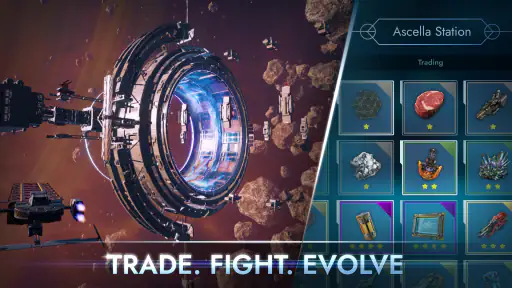
The free entry point is useful for trying the combat before deciding whether the progression is worth pursuing. Optional purchases range from $0.99 to $99.99 per item, so I would approach the economy with a simple rule: enjoy the early loop without assuming that every upgrade must be bought immediately. In a competitive game, that distinction matters. If I feel pressured to spend before I have learned the controls, I lose the ability to judge the underlying design fairly.
One practical habit helped me get more from the first sessions: I stopped treating every defeat as a reason to upgrade randomly. Instead, I looked for the specific moment where the battle turned against me. Was I taking damage because I committed too early, or because my ship lacked the strength to survive a direct exchange? That small pause makes the upgrade system more useful. It turns progression into a response to play rather than a shopping list.
A good fit for short, competitive play
The game is especially appealing if you want a mobile action title that can be played in compact bursts. Its space setting gives those sessions a clear visual theme, while the PvP focus adds a reason to stay alert. I would recommend it to someone who enjoys learning an opponent’s habits, adjusting a build, and repeating a match with a slightly better plan.
I would be more cautious about recommending it to someone looking for a relaxing space screensaver or a deep solo adventure. Competitive battles naturally create pressure, and progression can make losses feel more significant than they would in a purely casual shooter. Players who dislike repeated matches, upgrade decisions, or the possibility of facing stronger opponents should probably choose a more narrative-focused space game instead.
For an everyday example, I can imagine playing it on a short commute. I would use the first session to test one approach, leave the game, and return later with a specific adjustment in mind. That is a better routine than opening it without a goal and spending the entire time making small upgrades. The game rewards a little intention: one question per session, one change to test, and a decision about whether the result actually improved my performance.
The visual language of a playable galaxy
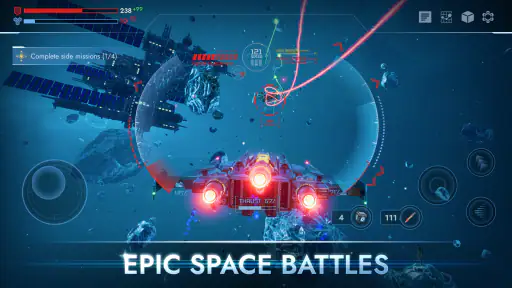
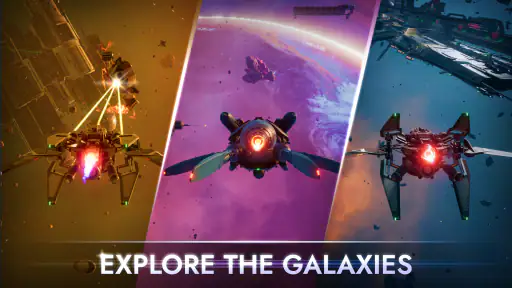
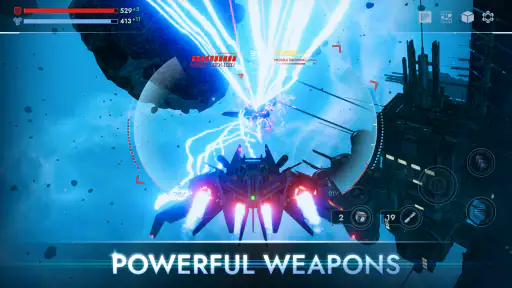
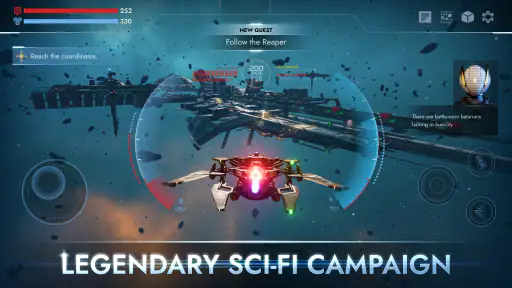
Galaxy Division: Space Battles communicates its setting through the familiar language of warships, open space, and direct conflict. That may sound simple, but clarity matters in an action game. I need to understand what belongs to me, what threatens me, and where the next danger is coming from without stopping to decode the screen. The ship-focused presentation supports that readability and keeps the fantasy centered on commanding a combat vessel rather than wandering through a huge, unfocused universe.
The art direction also affects how upgrades feel. A stronger ship is not only a number that changes in a menu; it represents a more confident way of entering battle. That visual connection is important because competitive progression can otherwise become abstract. When the setting makes the vessel feel like the player’s main character, each improvement has more emotional weight.
At the same time, I would not approach this as a substitute for a large-scale science-fiction role-playing game. Its setting exists to frame the combat loop, not to overwhelm it with lore. That is a strength when I want immediate action, but a limitation when I want detailed factions, exploration, or a long chain of character-driven events. The game’s world language is functional and focused: it tells me what kind of conflict I am entering and keeps my attention on the next encounter.
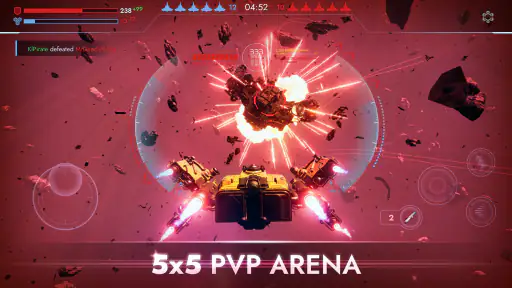
A useful way to appreciate the presentation is to watch how it supports decision-making. In a crowded battle, attractive effects are only helpful if they do not hide the important information. I prefer to judge the visuals by asking whether they let me recognize danger early enough to respond. If I can see the difference between an opening for attack and a moment when retreat is wiser, the art is doing more than creating a space backdrop.
Why the setting works better than a generic shooter frame
Space gives the game room to make movement and distance feel important. Even without turning the experience into a simulation, the setting encourages me to think about approach, exposure, and timing. A conventional ground-based shooter might deliver faster visual feedback, but the warship theme creates a slightly more deliberate sense of scale. I am not just rushing toward another player; I am trying to make my vessel survive long enough to control the exchange.
This is also where the game separates itself from many ordinary action alternatives. A standard arcade shooter may offer more familiar instant gratification, while a strategy game may give me more time to plan. Galaxy Division: Space Battles sits between those ideas. It wants the energy of action, but it also asks me to think about the ship I bring into the fight and the way I use it.
The compromise will not suit everyone. If you want the immediate physicality of a fast shooter, the space-warship framing may feel less direct. If you want a deep fleet-management game, the action emphasis may feel too hands-on. I see its visual identity as most successful for players who want the fantasy of commanding a combat ship without the slower responsibilities of a full simulation.
Sound, rhythm, and the feeling of each match
Sound has an important job in a game built around repeated battles. It should make attacks feel decisive, help separate calm moments from danger, and give victories enough impact that the next match feels worth starting. In my experience, the audio works best as part of the game’s rhythm rather than as a separate attraction. The setting becomes more convincing when the sound supports the sense that the ship is under pressure and that every exchange has consequences.
The pacing is similarly central. A match that moves too slowly can make upgrades feel like chores, while one that never gives me time to read the situation becomes noise. I prefer the moments where the game lets me recognize a pattern before demanding a response. That pause may be brief, but it gives the combat a useful pulse: observe, commit, react, and reassess.
That rhythm changes how I use the game in daily life. If I have only a few minutes, I want the action to begin quickly and leave me with a clear stopping point. If I have more time, I can play several battles and compare different approaches. The game’s competitive structure supports both habits, but it also makes it easy to continue after a frustrating loss. I have learned to stop when I am no longer making decisions and am simply chasing a better result.
One of the less obvious strengths of this kind of pacing is that it makes failure informative. A defeat is not automatically satisfying, of course, but a well-paced match can show me the precise mistake that caused it. I might have attacked while exposed, ignored a threat, or relied too heavily on a ship that was not ready for the opponent. When the audio and visual cues make that turning point clear, I can improve instead of blaming the result on randomness.
When the atmosphere becomes pressure
The same competitive mood that makes the game engaging can also become tiring. Players who prefer gentle, low-stress sessions may find PvP battles demanding, especially when they are still learning how upgrades affect their preferred style. I would not use this as my first choice for winding down before sleep. The action asks for attention, and the desire to correct a loss can keep a short session going longer than planned.
There is also a difference between playing for atmosphere and playing for mastery. If I only want to enjoy the idea of a space battle, the repeated competitive structure may eventually feel narrow. If I want to improve, however, the same repetition becomes useful because each match gives me another chance to refine timing and ship choices. The game is at its best when I accept that its mood is built around rivalry, not sightseeing.
How the mechanics support the space-war mood
The central mechanical fit is clear: shooting, ship upgrades, and PvP battles all reinforce the fantasy of a growing space combat force. None of those elements feels disconnected from the setting. The important question is whether the upgrade decisions change how I play or merely make the numbers larger. I get the most value from the system when I use improvements to support a deliberate plan rather than automatically selecting whatever appears strongest.
My preferred workflow is to choose a single combat intention before spending resources. For example, I might decide that I want a ship that can survive a longer exchange, or I may prioritize an approach that lets me pressure an opponent earlier. I then test that intention in battle and judge the result by how it changes my options. This is more revealing than upgrading several areas at once because I can identify what actually helped.
That method also exposes an important trade-off. A stronger ship does not remove the need for good timing or awareness. Upgrades can give me more room for mistakes, but they cannot guarantee a win against a player who reads the fight better. This is healthy for the action design because progression does not completely replace skill. It can still be frustrating if the gap between ships feels too large, so I would keep expectations realistic and treat the improvement system as support rather than a shortcut.
Another practical tip is to avoid changing too many variables after a loss. If I switch ships, alter my upgrade direction, and change my entire approach at the same time, I learn very little from the next battle. Keeping one part familiar makes it easier to understand whether the change worked. This is the sort of small discipline that helps a competitive mobile game feel less random and more like a series of experiments.
Where it compares with other action choices
Compared with a traditional single-player action game, Galaxy Division: Space Battles offers less control over the pace of the overall experience because another player is part of the equation. That makes victories more rewarding, but it also means the game cannot always provide a calm or predictable session. Compared with a strategy title, it gives me more immediate control and less time to plan. Compared with a space simulator, it is much easier to approach because the focus stays on combat rather than technical operation.
That middle position is its clearest advantage and its clearest limitation. I can recommend it to someone who wants the fantasy of space warfare with direct action and a progression loop. I would point elsewhere for a player who wants a campaign with a strong cast, detailed exploration, or a complex simulation of navigation and ship systems. The right alternative depends on whether the player values competition, story, or control depth most.
The age rating of Everyone makes the game broadly approachable, but that should not be confused with a universally gentle experience. The content is accessible in that sense, while the PvP pressure may still be unsuitable for someone who dislikes competitive play. I would also remind younger players and parents that optional purchases are present, so setting a spending boundary before playing is sensible.
Device expectations and practical setup
The minimum operating-system requirement is Android 9, which gives the game a reasonably clear starting point for Android users. Before installing, I would still make sure the device has enough free space and that the system is updated, because action games are more enjoyable when performance is stable. I would also begin with a short test session rather than immediately buying anything. That confirms whether the controls, screen size, and visual pace feel comfortable on the particular phone or tablet.
For players deciding between platforms, the most important consideration is not the space theme but personal control preference. A larger screen can make targets and battlefield information easier to read, while a smaller phone may be more convenient for quick sessions. I would choose the device on which I can react comfortably, since a minor visibility or handling problem matters more in PvP than it would in a passive game.
My verdict on the atmosphere and long-term appeal
Galaxy Division: Space Battles succeeds when its art direction, sound, and pacing all point toward the same idea: I am preparing a warship, entering a dangerous encounter, and learning from the result. The setting does not need a huge amount of lore to feel coherent because the mechanics keep reinforcing the role. Shooting gives the world urgency, upgrades give it continuity, and PvP gives each battle a reason to demand my attention.
My main reservation is that the game’s appeal is concentrated. If the competitive loop does not grab me, the surrounding atmosphere may not be enough to carry the experience for long. The optional purchase range also means I would play thoughtfully and resist treating every progression obstacle as a prompt to spend. I prefer to discover whether my decisions and practice are improving my results before investing money.
I would recommend it to mobile players who enjoy action battles, ship progression, and the tension of facing other people. It is a particularly good match for someone who likes to play in short sessions but still wants each session to teach something. I would skip it in favor of a story-led space adventure if I wanted exploration, characters, and a carefully paced solo journey, or choose a deeper strategy game if fleet planning matters more to me than direct combat.
My final advice is to approach it as a competitive training loop rather than an endless upgrade chase. Pick one ship goal, test it across several battles, and stop when the matches stop feeling informative. That mindset brings out the game’s strongest qualities and keeps its weaker pressures in check. For me, the result is a focused and atmospheric action game with a clear space-war identity, best enjoyed by players who want their science fiction to come with a rival on the other side of the battlefield.
Galaxy Division: Space Battles is free to start, developed by Armada Forge Games, and currently available in version 1.0.10042 for devices running Android 9 or later. Its broad age rating makes it easy to try, while the competitive design and optional purchases are the details I would consider most carefully before recommending it to a particular player.
Pros
- Fast-paced battles are easy to learn but still reward tactical decisions.
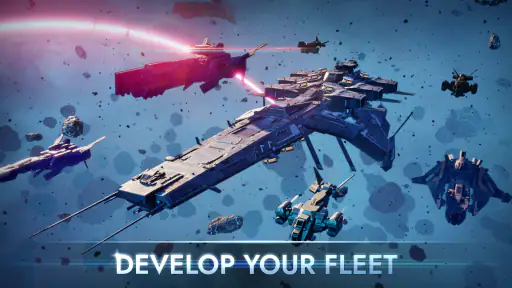
- Fleet upgrades provide a satisfying sense of long-term progression.
- Short missions work well for quick gaming sessions.
- Distinct ship types make team composition more interesting.
- Space visuals and combat effects look polished on modern devices.
Cons
- Progress may slow noticeably once upgrade costs begin to rise.
- Some battles can feel repetitive after extended play sessions.
- A stable internet connection may be required for several features.
- The interface can feel crowded when managing multiple fleet systems.
- New players may need time to understand all upgrade and battle mechanics.
- Category
- Action
- Version
- 1.0.10042