Fire and Glory: Blood War
- 1.28K
- 4.6
- Installs
- 1.00M
- Price
- Free

Screenshots
Analysis by Reviewed
I spent time with Fire and Glory: Blood War as a strategy game built around an ancient Spartan setting, and my first impression was that it wants to make planning feel dramatic without turning every decision into a complicated spreadsheet. The presentation points toward empire-building and conflict, while the practical question for me was simpler: can I understand what matters, make sensible choices, and keep playing when I do not have a long uninterrupted session?
That answer is mostly yes, although the experience is better suited to players who enjoy gradual progress than to anyone looking for a quick tactical match. Developed by KOOFEI, the game is free to start and carries an Everyone 10+ content rating. It has reached over a million installs, with a 4.6 average from around ten thousand ratings, so it has clearly found an audience beyond a small niche.
How clearly the game communicates its strategy
Readability and navigation during the first sessions
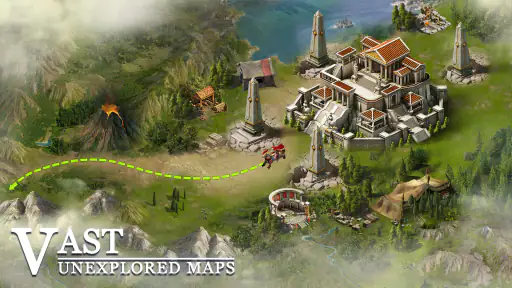
The ancient-war theme gives the game a clear identity, but the most important part of any strategy game is whether its menus help me understand priorities. In my experience, the opening hours are manageable because the game gradually introduces the broad idea of developing a stronghold, improving what is available, and preparing for conflict. I did not feel that I needed to understand every system immediately before making progress.
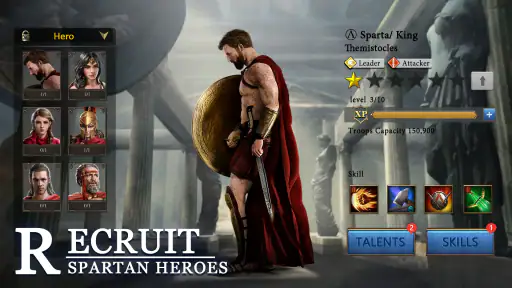
That said, a strategy interface can become busy very quickly. Fire and Glory: Blood War asks me to move between development choices, military decisions, and longer-term improvements, so I found it useful to pause before tapping through a new screen. The most helpful habit is to read the available information first rather than spending resources immediately. A reward that looks attractive in the moment may be more useful when saved for a construction or upgrade that unlocks several later choices.
My practical tip is to treat the first few sessions as a learning period, not a race. I watched which actions improved my position most consistently, then repeated those priorities instead of trying to activate everything at once. This approach makes the game easier to follow and also reduces the frustration of discovering that an early purchase or upgrade has left no room for a more important goal.
Navigation is clearest when I approach it with one task in mind. If I open the game intending to improve my settlement, I focus on development rather than jumping between every available feature. If I am preparing for conflict, I first check what I can realistically support. This simple separation makes the interface feel less demanding, especially for players who are new to mobile strategy games.
Information density and visual attention
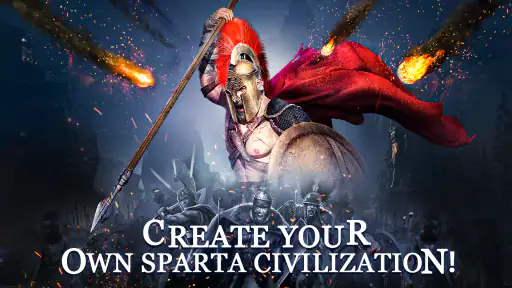
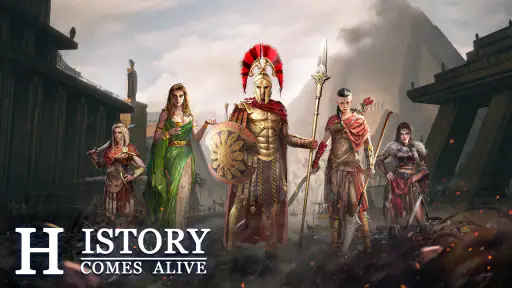
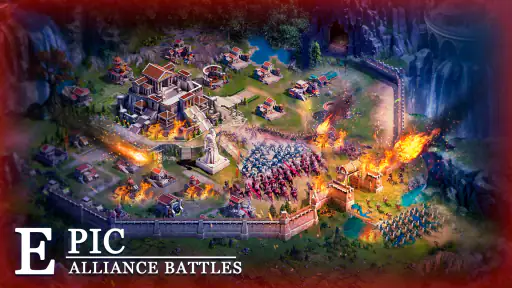
Fire and Glory: Blood War relies on a visual style that fits its Spartan theme, but decorative elements can compete with the information I actually need. I found that the important question is rarely whether a screen looks impressive; it is whether I can identify the next useful action without guessing. Players who prefer clean, minimal interfaces may need more time to become comfortable with the presentation.
I also recommend avoiding rushed taps when several buttons or rewards appear together. In a strategy game, an accidental selection can change the order of priorities, and the problem is not always obvious until later. Reading labels carefully and checking the result of each action is more valuable here than playing at maximum speed.
The game is more approachable for someone willing to learn its visual language. After repeated visits, familiar screens become easier to scan, but the first visit to a busy menu may require concentration. That is a normal trade-off for a game trying to combine empire management, progression, and warfare rather than offering one isolated mechanic.
Motor and sensory considerations
From a motor perspective, the game generally fits the touch-screen strategy format: I can make progress through deliberate taps instead of needing rapid, precise action. That makes it more comfortable than a reflex-heavy action game for players who prefer planning over speed. The main challenge is not sustained physical input; it is selecting the correct control when several options are close together or when the screen is visually crowded.
For that reason, I found a larger phone or tablet easier to use than a very compact display. A bigger screen gives the interface more breathing room and makes it simpler to inspect details before confirming a decision. This is not a requirement for playing, but it can reduce mis-taps and visual fatigue during longer sessions.
Players sensitive to visual intensity should approach the game with realistic expectations. The Spartan-war atmosphere is designed to feel energetic, and the combination of themed artwork, combat focus, and multiple information panels may be tiring for someone who prefers quiet, low-stimulation software. I would play in shorter sessions if the screen begins to feel overwhelming rather than forcing myself to continue.
Sound is another personal consideration. I often lower or mute game audio when I am playing in public or when I want to concentrate on the strategic layer. The game remains useful as a planning experience without needing to dominate the room, and this makes it more practical on a commute, during a break, or beside someone who is watching television.
Situational access for everyday play
The strongest everyday use case is a player who has a few minutes at a time and enjoys returning to an ongoing project. I could imagine opening it during a lunch break, checking what needs attention, making one or two careful decisions, and leaving before the session becomes a major commitment. It works better in that setting than a game that demands a complete match before progress feels meaningful.
However, I would not recommend starting a complicated strategic objective while distracted. If I am walking, talking with someone, or switching between several notifications, I am more likely to overlook an important detail. The game rewards attention even when the individual controls are simple, so “mobile” does not mean “mindless.” A quiet moment is enough; divided attention is not always enough.
Its free entry also makes it easy to test without committing money at the beginning. The game includes optional purchases priced from $0.99 to $99.99 per item, which creates a clear trade-off. A cautious player can begin by learning the systems and deciding whether the normal pace feels satisfying. Someone who dislikes in-app purchase pressure should establish a personal spending limit before becoming invested in long-term progress.
I would especially suggest turning the game into a measured routine rather than checking it constantly. Decide what you want to accomplish in a session, complete that plan, and stop. This helps preserve the strategic pleasure and prevents the experience from becoming a repetitive series of taps driven by the fear of missing something.
Who will find the format comfortable?
This is a good fit for players who enjoy ancient settings, gradual development, and decisions that matter over time. I think it will appeal to someone who likes the idea of building strength before taking a risk, comparing short-term rewards with longer-term stability, and revisiting a growing empire instead of starting from nothing every few minutes.
It is less suitable for a player who wants a completely transparent board-game-style system with no waiting, no layered menus, and no commercial interruptions. It is also not my first recommendation for someone seeking fast competitive action or a story-led adventure with a fixed ending. The game’s appeal is in maintaining and improving a strategic position, not in delivering one brief, perfectly contained challenge.
Compared with a traditional turn-based strategy game, Fire and Glory: Blood War feels more like an ongoing mobile commitment. A classic strategy title may offer more direct control over each turn and a cleaner sense of completion, while this game is more convenient for checking in repeatedly. Compared with a simple casual builder, it asks more of me because military preparation and strategic priorities matter, but it also offers a stronger sense of purpose than decorating or collecting alone.
Remaining barriers and points of friction
The biggest barrier is learning what deserves attention first. New players can easily mistake activity for progress: opening every screen, claiming every visible reward, or upgrading whatever is immediately available may feel productive without creating a coherent plan. I had a better experience when I chose a central objective and judged other actions by whether they supported it.
Another limitation is the possibility of uneven comfort across devices. Small text, compact controls, and dense screens are easier to handle on a larger display, while players using older or smaller phones may need more patience. The minimum operating-system requirement is Android 6.0, and the current version is 1.0.177, but compatibility alone does not guarantee that every screen will feel equally comfortable for every person.
The game’s monetization can also affect how inclusive the experience feels for different budgets. Free access is valuable, but optional purchases reaching $99.99 per item may be intimidating to players who prefer a completely fixed-cost experience. I would not spend simply because a bundle appears convenient. First I would decide whether the ordinary progression loop is enjoyable on its own, then consider only a small purchase that solves a specific annoyance rather than buying impulsively.
There is also a cognitive barrier for players who want immediate clarity. Strategy games naturally involve remembering goals, resources, and consequences, and this one can feel demanding when I return after a break. My solution was to leave myself a simple mental note about the next priority. That small habit made re-entry easier than trying to reconstruct every decision from memory.
Players with particular visual, motor, or sensory needs should judge the interface on their own device and comfort level. I can describe how it felt in my use, but I would not treat that as a guarantee of accessibility for everyone. The safest approach is to begin with a short session, check whether labels and controls are comfortable, and avoid spending money until the basic interaction feels manageable.
My inclusive verdict
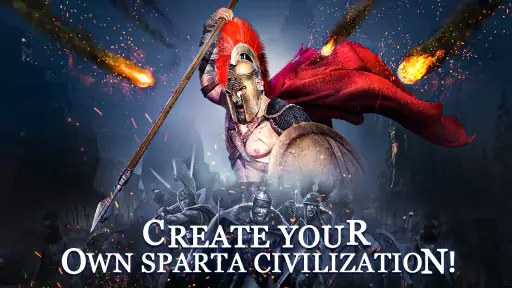
Fire and Glory: Blood War succeeds when I approach it as a patient strategy game rather than a quick action title. Its Spartan theme gives the long-term decisions personality, and the free starting point makes experimentation straightforward. I appreciated that careful planning matters more than frantic tapping, which opens the door to players who prefer deliberate play and flexible session lengths.
At the same time, it is not effortless. Busy screens, layered priorities, and optional purchases can create friction, particularly for players who need very clear visual organization or who want a single upfront price. The best way to make it work is to use a larger display when possible, play in focused bursts, read before confirming actions, and set a spending boundary early.
For me, the game is worth trying if you enjoy building toward a stronger position and do not mind learning through repetition. I would recommend it to a friend who likes mobile empire strategy and wants something more involved than a basic casual builder. I would steer a friend toward a simpler or more self-contained alternative if they need instant readability, rapid matches, or a completely distraction-free experience.
Overall, KOOFEI has made a strategy game that can fit naturally into short daily sessions while still asking for genuine thought. Its accessibility is strongest in the slow, tap-based style of play and weakest where visual density and monetization add pressure. If you give yourself time to understand the priorities, the most rewarding path is to plan deliberately, spend cautiously, and let the empire grow at a pace that remains comfortable for you.
Pros
- Fast-paced battles make short play sessions feel rewarding.
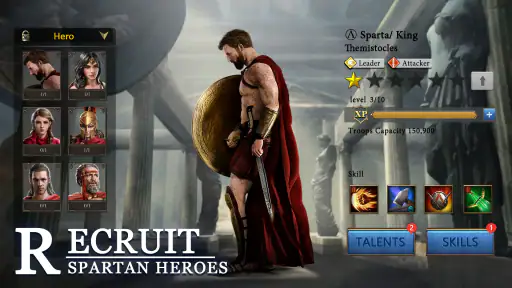
- Hero upgrades offer clear long-term progression goals.
- Guild features add teamwork and social interaction.
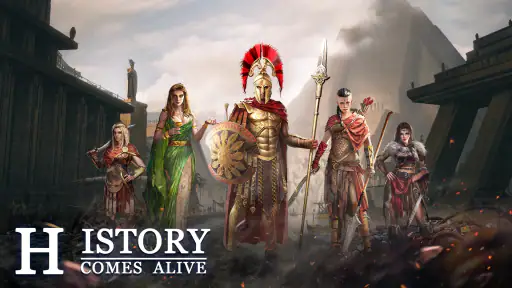
- Fantasy visuals give the battlefield a distinctive atmosphere.
- Regular rewards help free players keep advancing.
Cons
- Later stages can become heavily dependent on upgraded heroes.
- The interface may feel crowded for new players.
- Resource management requires frequent attention.
- Some events may favor players who spend money.
- Repeated battles can feel monotonous over time.

- Category
- Strategy
- Version
- 1.0.177