FIFA Heroes: Soccer Action
- 535.00
- 4.3
- Installs
- 1.00M
- Price
- Free

Screenshots
Analysis by Reviewed
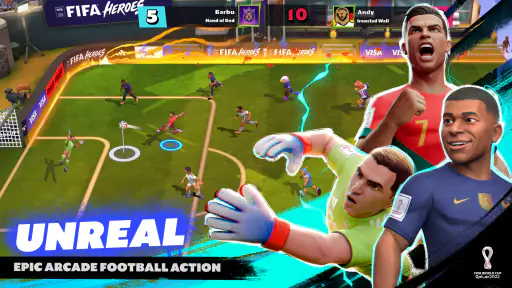
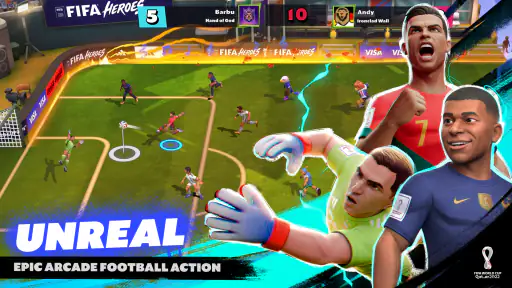
I approached FIFA Heroes: Soccer Action as a quick sports game rather than a full football simulation, and that distinction matters from the first match. Its appeal is built around five-a-side arcade action, short bursts of competition, and the recognizable FIFA World Cup 2026™ license. I found it easier to pick up than a traditional console-style football game, but also less satisfying if what I want is deep tactical control, long league management, or a highly realistic recreation of eleven-a-side football.
It is a free game from Solace Games & ENVER, listed for Everyone and available on Android devices running version 8.0 or later. The current version is 1.4.1, and the game has passed the one-million-install mark with an average rating of 4.3 from roughly fifteen thousand ratings. Those figures suggest that it has reached a substantial audience, although popularity alone does not tell me whether its competitive model will suit every player.
How the five-a-side format feels in everyday play
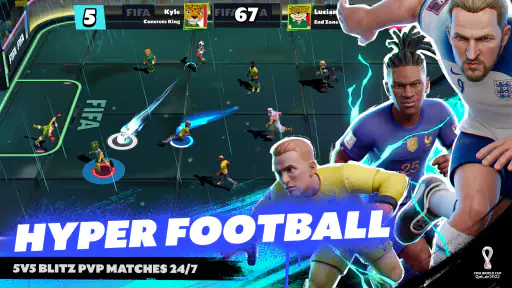
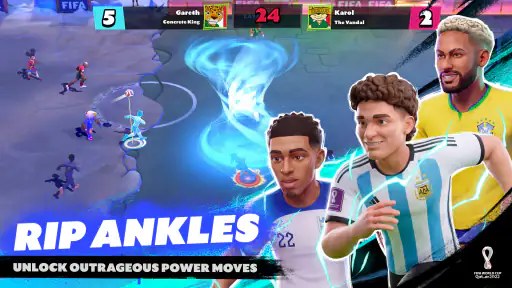
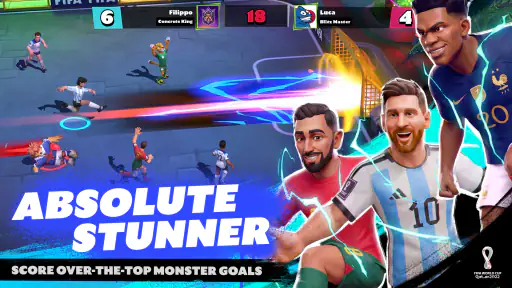
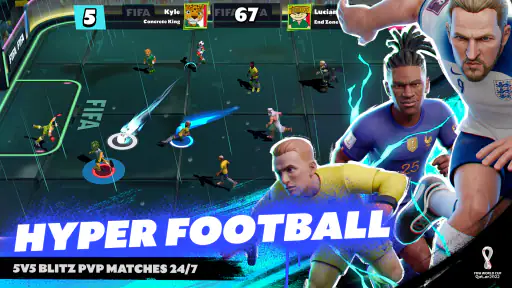
The central idea is easy to understand: take football, reduce the space and team size, and make each possession matter quickly. A five-versus-five format creates a much more immediate rhythm than a conventional football title. I do not need to spend several minutes building an attack before seeing whether it works. There is less room for slow preparation, so the game naturally fits the moments when I have only a short break.
A realistic use case is a commute, a coffee break, or the few minutes before an appointment. This is where the arcade approach makes sense. I can focus on a small number of decisions instead of learning an enormous control scheme. The compact format also makes mistakes visible: losing the ball can change the shape of the whole play immediately, while a good interception can turn into an attack before the opponent has time to settle.
That speed is also the first trade-off. Players who enjoy carefully managing defensive lines, adjusting several tactical instructions, or recreating the slower flow of a full football match may find the experience too compressed. The game is better understood as a competitive street-football-style diversion than as a replacement for a detailed football simulator.
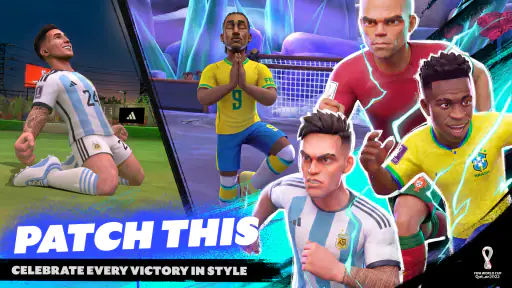
The FIFA World Cup 2026™ official license gives the presentation a familiar football identity, but I would not choose the game solely because of that branding. The license helps attract fans who want a recognizable connection to international football, while the actual reason to stay is whether the short-form matches and arcade handling keep you engaged. In my view, the license is a useful entry point, not a substitute for strong moment-to-moment play.
What I would learn before spending anything
The game is free to download, but it includes optional in-app purchases ranging from $1.99 to $99.99 per item. That is the most important spending context for a new player. The presence of purchases does not, by itself, prove that progress requires payment or that competition is unfair. It does mean I would install it with a clear personal limit and avoid treating every offer as part of the basic cost of playing.
I would begin by playing without buying anything and observing what the normal progression feels like. In particular, I would pay attention to whether the game lets me enjoy several sessions before presenting a purchase decision, whether my performance matters more than my collection, and whether the paid options seem like convenience, customization, or a direct competitive advantage. Those distinctions are more useful than simply asking whether a game contains purchases.
The wide gap between the smallest and largest listed item is worth keeping in mind. A low-cost purchase may feel harmless, while repeated purchases can add up quickly, especially in a game designed for frequent short sessions. I would not make a purchase immediately after a frustrating loss. That is exactly when a player is most likely to confuse a temporary performance problem with a need to spend.
For families, the Everyone rating makes the game broadly accessible from an age-classification perspective, but that does not remove the need for sensible spending controls on a shared device. A child may understand the football match without understanding the long-term effect of repeated digital purchases. I would set a device-level approval requirement before handing the game to a younger player.
Progress can be enjoyable, but pressure changes the experience
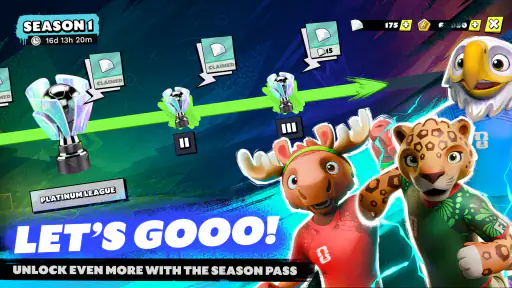
Arcade sports games often rely on a simple loop: play, improve, unlock or advance, then return for another match. That loop works best when each session feels like a chance to sharpen decisions rather than a test of how much money I am willing to put behind my team. With this title, I would judge progress by how much control I retain over my results and how often the game encourages me to return for a reason beyond a limited reward.
One practical tip is to separate improvement goals from reward goals. Instead of entering every match focused only on winning, I would choose one repeatable objective, such as protecting possession under pressure or making quicker defensive recoveries. That approach makes the short matches useful even when the result goes badly, and it helps reveal whether the controls themselves are rewarding.
Another useful habit is to stop after a small number of frustrating matches rather than chasing a turnaround. Fast competitive games can make losses feel inexpensive because each match is short, but that also makes it easy to keep playing without noticing how much time or attention has gone into the session. A brief pause gives me a better chance of deciding whether I am enjoying the game or merely reacting to the last result.
I would also avoid assuming that a stronger-looking team automatically solves poor play. In a five-a-side setting, positioning and timing should matter because there are fewer players covering mistakes. If the game allows meaningful control over those moments, learning the flow can be more satisfying than immediately looking for an upgrade. If progression starts to dominate the result, that is where the free-to-play structure becomes more intrusive.
The current version, 1.4.1, is relevant when troubleshooting. If controls feel inconsistent or a match behaves strangely, I would first check that the installed version is current before blaming my device or connection. Version numbers are not a promise that every issue is solved, but they are a useful first checkpoint when comparing my experience with recent player feedback.
My test for competitive fairness
For me, fairness in a sports game comes down to whether skill remains meaningful when players meet opponents with different levels of progress or spending. A fair system does not need to make every player identical. It does need to make losses understandable. I should be able to tell whether I was outplayed, made a bad decision, or faced a difference that could not realistically be overcome through better play.
I would look for three signals during normal use. First, do matches remain close enough that decisions can change the outcome? Second, do I understand why a tackle, pass, or shot failed? Third, does practice improve my results, or do better outcomes mainly appear after acquiring something new? These questions are more revealing than a single win streak.
The five-a-side structure can support fairness because every player has a visible role in a smaller space. A defensive mistake is easier to identify, and there are fewer teammates hiding poor positioning. That can make competition feel more personal and skill-based. At the same time, a compact format may magnify any imbalance in player strength or progression, because one exceptional character or advantage could influence a larger share of the action than it would in a full team.
I would therefore recommend treating the first sessions as an observation period. Do not spend because another player appears stronger. Watch whether you can create chances through better movement, whether defensive choices improve with practice, and whether the game gives you enough information to learn from a loss. If those answers are positive, spending becomes a personal convenience decision. If they are negative, payment is unlikely to fix the underlying frustration.
Players who want a completely level competitive field may prefer a paid football game with fewer purchase pressures, or a mode where teams are standardized. Players who enjoy building a team and accept some progression differences may be more comfortable here. The right choice depends less on the FIFA name and more on how strongly I value equal starting conditions.
Who will enjoy it, and who should skip it
I would recommend this game to someone who wants football matches that get moving quickly, enjoys arcade-style competition, and likes the idea of a compact five-a-side format. It is particularly suitable for players who find full football simulations too demanding but still want more interaction than a passive sports title. The Everyone rating also makes it approachable for a broad audience, provided purchases are managed responsibly.
It is a good fit for a casual group of friends who can compare results, discuss tactics, and treat each match as a short challenge. Even without turning the game into a serious commitment, the smaller team format gives players room to develop practical habits: recover quickly after losing possession, avoid pulling every player toward the ball, and look for the next safe pass instead of forcing a spectacular attempt.
I would be more cautious about recommending it to someone who dislikes free-to-play economies on principle. The purchase range means the game is not simply a one-time paid product presented through a free download. I would also steer simulation fans toward a more traditional football game if they want authentic match pacing, extensive management, or detailed tactical systems.
It may not suit players who need a fully transparent competitive environment before investing serious time. The game’s public rating and large install base can indicate broad interest, but they cannot answer the personal question of whether progress feels earned or pressured on a particular device. That is something I would evaluate through actual play before becoming committed.
The questions I would answer before keeping it installed
Is it genuinely free to play? Yes, the game is free to download and play, while optional purchases are available. I would not confuse “free” with “without commercial pressure.” The sensible approach is to play first, decide whether the core matches are enjoyable on their own, and only then consider whether any purchase provides value for the way I play.
Can a new player enjoy it without paying? The purchase information confirms that buying is optional, but it does not establish how progression or competition behaves in every situation. My practical advice is to use the early sessions as a test: if the basic matches are fun before spending, the game has a stronger foundation for you. If the experience already feels blocked or frustrating, spending should not be treated as the automatic solution.
Is it suitable for younger players? It carries an Everyone content rating, so it is broadly classified for general audiences. I would still protect purchases with device settings, especially on a family tablet or a phone shared with children. Age suitability and spending suitability are separate decisions.
Will it replace a realistic football simulator? Not for me. Its value is in quick five-a-side arcade action and accessible competition. A simulation remains the better choice for players who want full squads, slower build-up, detailed tactics, and the feeling of managing an entire football match rather than a concentrated street-style contest.
What should I check before installing? I would make sure the device runs Android 8.0 or later, leave enough room for normal game updates, and decide in advance whether I am comfortable with optional purchases. I would also update to version 1.4.1 if an update is available, since keeping the current release is a sensible first step when judging stability.
My trust verdict after weighing the trade-offs
My overall view is cautiously positive. FIFA Heroes: Soccer Action has a clear identity: fast, compact football for players who want action without the commitment of a full simulation. The official FIFA World Cup 2026™ connection gives it extra recognition, and the five-a-side format is a sensible choice for mobile sessions. I can imagine returning to it when I want a quick competitive match rather than a long career mode.
The main condition is spending discipline. With optional items priced from $1.99 up to $99.99, I would not recommend installing it without thinking about purchase limits. I also would not promise that every competitive concern disappears simply because the game is popular or well rated. The right test is whether the free experience remains enjoyable, understandable, and rewarding before money enters the decision.
For me, the strongest way to approach it is as a short-session sports game: learn the compact pitch, improve one habit at a time, pause when frustration takes over, and treat purchases as optional rather than necessary. That makes the game easier to judge honestly. If you want accessible arcade football with a recognizable international flavor, it is worth trying. If you want a guaranteed level playing field or a deep simulation, I would choose a different kind of football game instead.
My recommendation: try it free, set a spending boundary first, and keep it only if the matches themselves—not the pressure to upgrade—are what bring you back.
Pros
- Quick matches are ideal for short gaming sessions.
- Simple controls make it easy for newcomers to start playing.
- Hero abilities add variety beyond standard soccer mechanics.
- Collecting different characters gives progression a clear purpose.
- Bright visuals and energetic effects make matches feel lively.
Cons
- Match outcomes can feel influenced by character strength over skill.
- Upgrading a large roster may require considerable time and resources.
- The action can become repetitive after extended play sessions.
- Some features may depend heavily on an active internet connection.
- Frequent effects and animations can make the screen feel cluttered.

- Category
- Sports
- Version
- 1.4.1