Farm Feud
- 14.00
- 4.8
- Installs
- 100.00K
- Price
- Free

Screenshots







Analysis by Reviewed
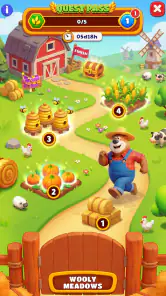
I approached Farm Feud as a quick social simulation rather than a traditional farming game. That distinction matters. You are not simply arranging crops, decorating a quiet plot, or waiting for a long production chain to finish. The appeal comes from combining a farm-themed board-game setting with friendly competition, raids, rewards, and the possibility of playing alongside people you know. After spending time with it, I see a game aimed at players who enjoy a little rivalry with their routine progress.
It is a free simulation game from ARK GAME LIMITED, available for players aged Everyone. The current version is 30.91.367, and it runs on Android 6.0 or later. Its average rating sits at 4.8 from around 271 ratings, while its reach has passed 100K installs. Those figures suggest that the game has found an audience, although the smaller review count means I would treat the rating as an encouraging signal rather than a complete picture of long-term satisfaction.
What kind of player will enjoy Farm Feud?
The first question I would ask is whether you want a relaxed solo farming experience or a social game where other players influence your progress. Farm Feud clearly leans toward the second option. Its board-game structure gives each session a sense of movement and decision-making, while the raid element adds tension that ordinary farming simulators usually avoid.
I found that the game makes most sense when I treat each visit as a short check-in with a competitive purpose. I might open it during a break, make progress, see what rewards are available, and decide whether it is a good moment to challenge a rival. That rhythm is different from settling into a long session of a farming sandbox. The game is better suited to people who like compact turns, visible goals, and the feeling that another player can change the value of a good run.
It is also a reasonable choice for friends who want something lighter than a complex strategy game. The social framing makes the experience easier to understand than a deep management simulator, but the rivalry keeps it from becoming completely passive. If your ideal game is about designing the perfect farm over many hours, however, this may feel too focused on competition and rewards.
The decision points are more important than the farm theme
The farming presentation is inviting, but I would not choose this game solely because I want crops, animals, or detailed land management. The stronger reason to install it is the mixture of board-game pacing and player interaction. The farm setting gives the competition a playful identity, while the board format helps keep the action approachable.
One useful way to judge it is to ask how you feel about losing progress or being interrupted by rivals. A raid-based game can make a successful session feel exciting, but it can also make a calm routine feel less secure. Players who enjoy adapting after an unexpected setback will probably get more from Farm Feud than players who want every investment to remain untouched.
That trade-off is central to the experience. The game does not seem designed to be a purely private garden. It wants me to look outward, pay attention to opponents, and think about when to take a risk. The social competition is the reason to play, not a small extra attached to a farming simulator.
Where the board-game format works well
Compared with a conventional farming simulator, Farm Feud gives me a clearer sense of immediate purpose. Traditional alternatives often ask me to plan layouts, optimize schedules, and wait for several systems to develop. That can be satisfying, but it also requires patience and a willingness to manage detail. Here, the board-game approach makes the next decision feel closer at hand.
I especially like this format for short sessions. If I have only a few minutes, I can focus on the current opportunity instead of feeling that I have abandoned a large, complicated farm. The structure also makes the social side easier to understand: the game is not asking me to become an expert agricultural planner before I can interact with other players.
Another strength is the way rivalry gives routine rewards more meaning. In a quiet farming game, collecting resources can become an automatic habit. In Farm Feud, I am more likely to think about what those rewards help me do next, particularly when a rival or a board opportunity changes the best choice. That extra pressure creates a useful layer of attention without requiring the heavy rules of a full strategy title.
Practical ways to play without wasting your attention
My first practical tip is to avoid treating every available action as equally valuable. In a competitive board-game setting, an attractive reward may not be the best choice if it leaves you poorly positioned for the next exchange. I found it more helpful to pause briefly and ask whether an action improves my immediate progress, protects a lead, or creates a chance to catch up.
A second tip is to separate social play from constant competition. If I am playing with friends, the most enjoyable moments come from using the rivalry as conversation rather than turning every move into a serious contest. That makes the game work well during a casual group chat or a short evening session. It also reduces the frustration that can appear when a raid affects a carefully planned run.
A third insight is that the game rewards a flexible routine. Instead of opening it with one rigid objective, I would check the current board situation and then choose between progress, rewards, and rivalry. This approach is particularly useful for players who do not want to spend time studying complicated systems. The game becomes easier to live with when I make small decisions based on the moment rather than trying to solve the entire farm in advance.
Finally, I would decide in advance how much time and money I want to give the game. It is free to start, but individual in-app purchases range from $0.99 to $199.99. That wide range is important context for anyone who enjoys competitive progression. I would keep spending optional in my own routine and judge the game by how entertaining it remains without turning every reward into a purchase decision.
Where other game styles may fit better
Choose a traditional farming simulator for control and calm
If you want a peaceful game where the main satisfaction comes from planning a farm, Farm Feud may not be the best match. A conventional farming simulator is usually a better choice for players who prefer long-term construction, predictable production, and control over the environment. Those games tend to make the farm itself the central project.
Farm Feud is more outward-facing. The presence of raids and rivals changes the emotional tone. Even when the subject remains cheerful, there is more reason to watch what is happening around you. I would recommend a quieter alternative to anyone who finds competitive interference tiring or who plays mainly to relax before bed.
Choose a deeper strategy game for layered planning
Players who enjoy complex economies, detailed resource chains, or carefully balanced tactical systems may eventually want more depth than this format provides. Farm Feud appears designed to keep its board-game identity accessible, which is a benefit for newcomers but may feel limiting to strategy enthusiasts who want several interacting layers of control.
The trade-off is straightforward: Farm Feud is easier to approach, while a deeper strategy title may offer more room for mastery. I would start here if I wanted social competition without learning a large rulebook. I would look elsewhere if studying systems and refining a long-term plan is the main pleasure.
Choose a purely social party game for conversation first
There is another important alternative: a party game whose main purpose is direct interaction between friends. Farm Feud includes a social angle, but it still asks me to care about progression, rewards, and rival activity. That means it works best when the group enjoys having a game structure to support the conversation.
If your friends want rapid rounds, jokes, and almost no commitment, a simpler party game may fit better. Farm Feud is more suitable when you like returning to the same game, building familiarity with its rhythm, and gradually making better choices.
Think about the cost of switching before you commit
Switching away from Farm Feud is easy if you only want a casual game for spare moments, because its basic appeal is simple to understand. The bigger cost is not learning a new control scheme; it is losing the particular social routine that develops around raids, rewards, and friendly rivalry. If your group adopts it as a shared habit, another game may feel less satisfying even if it has more detailed mechanics.
On the other hand, staying with it has its own cost. Competitive games can encourage frequent checking, and the free-to-play structure may make spending feel tempting when progress slows or a reward looks especially appealing. I recommend deciding whether you enjoy the actual decisions before investing heavily. If the fun depends mainly on chasing the next reward, a different genre may provide better value for your time.
The age rating of Everyone makes it approachable for a broad audience, but that does not mean every player will enjoy the same level of rivalry. Parents choosing a game for younger players should still consider whether the competitive and purchase-oriented elements fit the household’s expectations. The rating describes suitability by age, while personal tolerance for competition and spending is a separate decision.
Who should install it, and who should skip it?
I would recommend Farm Feud to someone who wants a friendly-looking simulation game with a board-game pace and a reason to interact with rivals. It is a particularly good fit for players who enjoy checking in regularly, making small tactical choices, and sharing a game with friends without committing to a demanding strategy experience.
I would also suggest it to a farming-game fan who feels that traditional simulators are too solitary. The raid system changes the relationship with progress: the farm is not only something to build, but also part of a competitive environment. That can make routine play more memorable.
I would skip it if my priority were complete control, uninterrupted relaxation, or a highly detailed agricultural management system. I would also be cautious if I knew that optional purchases or competitive rewards could make me play longer than intended. The free entry is attractive, but the in-app purchase range means I would set a personal limit before getting invested.
My recommendation after weighing the trade-offs
Farm Feud works because it keeps the farming theme approachable while giving it a social edge. I like that it does not ask me to choose between a completely passive reward loop and a highly complicated strategy system. The board-game structure creates enough decision-making to keep short sessions interesting, and the rivalry gives friends something meaningful to react to.
Its limitations are just as clear. The competitive focus will not suit everyone, and players seeking deep farm customization or a calm, private experience may prefer a different kind of simulator. The free-to-play model also deserves sensible boundaries, especially because purchases can range from small amounts to $199.99 per item.
My final advice is to try it with the right expectations. Do not install it expecting a detailed agricultural sandbox. Install it if you want a social simulation game where rewards, board-style choices, and raids shape the rhythm. For that audience, ARK GAME LIMITED has created an accessible option with enough tension to make routine progress feel active.
After weighing the alternatives, I would recommend giving Farm Feud a chance if you enjoy friendly rivalry and short, repeatable sessions. I would keep spending optional, play with people who appreciate the competitive tone, and move to a traditional farming simulator if calm control matters more than interaction. Its best quality is the way it turns a simple farm setting into a shared contest without demanding expert strategy knowledge.
Pros
- Simple controls make it easy for new players to start quickly.
- Short matches work well for quick gaming sessions.
- Colorful farm visuals create a cheerful
- family-friendly atmosphere.
- Varied crops and animals help keep the farming tasks engaging.
- Progression rewards encourage regular play without demanding long sessions.
Cons
- Energy or waiting systems may slow progress during longer play sessions.
- Some upgrades can require considerable grinding to unlock.
- Small screens may make certain menus or items harder to tap accurately.
- The gameplay can feel repetitive once the main farm routines become familiar.
- Ads or optional purchases may interrupt the experience for some players.

- Category
- Simulation
- Version
- 30.91.367