Drop The Car
- 8.00
- 4.8
- Installs
- 10.00K
- Version
- 1.8

Screenshots

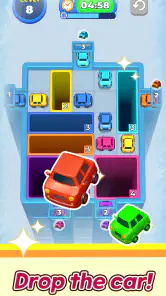
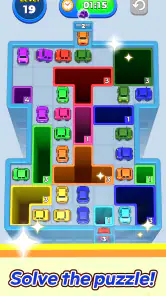
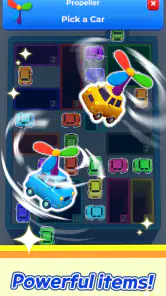
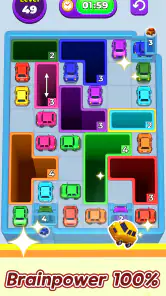
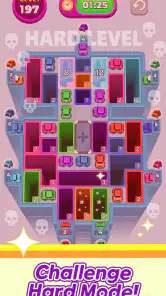

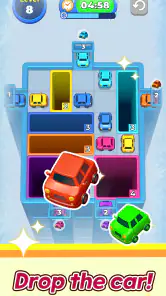
Analysis by Reviewed
Drop The Car is a free board-style puzzle game from Springcomes built around a very simple idea: match colors and release cars. I found the appeal easy to understand within a few turns. The rules are light enough for a quick break, but arranging drops carefully gives the game more thought than its short store description suggests.
The important question is not whether the concept is easy to learn—it is—but whether that simplicity stays enjoyable after the novelty fades. In my experience, this is best approached as a compact casual game rather than a deep strategy title. It suits people who like visual matching, short decision-making loops, and the satisfaction of clearing a small problem without committing to a long session.
How the puzzle works and what makes it satisfying
The central action is matching colors while dropping cars. That combination gives each move two jobs: I am watching the color relationships, but I am also thinking about where a car should land and what the next drop might affect. The result feels more active than simply tapping identical pieces, even though the basic rules remain approachable.
What I like most is the way the game creates small moments of hesitation. A quick move may solve the immediate match, but a more patient choice can leave a better arrangement for what follows. That makes the board worth reading before tapping. I do not need a tutorial full of complicated systems to understand the objective, yet I still have a reason to improve my decisions.
This is also why the game works well in short sessions. If I have a few minutes while waiting for an appointment or taking a break from work, I can start playing without first remembering a long storyline, a character build, or a complicated control scheme. The visual premise does most of the explaining.
At the same time, players should keep their expectations realistic. The game’s strength is its focused puzzle loop, not a broad collection of genres. Anyone looking for a campaign, competitive matchmaking, role-playing progression, or a large narrative world will probably find the experience too narrow. Its charm comes from repetition refined by better choices, not from constant reinvention.
What I learned from playing more carefully
A useful habit is to avoid treating every possible match as equally urgent. When several colors are available, I first look for the move that keeps the largest number of future positions usable. That approach is more reliable than immediately taking the most obvious match, because an easy clearance can sometimes leave an awkward arrangement afterward.
I also found it helpful to pause after each successful drop instead of tapping through the next move automatically. The board can change enough that the best follow-up is not always the one I expected. This small pause turns the game from a reflex exercise into a light planning puzzle, especially when the available spaces begin to feel limited.
Another practical tip is to play with a clear stopping point. Because matching games invite “one more turn,” a short session can easily become longer than intended. I get more enjoyment when I treat a few rounds as a break rather than trying to force progress indefinitely. The design is naturally suited to that rhythm.
Cost, free access, and the value question
Drop The Car is free to download and play, which makes the initial decision straightforward: there is no purchase required just to try its core idea. That matters here because the game is built around a concept that can be understood quickly. You can discover whether matching colors and dropping cars feels satisfying before spending anything.
There are in-app purchases ranging from $1.99 to $99.99 per item. That wide range is the main financial consideration. I would not assume that paying is necessary for enjoyment, and I would not treat the presence of purchases as proof that the free experience is poor. The sensible approach is to begin without buying anything and decide whether the game already provides enough entertainment for your habits.
For me, the free entry point gives the game its strongest value. It is easy to recommend as a low-commitment download for someone who wants a casual board puzzle. The value becomes more personal if a player is tempted by optional purchases, because the benefit of spending depends on how much the game is played and what those items change for that individual. I would set a spending limit before experimenting with purchases rather than making an impulse decision during a long session.
That distinction is important: free access is clear, while paid value is not automatically the same thing as better value. A player who enjoys the basic loop may be perfectly satisfied without paying. Someone who dislikes the repeated matching structure is unlikely to solve that problem by purchasing an item. Spending can support a game you already enjoy, but it should not be used to test whether the underlying design is fun.
Where the game fits among board and puzzle alternatives
Compared with traditional board games, this is much faster to start and less dependent on another person being available. I can pick it up alone and focus on a compact visual problem. The trade-off is that it does not offer the social negotiation, bluffing, or long-term planning that makes tabletop games memorable.
Compared with larger match-three games, the car-dropping theme gives this one a more specific identity. It feels less like a broad entertainment package and more like a single mechanic presented cleanly. That can be refreshing when I want fewer distractions, although players who enjoy quests, collections, characters, or many side modes may prefer a bigger alternative.
It also differs from classic board apps that recreate familiar games. There is no need to learn a well-known rule set, but there is also less of the strategic depth that comes from chess, checkers, or other established formats. I would choose this title for quick visual decisions, not for serious competitive study or a long evening of deliberate play.
Small decisions, real everyday use cases
One realistic use case is a commute or waiting room. I can play a few rounds without needing sound, a large time block, or a group of friends. The short-loop structure makes it less demanding than a story game, where stopping in the middle of a scene can feel disruptive.
It can also work as a mental reset between tasks. After concentrating on writing or spreadsheets, solving a few color arrangements gives me something concrete to focus on. I would not describe it as a productivity tool, but it can serve as a brief change of attention when I want something more engaging than passive scrolling.
Families may appreciate the Everyone content rating and the uncomplicated premise. Younger players can understand the color-based objective, while adults can still find a little satisfaction in planning placements. However, an age rating alone does not tell me whether every child will enjoy the repetition. A child who wants fast action or imaginative storytelling may lose interest sooner than someone who likes sorting and matching.
The game is less suitable for players who need accessibility options, extensive customization, or detailed strategic explanations before committing. I would also look elsewhere if my priority were a substantial offline-style board-game collection, a competitive ladder, or a narrative campaign. This title’s value comes from its narrow focus, and that same focus is its clearest limitation.
What may become tiring over time
The simplicity that makes the first session welcoming can also limit long-term variety. Once I understand the matching-and-dropping rhythm, the experience depends heavily on whether I enjoy repeating that loop and improving my choices. Players who need frequent new mechanics may find the presentation too restrained.
There is also a possible tension between careful play and casual convenience. The game is easy to launch during a spare moment, but better decisions require attention. If I play while distracted, I may make a move that looks fine immediately but creates a poor follow-up. That is not a flaw in the controls; it is a reminder that the puzzle rewards at least a little focus.
The purchase range deserves a second mention because it affects different users differently. A completely free player can judge the game on its basic entertainment value. A player who regularly buys items needs to consider whether those purchases add enough enjoyment to justify their own budget. I would be especially cautious about spending near the upper end of the listed range on a game whose appeal is intentionally simple.
Finally, the game may not satisfy someone who wants a clear sense of mastery beyond individual puzzles. I enjoy improving a decision and finding a cleaner solution, but that is a different reward from building a deck, unlocking a large world, or competing against skilled opponents. Choosing the game for the right reason matters more than expecting it to become something broader.
Technical details that matter before installing
Springcomes lists version 1.8, and the game supports devices running Android 7.1 or later. That makes the minimum system requirement relatively approachable for people using older compatible Android hardware, although actual comfort will still depend on the phone or tablet’s general condition.
The game has an average rating of 4.8 from around 655 ratings, with 8 written reviews, and it has passed 10K+ installs. Those figures suggest a positive early response, but I would read them as an encouraging signal rather than a guarantee that the puzzle will match every player’s taste. A small, focused game can appeal strongly to its audience while still feeling too repetitive to someone who wants more variety.
The title is free and rated Everyone, so the entry barrier is low in both cost and subject matter. The main decision is therefore about fit: do you want a compact color puzzle involving car drops, or do you want a broader board-game experience? That is the question I would answer before thinking about optional purchases.
My verdict for different kinds of players
I recommend Drop The Car to casual puzzle fans who like matching colors but want a slightly more positional decision than simply connecting identical pieces. It is particularly suitable for short breaks, solo play, and people who prefer learning by doing rather than reading a long rulebook.
I would also recommend trying it to families looking for an approachable game with an Everyone rating, provided they are comfortable with a focused and repetitive puzzle loop. The free starting point makes experimentation easy, and there is no reason to spend money before deciding whether the basic interaction is enjoyable.
I would skip it if I were seeking deep board-game strategy, multiplayer competition, a story, or a large progression system. I would also skip optional purchases unless the free experience had already earned a regular place in my routine. Buying more cannot compensate for choosing the wrong type of game.
Overall, Drop The Car delivers its best value as a free, easy-to-start board puzzle with a clear identity. Its color matching and car placement create enough decision-making to make a quick session feel active, while its narrow design keeps it accessible. My buy-or-skip verdict is simple: try the free game if you enjoy compact matching puzzles, keep your spending measured, and choose another option if variety or deep strategy is your priority.
Pros
- Simple controls make it easy to start playing immediately.
- Short rounds are ideal for quick breaks or casual sessions.
- The falling-car concept offers a fun and unusual gameplay twist.
- Increasing difficulty keeps later levels more challenging.
- Lightweight gameplay should run well on many mobile devices.
Cons
- Gameplay may become repetitive after extended play sessions.
- Limited content can reduce long-term replay value.
- Precision timing may feel frustrating on tougher stages.
- Ads may interrupt the experience in the free version.
- The game may lack deeper progression or customization options.