Dreamweaving Garden
- 144.00
- 4.3
- Installs
- 50.00K
- Price
- Free

Screenshots





Analysis by Reviewed
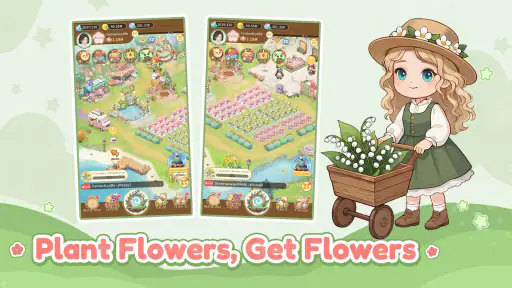
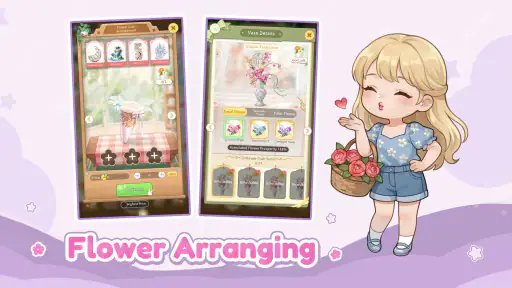
I went into Dreamweaving Garden expecting a gentle simulation game, and that is exactly the mood it creates first: quiet, decorative, and easy to approach. Its short store description, “Dreamweaving Garden,” points toward a calm experience, while the broader summary, “Just Flowers, and You,” sets a deliberately narrow focus. This is a game about spending time with a garden rather than racing through a crowded menu of unrelated activities.
That focused identity is its biggest strength. I do not open it when I want action, competition, or a complicated management challenge. I open it when I want a small break built around flowers and gradual attention. The developer, Pogo Hopper Games, has chosen a softer direction within the simulation category, and that makes the game appealing to players who enjoy arranging, tending, and watching a space become more personal over time.
It is free to start, with optional in-app purchases ranging from $0.49 to $99.99 per item. The game is rated Teen, works on Android versions from 6.0 onward, and currently sits at version 1.3.51. Those details matter because this is not presented as a premium one-time purchase; anyone deciding whether it belongs in a regular play routine should consider how comfortable they are with a free-to-play structure before becoming invested.
How the garden establishes its first goals
The early experience works best when I treat the garden as a place to settle into rather than a checklist to conquer. The initial goal is simple: begin shaping a floral space and learn what kind of attention the game expects. That simplicity is useful. I am not forced to absorb a large collection of rules before I can enjoy the central idea.
At the same time, a quiet opening can feel vague if I need a strong objective immediately. Players who prefer clear missions, constant rewards, or a dramatic tutorial may find the beginning restrained. The appeal depends on being willing to notice small changes and accept that the garden itself is the main subject.
My practical advice is to play the first session slowly. Instead of trying to rush toward every available unlock, I would spend a few minutes learning the rhythm of the garden and identifying which actions feel satisfying. This helps separate the game’s intended calm from the impatience that can come from treating it like a conventional progression-heavy simulator.
A useful everyday scenario is a short evening visit after work or school. I can check in, make a little progress, and stop before the session becomes a commitment. That makes the game easier to fit around real life than a simulation that expects long uninterrupted sessions. Its flower-centered premise also gives the experience a clear emotional boundary: I know what I am here to do, and I am not distracted by combat, racing, or a large cast of competing systems.
Small goals work better when I define the session
Because the experience is intentionally narrow, I get more from it when I set a modest personal target. I might decide to improve one area, work toward one unlock, or simply leave the garden in a more pleasing state than I found it. This is not a trick for manufacturing depth; it is a way to make the game’s slower pace feel purposeful.
That approach also reveals an important trade-off. In a larger gardening simulator, the game itself may constantly tell me what to do next through quests, resource chains, or business objectives. Here, the satisfaction comes more from the garden’s gradual development and from my own choice of focus. Players who enjoy self-directed play will likely appreciate that breathing room, while players who need an explicit task list may feel under-motivated.
I would not recommend judging the game solely by the first few minutes. Its concept needs room to work. The better question is whether the early goals make me curious enough to return and see what becomes available next. If the answer is no, the calm presentation will not compensate for the lack of urgency.
Reading progress through unlocks and visible change
Progress in a flower-focused game needs to be felt visually. I pay attention to whether each visit makes the garden look more considered, whether new possibilities give me a reason to continue, and whether an unlock feels like an actual change rather than a number moving upward. That is where garden progression either earns its place or starts to feel decorative without purpose.
The most convincing progress signal is a space that gradually reflects my choices. Even a small alteration can matter when it changes how the garden feels as a whole. I find this more rewarding than progress that exists only in a menu, because I can understand the result immediately. A good floral simulator should make me want to look back at what I have made, not merely collect another notification.
There is also a pacing question around unlocks. If new options arrive too quickly, the garden can lose its sense of discovery because I am simply processing a queue. If they arrive too slowly, the game risks becoming a pleasant screen with little reason to revisit. The strongest rhythm is one where an unlock gives me a new decision, not just another item to place without changing my priorities.
For that reason, I would keep an eye on how much each unlock affects the way I play. Does it encourage a different arrangement? Does it make an earlier choice more valuable? Does it give a neglected part of the garden a purpose? Those are better signs than the mere presence of a growing collection. A player who wants long-term engagement should look for meaningful variation in the garden, not only an expanding inventory.
A careful workflow makes slow progression feel less wasteful
I found it helpful to finish one small intention before jumping between every available possibility. In a game with a soft atmosphere, constant switching can make progress feel scattered. Choosing one corner, one visual idea, or one immediate improvement gives each visit a beginning and an end.
This is also a useful way to evaluate the game before spending money. I would first learn how satisfying the ordinary loop feels without buying anything. If the basic routine already gives me a sense of ownership, optional purchases may remain genuinely optional. If I feel bored before the garden has become meaningful, buying faster access is unlikely to solve the underlying problem.
The free entry point makes that test straightforward. I can decide whether the game’s pace suits me without committing to a purchase at the start. However, the wide range of optional item prices means I would keep a close eye on impulse spending, especially if an unlock becomes tied to the emotional desire to finish a particular garden idea.
Challenge, difficulty, and the shape of the learning curve
Dreamweaving Garden is not a challenge game in the usual sense. Its pressure comes from maintaining interest in a gentle activity, understanding the value of gradual progress, and deciding how much attention to give the garden. That can still create a learning curve, but it is a curve of judgment rather than reflexes.
Early on, the challenge is learning what deserves attention. Later, the challenge is deciding whether the available progress feels substantial enough to justify another visit. This distinction is important for expectations. Anyone looking for difficult puzzles, punishing resource management, or high-stakes failure should choose a different kind of simulation. The game’s appeal is closer to creative routine than mastery under pressure.
A calm difficulty curve can be a real advantage for players who use games to unwind. I do not need perfect concentration, and I can stop without feeling that I have abandoned a difficult run. That makes it suitable for short sessions, casual play, and moments when I want something more interactive than simply looking at a decorative screen.
The weakness is that low pressure can reduce urgency. Without a strong sense of risk, some players may find that the garden stops pulling them back once the initial novelty fades. The game therefore has to make progress, discovery, or personal decoration satisfying enough to replace the excitement that challenge normally provides.
Who will enjoy the pace, and who probably will not
I would recommend it to someone who likes relaxing simulation games, visual improvement, and self-directed goals. It is especially suitable for a player who enjoys checking a small project regularly rather than completing a large campaign in a weekend. The flower-only focus may also appeal to people who find broader life simulators too busy or too cluttered with unrelated systems.
I would be more cautious with players who need constant action or a clearly escalating challenge. If your favorite part of a simulation is optimizing production, balancing several resources, or overcoming increasingly demanding objectives, this may feel too quiet. A conventional management game would probably provide a stronger sense of pressure and a clearer definition of success.
It is also not the best choice for anyone who dislikes free-to-play economies on principle. The game can be tried without paying, but optional purchases are part of the overall structure. I would approach those offers as a boundary-setting issue: enjoy the free routine first, decide what the garden is worth to you, and avoid treating a purchase as a substitute for engagement.
Retention: does the garden earn another visit?
Retention in a game like this should feel like an invitation, not a demand. I want to return because I have an idea for the garden, because I am curious about the next stage of progress, or because a few quiet minutes with flowers fits my mood. I do not want to feel that I must check in simply to avoid falling behind.
That distinction shapes my view of the game. Its best retention pressure is personal: the desire to see a space develop and to continue a visual project I have started. That is healthier and more enjoyable than relying entirely on artificial urgency. It also means that the game’s long-term appeal will vary from person to person. A player who enjoys arranging and revisiting a personal space may stay engaged much longer than someone who needs a new objective every session.
The practical test is simple. After an ordinary visit, do I leave with a clear reason to come back, or do I only feel that I have completed a routine? If the answer is the former, the pacing is doing its job. If the answer is the latter, the game may be better as an occasional relaxation tool than as a daily habit.
I would also avoid turning the game into another obligation. A short session should be enough to enjoy it. If I start measuring the experience only by how quickly I can reach the next unlock, I lose the quality that makes a flower-centered simulator different from a standard progression game. The garden works best when progress and atmosphere support each other.
How it compares with familiar simulation alternatives
Compared with a farming simulator, this is a more focused proposition. Farming games usually ask me to balance crops, money, schedules, tools, or relationships. Those layers can create satisfying strategy, but they also make the experience busier. Dreamweaving Garden is a better fit when I want the garden itself to remain the center of attention rather than one part of a larger economy.
Compared with a city builder or management simulator, the difference is even clearer. Those games reward planning at a broad scale and often introduce problems that need solving. Here, the attraction is intimate and decorative. I am shaping a small personal space, not running a complex organization. That makes it easier to relax, but it also means there is less room for players who enjoy intricate optimization.
Compared with a pure decorating app, the simulation framing gives the garden a sense of ongoing development. I am not only arranging a finished canvas; I am returning to a place that can change over time. The trade-off is that I may not receive the immediate creative freedom of a tool designed solely for decoration. Anyone choosing between them should decide whether gradual progression or instant control matters more.
My progression verdict after weighing the trade-offs
My overall impression is positive, with a clear condition: Dreamweaving Garden succeeds when I accept its measured pace. Its goals are modest, its challenge is gentle, and its strongest rewards come from seeing a floral space become more personal. The game does not need to imitate a busy farming or management simulator to be worthwhile; its narrow focus is precisely what gives it character.
The current version, 1.3.51, has enough identity to stand apart from generic simulation games, and the audience response is encouraging: it holds a 4.3 average from around 678 ratings, with over 50K installs. Those figures suggest that the idea is connecting with a meaningful group of players, although popularity alone cannot tell me whether its slow rhythm will suit my own habits.
I would start with the free version and give the ordinary progression loop a fair chance. Before considering an in-app purchase, I would ask whether the garden already makes me want to return and whether the next unlock feels meaningful rather than merely convenient. That small test protects the relaxing nature of the experience and helps separate genuine enjoyment from purchase-driven momentum.
For me, the game is strongest as a low-pressure companion: something to open during a quiet break, shape for a while, and leave without stress. It is weaker as a substitute for a deep strategy simulator or a demanding progression game. The right reason to play is not to conquer the garden, but to enjoy watching it become yours.
If that sounds appealing, Pogo Hopper Games has made a focused simulation worth trying. The Teen rating, Android 6.0 minimum, free starting price, and optional purchases make it accessible to a broad audience, while the flower-centered design gives it a specific mood. I would recommend it to patient players who value atmosphere and gradual change, and I would steer action-focused players toward a more demanding alternative.
Pros
- Calming visuals and music create a relaxing atmosphere.
- Simple controls make it easy to start playing immediately.
- Creative garden designs encourage personal expression.
- Short sessions fit well into quick breaks.
- Gentle gameplay is suitable for players seeking low-pressure entertainment.
Cons
- Progress may feel slow for players who prefer fast-paced challenges.
- Limited competitive features reduce replay value for some users.
- Some decorative options may require extended play to unlock.
- The tranquil pace may feel repetitive over longer sessions.
- Performance can vary on older phones or tablets.

- Category
- Simulation
- Version
- 1.3.51