Draw to Dig - EPO Eats All
- 17.00
- 4.4
- Installs
- 1.00M
- Price
- Free

Screenshots
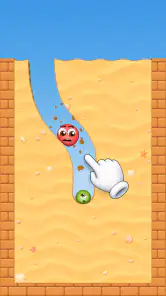
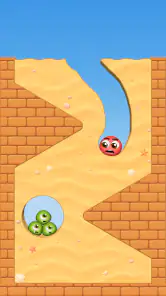
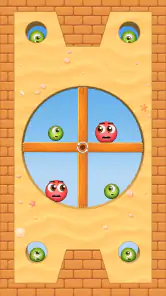
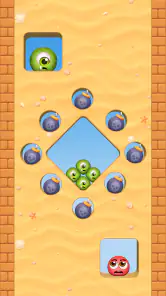
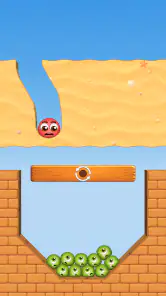
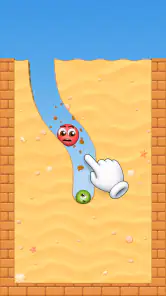
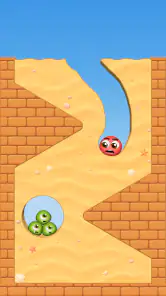
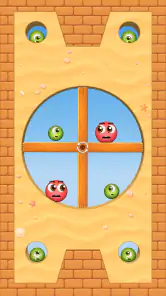
Analysis by Reviewed
Draw to Dig - EPO Eats All has a simple premise that becomes a small test of patience: work out how to alter a sandy route so EPO can reach the things it needs to eat. I like the appeal of that setup for a short break. You can focus on one compact problem at a time rather than learn a large strategy game, though the drawing mechanic also means a tiny change in your approach can matter more than it first appears.
Getting unstuck when a route goes wrong
Think about the path before you draw
The central action is direct: you draw, dig through sand, and try to guide EPO toward bacteria and germs. The challenge is not simply making the longest possible tunnel. It is deciding where a route should bend and how much sand needs to be cleared for the intended path to make sense. A rushed line may create a route that looks plausible but does not solve the puzzle as expected.
When a first attempt fails, I would avoid immediately drawing a bigger or more complicated path. Pause and identify the point where your plan stopped working: was the route aimed incorrectly, did you remove more sand than necessary, or did you overlook the position of the target? Changing one part of the plan at a time makes it easier to learn from a failed attempt. That is a more useful habit than treating every miss as a cue to scribble over the whole screen.
This is where the game’s strategy label makes sense. Its strategic side is about spatial judgement and controlled decisions, not managing an army or building a long-term plan. If you enjoy puzzles where a small adjustment can change the result, the loop should feel satisfying. If you want a strategy game with lots of systems to master, this is a much lighter choice.
Use smaller corrections
A practical approach is to begin with the simplest route you think could work, then make a modest correction if it does not. Keeping your drawing focused can help you see which part of your reasoning needs to change. It also keeps the puzzle from turning into an unclear mass of lines, where you are no longer sure which decision caused the problem.
I would also treat a failed attempt as information, not as proof that the game is broken. The premise depends on interacting with sand, so a route that seems obvious in your head may need a different shape in practice. Try shifting the angle or endpoint rather than repeating the same gesture. This is a general puzzle-solving tactic, not a claim about a special undo tool or hidden mechanic.
That distinction matters for anyone wondering whether the game is easy to pick up. The basic idea is quick to understand, but a clear premise does not make every individual puzzle automatic. You still need to pay attention to the space between EPO and its food and be willing to rethink a route. It is accessible in concept, but the satisfaction comes from doing more than drawing at random.
Setup checks and a smoother play session
Check the device before blaming a puzzle
The game is free to download, is listed for devices running Android 6.0 or later, and includes in-app purchases priced at $4.99 per item. I would check that the device meets the operating-system requirement before troubleshooting anything else. If an installation or launch problem occurs, confirming that the download has finished and reopening the game are sensible first steps; they are ordinary device checks, not special fixes promised by the developer.
The age rating is Everyone 10+, which gives families a useful reference point when deciding whether it suits a younger player. I would still consider the individual child’s comfort with the game’s germs-and-bacteria theme and the amount of independent screen time involved. The playful premise is about feeding EPO, but the subject matter is not exactly the same as a purely abstract shape puzzle.
Because the game’s core interaction depends on drawing, it is worth getting comfortable with how your own device responds to touch before deciding that a route is impossible. Keep your finger movement deliberate, and try not to make a gesture so quickly that you cannot tell where you meant the tunnel to go. If a touch seems to register oddly, close and reopen the game and try the same kind of movement again in a calm moment. This helps separate a momentary input issue from a puzzle that needs a new plan.
Make purchases a conscious choice
The game can be played without paying to download it, but the presence of optional purchases is relevant if you are installing it for a child or sharing a device. I would review the device’s purchase controls before handing it over, especially if accidental spending would be a concern. The listed item price gives you a concrete reason to check those settings rather than assuming that a free download means there can never be a payment prompt.
I would not make a purchase just because one route has become frustrating. First, step back and reconsider the path, then decide whether you are still enjoying the kind of challenge the game offers. A purchase should be a deliberate choice, not a reaction to a single stubborn puzzle. That advice is especially useful for a game whose basic appeal is working out a physical route through sand.
For a more comfortable session, I would play somewhere you can give the screen your attention. This is not a game that needs a long tutorial to explain its central idea, but drawing accurately is easier when you are not trying to do it while walking or juggling another task. A few minutes at a desk or during a quiet break is a better fit than expecting it to work as a hands-free background activity.
Recovering your approach without overcomplicating it
Change one decision at a time
If a level feels confusing, I recommend breaking the route into a small sequence of questions. Where is EPO? Where is the food? What is the most direct path between them? Which turn or section of sand is actually preventing that path? Answering those questions separately can make the next drawing more purposeful, even without assuming that the game provides hints or a particular reset system.
One useful trade-off is between a direct route and a more elaborate one. A direct drawing is easier to understand and adjust, but it may not account for the shape of the available sand. A winding route gives you more room to adapt your idea, but every extra bend makes it harder to judge whether the path is doing useful work. I would start direct, then add only the change that seems necessary.
If you lose track of what you have tried, take a short pause rather than repeating the same gesture. Remember the last version that seemed closest to working and adjust from there. This small reset in your own thinking can be more helpful than making another hurried attempt. It is a practical way to keep the puzzle from becoming a test of persistence alone.
Separate input trouble from puzzle trouble
When a drawn route does not match what you intended, try a slower, simpler gesture and see whether the result is easier to read. If the same touch issue appears repeatedly, closing and reopening the app is a reasonable general troubleshooting step. If the interaction seems normal but the path still fails, return to the puzzle’s layout and revise the route instead. That distinction prevents wasted effort in both directions: endlessly redrawing when the device is acting up, or restarting the app when the real issue is the plan.
It also helps to avoid changing several things at once. If you alter the starting direction, add a curve, and make the route much longer in one attempt, success or failure will not tell you which adjustment mattered. A controlled change gives you a clearer lesson for the next try. For a drawing-based puzzle, that is more than a general tip; it is the best way to make each attempt feel like progress rather than guesswork.
For an everyday scenario, I can see this working well during a short wait: open it, focus on one route, and put it away when the break ends. The concept is compact enough for that kind of stop-and-start attention. It is less suitable if you want a game that can be played without looking closely, or if your preferred phone games depend on rapid action rather than tracing a considered path.
Who it suits, and when to choose something else
A small puzzle rather than a full strategy campaign
With a 4.4 average from around 2,800 ratings and over a million installs, Draw to Dig - EPO Eats All has drawn a substantial audience. It is made by GOOD TO SEE YOU, and its current version is 0.1.8. Those figures offer context for someone browsing the catalog, but they do not tell you whether its particular drawing-and-digging loop matches your taste. For that, the important question is whether you enjoy solving a spatial problem by shaping a route.
I would recommend it to someone who likes tactile puzzles, quick decisions, and the chance to refine a plan after a miss. It can also suit a casual player who wants a clear objective without committing to a large strategy campaign. The food-and-germ theme gives the goal a distinct identity, while the actual task stays focused on getting EPO through the sand.
I would skip it if you are looking for deep resource management, competitive matches, or a story-led adventure. Those are common alternatives within the broad strategy and puzzle space, but they answer different needs. A conventional logic puzzle may be better if you prefer fixed clues and a single clean solution path; a management game is the better pick if you want decisions that build across a longer session. This one is more immediate and physical in feel.
What to expect from the free version
The free download lowers the barrier to trying the core idea, while the listed in-app purchases mean the experience may include optional spending decisions. I would approach it as a free game first and judge whether the drawing puzzles are enjoyable before considering any purchase. Since the price applies per item, keep an eye on each individual prompt instead of assuming that one payment would cover everything.
It is also fair to keep expectations measured. A simple control scheme can be inviting, but the same simplicity means the game’s appeal rests heavily on whether its puzzles keep you interested. Players who enjoy experimenting with a route may find that restraint refreshing. Players who need many different systems, modes, or story developments to stay engaged may prefer a broader game.
A practical verdict for a quick puzzle break
My overall impression is that Draw to Dig - EPO Eats All is easiest to recommend as a focused, low-commitment strategy puzzle. Its main strength is the direct connection between your drawing and the route EPO takes: you are not just selecting an answer, but shaping the space that should lead to the goal. The best way to enjoy it is to draw with intention, make small corrections, and treat each attempt as a clue about the layout.
Its main limitation is equally clear: if you do not enjoy working out paths by trial and adjustment, the central interaction may feel repetitive rather than clever. It is not a substitute for a sprawling strategy game, and it is not the right choice for distracted play that demands little attention. Those are not flaws for every player, but they are meaningful boundaries when deciding whether to install it.
For someone who wants a free, approachable game to tackle in short bursts, I would give it a try, while keeping purchase controls in mind and checking that the device meets the Android requirement. If a route fails, slow down, change one part, and distinguish a drawing problem from an input problem before starting over. That measured approach is where the game’s small puzzles are most enjoyable.
Draw to Dig - EPO Eats All Frequently Asked Questions
What is Draw to Dig - EPO Eats All?
Draw to Dig - EPO Eats All is a casual puzzle game built around drawing paths to guide food toward EPO, the character who wants to eat it. Each level asks you to work out how to move the food through the scene, often around gaps, barriers, or other obstacles. Its simple premise makes it easy to understand, while the changing layouts provide the main challenge.
How do you play Draw to Dig - EPO Eats All?
You use your finger to draw a line or route on the screen, then rely on the game’s physics and level layout to help the food reach EPO. The key is to consider where the food will roll or fall after your drawing is made, rather than drawing a path without a plan. Controls are straightforward, so most of the challenge comes from experimenting with shapes and timing.
Is Draw to Dig - EPO Eats All suitable for children?
The game’s drawing-based puzzles and playful food theme may appeal to children, and its basic controls are easy to learn. However, suitability can depend on the child’s age and tolerance for advertisements, difficulty, or in-app purchase prompts. Check the current store listing and the game’s settings before handing over a device, and consider using parental controls to manage purchases and screen time.
Does Draw to Dig - EPO Eats All work offline, and does it contain ads or in-app purchases?
Availability of offline play, advertisements, and optional purchases can vary by version, device, and region. The store page is the best place to confirm the current details before downloading, since these policies may change after updates. If you want to play without an internet connection or avoid unexpected spending, review the listing and check the game’s menus for purchase and privacy information.
Which devices support Draw to Dig - EPO Eats All, and how can I download it safely?
Compatibility depends on your device’s operating system version, available storage, and the requirements shown on the relevant app store page. Before downloading, confirm that the listing is for Draw to Dig - EPO Eats All and that it comes from the official publisher. Installing through Google Play or Apple’s App Store is the safest approach; avoid unofficial download files, which may be outdated or unsafe.
Pros
- Quick drawing puzzles are easy to pick up and play.
- Creative solutions let players experiment with different shapes.
- Short levels suit brief play sessions.
- Simple controls make the game accessible to many ages.
- The playful theme adds charm to the puzzle challenges.
Cons
- Some puzzles may feel repetitive after extended play.
- Later levels can require trial and error to solve.
- Drawing precision may be tricky on smaller screens.
- Ads or in-app purchases may interrupt the experience.
- The game may offer limited variety for players seeking deeper mechanics.

- Category
- Strategy
- Version
- 0.1.8