Dragonfist Limitless
- 3.77K
- 4.7
- Installs
- 500.00K
- Price
- Free

Screenshots
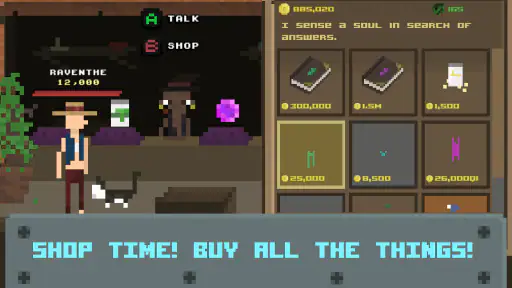
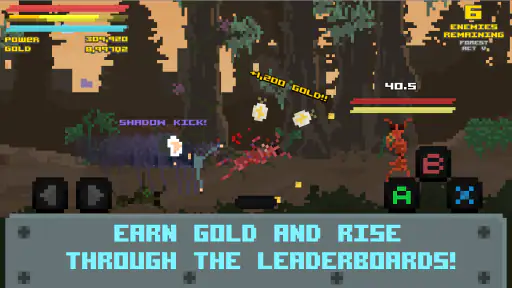
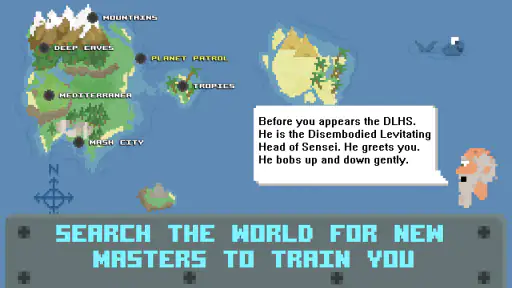
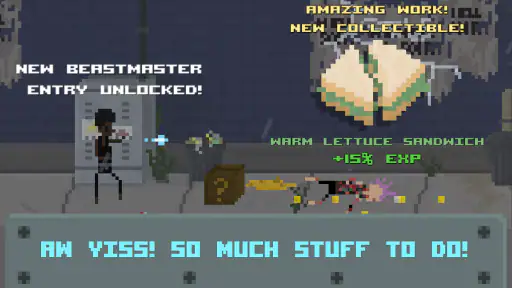
Analysis by Reviewed
I approached Dragonfist Limitless expecting a small, joke-heavy role-playing game that I could check between other tasks, and that is broadly what I found: a free simulation game built around incremental progress, training, and a deliberately dark sense of humor. The pitch is unusual enough to stand out, but the real question is whether its slow accumulation of power feels satisfying or merely asks me to wait. My answer is positive with reservations. I enjoyed the strange tone and the feeling of gradually improving a fighter, yet the game works best when I treat it as a background routine rather than a traditional action RPG.
The game comes from Bitter Extracts and is aimed at a Teen audience. It has been available since July 20, 2021, and the current version is 4.25.08. On Android, it can run from OS 7.1 onward, which makes it accessible to many older devices. It is free to start, with optional in-app purchases ranging from $0.99 to $59.99 per item. That last point matters because the experience is based on repeated progress, so spending can become tempting if I start treating every delay as a problem that needs solving.
How the training loop feels in everyday play
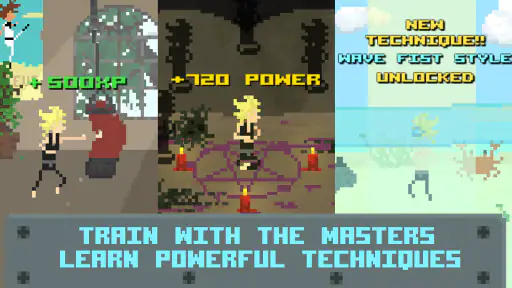
The central appeal is the training-montage idea translated into an incremental RPG. Instead of expecting constant manual combat, I make progress through repeated improvement and return to check how far the character has advanced. That structure suits short sessions. I can open the game while waiting for a bus, make a few decisions, collect what has accumulated, and leave without feeling that I have abandoned a complicated quest.
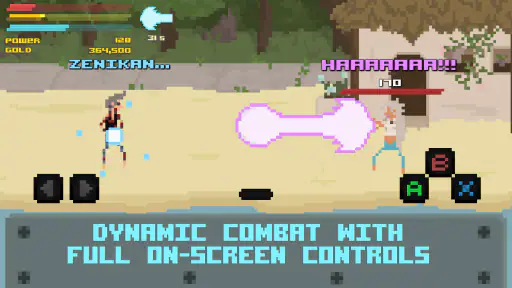
That convenience is also the first important trade-off. Players who want direct control, quick reactions, and dramatic battles may find the pace too passive. This is not the best choice if I want a game that rewards precise timing or gives me a large world to explore. Its satisfaction comes from watching a weak fighter become more capable, not from mastering a difficult control scheme.
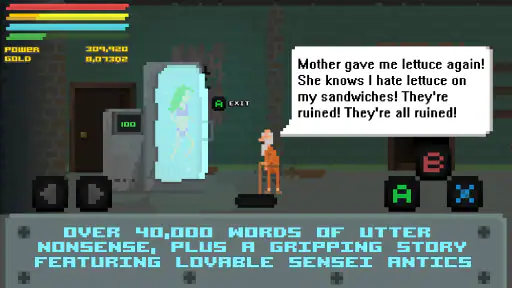
The pitch-black comedy helps the routine feel less mechanical. The writing and presentation give the training concept an intentionally odd edge, so the game does not feel like a completely serious fitness chart for imaginary warriors. I found that tone useful because incremental games can become repetitive quickly. A strange joke or grim turn of phrase gives the next upgrade more personality than a plain list of numbers would.
Still, the humor will not work for everyone. The Teen rating is a useful signal for families and younger players, but it does not mean the tone is universally comfortable. Anyone who dislikes bleak jokes, exaggerated violence, or comedy built around unpleasant situations should approach carefully. I would not recommend handing it to a child simply because the artwork or basic idea looks playful.
Why the incremental format can be relaxing
What I like most is that the game gives me a low-pressure reason to return. I do not need a long uninterrupted session to feel that I have done something. A quick check-in can become part of a daily routine: open the game after breakfast, review progress, make a training choice, and close it again. Later, I can return with a clearer sense of what improved.
This makes it a better companion game than a main game for many people. I would keep it alongside a more active RPG, puzzle game, or strategy title rather than expecting it to replace them. When I want a calm progression loop, it fits. When I want immediate excitement, it can feel like the game is asking me to appreciate waiting instead of giving me something to do.
A useful habit is to decide before opening it whether I am checking progress or looking for entertainment. If I am only checking progress, a short visit feels efficient. If I expect a full evening of action, the same session may feel thin. That distinction prevents me from blaming the game for doing exactly what its incremental format is designed to do.
Progression, patience, and the pressure to spend
Free incremental games naturally create a tension between patience and convenience. In this case, the purchase range begins at $0.99 and reaches $59.99 for an individual item. I see that as a reason to set a personal rule before playing: enjoy the free loop first, and do not buy simply because a timer, upgrade, or slower stretch makes me impatient.
I cannot responsibly describe the purchases as fair or unfair in every situation without claiming details that are not established here. What I can say is that the price range creates different expectations. A small optional purchase may feel harmless to one player, while the highest-priced item deserves much more thought. The sensible approach is to treat spending as a separate decision from enjoying the game.
My strongest practical tip is to play long enough to understand the normal rhythm before considering any purchase. Incremental systems can feel slow during the first few visits and more rewarding once I understand what the game expects me to check and when. Buying early can hide whether I actually enjoy the underlying loop. If the routine is not satisfying without spending, a purchase is unlikely to fix that fundamental mismatch.
I also recommend turning the game into a schedule rather than a constant interruption. Reopening it every few minutes can make progress feel smaller because I am watching each pause. Checking at natural points in the day makes the same advancement feel more meaningful. This is one of those games where my relationship with the clock affects my opinion almost as much as the mechanics do.
Is the game fair in competitive terms?
For me, the most important fairness question is whether I am playing against other people or mainly against my own previous progress. The available description presents Dragonfist Limitless as an incremental RPG, but it does not establish a detailed competitive structure that would let me judge rankings, player-versus-player balance, or purchase advantages. I therefore would not choose it specifically as a competitive game.
If I want a fair contest based on reflexes or carefully balanced multiplayer decisions, I would look elsewhere. A traditional fighting game gives me clearer control over the outcome, while a competitive strategy game usually explains its rules and opposing players more directly. This title appeals more to someone who enjoys personal progression and the amusement of its world.
That does not make the experience meaningless. Personal progression can be fair in a different way: I decide how much time and money I want to give it, then judge whether the return feels worthwhile. The danger is comparing my progress with other players when I do not know how much time or spending shaped their results. I would keep the focus on my own training path unless the game clearly gives me a competitive reason to do otherwise.
For families, the Teen label and the presence of purchases are the two details I would discuss before installation. A young player may understand that the game is free to download but still not understand that individual items can cost substantially more than a casual impulse purchase. I would use device-level purchase controls and agree on a spending rule in advance. That is practical protection, not a judgment about the game’s design.
What kind of player should choose it?
I think it is a good match for players who enjoy watching long-term improvement, checking a game in short bursts, and discovering humor in an intentionally grim setting. It also suits people who like the idea of an RPG but do not always have time for maps, quests, equipment screens, and long battles. The training theme gives the progression a clear identity instead of presenting it as an anonymous upgrade menu.
I would skip it if I need a strong story delivered through continuous scenes, deep tactical combat, or a fully active role in every encounter. I would also be cautious if I know that slow progress makes me spend impulsively. The free entry is appealing, but the optional purchase range means self-control is part of getting the best experience.
Compared with standard simulation games, this one is more characterful and game-like. Many simulations focus on building, managing, or reproducing a real-world process. Here, the simulation idea is tied to fantasy training and RPG advancement, so the goal is not realism. Compared with conventional RPGs, it is lighter on direct action and stronger on routine. Compared with idle games, its dark comedy gives it a more specific personality, although players who dislike waiting may still find the same basic friction.
Questions I would answer before installing
Is it genuinely free to play? Yes, the game is free, but it also offers optional purchases from $0.99 to $59.99 per item. I would interpret “free” as a chance to try the core experience without paying, not as a promise that every convenience or progression option is free.
Will it work on an older Android phone? The minimum operating system is Android 7.1, so it is not restricted to only recent devices. Compatibility is not the same as guaranteed smooth performance on every handset, but the operating-system requirement is relatively approachable for older Android users.
Is it suitable for children? The content rating is Teen, so I would not treat it as a children’s game. The dark-comedy style may also be more important to consider than the simple training premise suggests. Parents should review the tone and manage purchases before allowing independent play.
Does it replace a full RPG? In my view, no. It offers a different kind of satisfaction: gradual development and short check-ins rather than constant exploration and combat. I would recommend it as a companion to a full RPG, not as a substitute for one.
Is the latest version important? The current version is 4.25.08, and using the current release is the sensible way to avoid judging an older build. I would still keep expectations realistic: an updated version does not change the fact that the game is built around incremental progress.
My trust verdict after weighing the trade-offs
The game’s strongest point is its identity. The combination of training-focused progression, RPG framing, and pitch-black comedy is more memorable than a generic idle loop. I also appreciate that the free starting point lets me decide whether the rhythm suits me before I spend anything. With an average rating of 4.7 from around 39 thousand ratings, it has clearly found an audience, and more than 500 thousand installs show that the concept has reached well beyond a tiny niche.
Those figures do not guarantee that I will enjoy it, but they do make it easier to see the game as an established choice rather than an experiment with no audience. My own recommendation remains conditional. I would suggest trying it to a friend who likes incremental games and dark humor, especially if they want something that can be checked in short sessions. I would not recommend it to someone seeking a hands-on fighting experience or a competitive game where skill decides every result.
My final advice is to protect the free trial period. Learn the routine, notice how the waiting feels, and decide whether the jokes and progression keep you interested without pressure. Only then should spending enter the conversation. Bitter Extracts has made a distinctive simulation RPG, but its value depends on accepting its pace. Once I stopped expecting constant action, I found a quirky, convenient game with enough personality to earn regular visits; before that adjustment, it was easy to mistake its deliberate slowness for a lack of content.
Pros
- Fast-paced combat feels responsive and satisfying.
- Distinct heroes offer varied playstyles and team combinations.
- Short missions fit well into quick gaming sessions.
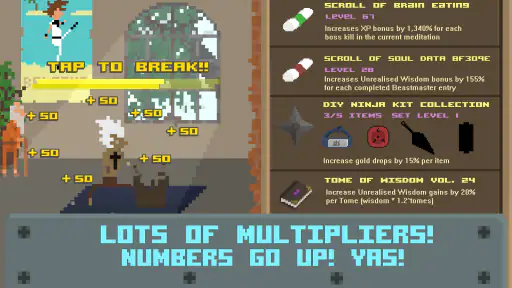
- Upgrade systems provide steady progression over time.
- Stylized visuals give battles a lively
- polished appearance.
Cons
- Progress may slow noticeably without frequent upgrades.
- Some stages can feel repetitive after extended play.
- Higher difficulty may encourage resource grinding.
- The interface can feel crowded during intense battles.
- Device performance may vary on older phones.

- Category
- Simulation
- Version
- 4.25.08