Diner Fever® Cooking Game
- 455.00
- 4.7
- Installs
- 1.00M
- Price
- Free

Screenshots




Analysis by Reviewed
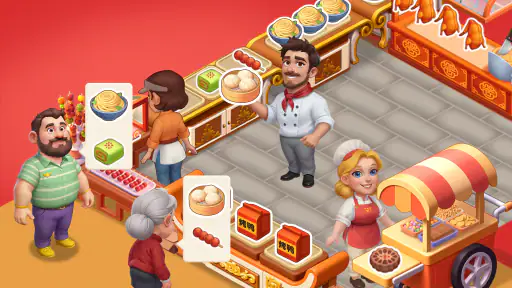
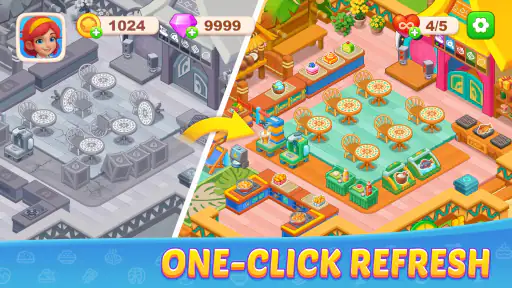
I spent time with Diner Fever® as a casual cooking and restaurant simulation, and my first impression was that it aims for a quick, colorful loop rather than a slow management spreadsheet. You move through the fantasy of becoming a chef, travel between food-focused settings, prepare orders, and make decorating choices along the way. That combination makes it easy to understand within a few minutes, while the restaurant theme gives the short sessions a clear purpose.
It is a free game from gameone, available for Android users on version 6.0 or later. The game is rated for Everyone, which fits its approachable presentation and simple premise. Its current version is 1.19.3, and the audience is already substantial: it has passed one million installs and holds a 4.7 average from around twenty-nine thousand ratings. Those figures suggest that it has found a strong audience, although a high rating does not remove the need to decide whether its pace and spending model suit you.
How the cooking loop feels in everyday play
The best way to understand this game is to imagine a small break in the day. I can open it while waiting for an appointment, complete a few customer-focused tasks, and leave without needing to remember a complicated control scheme. The cooking theme supplies immediate goals, while the travel and decoration elements give the session more variety than a simple order-serving game.
That accessibility is also the main reason I would recommend it to someone who likes light simulation games but does not want a demanding city builder. You are not being asked to learn a large menu of systems before having fun. The appeal comes from the rhythm of responding to food orders and improving the visual identity of the restaurant experience. For me, that makes the game easier to pick up than a traditional restaurant-management title with extensive menus, staff schedules, supply chains, and financial planning.
The trade-off is that players looking for deep culinary strategy may find the concept lighter than the word “simulation” suggests. The chef fantasy is central, but this is still designed around approachable mobile play. I would not choose it as a replacement for a detailed management game where every ingredient, employee, and business decision has a major long-term consequence.
What makes the pace work
The game’s strongest quality is its sense of immediate direction. A session is naturally framed around doing something useful: serving, cooking, progressing through a location, or making a decorative decision. That structure matters on a phone because it reduces the feeling of opening an app without knowing what to do next.
I also like the way the different themes support one another. Cooking gives the game its active center, travel creates a sense of movement, and decoration offers a more relaxed activity between busier moments. If you enjoy changing from a quick task to a visual customization choice, this mixture is more appealing than a game that repeats only one type of order forever.
My practical tip is to treat the game as a short-session experience rather than trying to rush through everything in one sitting. The cooking sections feel more manageable when I focus on the immediate order flow, while the decorating side is better approached as a longer-term project. Separating those moods helps prevent the game from feeling like a constant race.
Busy moments and the cost of concentration
Cooking games often feel simple at the start and become more demanding when several requests compete for attention. That is where Diner Fever® can be enjoyable for players who like light pressure. The satisfaction comes from keeping the service moving and making fewer mistakes as the situation becomes busier.
At the same time, this style is not ideal for everyone. If you prefer calm decorating with no time pressure, the active restaurant sections may feel distracting. Conversely, if you want a highly competitive reaction test, the broader travel and decoration concept may make the experience feel less focused than a dedicated speed-cooking game.
One useful way to play is to use the quieter parts of a session to plan your next visual or progression choice instead of making every decision during a busy order sequence. That small habit keeps the action from becoming mentally cluttered. It also makes the game feel more like a restaurant journey and less like a string of disconnected taps.
Heavy use is where I would pay the most attention to your device. Any game that combines animated cooking scenes, changing environments, and decorative presentation can feel more demanding than a static puzzle. I would avoid judging it after only a brief launch. Play through a longer session, especially if your phone is older, and notice whether touch response remains comfortable and whether the device becomes warm or the battery falls faster than you accept.
I cannot promise identical behavior on every Android phone, because hardware, background activity, and operating-system conditions vary widely. The sensible approach is to keep other demanding apps closed when you want a longer restaurant session and to avoid playing while the phone is already struggling with storage or heat. Those are ordinary precautions, but they matter more during repeated cooking rounds than during a single quick check.
Stability and recovering from interruptions
Reliability matters in a game built around short visits. If I am playing during a commute or between errands, an interruption is more likely than it would be on a dedicated console. A phone call, a notification, or simply switching to another app can break the rhythm, so I value a game that lets me return without making the whole session feel wasted.
My advice is to pause naturally before leaving the game whenever possible, especially after completing a meaningful cooking or decorating step. I would also avoid beginning a long session when the battery is nearly empty or when the phone is already hot. These habits do not change the game itself, but they reduce the chance that an interrupted session becomes frustrating.
The current version is 1.19.3, so users should keep an eye on the version installed on their device when troubleshooting. If the game behaves differently after an update, the first practical checks are simple: restart the app, restart the phone, confirm that the operating system meets the requirement, and make sure there is enough free space for normal app activity. I prefer this straightforward approach before assuming that a temporary problem is a permanent flaw.
Recovery is especially important for progression-focused players. If you are the kind of person who becomes upset after losing a carefully timed run, you may want to play in a stable environment rather than squeezing in a session while multitasking. Diner Fever® is a better fit when you can give the active cooking moments your full attention, even if that attention lasts only a few minutes.
Older phones, newer phones, and practical limits
The minimum operating-system requirement is Android 6.0, which gives the game a broad potential device range. That does not mean every compatible phone will feel identical. A phone can meet the software requirement and still differ noticeably in memory, processor strength, display response, and battery condition.
On a newer device, I would expect the game’s visual presentation and quick transitions to feel more comfortable, particularly during longer sessions. On an older compatible phone, the better test is not whether the game opens, but whether it remains pleasant after repeated cooking rounds. If loading, touch response, or heat becomes distracting, the game may be technically compatible without being the right everyday choice for that device.
Storage is another practical consideration, even though the game’s listed price is free. Games that receive ongoing version changes can be less comfortable on a phone that is almost full. I recommend leaving room for normal system activity and updates rather than treating the installation itself as the only storage concern.
The free entry point is helpful because you can test the cooking rhythm, travel theme, and decoration side without paying before you know whether they suit you. However, the game includes in-app purchases ranging from $0.99 to $99.99 per item. That is a wide span, so I would decide on a personal spending limit before playing regularly. The free download is a genuine advantage for trying the experience, but the purchase model deserves attention if you are prone to buying boosts or cosmetic progress during a busy session.
For families, the Everyone rating makes the game easier to consider as a broadly accessible title. I would still explain the purchase option to younger players and use the device’s purchase controls where appropriate. The age label describes the content audience; it does not remove the need for sensible spending boundaries.
How it compares with other cooking and simulation choices
Compared with a pure time-management cooking game, this title offers a wider fantasy through travel and decoration. That makes it more attractive if you want your restaurant to feel like part of a journey instead of a single counter where every level looks and feels the same. The downside is that players seeking only rapid order chains may find the additional themes less essential.
Compared with a serious restaurant simulator, it is easier to approach but less suited to detailed business planning. I would pick Diner Fever® for visual progression, short sessions, and a friendly chef role. I would choose a deeper management alternative if my main goal were controlling staffing, pricing, inventory, and long-term restaurant economics.
It also differs from a purely decorative game because the cooking activity gives the customization a functional context. You are not only arranging a space for its appearance; you are building around a restaurant identity. That connection is a good reason to try it if you enjoy games that alternate between active tasks and creative choices.
The most important comparison is therefore about attention. This game sits between a relaxed decorating title and a faster cooking challenge. That middle position is its strength for flexible players, but it can be a weakness if you want one sharply defined type of gameplay.
Who will get the most from it
I think Diner Fever® is a good match for someone who enjoys food-themed games, likes visible restaurant progress, and wants a mobile activity that can fit around ordinary routines. It works particularly well for players who enjoy switching between serving customers and making a place look more personal. The Everyone rating also makes its overall presentation approachable for a wide audience.
A realistic use case would be a short evening break after work. I might play a few cooking rounds first, when I still want something active, then spend a little time on decoration once I am ready for a calmer task. That change of pace gives the session a natural ending point and prevents me from feeling that I need to commit to a long campaign.
I would be more cautious if you dislike in-app purchases, have a very old phone that struggles with animated games, or want a simulation with extensive economic control. I would also skip it if your ideal cooking game is built entirely around perfect timing and increasingly intense service. The travel and decorating elements are not distractions for the intended audience, but they may be unnecessary for a specialist player.
Another useful distinction is between casual interest and completionist habits. Casual players can enjoy the free starting point and decide later whether the wider progression is worth their time. Completionists should think carefully about how much they are willing to spend, because the presence of purchases can change the way progress feels even when the basic game is free to install.
My performance verdict after using it
From a performance perspective, I would describe this as a game that should be evaluated by sustained comfort rather than by its first launch. The cooking, travel, and decoration combination gives it more visual activity than a basic menu-driven simulator, so the important questions are whether your phone stays responsive, whether longer play remains comfortable, and whether interruptions fit your routine.
The broad Android requirement and free entry point make it easy to try. The large install base and strong average rating also show that many players have found the overall experience appealing. Still, those facts should not replace a personal test on your own phone, particularly if it is older or already close to its storage and battery limits.
My final recommendation is positive with clear conditions. Try it if you want a friendly cooking simulation game that mixes restaurant activity with travel and decoration, and use short sessions to judge how well the pace fits you. Keep spending controls in place, give busy cooking moments your attention, and do not expect the depth of a full restaurant-management simulator.
For me, its best quality is the balance between immediate food-service action and a broader sense of building a chef’s world. Its main limitation is the same balance: players who want either pure relaxation or intense culinary competition may prefer a more specialized alternative. If that middle ground sounds appealing, gameone’s free title is worth installing and testing on your own device.
Pros
- Fast-paced levels keep short play sessions engaging.
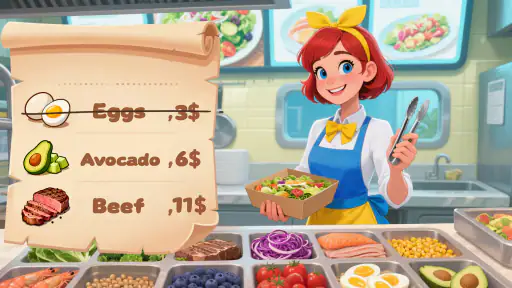
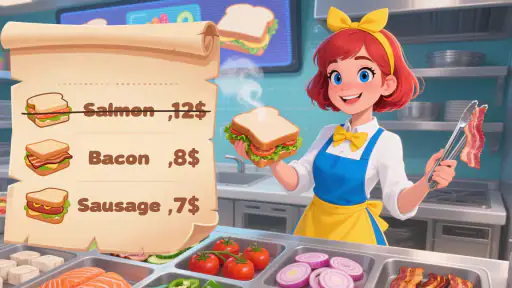
- Large variety of dishes and restaurant settings.
- Simple controls are easy for new players to learn.
- Upgrades make kitchen equipment and service more efficient.
- Bright cartoon graphics give the game a cheerful style.
Cons
- Later stages can feel repetitive once the core routine is familiar.
- Some upgrades may require considerable time or in-game currency.
- Frequent rewards and prompts can interrupt the cooking flow.
- Mistakes are costly when several customer orders arrive together.
- Performance may vary on older phones with limited memory.

- Category
- Simulation
- Version
- 1.19.3