Diesel Challenge 2K15
- 1.00
- 4.2
- Installs
- 1.00M
- Price
- Free

Screenshots
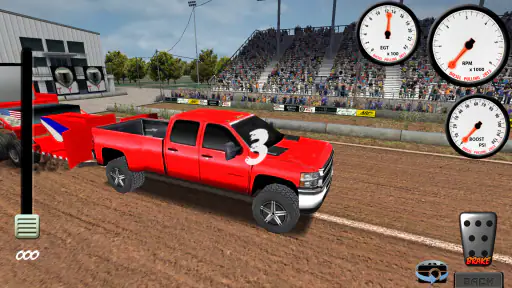
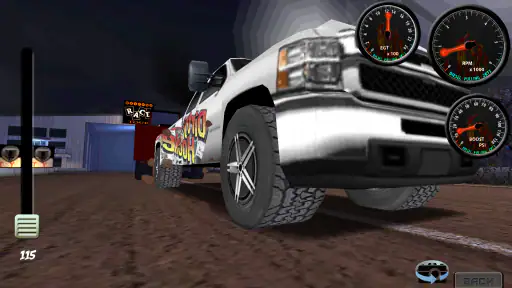
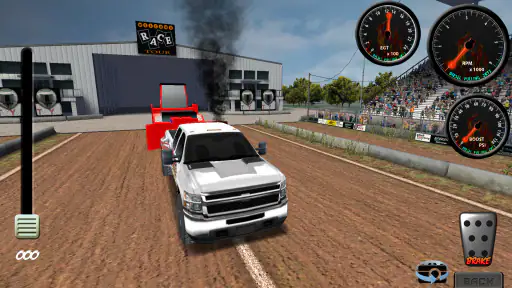
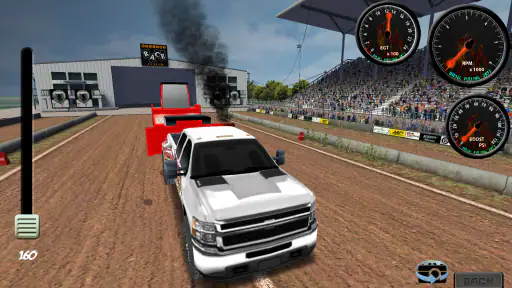
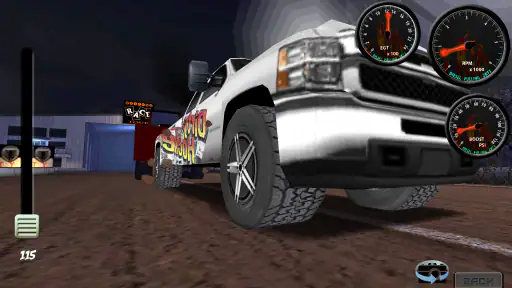
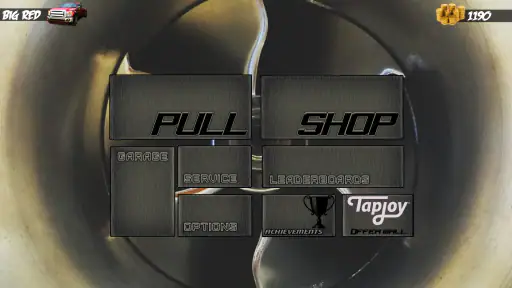
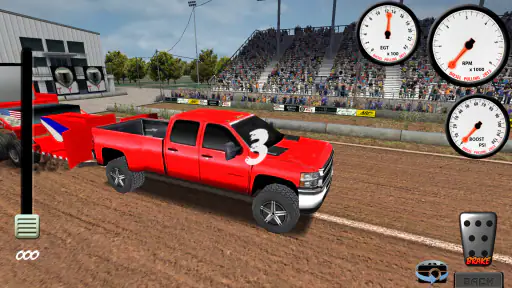
Analysis by Reviewed
Diesel Challenge 2K15 is the kind of sports game I open when I want one very specific fantasy: controlling a diesel sled pull rather than playing a broad racing or team-sports title. That focus is its main appeal. Instead of trying to be everything at once, it builds its identity around the challenge of getting a heavy machine moving and keeping the run alive.
I reviewed it as a compact mobile game from Slyon Studios LLC, and my first impression was that its appeal depends heavily on whether you already enjoy pulling competitions. If that idea sounds entertaining, the narrow theme gives the game a personality that many generic sports apps lack. If you are looking for a full driving simulator, a large career mode, or a polished modern racing experience, you should approach it with more caution.
The game is free to download and is suitable for Everyone, which makes it easy to try without committing money at the start. It has passed one million installs and holds a 4.2 average from fourteen ratings, so there is clear interest in the concept, although the small number of ratings means I would treat that score as a useful signal rather than a complete verdict. The current version is 1.55, and the original release dates back to November 25, 2013.
The pull itself is the whole reason to play
The central capability is simple to explain but more interesting to experience: the game turns a diesel sled pull into a short, focused mobile challenge. Your attention is not spread across a football squad, a racing grid, or a long list of sports. The point is the run in front of you and the feeling that every attempt is about extracting more from the machine.
That narrow design works in its favor. I do not need to learn a large roster, remember complicated event rules, or spend a long time preparing before playing. I can start with the central activity immediately, which makes the game a natural fit for brief sessions. The theme also gives it a more distinctive character than another interchangeable car racer.
At the same time, the focused concept creates a clear limit. A diesel pulling game cannot offer the variety of a general sports collection unless it adds substantial supporting systems, and I would not choose this title expecting the breadth of a mainstream racing game. Its value comes from repeating and improving the same basic kind of challenge, not from constantly changing sports or environments.
The important question is not whether the game has a wide range of activities; it is whether repeating the pull remains satisfying for you. I found that the answer depends on how much I enjoy small improvements. Players who like trying again to beat their previous result may find a good rhythm. Players who need frequent surprises may feel the concept becomes narrow quickly.
What the focused design changes during a session
In a normal mobile sports game, I often look for spectacle first: a fast race, a dramatic goal, or a quick match against an opponent. Here, the attraction is more deliberate. The run feels like a test of control and patience, and the satisfaction comes from seeing a difficult attempt develop rather than simply watching a short burst of action.
That makes it useful as a casual game for a waiting room, a short break, or a few minutes before bed. I can play without needing to reserve a long block of time. The trade-off is that the game is less suitable when I want a strong sense of progression from one completely different activity to the next.
How it feels to use in practice
My practical approach is to treat each pull as an experiment rather than assuming the first attempt should be perfect. I pay attention to what happened during the run, then try to make one adjustment on the next attempt instead of changing everything at once. That method makes the focused design more rewarding because it gives each retry a purpose.
A useful habit is to avoid judging the game after only one run. The concept is too specialized for a single attempt to show its full appeal. I would give it several short sessions and ask whether I am enjoying the process of refining my performance. If I am only waiting for a completely different event to appear, the game is probably not matching my taste.
The best way to play is with a clear goal for the session. I might try to improve consistency, understand why a run felt weak, or see whether a small change produces a better result. This turns a potentially repetitive activity into a compact practice loop. It is one of the less obvious strengths of a game built around one capability: the rules are easy to understand, so my attention can move toward decision-making.
That simplicity can also expose rough edges. Older mobile games often feel less immediately comfortable than newer releases, especially when compared with highly polished racing apps designed around elaborate tutorials and constant visual rewards. Diesel Challenge 2K15 comes from an earlier mobile era, and I would not expect the same presentation standards as a recent premium sports production.
The age of the release matters when deciding where to play it. The minimum operating system is Android 4.0.3, which shows that the game was designed for older hardware and software. That can be helpful for people using an older compatible device, but it also means modern users should not judge it by the standards of current high-end games. Its attraction is the specialized activity, not cutting-edge presentation.
A practical routine for getting more from it
I recommend using a three-step routine. First, make a normal attempt without trying to optimize everything. Second, identify the moment where the run stopped feeling effective. Third, repeat with one deliberate change. This is more useful than tapping through attempts without remembering what happened.
Another good tip is to play in short blocks instead of forcing a long session. Because the game centers on one type of challenge, fatigue can make the experience feel more repetitive than it really is. A few focused attempts leave me with a clearer sense of progress, while a long, unfocused session can turn the same strength into a weakness.
It is also worth deciding before playing whether I want a relaxed activity or a performance test. The game can serve both purposes, but the experience changes. For relaxation, I accept imperfect runs and enjoy the theme. For improvement, I slow down and compare the result of each attempt. That distinction helps prevent disappointment when the game does not provide the constant stimulation of an arcade racer.
The best everyday scenario for this game
The strongest use case is a short break when I want something more interactive than scrolling but less demanding than a full racing game. Imagine having ten minutes between appointments. I can launch the game, complete several attempts, and stop without losing the thread of a long story or leaving a team match unfinished.
It also suits someone who has a personal interest in diesel machinery, pulling events, or unusual sports themes. The specialized subject is not just decoration; it is the reason the game stands apart. For that audience, even a relatively compact experience can feel more engaging than a technically richer game about a sport they do not care about.
Another realistic scenario is playing with a friend nearby and taking turns trying to improve a run. I would not describe it as a replacement for a dedicated multiplayer competition, but the short-attempt structure makes informal comparison easy. Each person can focus on doing better rather than learning a huge rule set.
That scenario also reveals an important limitation: the game is better for self-directed improvement than for people who need a deep social layer. If your main reason for downloading a sports title is online competition, team management, or a large community, this is probably not the strongest choice. Its appeal is personal and mechanical, built around the pull rather than a wider social ecosystem.
For parents, the Everyone rating makes the subject broadly accessible from an age-classification perspective. I would still explain the game’s narrow focus before recommending it to a child, because age suitability and personal interest are different questions. A young player who loves vehicles may enjoy it, while another may find the repeated pulling challenge confusing or dull.
Where the trade-offs become noticeable
The biggest trade-off is variety. The same focused capability that gives the game its identity can make it feel limited beside a conventional racing title with multiple event types. If I want drifting, circuits, upgrades, open exploration, or a large selection of vehicles and competitions, I would look elsewhere. This game makes more sense as a specialized sports experiment than as an all-purpose driving package.
There is also a trade-off between accessibility and depth. A focused game is easier to understand because I do not have to learn several unrelated systems. However, once I understand the basic rhythm, the experience depends on whether the underlying challenge continues to hold my attention. Players who enjoy mastery may appreciate that concentration; players who prefer constant unlocks may not.
The free entry point is convenient, but in-app purchases range from ninety-nine cents to nineteen dollars and ninety-nine cents per item. I would begin without spending anything and only consider a purchase after deciding that the core pulling experience genuinely suits me. The price range means it is sensible to keep an eye on the purchase flow, especially if someone else uses the device.
That does not automatically make the free version poor. It simply changes how I evaluate the game. I ask whether the basic experience is enjoyable on its own rather than assuming that spending will solve every limitation. Purchases may be relevant to players who want to progress or customize their experience, but they cannot change the fact that the central concept remains a specialized diesel sled pull.
The older release is another consideration. The game may be appealing precisely because it is straightforward, but users accustomed to modern interfaces may notice that it lacks the refinement they expect from newer sports apps. I would not install it for visual spectacle. I would install it because the subject is unusual and the gameplay idea is clear.
There is a further trade-off between realism and convenience. A mobile game built around a real-world pulling concept can give me a taste of the activity without requiring equipment, space, or specialist knowledge. In exchange, it cannot replace attending an event or using a serious simulation. That makes it a lightweight interpretation, not a complete technical training tool.
How it compares with familiar alternatives
Compared with an arcade racing game, Diesel Challenge 2K15 is less about speed across a course and more about one concentrated test. A racing alternative is better when I want multiple tracks, overtaking, rapid visual movement, and a stronger sense of travel. This game is better when the diesel pulling theme itself is the attraction.
Compared with a general sports game, it offers less variety but a more recognizable identity. A broad sports app can provide several kinds of matches and may be the smarter download for a family sharing one device. I would choose this title instead when I want something specific rather than a collection of familiar sports.
Compared with a serious simulator, it is easier to approach but less appropriate for technical learning. Someone trying to understand real machinery, engineering behavior, or professional competition should use a more specialized educational or simulation product. Someone who simply wants a casual mobile interpretation of diesel sled pulling may find this one more approachable.
That comparison helped me place the game correctly. It is not competing on breadth, realism, or modern production scale. It competes on the novelty of its subject and the compact loop of attempting a pull, learning from it, and trying again.
Who gains the most from the focused experience
I would recommend it most strongly to players who already enjoy vehicle-based sports and do not mind repetition when each attempt has a small purpose. The game is especially easy to justify as a free trial because the central idea can be understood quickly. If the theme catches your attention, you can find out soon whether the focused loop works for you.
It is also a reasonable choice for owners of older compatible Android devices who want a lightweight sports game rather than a demanding modern racer. The minimum Android requirement is 4.0.3, and the long availability of the title has helped it reach over one million installs. Those details do not guarantee that every device will feel identical, but they fit the game’s accessible, older-school character.
I would tell competitive players to approach it with realistic expectations. It can support personal improvement and informal challenges, but it should not be confused with a large online sports platform. If your enjoyment comes from rankings, regular events, or playing against a broad community, another category of game will likely serve you better.
I would also suggest skipping it if you dislike repeating a single activity. No amount of interest in mobile racing will make the title a good fit if what you really want is a varied campaign. The specialized subject is a strength only when it matches your curiosity.
One final practical point is storage and commitment: because the game is free, the sensible path is to try the core experience before considering any optional spending. Play enough sessions to decide whether the pull itself remains interesting, not merely whether the first launch feels novel. That test gives a much clearer answer than the download page alone.
My final opinion is that Diesel Challenge 2K15 is a niche sports game with a clear reason to exist. I like that it commits to diesel sled pulling instead of hiding the idea inside a generic racing package. Its best quality is the focused attempt-and-improve rhythm, while its main weakness is the limited variety and older presentation.
For me, it works as a short-session curiosity that can become a modest skill challenge for the right player. I would recommend trying it free to fans of unusual vehicle sports, older Android games, and compact repeatable challenges. I would not recommend it as a substitute for a full racing simulator or a broad sports collection. Choose it for the specific pull, not for everything around it.
Pros
- Simple controls make the drag-racing gameplay easy to pick up.
- Short races are convenient for quick gaming sessions.
- Multiple cars offer variety in handling and performance.
- Upgrades provide a clear sense of progression.
- Offline play is useful when no internet connection is available.
Cons
- The 2015 presentation feels dated on modern devices.
- Limited track variety can make races feel repetitive.
- Progress may depend heavily on repeated grinding.
- Some vehicles and upgrades may require significant in-game currency.
- The game may not be compatible with newer Android or iOS versions.

- Category
- Sports
- Version
- 1.55