Dice Slam - Fun Classic Game
- 256.00
- 4.9
- Installs
- 50.00K
- Version
- 1.1.24973

Screenshots



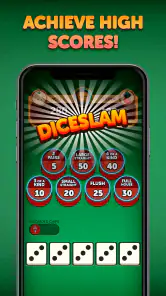

Analysis by Reviewed
I went into Dice Slam - Fun Classic Game expecting a lightweight board game built around quick dice throws, and that is exactly the kind of experience it offers. The basic appeal is easy to understand: roll, watch the result, collect chips, and decide whether another round is worth starting. It does not ask me to learn a complicated rulebook before I can enjoy the first move, which makes it approachable when I only have a few spare minutes.
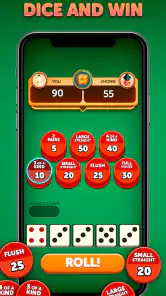
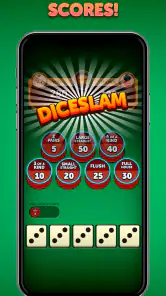
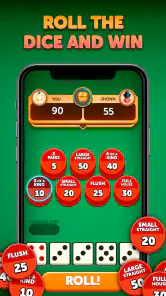
What makes the game interesting is not a deep story or a large world. Its appeal comes from the small cycle of anticipation and response. I tap into the action, wait for the dice outcome, see how the result affects my chip total, and then immediately face the temptation to continue. That rhythm gives the game its personality. It feels closer to a compact tabletop diversion than to a long-form strategy title.
How the dice-and-chip loop feels in everyday play
The first roll is deliberately easy to understand
The opening action is the strongest part of the design because it is so direct. I do not need to spend time arranging a board, building a deck, or remembering a long sequence of special rules. The focus goes straight to the dice. For a player who wants a casual board game rather than a demanding tactical project, that simplicity is a genuine advantage.
There is also a useful social quality to this format. I can imagine passing the phone around during a short break, letting someone else take a turn, and discussing whether the latest result was lucky or disappointing. It works well for the kind of informal play where nobody wants to commit to a lengthy match. The game’s Everyone content rating also supports that broad, family-friendly positioning.
That accessibility does not mean every player will find the first action equally satisfying. People who prefer a large number of meaningful choices may feel that the dice are doing too much of the work. In a traditional strategy board game, I might plan several turns ahead or manipulate the board state. Here, the immediate attraction is the reveal itself, not a complex chain of decisions before it.
Feedback arrives in short, readable beats
The game’s feedback rhythm is built around the contrast between waiting for the roll and seeing the chip outcome. That short pause matters. If the result appeared without any sense of anticipation, the loop would feel flat; if every turn took too long, the simplicity would become frustrating. In my experience, the appeal comes from keeping the action compact enough that I can quickly understand what happened and consider the next move.
The chip system gives the result a visible consequence. A dice roll is not merely a number that disappears after the animation or reveal. It connects to something I am collecting, so each successful moment feels more substantial than a bare random outcome. Even when the result is not ideal, I know what the round is doing: it is moving my chip progress forward or making the next decision feel less attractive.
A useful way to play is to treat each roll as a small checkpoint rather than as an isolated event. I look at the current result, notice whether the reward feels worthwhile, and then decide if I am still enjoying the exchange between risk and anticipation. That habit prevents the game from becoming mindless tapping. It also helps reveal its main limitation: the more I want control over the outcome, the less satisfying the loop may become.
Chips provide the reason to continue
Collecting chips is the reward layer that turns a dice result into a repeatable activity. The reward is deliberately simple, but simplicity is part of the attraction. I do not need to maintain a complicated inventory or understand a large economy to appreciate the feeling of adding to my collection. The chip count gives the session a sense of direction, even when the individual action takes only a moment.
The best use case is a short, low-pressure break. If I am waiting for an appointment or taking a pause between tasks, I can play a few rounds without needing to remember a plot or rebuild a strategy after closing the app. The game suits players who enjoy small bursts of progress and like the familiar physical feeling of rolling dice without carrying a board game with them.
There is a trade-off here. A reward based mainly on collection can be motivating at first, yet it may lose impact if a player wants more variety from one session to the next. Dice Slam is strongest when the pleasure comes from the roll-and-reward moment itself. It is less convincing for someone who needs new maps, elaborate objectives, or a constantly changing campaign to stay interested.
Why one completed session leads to another
The reset after a round is important because it removes friction. Once I have seen the result and received the associated chip feedback, the next attempt is close at hand. I do not have to prepare a new board or read a fresh set of instructions. That clean restart explains why the game can be surprisingly easy to revisit: each session feels self-contained, and the next one begins with almost no mental overhead.
This structure is particularly useful for interrupted play. I can stop after a short run instead of worrying that I am abandoning a long match. If I return later, the core action remains familiar. That makes it a better fit for casual phone use than many traditional board-game adaptations, which sometimes require enough uninterrupted time to make setting up the match worthwhile.
At the same time, the quick reset can make the experience feel repetitive. The same quality that makes the game convenient also limits its dramatic build-up. There is no need to protect a long-term position in the same way I might in a competitive strategy board game. If I am looking for a tense final turn with a carefully developed board, I would choose a more substantial alternative.
The loop is simple, but the choice of player matters
For me, the central loop works because every stage is clear: I take an action, receive immediate feedback, collect a reward, and get a clean opportunity to begin again. The reason to start another session is not a complicated objective. It is the hope that the next roll will produce a more satisfying result and add more chips to the growing total.
That is a modest promise, but it is delivered consistently enough to make the game pleasant in the right setting. I would recommend it to someone who enjoys dice-based board play, wants an easy entry point, and prefers short sessions over long strategic commitments. I would not recommend it as a replacement for a full tabletop simulator or a deep competitive board game.
What the developer’s presentation suggests about the audience
FunCraft Games has positioned this release as a straightforward board game rather than an intimidating strategy product. The store summary, “Roll Dice! Collect Chips!”, captures the basic loop without pretending it is something more elaborate. The short description, “Dice Slam,” is equally direct. That clarity is helpful because I know before installing it that the main attraction is the repeated dice action and the collecting element.
The game is free to install, which lowers the barrier for curious players. It includes in-app purchases ranging from $0.99 to $49.99 per item, so I would approach the chip-collecting loop with a little self-discipline. My practical advice is to decide before playing whether I am comfortable spending anything at all. A simple game can encourage quick repeat actions, and setting a personal limit keeps the casual experience from becoming less relaxing.
The broad age rating also makes it easier to consider for shared family use, although I would still explain the purchase options to younger players before handing over the device. That is not a criticism of the dice mechanic itself; it is simply sensible whenever a free game includes optional purchases. The important point is that the basic appeal can be understood without treating payment as the reason to play.
How it compares with familiar board-game alternatives
Compared with a physical dice game, Dice Slam is more convenient because I do not need dice, chips, a table, or another person ready to play. It also avoids the small setup tasks that can stop me from bringing out a real board game during a short break. The phone handles the repeated actions, allowing me to focus on the anticipation of the result.
Compared with a digital strategy board game, however, it offers a narrower decision space. A strategy title may reward planning, negotiation, resource management, or careful positioning. This game is better understood as a compact chance-driven diversion. I would choose it when I want immediate action; I would choose the deeper alternative when I want to study a board, improve through planning, or feel that every outcome reflects a deliberate decision.
It also differs from large collection-focused games because its core pleasure is more concentrated. There is less need to learn a broad system before the first satisfying moment. That makes it friendlier to newcomers, but players who enjoy unlocking layers of complexity may eventually want something with a larger range of mechanics.
Small habits that make the experience better
My first practical tip is to play in short blocks rather than treating every available moment as an invitation to continue. Because the next session starts so easily, it is useful to choose an endpoint before the first roll. For example, I might play during a coffee break and stop after that break ends, regardless of whether the latest result was good or bad. This keeps the reset loop working for me instead of encouraging automatic repetition.
My second tip is to separate enjoyment of the roll from expectations about control. The game is most comfortable when I accept that the dice result is the main event. If I keep judging every turn by whether I could have made a better strategic choice, I am using the wrong standard. The better question is whether the reveal, chip feedback, and quick restart are entertaining enough for the time I am giving them.
A third useful approach is to use the game as a social icebreaker rather than assuming it must be a solitary challenge. The rules are simple enough to explain quickly, and the visible chip reward gives people something to react to. It can work when friends want a tiny shared activity without setting up a full board. That use case is easy to overlook because the store wording focuses on the roll itself, but the uncomplicated format is well suited to passing a device around.
I would also keep the purchase structure in mind while playing. Since individual items can cost between $0.99 and $49.99, I would not tap through purchase prompts casually just because I am chasing a better run. The game’s free entry is a strong reason to try it, while the optional spending range is a reason to make decisions deliberately. Players who dislike any form of in-app purchase may prefer a paid board game with a fixed upfront cost instead.
Performance expectations and device fit
The listed minimum operating-system requirement is Android 7.0, so the game is accessible to a wide range of Android devices that still support that software level. Its current version is 1.1.24973. Those details matter if I am installing it on an older phone and want to avoid assuming that every device will offer the same experience.
The release date was September 23, 2025, which places it among relatively recent additions to the board-game space. I would keep the app updated when possible, especially if I encounter an issue after installing it on older hardware. I would not choose this game because of technical ambition; I would choose it because the basic interaction is easy to start and easy to pause.
What the early reception tells me
The game holds an average rating of 4.9 from around three thousand six hundred ratings, with roughly two hundred fifty-six written reviews. It has passed fifty thousand installs. Those figures suggest that the simple format has found a receptive audience, although a rating alone cannot tell me whether every player wants the same kind of experience.
I read that reception as encouragement for casual players, not as proof that the game replaces every other board title. A high average is especially meaningful here because the product has a focused identity: people who enjoy quick dice-and-chip sessions are likely to appreciate it. Players searching for detailed strategy should still judge it by its limited, compact loop rather than by its popularity.
Who should install it, and who should skip it
I would point Dice Slam toward casual board-game fans, families looking for a simple shared activity, and anyone who likes the anticipation of a dice roll without the preparation of physical equipment. It is also a good match for people whose gaming time arrives in small fragments. The immediate action and clean reset mean I can play briefly without feeling that I have wasted a longer setup.
I would steer competitive strategists toward another option if they need extensive planning, player interaction, or a strong sense that skill determines every outcome. I would also be cautious about recommending it to anyone who is easily drawn into repeated reward loops or who wants a completely purchase-free environment. The free installation is convenient, but the in-app purchase range deserves attention before regular play.
My final view is positive but specific. Dice Slam is not trying to be a sprawling board-game system, and it should not be judged as one. Its value is in the compact sequence of action, reaction, chips, reset, and renewed curiosity. When I want a quick dice diversion that I can understand immediately, it does the job well. When I want a rich strategic contest, I would reach for a different game. Choose it for the satisfying rhythm of small rolls and quick rewards, not for complexity it was never designed to provide.
Pros
- Quick rounds make it easy to play during short breaks.
- Simple dice mechanics are accessible for players of all ages.
- Casual gameplay does not require advanced strategy to enjoy.
- Lightweight design should run smoothly on many mobile devices.
- Replayable matches offer a convenient way to pass the time.
Cons
- Random dice results may feel frustrating when luck dominates a round.
- Limited depth could become repetitive for frequent players.
- May offer little appeal to users seeking complex board-game mechanics.
- Some features may depend on ads or optional in-app purchases.
- Offline functionality and multiplayer options may be limited.