Dice Connect - Sequence Twist
- 403.00
- 4.9
- Installs
- 100.00K
- Version
- 1.2.25127

Screenshots





Analysis by Reviewed
I spent time with Dice Connect - Sequence Twist as a casual board game and found that its main appeal is easy to understand: each turn asks me to think about where a dice result can help build a connected route. That simple idea gives the game a more thoughtful feel than a purely luck-based dice roller, while keeping the rules approachable for people who do not usually play strategy games.
It is made by FunCraft Games and is available free of charge for Android users. The game is listed for Everyone, so it is positioned as a family-friendly choice rather than a title aimed at mature players. The current version is 1.2.25127, and it runs on Android 7.0 or later. I would describe it as a lightweight option for short sessions, especially when I want something more engaging than scrolling but less demanding than a large strategy game.
The store page shows a 4.9 average from around five thousand ratings, with over one hundred thousand installs. Those figures suggest that the basic concept has found an audience, but they do not replace personal fit. The important question is whether the board layout, dice decisions, and visual presentation work comfortably for the way you play.
How Dice Connect handles readability and navigation
A board that asks for attention without burying the objective
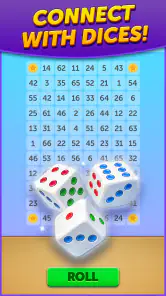
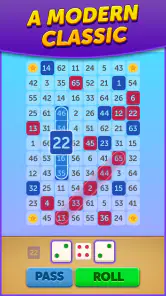
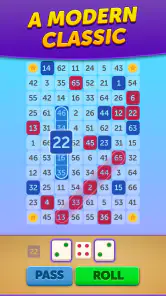
The strongest part of the design is the relationship between the dice and the path. I am not simply rolling and waiting for a result to resolve itself. I need to look at the board, consider where a connection might be useful, and decide whether the immediate move helps the route I am building. That gives each turn a small planning task and makes the board worth studying.
For a new player, the central goal is understandable quickly: connect the path and work toward victory. The game does not need a complicated fictional setting or a long rulebook to explain why a move matters. That clarity is valuable for younger players, older relatives, or anyone who prefers board games with a direct objective.
At the same time, a connected-path board can become visually busy once several possible moves compete for attention. I found that the useful habit is to scan in a fixed order: first check the current route, then inspect open connection points, and only afterward think about the dice result. Looking at every square at once makes a simple turn feel more confusing than it needs to be.
Why the first few rounds matter
The early turns are where I would expect most players to form their understanding of the game. A person who already enjoys tile-laying or route-building games will probably recognize the basic rhythm quickly. Someone coming from a traditional roll-and-move board game may need a little longer, because the result of the dice is only part of the decision. The placement or connection choice is where the strategy lives.
My advice is not to judge the game after one rushed round. The first attempt is useful for learning how the board communicates legal or sensible choices. On the next attempt, I would focus less on winning and more on noticing how a short-term connection can either open the board or leave a route awkwardly shaped.
This is also where the game differs from many familiar dice games. In a standard roll-and-move title, the board often tells me exactly how far to go. Here, the roll creates an opportunity, but I still have to interpret it. That makes Dice Connect more interesting for players who want a little agency, while people seeking a completely automatic, luck-first experience may find the extra thought unnecessary.
Practical navigation habits
When I play on a smaller phone screen, I prefer holding the device steadily and giving myself a moment between the roll and the next action. This is not a game I would rush through while switching constantly between apps. A calm scan helps me see the route as a whole instead of reacting to the most obvious open space.
Another useful approach is to treat the board like a problem with priorities. A move that extends the route may be less valuable than one that prevents a future dead end. I also try not to commit immediately to the first connection that appears attractive. The dice result can tempt me into a move that looks productive but makes later turns harder.
That small pause is especially helpful for players who process visual information more slowly. It turns the game from a reflex test into a deliberate board puzzle. The experience is still casual, but it rewards patience more than speed.
Motor and sensory considerations during play
Why the game can suit careful, low-speed play
The core activity is selecting a dice-related move on a board, so the game does not appeal because of rapid action or complex physical controls. In my experience, its strategic value comes from choosing well, not from tapping quickly. That makes it a better match for players who prefer measured interaction and time to inspect the screen.
For someone with limited dexterity, the main practical concern is not fast movement but accurate selection. Small board spaces can be harder to target on a compact display, particularly when several possible connections sit close together. I would recommend using a larger phone or tablet when available, and avoiding play while walking or riding in a vehicle. A stable position gives the finger more control and makes the board easier to read.
The game also works better when I keep my attention on one decision at a time. If I am distracted, I can easily tap before fully considering the route. That is a normal risk in touch board games, but it matters more here because a single placement can change the shape of the remaining puzzle.
Visual comfort and sensory load
The board is the main source of information, so players who have difficulty distinguishing nearby spaces, path directions, or changing game states should take a cautious approach. I would not assume that every visual element will be equally comfortable for every person. The practical test is whether the route remains clear on your own device at your preferred brightness and text scale.
I found that reducing environmental distractions helps more than trying to play in the background. A quiet room, a clean screen, and enough brightness to separate the board from its surroundings make the decisions easier. If visual contrast is a personal concern, I would test a short session before spending money on any optional purchase.
Sound is not the reason I would choose this game. The board and dice are the meaningful parts of the experience, so I can imagine playing with the device muted in situations where audio would be disruptive. That is useful on public transport, in a waiting room, or beside someone who is sleeping. It also means players who depend on audio cues should pay close attention to whether the visual feedback alone is comfortable for them.
Different abilities, different strengths
I see a genuine advantage for players who need more time to decide. A route-building game can be paused mentally between actions, unlike a game that constantly asks for rapid reactions. It may also work well for a family member who enjoys puzzles but does not want a complicated multiplayer ruleset.
The trade-off is that the same visual board can create a barrier for players who need strong separation between elements or who find dense layouts tiring. I would not present it as universally accessible. Its inclusive potential comes from the slow, thoughtful nature of the decisions, but that benefit depends on being able to identify the board spaces and select them accurately.
Situational access in everyday use
A good companion for short waiting periods
A realistic use case is a short appointment delay. I can open the game, play a focused session, and put the phone away without needing to remember a large story or manage a long campaign. The direct board objective makes it suitable for a few spare minutes when I want active concentration rather than passive entertainment.
It also fits a quiet break at home. I might play with a drink beside me, take time to compare two possible connections, and stop after a round without feeling that I have abandoned a complicated world. That simplicity is one of the reasons I would recommend it to people who like board games but do not always have the energy for a full-length strategy session.
For shared play, I would be more selective. The game can be discussed around a table, but the phone screen becomes the center of attention, and that may not feel as social as a physical board. If your priority is conversation, face-to-face interaction, or several people touching the same game space, a traditional tabletop alternative may be better.
When the free price helps and when it needs thought
The free entry point makes it easy to test the basic experience before deciding whether it belongs in your regular rotation. That is particularly helpful for families or players who are unsure whether a dice strategy game will hold their interest. I would start with ordinary play and evaluate whether the route decisions remain enjoyable over several sessions.
Optional purchases range from forty-nine cents to $49.99 per item. That is a wide span, so I would treat in-app buying as a separate decision from downloading the game. Anyone sharing a device with children should review purchase controls before handing it over, and anyone who prefers a completely fixed-cost experience should keep that difference in mind.
The free model is most attractive when I use the game as an occasional board puzzle. If I am looking for a premium-style experience with every element included from the start, I would compare it with a paid board game instead of assuming that free automatically means simpler or better value.
Device age and practical compatibility
Support for Android 7.0 or later gives the game a broad potential device range, which is useful for people who keep an older phone as a spare or share devices within a household. Still, operating-system compatibility does not guarantee that every screen size will feel equally comfortable. The board may be easier to inspect on a larger display, while a small phone is more convenient for quick sessions.
I would also avoid judging performance while many other apps are open. Board games do not require the same kind of attention as action titles, but a responsive touch screen matters when I am selecting a specific connection. Keeping the device steady and giving the game the full screen makes the interaction more dependable.
Remaining barriers and who should choose something else
The limits of a visual route puzzle
The biggest potential barrier is that the game communicates its main challenge through a visual board. Players who struggle with changing patterns, small targets, or crowded layouts may find the experience tiring even if the rules themselves are simple. I would not recommend it blindly to someone who needs highly customized presentation or explicit alternative input methods.
There is also a mental-load trade-off. The game is casual, but it is not mindless. If I am exhausted and only want to roll dice with no planning, the connection decisions can feel like work. A classic roll-and-move game is a better choice for that mood because luck carries more of the experience.
On the other hand, a deep strategy-game fan may find the concept too compact. Players who want elaborate economies, extensive campaigns, or many layers of character development should look elsewhere. Dice Connect focuses on the board decision in front of me, and that focus is both its identity and its limit.
Managing mistakes and expectations
A careless tap can be frustrating because the board is about consequences. I recommend slowing down before confirming a promising connection, especially when two routes appear similar. I also try to separate a bad result from a bad game: sometimes the appeal is seeing how a less-than-perfect roll changes the puzzle rather than expecting every turn to go my way.
New players should not expect the dice to provide a clear answer every time. The useful question is not “What move can I make?” but “Which available move leaves me the most workable future?” That shift is one of the game’s less obvious lessons, and it is what gives the simple format more depth than its short description suggests.
My inclusive verdict after playing
Dice Connect - Sequence Twist is a thoughtful free board game for people who enjoy connecting routes, weighing small choices, and playing at a controlled pace. I like that the dice do not completely remove decision-making. The result creates constraints, but my response to those constraints determines whether the board stays open or becomes difficult to manage.
From an inclusion standpoint, its best quality is the lack of dependence on rapid action. That makes it promising for careful players, relaxed family sessions, and short periods when I want to concentrate without committing to a large game. It can also be played quietly, which helps in shared spaces where sound would be inconvenient.
Its weaknesses are equally important. The board may be demanding for people who need very large targets, strong visual separation, or alternative ways to understand changing game states. The touch interaction rewards accuracy, and the strategic layer means it is not ideal for someone who wants pure chance. Optional purchases also mean that players who prefer a strictly one-time-cost model should approach it with a clear budget.
I would recommend trying it if you want a compact dice strategy game that asks you to plan rather than simply move. I would skip it in favor of a physical board game for a more social group experience, or choose a simpler roll-and-move title when accessibility to visual route planning is the main concern. For me, the game succeeds because it keeps its central idea focused while leaving enough room for careful decisions. Its strongest feature is the pause between rolling and acting: that is where the real game begins.
Pros
- Simple rules make it easy for new players to start quickly.
- Short matches fit well into quick gaming sessions.
- Strategic tile placement keeps turns engaging.
- Colorful visuals make the board easy to read.
- Works well for casual play without demanding advanced skills.
Cons
- Random dice rolls can sometimes outweigh careful planning.
- Later levels may feel repetitive after extended play.
- Limited variety may reduce long-term replay value.
- Some players may find the pace slower than expected.
- Ads or in-app purchases may interrupt the overall experience.