Dead by Extraction
- 451.00
- 4.3
- Installs
- 500.00K
- Price
- Free

Screenshots

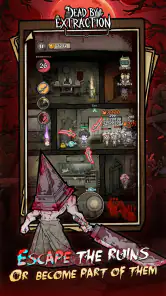

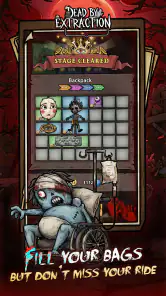
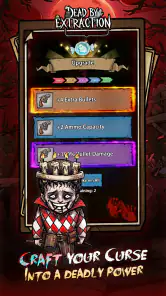
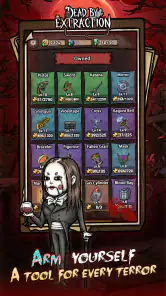


Analysis by Reviewed
I spent time with Dead by Extraction as a role-playing game built around a simple but demanding loop: enter danger, search for useful loot, survive encounters, and make it through the night. That basic idea gives every run a clear purpose, but it also creates a particular kind of tension. I was rarely playing just to defeat enemies. I was weighing whether the next reward was worth exposing myself to another fight.
That makes this a better fit for players who enjoy short-term decisions and survival pressure than for people looking for a relaxed, story-heavy role-playing adventure. The game is free to play, and PIXEL RABBIT LIMITED has positioned it as a compact extraction experience rather than a traditional fantasy journey. Its Everyone 10+ rating makes it approachable for a broad audience, although the danger-focused structure still expects players to accept setbacks.
My overall impression is positive, with an important qualification: the appeal depends heavily on whether you enjoy repeating a risky loop and improving through better choices. If you want constant spectacle or a large narrative campaign, this is probably not the right destination. If you like the feeling of leaving with something valuable after a tense run, it has a much clearer identity.
How the first sessions establish a reason to keep playing
Early goals are easy to understand
The opening hours work because the game does not need a complicated explanation for what I should be doing. Loot gives me an immediate reason to explore, combat gives exploration a threat, and survival gives every decision a consequence. Those three elements form a readable objective even when I am still learning how the game wants me to approach each situation.
I found that clarity useful on a phone. I could begin a session knowing what success meant without needing to remember a long quest chain. The goal was not simply to move forward; it was to judge how far I could push a run before the risk became unreasonable. That distinction is what separates this from a conventional role-playing game where progress usually means clearing the next stage in a fixed order.
The first useful habit is to treat loot as a reason to make decisions, not as a reason to collect everything automatically. A tempting item can pull me away from a safer route, and the extra distance can create a fight I did not need. I recommend deciding early whether a run is about securing modest gains or testing how much danger you can handle. Changing that plan halfway through is where many careless mistakes begin.
A realistic everyday use case
Dead by Extraction suits the kind of session I might play while waiting for an appointment or taking a short break. I can start with a specific intention, make a few meaningful choices, and stop after a run rather than committing to a long uninterrupted campaign. The tension remains present even in a brief session because the value of the attempt comes from getting out safely, not from simply reaching a timer or watching a cutscene.
There is also a different use case for a longer evening session. I can use the early attempts to understand the rhythm, then play more aggressively once I have a better sense of when to withdraw. That creates a natural change in mood: the first runs are about learning the boundaries, while later runs become tests of judgment. The game is strongest when I am actively making that choice instead of repeating actions without thinking.
Players who dislike losing progress should pay attention to this structure before installing it. The attraction comes from risk, so the game can feel unfair if you expect every attempt to produce a clean reward. I would skip it if your ideal role-playing game lets you steadily accumulate progress with little interruption. The extraction format is designed to make survival itself feel like an achievement.
What feels different from usual role-playing alternatives
Many mobile role-playing games guide me through a dependable sequence of battles, upgrades, and rewards. Dead by Extraction creates more uncertainty around the value of continuing. Instead of asking only whether I can win the next encounter, it makes me consider whether winning it is worth the exposure, the time, and the possibility of losing what I have gathered.
That comparison is important because the game is not trying to replace a deep, character-driven role-playing adventure. It offers a more focused loop. Someone who enjoys planning a build over a long campaign may find the experience narrower, while someone who likes tactical hesitation may appreciate its economy. The best comparison is not a conventional quest game but a repeated expedition in which the exit matters as much as the destination.
How progress, challenge, and pacing shape the loop
Progress signals are practical rather than decorative
One of the more interesting aspects of the design is how progress is felt through the quality of my decisions. A successful attempt tells me more than whether I won a fight. It shows whether I chose a sensible route, recognized a bad engagement, and stopped before greed turned a good run into a failed one. That kind of improvement is less obvious than a large level number, but it is meaningful for this style of game.
The loot loop also gives each outing a short-term target. I am not wandering without purpose; I am looking for something that can justify the danger. The important insight is that a small, secure gain can be better than a larger haul that requires several additional confrontations. Once I started thinking in terms of risk-adjusted rewards, the pacing became more deliberate and the game felt less like a sequence of random encounters.
For new players, I suggest using the first few attempts to identify personal stopping points. Do not wait until a run feels completely safe, because that moment may never arrive. Instead, decide what kind of reward would make the current risk acceptable, then leave when you reach it. This approach turns extraction into a skill rather than an emergency reaction.
The difficulty curve rewards restraint
The challenge does not come only from stronger opposition. It also comes from the pressure to continue after a successful moment. Once I have already invested time in a run, another piece of loot can appear more attractive than it should. The game’s difficulty curve therefore works psychologically as well as mechanically: the longer I remain exposed, the harder it becomes to separate ambition from poor judgment.
I appreciated that the challenge could be adjusted through behavior. Playing cautiously changes the experience without making the game feel empty, while pushing deeper creates more opportunities for trouble. This gives the player some control over the difficulty curve, even though the underlying threats remain. The trade-off is that cautious play may feel slow to people who want constant action.
My most useful rule became simple: do not confuse a quiet moment with a safe situation. Quiet is often when I was most tempted to overextend. If I had already achieved the main purpose of a run, continuing needed a clear reason. That small discipline improved my results more than rushing into every possible encounter.
Pacing alternates between tension and hesitation
The pacing is not built around nonstop combat. Its strongest moments come from the space between encounters, when I am deciding whether to move, search, or turn back. That hesitation can be satisfying because it makes ordinary movement meaningful. It can also feel uneven if I am expecting the constant forward momentum of an action-focused game.
I found the slower sections useful for planning, especially after an intense encounter. They gave me time to reconsider my route and think about what I had already gained. Still, players who prefer a fast stream of rewards may see these pauses as friction. This is one of the clearest situations where a different option is better: choose a more traditional action role-playing game if you want the game to keep pushing you from one fight directly into the next.
The pacing also affects how I use the game during the day. A short break works well when I want one focused attempt, but I would not describe every session as instantly satisfying. Some runs build slowly, and their value becomes clear only when the final decision pays off. The game asks for attention, even when the screen itself is relatively quiet.
What creates retention pressure
The reason to return is not just the promise of another battle. It is the feeling that the next run could go better because I now understand one more mistake. That is a healthy form of retention when it remains tied to learning. I wanted to try again after a poor decision because the failure felt connected to my choices, not merely to bad luck.
There is a less comfortable side to that pressure. A failed run can make the next attempt feel like recovery rather than exploration. If I was not careful, I could start playing defensively simply to repair a setback, which reduced the excitement. The game is at its best when I accept that some losses are part of the loop instead of treating every failure as something that must immediately be erased.
In-app purchases range from $0.99 to $99.99 per item, so players should decide in advance how they want to approach spending. I would recommend treating purchases as optional support rather than assuming they are necessary for the core experience. The free entry point makes it sensible to test the loop first, especially because enjoyment depends more on liking extraction pressure than on liking the role-playing label.
Who will enjoy the progression most
This is a strong match for players who enjoy:
- Short expeditions with a clear risk-and-reward decision.
- Learning from failed attempts instead of expecting every run to be profitable.
- Loot-focused role-playing where leaving safely matters.
- Quiet tension between encounters rather than uninterrupted action.
- Improving through route choices, timing, and restraint.
I would be more cautious recommending it to players who want a large story, extensive character customization, or a guaranteed sense of advancement after every session. Those expectations fit a different kind of role-playing game. Here, the emotional payoff comes from surviving a dangerous outing, and that payoff can disappear if the player dislikes uncertainty.
Practical advice before committing
Because the game is free, my advice is to judge it by the first several attempts rather than by a single frustrating loss. The important question is not whether every run feels rewarding. Ask whether you can identify why a run succeeded or failed, and whether that explanation makes you want to try again. If the answer is yes, the loop has probably found its audience in you.
It is also worth keeping expectations realistic around the current build. Version 1.0.9 is a relatively specific snapshot of the experience, and the game’s appeal will depend on how comfortable you are with its focused structure. I would not install it expecting a broad substitute for every role-playing game on mobile. I would install it as a dedicated extraction game that asks me to make better decisions under pressure.
The game is available free of charge, supports devices running Android 7.0 or later, and carries a 4.3 average from over 16 thousand ratings, with more than 500 thousand installs. Those figures suggest a meaningful audience, but they do not replace personal fit. The more useful takeaway is that the game has reached enough players to be worth trying, while its unusual loop still makes a hands-on test more informative than its popularity alone.
My progression verdict
After playing it, I see Dead by Extraction as a focused role-playing game with a clear personality. Its early goals are understandable, its progress is felt through better judgment, and its challenge grows from the temptation to stay too long. The pacing will not suit everyone, but the slower stretches are part of what gives the successful extraction its weight.
The central strength is that survival is a decision, not merely a result. I was constantly choosing between a safe return and a potentially better reward, and that choice kept the familiar loot-and-fight structure from becoming completely automatic. The main weakness is the same feature viewed from another angle: players who dislike losing time or rewards may find the pressure tiring rather than exciting.
With an Everyone 10+ rating and free access, it is easy to try without treating the game as a major commitment. I would recommend it to a friend who enjoys tense expeditions, measured risk, and learning through repeated attempts. I would skip it for someone seeking a relaxed campaign or a purely action-driven experience.
My final recommendation is to approach Dead by Extraction with one question: do you enjoy deciding when enough is enough? If you do, the game’s goals, unlock-driven motivation, challenge, and pacing can support a satisfying routine. If you do not, the same design may feel like unnecessary friction. For me, that focused identity is its biggest success, and it makes PIXEL RABBIT LIMITED’s game worth a careful trial rather than a quick dismissal.
Pros
- Fast-paced matches make every round feel tense and unpredictable.
- Distinct survivor and killer abilities encourage varied playstyles.
- Team coordination can turn a losing match around quickly.
- Dark visuals and sound design create a strong horror atmosphere.
- Short sessions make it easy to play during brief breaks.
Cons
- Match quality depends heavily on having reliable online players.
- New players may struggle against experienced killers and survivors.
- Some abilities and strategies can feel unbalanced after updates.
- The horror presentation may be too intense for younger players.
- Progression can become repetitive after extended play sessions.

- Category
- Role Playing
- Version
- 1.0.9