CrossGrams - PvP Puzzle Game
- 73.00
- 4.9
- Installs
- 10.00K
- Price
- Free
Screenshots
Analysis by Reviewed
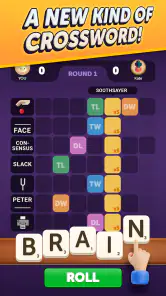
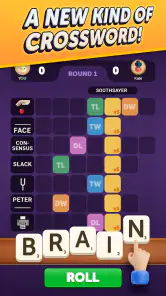
CrossGrams - PvP Puzzle Game is the kind of trivia game I open when I want something more focused than a quick tap-through challenge but less demanding than a long strategy session. It combines crossword-style clue solving with head-to-head competition, so every answer matters twice: I need to know the word, and I need to find it before the other player gains too much ground. That competitive pressure gives ordinary word puzzles a sharper rhythm.
Developed by FunCraft Games, the game is free to download and aimed at Everyone. It runs on Android 7.0 or later, which makes it accessible on many older phones as well as newer devices. There are optional in-app purchases ranging from $0.99 to $49.99 per item, so I would approach it as a free game first and decide later whether any extras are worth paying for.
After spending time with it, my main impression is that CrossGrams works best for players who enjoy short, repeatable matches and like seeing knowledge tested under a little pressure. It is not simply a crossword app with a timer attached. The opponent changes how I read clues, how quickly I commit to an answer, and whether I choose a safe move or chase a more ambitious one.
How a typical CrossGrams session feels
A simple starting routine that keeps matches manageable
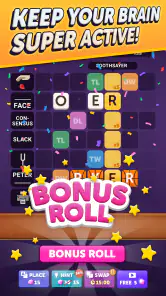
My preferred way to begin is to treat the first moments of a match as reconnaissance rather than a race. I scan for clues that I can answer immediately, especially short words, familiar phrases, and entries with several visible crossing letters. Solving those first gives me a foothold in the grid and reduces the chance of wasting time on an uncertain clue.
That approach matters because competitive crossword play punishes random guessing. In a solo puzzle, I can fill an answer, erase it, and continue without anyone benefiting from my mistake. In CrossGrams, an incorrect attempt can interrupt my rhythm while the opponent continues building progress. I therefore prefer a clean opening over a dramatic one.
Once I have a few reliable letters, I return to clues that looked vague at first. A partial pattern often changes everything. A clue that felt impossible with no letters can become obvious when its word shape is visible. This is one of the most useful habits for new players: do not decide that a clue is beyond you until the surrounding answers have had a chance to provide context.
The game is particularly easy to fit into small gaps in the day. I can imagine playing a round during a commute, while waiting for an appointment, or between household tasks. The competitive format gives each session a clear purpose, while the crossword structure means I am still using language and recall rather than simply reacting to colored buttons.
Why the opponent changes ordinary crossword habits
Against a passive puzzle, accuracy is the only real priority. Here, speed becomes part of the decision. I sometimes choose an answer that is strongly supported but not absolutely certain because delaying too long can be just as damaging as making a mistake. That trade-off gives the game its personality.
Still, speed should not mean pressing every possible answer. An experienced player learns to separate productive uncertainty from careless guessing. Productive uncertainty is when the clue, word length, and crossing letters all point in one direction, even if the wording is slightly unfamiliar. Careless guessing is when I am filling space simply because I feel behind.
When I fall behind, I try not to respond by attacking the hardest clue on the board. Instead, I look for a cluster where one answer can reveal several crossing letters. This creates a recovery path rather than a collection of isolated guesses. That habit is more valuable than memorizing a few obscure words because it improves how I use information already present in the puzzle.
Settings and preparation worth checking before serious play
I recommend looking through the available settings before settling into regular matches. The most important checks are practical ones: sound, notifications, and any display or input options that affect how comfortably I can read clues and enter answers. A game built around quick decisions becomes frustrating if audio interruptions or poorly timed alerts break concentration.
I also prefer to play with a stable connection and enough battery for an uninterrupted session. That is not a glamorous tip, but competitive games feel much less fair when I begin a match while distracted by a low-power warning or unreliable network. If I am playing casually, I accept that risk. If I am trying to improve, I remove avoidable interruptions first.
Notification control is especially useful for people who do not want a puzzle game dictating their attention. I would keep only the alerts I genuinely care about and silence the rest through the phone’s system controls if necessary. That lets me choose when to play instead of turning every reminder into a reason to reopen the app.
Because CrossGrams is free but includes optional purchases, I would also review the purchase settings on the device before handing the phone to a child. The Everyone rating makes it approachable for a broad audience, but age suitability and spending control are separate questions. A parent can reasonably allow the game while still requiring confirmation for every transaction.
Small speed gains that come from reading patterns
The fastest improvement I noticed came from changing the order in which I read clues. Rather than moving mechanically from top to bottom, I look for answers with unusually strong anchors: a clear definition, a familiar phrase, or several crossing letters already in place. These clues offer the greatest chance of opening other parts of the grid.
I also try to recognize grammatical signals. Clues that suggest a plural, a past-tense verb, a person, or a place narrow the answer before I consciously search my vocabulary. This is a subtle advantage because it reduces the number of possibilities I hold in my head. The goal is not to become a dictionary; it is to notice what the clue is already telling me.
Another useful pattern is to revisit a difficult clue after solving nearby entries. I do not spend the same amount of time staring at it. I fill one or two crossing answers, then return with fresh letters. This creates a repeatable loop: scan, solve the clearest entries, use the new letters, and scan again.
When a word seems familiar but I cannot retrieve it, I avoid repeatedly forcing the same mental route. I move to another clue, build more structure, and come back later. That prevents one stubborn entry from consuming the attention needed for several easier answers. In a duel, protecting attention is almost as important as knowing vocabulary.
How I handle mistakes and uncertain answers
I treat a wrong answer as information rather than a reason to panic. It tells me either that my interpretation was weak or that I overlooked a crossing constraint. The best response is to inspect the surrounding pattern and identify which assumption failed. If I immediately make another guess, I often compound the problem.
This is also where CrossGrams differs from a relaxed crossword app. A solo alternative is better when I want to learn at my own pace, pause indefinitely, or research an unfamiliar word without pressure. CrossGrams is better when I want the puzzle itself to create urgency. Neither format replaces the other; they serve different moods.
Players who dislike competition should know that the head-to-head structure is not a minor decoration. It affects the entire experience. Even a familiar clue feels different when another player may be advancing at the same time. If I want a quiet vocabulary exercise, a conventional crossword or an untimed trivia app may be a better match.
Where experienced play reaches its limits
The game rewards knowledge, but knowledge alone does not remove every source of friction. Crossword clues can depend on wording, word associations, and the ability to recognize a pattern quickly. Someone with a large vocabulary may still lose if they hesitate too long, while a quicker reader can gain an advantage by identifying straightforward entries early.
That makes the game engaging, but it can also make losses feel difficult to diagnose. If I lose, the cause may be vocabulary, reading speed, attention, or simply a poor opening sequence. I recommend judging progress over several sessions rather than treating one result as a complete measure of skill.
There is also a natural ceiling for players who want deep strategic variety. CrossGrams is built around crossword duels, not a broad collection of unrelated modes. If I am looking for character development, elaborate progression systems, or a large campaign, this is not the right destination. Its strength is concentration on one competitive puzzle idea.
The purchase range deserves a measured response as well. The game costs nothing to start, which lowers the barrier to trying it, but optional items can become tempting for highly engaged players. I would play the free experience long enough to understand whether I enjoy the core matches before spending anything. A purchase should solve a clear personal need, not simply follow a frustrating loss.
Who will enjoy it most
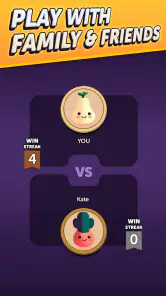
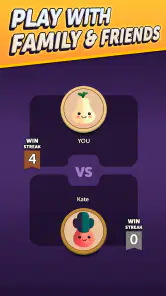
CrossGrams suits people who already enjoy crosswords, word trivia, and quick competitive rounds. It is also a good choice for friends or family members who like comparing performance without committing to a long multiplayer game. The format gives both players a shared task while leaving room for individual knowledge and technique.
It can work for casual players too, provided they are comfortable with the possibility of losing while learning. The best beginner mindset is to focus on improving the opening scan and recognizing clue patterns, not on winning every match immediately. Those skills develop naturally through repetition.
I would be more cautious recommending it to someone who becomes annoyed by timed pressure, dislikes uncertain answers, or wants complete control over the pace. For that person, a traditional crossword app offers a calmer experience. Likewise, anyone seeking a trivia game with many subject-specific categories may prefer a broader quiz title rather than a game centered on crossword-style play.
What the current version suggests about the experience
The current release is version 1.1.25159, and the game has built a strong early response, with an average rating of 4.9 from around 776 ratings. It has passed 10K+ installs, which places it in the early-growth stage rather than the crowded scale of a long-established mainstream game.
I read those figures as encouragement to try it, not as proof that every player will enjoy it. A high average can indicate that the core audience is finding exactly what it wants, while newcomers who dislike competitive word play may still bounce off the format. The most useful question is whether I want crossword solving to feel like a race.
The release date of March 4, 2026 also gives the app a relatively fresh feel in the broader mobile game landscape. That matters mainly for expectations: I would approach it as a focused title that may continue to develop, rather than assuming it already offers the breadth of a huge, mature trivia platform.
A repeatable practice plan for getting better
If I wanted to improve deliberately, I would use a simple three-part routine. First, I would play one match while concentrating only on opening choices. Second, I would notice which clues caused hesitation and whether more crossing letters would have solved them. Third, I would apply that lesson in the next match without trying to change everything at once.
I would also keep mental notes about recurring weaknesses. Maybe I overlook plural clues, spend too long on short answers, or abandon a promising section too early. Each issue calls for a different adjustment. The point is to turn a loss into a specific habit change instead of a vague conclusion that the opponent was simply faster.
Another advanced habit is managing attention across the whole board. I avoid locking onto one corner because a clue elsewhere may be easier and may provide the letters needed to unlock that corner later. This wider scan is especially helpful when the first obvious answers run out.
Finally, I would stop playing when concentration has clearly dropped. More matches do not always mean more improvement. Once I begin guessing without reading carefully, I am practicing poor decisions. Short, attentive sessions are more useful than a long streak of distracted attempts.
My recommendation after living with the format
CrossGrams is strongest when I want a compact crossword challenge with real competitive tension. Its appeal comes from the interaction between clue knowledge and timing, not from a sprawling collection of features. I like that the basic idea is easy to understand but gives experienced players room to refine scanning, letter-building, and risk management.
It is not my first choice for quiet solo solving, extensive trivia coverage, or players who want a deep progression system. Those needs are better served by a traditional crossword, a broad quiz app, or a more feature-heavy multiplayer game. CrossGrams earns its place when the question is not only “Can I solve this?” but also “Can I solve it efficiently while someone else is doing the same?”
For a free game from FunCraft Games, the entry point is friendly, and the Everyone rating makes it easy to consider for mixed-age households, with spending controls still worth checking. I would download it for short sessions, learn the board-reading rhythm before chasing speed, and decide about optional purchases only after the core duel format has proved enjoyable.
My final verdict is positive but specific: this is a focused trivia game for people who want crossword thinking under competitive pressure. If that combination sounds appealing, the early ratings and growing install base make it worth trying. If I am looking for a relaxed puzzle with no opponent, I would choose something else instead.
Pros
- Quick PvP rounds are ideal for short breaks.
- Competitive matchmaking adds tension beyond solo puzzles.
- Word-based gameplay helps build vocabulary naturally.
- Simple controls make it easy to start playing.
- Regular challenges can keep daily sessions engaging.
Cons
- Some opponents may feel difficult for new players.
- Fast matches can make mistakes especially costly.
- Progress may depend on having a stable internet connection.
- The word selection may vary in difficulty between rounds.
- Competitive play may become repetitive over longer sessions.
- Category
- Trivia
- Version
- 1.1.25159