Craft Battle: Block Wars
- 13.00
- 3.5
- Installs
- 1.00M
- Price
- Free

Screenshots
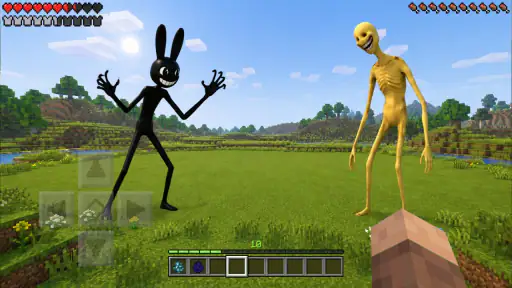
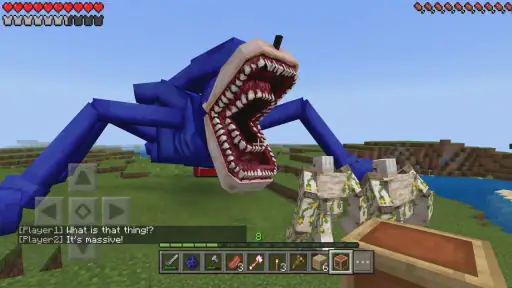
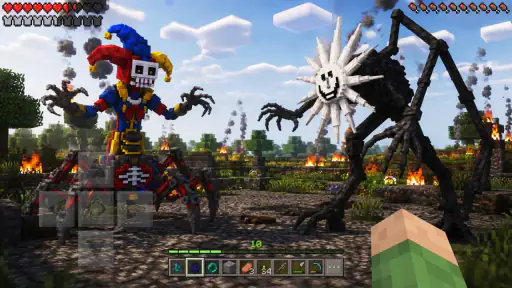
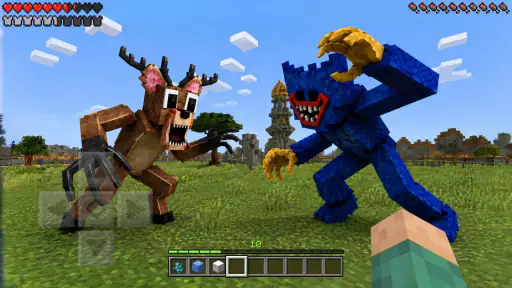
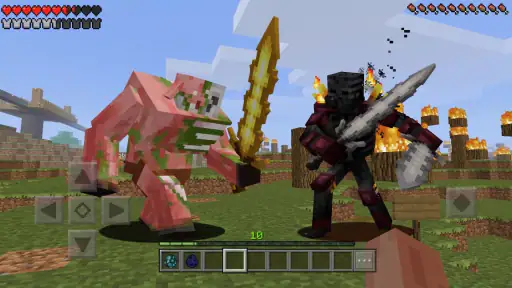
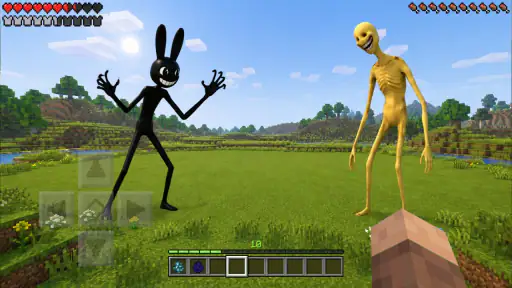
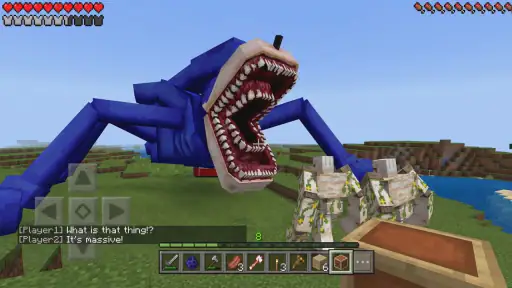
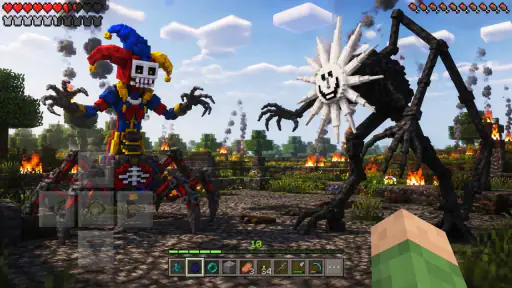
Analysis by Reviewed
I’d approach Craft Battle: Block Wars as a small-scale sandbox for people who enjoy shaping a play space as much as taking part in a fight. Its central appeal is the combination of building and battling, rather than a long simulation of running a business, caring for a town, or managing a detailed world. That makes it an easy idea to understand, but the right fit depends on what you want from a simulation game: a place to experiment, or a guided experience that steadily introduces goals and systems.
In my view, the key question is whether you like making your own fun. A build-and-battle sandbox can be rewarding when you enjoy trying a layout, seeing how it works in a skirmish, then changing it. If you mainly want a clearly directed campaign or a simulation where progress comes from carefully managing a complex set of resources, this is less likely to be your first choice. The building is most appealing when it gives the action a personal setup, not when you expect the game to supply a tightly scripted path.
What to decide before you jump in
Do you want a sandbox or a guided simulation?
The game’s premise points toward open-ended play: you make things, bring activity into the block-based space, and take part in battles. That structure suits short sessions because you can focus on one small idea instead of committing to a long management run. I’d start with a modest goal—make a simple arena, adjust its shape, and see whether the resulting fight is enjoyable—rather than expecting a fully formed plan to be handed to you.
This distinction matters when comparing it with the usual alternatives in simulation. A city or life simulator often rewards patient upkeep and long-term decisions; a construction-focused title may put most of its attention on planning and decoration; an action game usually makes combat the main event. Craft Battle sits between those expectations. Its draw is the link between arranging a space and seeing battles take place in it, so neither construction nor combat should be judged in isolation.
How much freedom do you actually enjoy?
Freedom can be a strength and a source of friction. If you like testing ideas without worrying about a perfect blueprint, the sandbox framing gives you a reason to experiment. If you find a blank space more stressful than exciting, you may prefer a game with explicit missions, step-by-step objectives, or a more conventional progression loop. I wouldn’t treat the open premise as a promise of endless variety; it is better understood as an invitation to see whether your own small experiments hold your interest.
One practical approach is to build for a specific question rather than for appearance alone. For example, change the layout to create a tighter route through an arena, then see whether that makes the encounter feel more engaging. This turns building into a useful part of play instead of a separate chore. It also helps you decide quickly whether the game’s central loop suits you: if you enjoy revising a space in response to what happened, you are more likely to get value from it.
What the game is, and who makes it
Craft Battle: Block Wars is a free simulation game from Coup Coup LTD, with a Teen age rating. It has a 3.5 average from around two thousand ratings, alongside over a million installs. Those figures suggest a sizeable audience but also a mixed reception; I’d read that as a reason to match the game to your preferences rather than assume it will work for everyone. The current version is 1.1.04, and it supports Android 9 or later.
The game is also presented as “Craft Battle” in its short description, which neatly captures its two-part premise without explaining how every session unfolds. I’d use that as a starting point, not as a guarantee of a particular set of tools or modes. The useful test is whether building and fighting feel connected once you play. If they do, even a simple arena can give you a reason to return and try another arrangement.
Where the block-based approach has an edge
It gives your battles a sense of authorship
The most distinctive promise here is that the space is not merely a backdrop. When you have a hand in shaping it, a battle can feel like the result of a decision you made rather than an encounter selected from a fixed sequence. That is a satisfying difference for players who enjoy tinkering. A change in the environment can become the experiment: build, observe, and decide whether the new arrangement makes the action more interesting.
For a realistic everyday use case, imagine having a few minutes between other tasks and wanting something more active than a pure building app but less involved than a lengthy strategy session. You could spend that time making a compact play area and seeing how it handles a battle. The value is not that every short visit must produce a grand creation; it is that you can give yourself a small, concrete project and stop when you have answered the question you set.
A second useful habit is to change one thing at a time. If you alter the whole layout after every encounter, it becomes difficult to tell which choice made the next attempt feel better. Keeping a simple mental note—“that narrow passage made the arena more interesting,” for example—turns casual tinkering into a clearer loop. This is not a special feature claim; it is a practical way to get more meaning out of a sandbox whose appeal depends on experimentation.
It can suit both makers and action-minded players
Some games make builders wait a long time before their creations matter, while action games rarely invite you to shape the setting. This title’s premise gives both impulses a place: you can care about the setup and still want to see what happens in a fight. That overlap is its strongest audience match. If a friend enjoys making spaces and another prefers battles, it could be a shared conversation starter, even if each person values a different part of the loop.
There is a trade-off, though. A game that straddles two styles may not satisfy someone who wants the deepest possible construction tools or the most demanding combat. I would not choose it as a substitute for a dedicated builder if intricate design is your main hobby, nor as a substitute for a focused action game if you want combat to carry every session. Its best case is the middle ground, where making a playable setting is part of the entertainment.
Use a small project to judge the learning curve
Rather than trying to understand every possibility immediately, I’d begin with a basic build and a clear purpose. Decide what kind of space you want, make only the changes needed to create it, and then test whether the battle gives the construction a payoff. This reveals more than spending a long time decorating before you know whether you enjoy the action. It also limits the frustration of overbuilding a design that does not make the play session more fun.
That workflow is especially helpful if you are new to sandbox games. Start with function, then refine the look only if you feel like it. A playable area can teach you what you want from the next one, while a purely decorative project may not answer whether the battle side is for you. If the first experiment feels satisfying, you can gradually make your layouts more ambitious; if it doesn’t, you have learned that the core combination may not be your preferred kind of simulation.
When another kind of game may fit better
Choose a more structured alternative if you need direction
If you prefer a steady chain of objectives, explicit milestones, or a story that tells you what to do next, a mission-led simulation or strategy game is probably a better match. Craft Battle’s sandbox identity asks you to contribute ideas of your own. That can make each session feel personal, but it can also leave a player wondering what counts as progress. I would skip it if the absence of a clear task list tends to make you put games down quickly.
Likewise, players who want calm, low-pressure building may find the battle element distracting. A dedicated creative builder is the safer choice when your main goal is to design without needing the result to support an encounter. On the other side, someone seeking a tightly balanced competitive experience may be better served by a game built primarily around combat. The decision is less about which category is objectively better and more about which activity you want to occupy most of your time.
Consider the limits of the mixed format
There is a risk in any hybrid: the builder may feel that the construction is only useful as preparation, while the action-focused player may see building as a delay before the interesting part. Whether that balance works for you depends on your patience for trial and error. I’d pay attention to how often you naturally want to return to the space and adjust it. If you do that willingly, the mix is working. If you repeatedly wish you could skip one half, a more specialized game will likely feel more satisfying.
The rating also encourages a measured expectation. A 3.5 average is not a reason to dismiss the game, but it is a reminder that the experience may not land equally for every player. The concept is quite specific, and its appeal depends on liking both sides of it. I would approach it as a free game to sample for that particular mix, not as a dependable replacement for a favorite building or battle title.
Make the first session answer a real question
Before installing, ask yourself whether you want to create a space and then use it, or whether you mainly want to build, fight, or follow a guided progression. That simple distinction can prevent a mismatch. If you are unsure, try one small session focused on making a functional arena and testing it. If you come away thinking of a change you want to make next time, that is a good sign. If you only want to move on to a different game, the hybrid loop may not be for you.
Because it is free, the cost of trying it is low in money, but your time still matters. I’d avoid treating the install count as proof that it will suit your tastes; popularity and personal fit are different things. The useful decision is whether its particular combination gives you an enjoyable reason to experiment. That is a more reliable guide than expecting a sandbox to provide the same kind of structure as a campaign-driven title.
Switching in and out without overcommitting
Keep your expectations narrow at first
If you are moving from a detailed building game, don’t assume that every familiar construction habit will transfer. Start by exploring what makes a space useful for battle, then decide whether the building itself offers enough room for your preferred style of play. If you are arriving from an action game, do the opposite: give the setup a fair chance, because the point is not simply to rush into combat. A little patience with both parts makes the comparison more honest.
It also helps to think in short experiments instead of judging the whole game by one layout. Try a compact arena, then a more open arrangement, and compare how each changes your interest in the next session. The point is not to claim that one design is universally better; it is to learn what you personally enjoy. This approach can keep the game from feeling aimless while avoiding the pressure to produce a perfect build immediately.
Who should give it a chance?
I’d recommend trying it if you enjoy block-based creativity, like seeing your own choices affect the play space, and don’t mind inventing small goals. It may also suit someone who wants a free game to dip into rather than a long, carefully managed simulation. The strongest reason to keep playing would be the urge to modify a layout after seeing how a battle went. That reaction shows that the building and action are feeding into each other for you.
I’d pass if you want a deep, peaceful construction experience, a strongly directed campaign, or combat that stands on its own without any setup. Those are reasonable preferences, and a more focused alternative will probably respect your time better. The game’s broad premise is a feature only when the blend itself is what you want; it is not automatically an advantage for every simulation fan.
My recommendation
Craft Battle: Block Wars is worth a look for players who want to shape a block-based setting and then see that setting used in battle. I like the decision-making loop implied by that combination: build with a purpose, test it, and adjust rather than treating creation and action as unrelated activities. The main caution is that this style asks you to supply some of your own direction, and the hybrid may feel less satisfying than a specialist game if you strongly prefer only one side.
For me, the best way to decide is to treat the first visit as a small trial, not a commitment. Make a simple space, give it a practical purpose, and notice whether you want to revise it after the action. If that little cycle feels rewarding, the game has found its audience. If you would rather have more guidance or a deeper focus on building or combat alone, I’d choose a title designed around that preference instead.
Craft Battle: Block Wars Frequently Asked Questions
What kind of game is Craft Battle: Block Wars?
Craft Battle: Block Wars is a block-themed action game that combines crafting-style visuals with combat and battle challenges. Players can expect to move through encounters, use available weapons or abilities, and take on opponents in compact arenas or levels. The exact modes and mechanics can vary by version, so check the game’s store listing and screenshots to confirm what is included before downloading.
Can I play Craft Battle: Block Wars offline?
Whether the game works without an internet connection may depend on its current version and the mode you want to play. Some mobile action games allow solo play offline but require a connection for multiplayer, advertisements, updates, or other online features. If offline access matters to you, review the store description and test the game’s requirements before relying on it during travel or in areas with limited connectivity.
Is Craft Battle: Block Wars free to download, and does it include in-app purchases?
The game may be offered as a free download, but that does not necessarily mean every item or feature is available at no cost. Mobile games can include optional purchases, advertisements, or progression systems that encourage players to unlock content. Check the Google Play or App Store listing for the latest pricing and in-app purchase details, and use device-level purchase controls if children will be playing.
What devices are compatible with Craft Battle: Block Wars?
Compatibility depends on the device’s operating system, hardware, and the requirements set for the current release. Before installing, open the official Google Play or App Store page and confirm that your phone or tablet is supported and has enough free storage. Keeping the operating system updated can help, but older devices may still experience slower performance, longer loading, or other limitations.
Is Craft Battle: Block Wars suitable for children?
The block-style graphics may look lighthearted, but the game’s combat and other content should be considered before a child plays. Age ratings, advertising, online interaction, and purchase options can differ by platform and region. Review the rating and content notes on the relevant app store, then use parental controls to manage play time, purchases, and access to any online features.
Pros
- Quick matches make it easy to jump in for a short play session.
- Block-based arenas are simple to read
- even during busy fights.
- Building adds a tactical layer beyond straightforward combat.
- A colorful visual style keeps the battlefield easy to follow.
- The controls are approachable for players new to action games.
Cons
- Combat can feel repetitive after playing several matches.
- Small touch controls may be awkward on compact phone screens.
- Busy battles can make it hard to track opponents and projectiles.
- Progression may take time if upgrades or items require repeated play.
- Performance and responsiveness can vary across older devices.

- Category
- Simulation
- Version
- 1.1.04