Color Mania Quiz guess logos
- 19.82K
- 4.2
- Installs
- 5.00M
- Price
- Free
Screenshots
Analysis by Reviewed
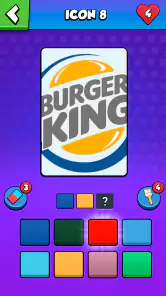
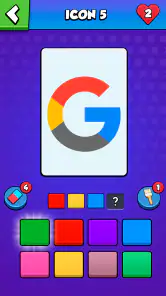
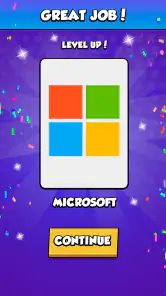
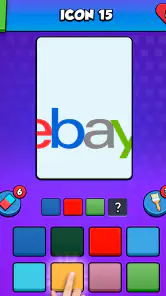
I spent time with Color Mania Quiz guess logos as a quick-fire trivia game built around visual recognition. The basic appeal is easy to understand: you look at a logo or color-based clue, try to identify it, and move through a large collection of quiz challenges. It is free to start, aimed at Everyone, and comes from Unico Games, so it feels designed for broad, casual play rather than for a narrow group of trivia experts.
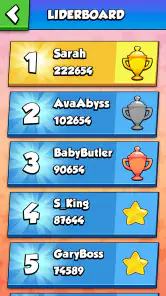
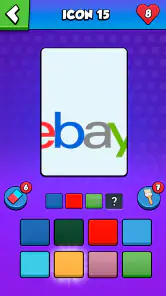
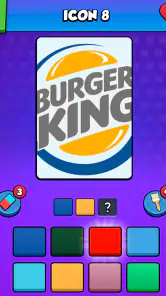
What makes it worth considering is the way it turns familiar branding into a memory test. You may recognize a shape immediately but struggle when part of the name is missing, or know the company but hesitate over the exact spelling. That small gap between “I know this” and “I can answer it correctly” gives the game its rhythm. I found it especially suitable for short sessions, although the leaderboard element can encourage longer runs once you start chasing a better position.
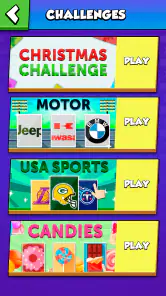
The game has been available since August 15, 2013, and its current version is 3.1.0. Its long presence and broad audience suggest a format that has remained approachable over time. It has an average rating of 4.2 from around 160 thousand ratings, with roughly 20 thousand written reviews, and more than 5 million installs. Those figures do not guarantee that every player will enjoy it, but they do show that this is an established logo quiz rather than an obscure experiment.
How Color Mania feels during ordinary play
Quick answers are the main attraction
The strongest part of the experience is the immediate recognition loop. A logo appears, I make a guess, and the result usually feels connected to something I have seen in daily life. That makes each question more personal than a random general-knowledge prompt. Even when I miss, the mistake tends to be memorable because the clue was visually familiar.
This is also why the game works well when I do not want a complicated session. I can pick it up while waiting for an appointment, during a short break, or when I want something lighter than a full strategy game. There is no need to learn a complicated control scheme. The challenge comes from observation, recall, and spelling rather than from fast physical reactions.
The color-focused identity gives the quiz a slightly different flavor from trivia apps that rely mainly on written questions. It rewards visual memory, including the ability to recognize a brand from a partial impression. That makes it a reasonable choice for players who enjoy puzzles based on images and symbols but do not necessarily want a traditional crossword or a broad knowledge test.
Speed expectations on a compatible device
In my experience, this type of game should feel most comfortable when the device meets its minimum requirement of Android 6.0 or later. The interaction is simple, so I would not approach it expecting the kind of demanding graphics performance associated with a modern 3D game. The important question is whether the quiz remains responsive while moving between clues and answers, not whether it produces cinematic effects.
That simplicity is a practical advantage. A logo quiz usually has less visual activity than an action title, which means the device has fewer demanding tasks to handle during a normal round. I found the experience best suited to a phone that is already running smoothly. If the handset is overloaded with background apps or has very little free storage, the game cannot compensate for wider system sluggishness.
There is a useful distinction here between perceived speed and raw power. Because the core activity is recognition, even a brief pause feels noticeable when I am trying to maintain a train of thought. On the other hand, the game does not ask me to coordinate several controls at once. A momentary delay is frustrating, but it does not create the same competitive disadvantage as a missed action in a racing or multiplayer game.
What happens during longer or heavier sessions
Short play is where the format makes the most sense. During a longer session, the main pressure is less likely to come from complex rendering and more likely to come from attention. After many logo questions, similar shapes and colors can start blending together. I found that taking a short pause can improve accuracy more than simply continuing to tap through guesses.
This is one of the less obvious ways to use the game well: treat it as a series of focused bursts rather than an endless test of endurance. I prefer answering until I notice that I am guessing from vague familiarity, then stopping before frustration takes over. That approach also makes the leaderboard element feel more meaningful, because a score earned with careful recognition is more satisfying than one produced by rushed guesses.
On a phone with limited resources, longer sessions may also expose general device strain sooner than a brief visit. Heat, battery condition, and available memory are properties of the handset and operating system, not something I can fairly attribute to the quiz itself. Still, players using an older phone should judge it in the same way they judge any free game: try a short session first, then see whether the device remains comfortable.
Reliability and recovering from interruptions
A casual quiz has an important reliability requirement: it should let me return to the activity without making every interruption feel costly. Real use is rarely uninterrupted. A call, message, low-battery warning, or simple switch to another app can break a session. I therefore pay attention to whether the game remains easy to resume and whether I can quickly understand where I was when I return.
The safest habit is to regard an answer session as a small unit rather than assuming every moment will be preserved indefinitely. If I am about to leave the game, I finish the current interaction instead of abandoning it halfway through. That is sensible advice for any mobile title, but it matters particularly here because the game is built around a sequence of individual guesses and a disrupted answer can break concentration.
I also recommend keeping the operating system reasonably current within the phone’s supported range and closing unusually demanding apps before a long quiz session. These steps are not special tricks for Color Mania; they are simple ways to reduce avoidable friction. Since the game supports Android 6.0 and later, compatibility covers a wide range of devices, but compatibility alone does not make every older handset equally comfortable.
Device constraints and who should be cautious
The minimum operating system is Android 6.0, so anyone using an older Android release will need a different option or a newer device. For supported phones, the more relevant concern is overall condition. A device with a tired battery, very little free space, or aggressive background management may make any game feel less dependable, even when the app itself is not graphically demanding.
I would also avoid installing it solely for high-end presentation. This is a trivia game first. If you want detailed environments, animated characters, or a large strategic system, a logo quiz will feel intentionally modest. Its value is in the questions and the recognition challenge, not in using the phone’s processor for impressive visuals.
It is a better fit for someone who enjoys brand awareness, visual puzzles, and repeatable short sessions. Families can also find it approachable because the content rating is Everyone, though different players will naturally have different familiarity with the logos. A younger player may recognize brands from one part of everyday life while an adult recognizes others, which can make informal group play more interesting than a solo score suggests.
How it compares with ordinary trivia alternatives
Compared with a general-knowledge quiz, Color Mania keeps its subject narrow and visual. That focus is both its strength and its limitation. I do not need to remember historical dates, scientific terms, or obscure facts to enjoy a round, but I also cannot expect the same range of subjects I would find in a broad trivia app.
Compared with a crossword or word puzzle, the game gives me a stronger recognition component and less dependence on long-form deduction. A crossword may reward patient solving from intersecting clues, while this title rewards the instant connection between an image and a name. If I am in the mood for language practice or deep reasoning, another puzzle type may be better. If I want a quick test of visual memory, this one is more direct.
It also differs from a pure casual matching game because the goal is not simply to pair colors or shapes. The visual clue points toward an answer with cultural meaning. That makes success feel more like recalling something from the real world than completing an abstract pattern. The trade-off is that players with less exposure to certain brands may find some questions inaccessible for reasons unrelated to puzzle skill.
Practical ways to get more from each round
My first tip is to separate recognition from spelling. When I know the logo but cannot immediately enter the name, I pause and say the answer mentally in full before typing. That reduces careless errors caused by rushing. It is a small change, but it helps when several possible names look similar.
My second tip is to use the game as a shared challenge rather than treating the leaderboard as the only measure of success. In a waiting room or on a relaxed journey, passing the phone around can turn difficult clues into a conversation about where each person has seen a brand. This is especially useful for mixed-age groups, where different life experiences produce different strengths.
My third tip is to stop when the activity becomes automatic guessing. A logo quiz is most enjoyable when I am making a considered connection. Once I am tapping random answers, the session is no longer testing memory in a useful way. Returning later with a clear mind is a better workflow than forcing a long run simply because the game is available.
A fourth trade-off is worth remembering: leaderboard motivation can improve replay value, but it can also push me toward speed over accuracy. Players who enjoy competition should decide whether they are chasing a high score or trying to learn which visual details they overlooked. Those are different goals, and the best pace for one is not always the best pace for the other.
Free access and optional spending
The game is free to play, which makes it easy to test without committing money first. There are in-app purchases ranging from $1.99 to $49.99 per item. That wide range means I would recommend checking the purchase prompt carefully and deciding in advance whether optional spending fits the way I intend to use the game.
For me, the free entry point is the important part because the core question is whether the logo format stays interesting after the novelty fades. I would not buy anything immediately. I would first play enough to see whether I enjoy the difficulty curve, whether the available challenges suit my knowledge, and whether the leaderboard adds motivation or simply pressure.
This is also where the game may not be right for everyone. If you dislike optional purchases in free games, prefer a single upfront price, or want a completely different subject area, a paid puzzle or general trivia alternative may provide a cleaner fit. The free model is convenient, but convenience does not remove the need to make deliberate choices around purchases.
Who should download it, and who should skip it
I would recommend Color Mania to someone who wants a low-commitment visual trivia game, enjoys guessing familiar logos, and likes having a score or leaderboard to work toward. It is particularly suitable for short breaks because the premise is immediately understandable and does not require a long tutorial or a complicated setup.
I would be more cautious about recommending it to players who want deep progression, a story, intense competition, or a constantly changing set of mechanics. The central activity remains logo recognition, so its appeal depends heavily on whether that specific subject keeps you curious. Someone who already knows they find brand quizzes repetitive will probably not be persuaded by the large install base alone.
It may also be a poor choice for a player looking for neutral general knowledge. Logos are tied to advertising and everyday consumer culture, and that means familiarity can depend on where someone lives, shops, studies, or spends time online. A broad trivia game may feel fairer if you want questions spread across science, history, geography, and language rather than concentrated on visual branding.
My performance verdict
Color Mania Quiz guess logos succeeds because it keeps the interaction simple while giving recognition a competitive edge. I found it more engaging than a completely passive guessing game because each answer asks me to connect a visual detail with a precise name. The experience is best understood as a lightweight trivia companion, not as a technically demanding game.
From a performance perspective, I would expect the most satisfying results on a supported phone that is not already struggling with general system tasks. The Android 6.0 minimum keeps the compatibility barrier relatively broad, while the uncomplicated quiz format should suit players who value quick access over elaborate graphics. Longer sessions are more likely to test my attention and the condition of my device than the depth of the game’s visual technology.
Unico Games has built something easy to pick up and easy to explain to another person. The free price lowers the risk of trying it, and the Everyone rating makes it broadly approachable. At the same time, the optional purchase range, the narrow logo-focused subject, and the possibility of repetition mean I would treat it as a selective recommendation rather than a universal one.
My honest recommendation is to try it for short, focused sessions first. If identifying a familiar logo gives you the same small satisfaction as solving a quick puzzle, the leaderboard and large collection can keep the format enjoyable. If you want richer systems or a wider knowledge test, choose a different trivia style. For the right player, though, this is a convenient way to turn everyday visual memory into a quick challenge without demanding much time or technical commitment.
Pros
- Simple gameplay that is easy to understand for all ages.
- Quick rounds make it suitable for short breaks.
- Recognizes logos from many popular brands worldwide.
- Clean interface keeps the focus on guessing.
- Progression encourages players to keep improving their score.
Cons
- Some logos may be difficult because of limited visual clues.
- Hints and extra help may be restricted or require rewards.
- Brand coverage can feel uneven across different countries.
- Repeated puzzles may reduce the challenge over time.
- Ads may interrupt gameplay
- especially between quiz rounds.
- Category
- Trivia
- Version
- 3.1.0