Castles of Mad King Ludwig
- 209.00
- 4.4
- Installs
- 10.00K
- Version
- 2.1.4

Screenshots
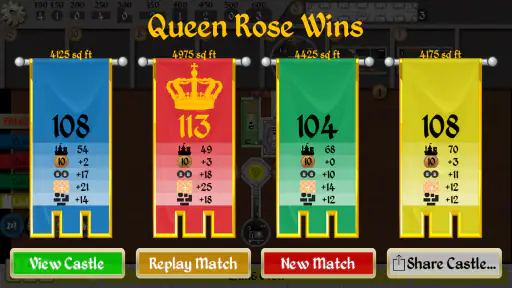
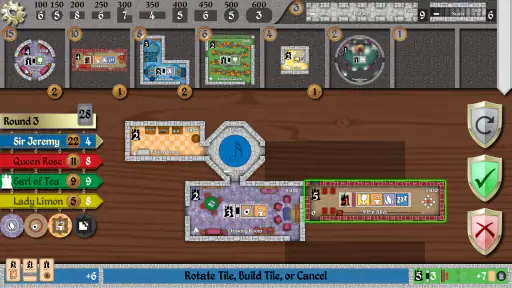
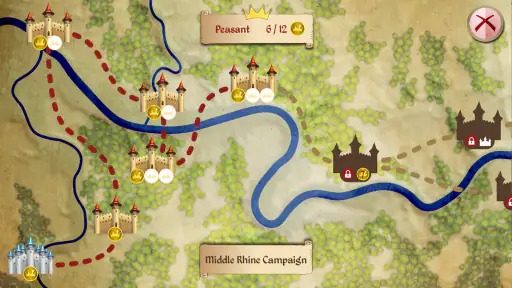
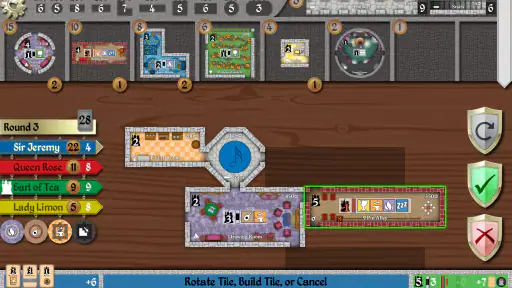
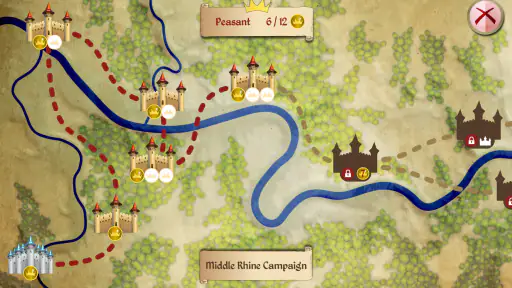
Analysis by Reviewed
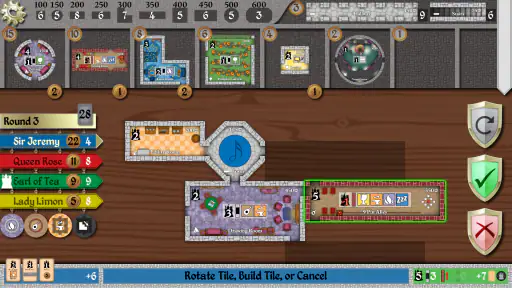
I approached Castles of Mad King Ludwig as the kind of digital board game that needs more than attractive pieces to justify its price. The central idea is immediately appealing: I build a castle room by room, but every decision affects how the whole structure develops. That makes each turn feel more deliberate than simply placing the next available tile. I am not only asking which room looks useful now; I am also thinking about how its position, connections, and value may shape the rest of my castle.
This is a paid board game from Bezier Games, priced at $7.99, with an Everyone content rating. It arrived on mobile on May 23, 2016, and the current version is 2.1.4. The game supports devices running Android 4.1 or later, which gives it a fairly broad technical range, although the age of the release means I would still check that an older phone behaves well before buying. Its store summary presents the experience as a board game brought to life, and that description is a useful starting point, but it does not explain why the design can be so absorbing once I begin weighing every room against the next opportunity.
How the castle-building decisions create momentum
A board game adaptation that rewards planning
What I like most is that the castle grows through a chain of connected choices rather than through a simple race to collect points. A room can look excellent in isolation and still be awkward when I consider the spaces around it. That tension gives the game its personality. I regularly find myself pausing before a seemingly obvious purchase because the better long-term choice may be less impressive at first glance.
The best sessions have a steady rhythm. I inspect what is available, compare it with my current layout, consider what another player might want, and then decide whether to spend now or wait for a more suitable opportunity. That sequence is easy to understand, but it does not become mindless. Even after I understand the basic flow, the value of a room depends on context, and context changes as the castle expands.
For me, this makes the game a particularly good fit for people who enjoy spatial puzzles and light economic decisions. It is not just about making a pretty arrangement. I have to think about efficiency, timing, and the possibility that a choice that benefits me may also open a stronger option for someone else. The castle is both a personal project and a competitive statement.
Why progress feels satisfying
There is a clear sense of progress because the board develops visibly in front of me. Early decisions establish the shape and direction of the castle, while later choices force me to deal with the consequences of that foundation. A weak opening is not always fatal, but it can make later decisions more restrictive. Conversely, a carefully planned beginning can give me room to adapt when the available options are not ideal.
One useful habit is to judge a room twice: first by what it offers immediately, and then by what it allows me to do afterward. That second question is where much of the depth lies. A room that connects cleanly or supports a broader plan can be more valuable than one that provides a tempting short-term benefit. I found that this approach reduced impulsive purchases and made my castles feel more intentional.
The game also creates pressure without needing a complicated presentation. When a desirable room appears, waiting may preserve flexibility, but it can also mean losing the chance to take it. Spending too quickly can leave me with fewer options later. That push and pull is the main source of tension, and it keeps the experience engaging even when the rules themselves are not difficult to grasp.
Small decisions that matter later
A less obvious lesson is that empty space has strategic value. I initially wanted to fill the castle as efficiently as possible, but doing so without considering future connections could leave an awkward layout. Leaving room for a better-fitting choice can be more useful than immediately adding something merely acceptable. This is especially important when I am trying to preserve several possible directions instead of committing to one plan too early.
I also learned to distinguish between a room I want and a room I can realistically support. A powerful-looking addition may demand a particular arrangement or may be less valuable if the surrounding castle does not cooperate. That trade-off gives the game a satisfying restraint: I am not rewarded simply for choosing the most impressive-looking option. I am rewarded for making it work within the structure I have created.
For a practical everyday scenario, I can imagine playing this after dinner with a friend who enjoys board games but does not want to spend an hour learning a dense rulebook. We could begin with a relaxed session, discuss why certain rooms seem attractive, and gradually discover that the real conversation is about timing and compromise. It is a better choice for that moment than a fast party game if we want a focused activity, but it may be too thoughtful for a group looking for constant jokes and rapid turns.
Where the pressure can become friction
The same decision-making that makes the game rewarding can slow a session when several players analyze every possibility. I do not see that as a flaw in the design, but it is a real consideration. Someone who dislikes waiting while opponents calculate may find the quieter pace frustrating. The game works best when everyone accepts that turns are about evaluating consequences rather than acting instantly.
It is also not the ideal board game for someone who wants a purely relaxing decoration experience. Building a castle sounds peaceful, but the competitive choices introduce pressure. I cannot always select the room I prefer, and I sometimes have to settle for a less elegant arrangement because the available opportunity is too important to ignore. The satisfaction comes from adapting, not from receiving a perfect set of pieces.
Fairness, spending, and the competitive experience
What the purchase gives me
The most important spending question is straightforward: this is a paid game rather than a free download. I pay $7.99 to access the experience, so I judge it by whether the design can hold my attention beyond a single curiosity session. In my view, the value depends heavily on how much I enjoy replaying a strategic board game and comparing different approaches. Someone who plays this style often is more likely to appreciate the purchase than someone who only wants a quick one-off distraction.
I prefer this kind of clear upfront purchase to a game that constantly interrupts play with requests for additional spending, but I would not treat that preference as proof of anything beyond the listed price. The important point for a buyer is that the initial decision is simple: decide whether the core board-game adaptation is worth $7.99. I would make that decision based on interest in the mechanics, not on the promise of a broad collection of unrelated activities.
The game has an average rating of 4.4 from around 1.1 thousand ratings, and it has more than 200 written reviews. Those figures suggest that the mobile version has found an audience, but they should not replace personal judgment. Ratings cannot tell me whether its measured pace, spatial planning, or competitive pressure will suit my habits. They are useful reassurance, not a guarantee that every session will feel equally enjoyable.
Why the competition feels fair when I play carefully
Fairness here comes mainly from making choices with incomplete control. I cannot force the perfect room to appear, and other players can affect which opportunities remain attractive. That uncertainty does not automatically make the game unfair. Instead, it asks me to manage risk and adjust my plan. A strong player is not simply the person who receives the best-looking option; it is the person who extracts the most value from changing circumstances.
One practical way to keep the experience fair at the table is to avoid treating every early decision as permanent proof that a strategy has succeeded or failed. The castle develops over time, and a flexible plan can recover from an imperfect start. I get better results when I watch the overall shape of my construction rather than obsessing over one missed room.
There is also a useful distinction between visible competition and hidden frustration. I can see when another player takes something I wanted, but I may not immediately understand whether that choice truly helps them. That uncertainty adds psychological pressure without requiring aggressive interaction. I have to decide whether to protect my own plan, deny an opportunity, or simply continue building efficiently.
Who should spend the money
I would recommend the purchase to a player who already knows they enjoy thoughtful digital board games, especially those involving placement, planning, and gradual optimization. It is also suitable for a friend or family member who likes classic tabletop structure but wants the convenience of playing on a mobile device. The Everyone rating makes it broadly approachable from an age-classification standpoint, although the strategic decision-making may appeal more to people who enjoy patient, focused play.
I would be more cautious about recommending it to someone seeking a free casual game, a fast arcade session, or a highly social party experience. The price is harder to justify if I am unlikely to replay it. Likewise, players who dislike games where a good option can disappear before their next turn may prefer a less competitive puzzle or a more forgiving digital board game.
Compared with a typical mobile puzzle game, this feels less disposable. A puzzle often asks me to solve a self-contained challenge, while this asks me to manage a developing system and respond to other players’ decisions. Compared with a conventional tabletop session, the mobile format should appeal to anyone who wants the structure of a board game without setting up physical components. The trade-off is that the digital version may feel less tactile and less naturally social than gathering around a real table.
Questions I would ask before installing
The first question is whether the game is suitable for a child simply because it carries an Everyone rating. The classification indicates broad content suitability, but it does not mean the experience is designed as a simple children’s game. I would expect a young player to need help understanding the strategic consequences, particularly when a room that looks attractive is not necessarily the best choice.
The second question is whether an older device can run it. The listed minimum is Android 4.1, so the technical requirement is modest. Still, I would not assume that every old phone will provide the same comfort, especially if the device has a small screen or limited performance. The current version is 2.1.4, and checking compatibility through the relevant store before purchase remains sensible.
A third question is whether the game remains interesting after the first few sessions. My answer is that its replay value comes from changing priorities and from trying to improve the way I evaluate rooms, not from a constant stream of unrelated content. If I enjoy refining decisions and testing different construction ideas, that can be enough. If I need a new surprise every few minutes, the design may feel too focused.
Another practical concern is session atmosphere. I would choose it for a quiet commute, a relaxed evening, or a deliberate game night with one or more people who are comfortable thinking between turns. I would skip it when I have only a minute or two and want immediate action. The game’s strengths need attention; they do not appear when I rush through decisions.
What remains important to judge personally
I would not buy it solely because the developer is Bezier Games, because a familiar developer name cannot guarantee that this particular mobile adaptation matches my preferences. I would also avoid assuming that its popularity makes it universally suitable. The game has over 10 thousand installs, which shows that it has reached a meaningful mobile audience, but audience size does not tell me whether its pace fits my own routine.
The release date, May 23, 2016, is another detail I would keep in perspective. An older release can still offer a strong design, particularly when the underlying board game is the main attraction, but I would not expect the same presentation or device behavior as a brand-new mobile title. For me, the important test is whether the interface makes the castle-building decisions clear enough that I can concentrate on strategy rather than fighting the controls.
That is where my trust in the purchase comes from: not from treating every unknown as a hidden benefit, but from keeping the decision grounded in what is actually visible. I know the price, the age classification, the developer, the version, and the general board-game premise. I can then ask whether I personally value this type of careful, competitive construction. That is a more reliable buying method than expecting a store page to predict my enjoyment.
My verdict after weighing the castle, the cost, and the competition
Castles of Mad King Ludwig works for me because it turns a simple fantasy of building a castle into a sequence of meaningful compromises. I am constantly balancing immediate appeal against long-term structure, and the best choices are often the ones that look modest until the rest of the castle develops around them. That gives the game a distinctive identity within the board category.
Its limitations are equally clear. The pace can feel slow for players who want instant action, and the competitive uncertainty may frustrate anyone who prefers complete control. The paid price also means I need genuine interest in replaying a strategic board game rather than treating it as a disposable download. Those are not minor details; they determine whether the purchase feels sensible.
My strongest tip is to resist filling space simply because it is available. I would first consider how a room affects future connections, whether it supports the direction of the castle, and whether spending now leaves enough flexibility for the next decision. That habit makes the game more rewarding and helps reveal why the design has more depth than its room-by-room premise suggests.
I would recommend it to patient players who enjoy planning, adapting, and watching a personal layout take shape under competitive pressure. I would skip it if my priority were a free experience, a rapid arcade loop, or a loud group activity with almost no downtime. For the right player, the $7.99 purchase offers a focused adaptation with enough strategic texture to justify returning to the castle after the first visit. My verdict is positive, but specifically positive: this is a good choice when I want a thoughtful board game, not a universal recommendation for every mobile player.
Pros
- Faithfully captures the strategic decisions of the board game.
- Tile placement offers plenty of creative freedom.
- Asynchronous multiplayer suits relaxed online sessions.
- Clear scoring goals help guide new players.
- Works well for both short and longer game sessions.
Cons
- The interface can feel dense on smaller phone screens.
- Some advanced scoring rules take time to understand.
- Online matchmaking may depend on an active player base.
- Replay value relies heavily on enjoying strategic optimization.
- Turn notifications can become easy to miss during long games.