Card Connect: Connect & Win!
- 814.00
- 4.9
- Installs
- 100.00K
- Version
- 1.2.26138
Screenshots






Analysis by Reviewed
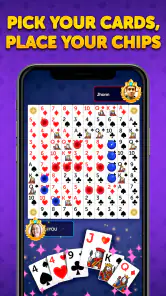
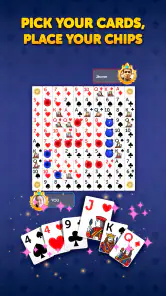
I spent time with Card Connect: Connect & Win! as a light, strategic card game rather than treating it like a quick novelty. Its central appeal is easy to understand: connect cards, look for useful relationships on the board, and make decisions that matter more than simply tapping the most obvious move. That makes it a natural fit for short sessions, but there is enough room for planning to keep it from feeling completely automatic.
The game comes from FunCraft Games and is available for free for players rated Everyone. It belongs in the board-game side of mobile gaming, although its card focus gives it a different rhythm from a traditional digital board game. I found it most interesting when I approached each turn as a small puzzle: not just “what can I connect now?” but “which connection leaves me with the best next choice?”
It is also a relatively new release, arriving on October 14, 2025. The current version is 1.2.26138, and it runs on Android 7.0 or later. That broad system requirement makes it accessible on many older Android phones, which is useful for a casual game people may install on a spare device or an everyday handset rather than a gaming phone.
How the card connections shape each session
The strongest part of the experience is the way a simple card action can invite a second thought. A beginner can start by identifying an available connection, but a more careful player will pause and examine what that move changes. In a game built around connecting cards, the visible move is only part of the decision. The real question is whether the connection improves the position or merely removes an option that could have been more valuable later.
I recommend taking a few seconds before committing to an obvious play. That small habit is more useful here than trying to move quickly. When several connections appear possible, I look for the one that keeps the board flexible. A move that creates another immediate opportunity can be stronger than one that produces a satisfying short-term result but leaves no clear continuation.
This is one of the non-obvious strengths of the design. The game can look simple from the outside, yet the best decisions are often about preserving choices. That makes it more rewarding for players who enjoy compact strategy games and less appealing to anyone who wants a completely passive card experience.
For an everyday example, I could easily see playing it while waiting for a train or taking a short break between tasks. I would not need to prepare a long session or remember a complicated campaign. I could open it, focus on a few decisions, and stop when the break ended. The same quality can work against it, though: if you prefer a game with a deep story, character development, or a large world to explore, this focused format may feel narrow.
The game’s store summary presents it as a fun and strategic card battle, while its short description uses the phrase “Card Connect.” I think the strategic side is the more useful way to understand it. The card theme gives the game its identity, but the lasting interest comes from deciding when a connection is worth making and when patience is better.
Progress feels best when I play deliberately
My preferred way to approach progress is to treat early rounds as practice for recognizing patterns rather than as a race. Instead of chasing every immediate connection, I pay attention to the kinds of positions that leave several routes open. This creates a practical learning loop: I make a move, see how the board changes, and adjust the next decision.
That approach also reduces one common source of frustration in casual card games: making a fast move and then realizing that the better option was visible a moment earlier. The game rewards attention more than frantic tapping, at least in the way I experienced its core concept. Players who enjoy thinking in short bursts should find that satisfying.
There is a useful trade-off here. A deliberate style can improve decision quality, but it may also make the game feel slower than expected if you are looking for instant action. Someone who wants a quick reflex challenge may prefer an arcade card title. Someone who enjoys weighing two or three plausible choices will probably get more from Card Connect than from a game where every move is obvious.
I also suggest separating “progress” from “winning one particular moment.” If a move fails to produce the result I wanted, I can still learn which connection was too narrow or which opportunity I overlooked. That mindset matters because compact board games often become repetitive when the player treats every round as a test of speed. Here, the more useful improvement is learning to read the available choices.
The pressure comes from limited attention rather than from a large amount of content that needs to be managed. I do not need to memorize a complicated ruleset to begin, but I do need to resist impulsive decisions. That balance makes it approachable for new players while still giving experienced puzzle and card fans something to analyze.
Where spending questions affect the experience
Card Connect: Connect & Win! is free to play, which removes the first barrier to trying it. I can install it without paying upfront and decide for myself whether the connection-based play is enjoyable. That is especially helpful for families or casual players who are uncertain whether they want a strategic card game rather than a conventional solitaire-style title.
When I evaluate a free mobile game, I look closely at whether the design encourages me to spend before I understand the basic loop. In this case, the responsible approach is simple: play enough to decide whether the core card decisions are enjoyable on their own. If the underlying action does not hold my attention, spending would not solve that problem.
I am not going to assign a purchase model, prices, or specific paid advantages that are not established here. That matters because fairness discussions become misleading when reviewers fill gaps with assumptions. The useful conclusion is narrower: the game is free to start, and players should judge any later purchase prompt by asking whether it improves convenience or changes the competitive balance.
For a player who wants a completely predictable, one-time purchase, a paid board game may be a better fit. That alternative usually makes the financial decision clearer from the beginning. For someone who wants to sample a card game during spare moments, the free entry point is more convenient. The right choice depends on whether you value low commitment or complete control over the spending model.
Fairness, competition, and the limits of what I can judge
Fairness is important even in a small mobile card game. If success depends mainly on recognizing connections and planning ahead, players should feel that their decisions matter. I found the game most appealing when I could focus on the board rather than on trying to guess whether an outside advantage was influencing the result.
That does not mean every player will define fairness in the same way. A person playing alone may care mostly about whether the challenge feels consistent. Someone comparing results with friends will care more about whether everyone has access to the same practical opportunities. A competitive player will also want to know whether progress, boosts, or other advantages can be purchased instead of earned through play.
I would not present Card Connect as a serious competitive platform without more clearly established information about its complete purchase and matchmaking structure. The game’s strategic appeal is real, but competitive trust requires more than a good card mechanic. It requires confidence that the outcome reflects decisions rather than unequal access.
That is why I recommend a cautious standard for spending. First learn the basic rules, then observe whether the game remains enjoyable without paying. If a purchase appears, consider whether it affects only convenience or whether it could change the strength of a player’s position. If the latter becomes a concern, the game may be better enjoyed casually than treated as a contest.
Compared with a traditional physical card game, the mobile version is easier to carry and faster to start, but it gives the player less control over the surrounding experience. With a tabletop deck, I know the rules I agreed to and can see the pieces directly. With a mobile game, the developer controls presentation, progression, and any prompts that appear around play. That convenience is valuable, but it also explains why transparency matters.
Compared with solitaire-style apps, Card Connect offers a more deliberate sense of interaction because connections can be evaluated as choices rather than as a simple sequence of available cards. Compared with large online strategy games, it is much less demanding to enter. The trade-off is depth: players seeking long-term team competition, extensive customization, or a broad campaign should look elsewhere.
Who will enjoy it, and who should skip it
I would recommend this game to players who like card puzzles, compact board challenges, and decisions that reward looking one move ahead. It is also a sensible option for someone who wants a free game that can fit into short breaks without requiring the commitment of a long role-playing adventure.
It is a good match for a patient beginner because the basic idea is approachable. The game does not need to be understood as a complex strategy system before it can be enjoyed. At the same time, players who naturally scan for future options may discover more satisfaction than those who simply choose the first legal connection.
I would skip it if your priority is a rich narrative, a large collection of modes, or a highly social competitive community. I would also be cautious if you dislike free-to-play uncertainty in general. Even when the core game is appealing, the surrounding spending experience can determine whether a player feels comfortable returning regularly.
Another group that may not enjoy it is anyone who wants every round to be purely relaxing. Strategic card games can create quiet pressure because a small mistake may make the next choice less attractive. If you want a hands-off way to pass time, a simpler matching game may be more suitable.
What I would check before committing long-term
My first practical tip is to test the game in three different moods: during a short break, during a longer relaxed session, and after making a mistake. The first test shows whether it starts quickly. The second shows whether the decisions remain interesting. The third reveals whether the game encourages learning or simply makes failure feel irritating. That is a more useful evaluation than judging it from a single successful round.
My second tip is to avoid treating every available connection as equally valuable. Look for moves that preserve flexibility and make the next decision easier. This is the kind of habit that turns the game from a sequence of taps into a small planning exercise.
My third tip is to separate personal improvement from any visible progression pressure. If the game encourages you to continue after a disappointing result, take a moment to decide whether you are returning because the strategy is enjoyable or because you feel pushed to recover a result. That distinction helps keep a free game from taking more attention than it deserves.
For families, the Everyone rating makes the game broadly approachable, but I would still show younger players how to pause around any purchase prompt. The age category tells me the content is suitable for a general audience; it does not replace sensible guidance about spending or screen time.
For older Android devices, the minimum requirement of Android 7.0 or later is reassuring. It means the game is not limited to recent hardware. Still, I would judge the actual experience on the device being used, especially if the phone is already crowded with apps or has a tired battery. A board game should be convenient, and performance problems would undermine its main advantage as a quick break activity.
My trust verdict after looking beyond the first impression
The game has a clear identity and a useful level of strategic friction. It is not trying to be a sprawling board-game collection; it focuses on card connections and the decisions surrounding them. That focus is a strength when I want a compact challenge, but it becomes a limitation when I want variety, story, or a larger sense of progression.
Its reception is encouraging: it holds a 4.9 average from around 8.6 thousand ratings, with about 814 written reviews and over 100 thousand installs. Those figures suggest that many early players have responded positively, although popularity alone cannot answer questions about long-term depth, purchase fairness, or how the experience changes over time.
My final recommendation is therefore positive but measured. I would tell a friend to try it if they enjoy strategic card decisions and want a free, accessible board game for short sessions. I would not promise it will replace a full tabletop experience or satisfy a dedicated competitive player. The best way to use it is to enjoy the connections, think one move ahead, and keep spending decisions separate from the pleasure of the core game.
My trust verdict: worth trying for casual strategy, but judge the long-term value through your own play rather than through the impressive first impression. FunCraft Games has created a focused card game with an approachable entry point, and the current version gives Android players on version 7.0 or later a straightforward way to explore it. If the central decision-making keeps you interested without pressure, it can become a pleasant part of a daily break. If you need guaranteed competitive equality or a fully transparent one-time purchase, a traditional paid board game remains the safer alternative.
Pros
- Quick rounds make it easy to play during short breaks.
- Simple card-matching rules are suitable for casual players.
- Progression gives you a reason to return regularly.
- Bright visuals make the cards easy to identify.
- Works well for players who prefer relaxed
- low-pressure gameplay.
Cons
- Later levels may feel repetitive once the core mechanics become familiar.
- Some challenges can depend heavily on luck rather than strategy.
- Frequent rewards may encourage longer sessions than intended.
- Small card details could be difficult to see on compact screens.
- Players seeking deep competitive gameplay may find it too simple.