Campus Roaming Chronicles
- 84.00
- 3.4
- Installs
- 1.00M
- Price
- Free

Screenshots




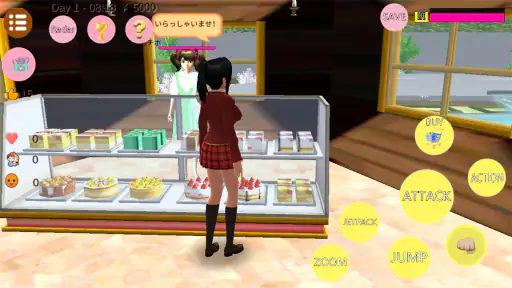



Analysis by Reviewed
I’d approach Campus Roaming Chronicles as a casual role-playing game to explore at my own pace, rather than as a tightly guided adventure with a clearly defined finish line. Its campus setting gives it an everyday backdrop, while the roaming premise suggests that the appeal is in spending time in that space and seeing what kind of play suits you. That makes it most promising for someone who enjoys a relaxed change of scenery and is happy to learn by trying things out.
It is a free game from Php Gaming Club, rated for Everyone, and it has reached over a million installs. Those figures make it easy to see why a curious player might give it a try, but they do not tell you whether its style will click. The average rating is 3.4 from around 2,500 ratings, so I’d go in with measured expectations: there is an audience for it, but it is not a universal recommendation.
Set expectations before you start wandering
For a first-time player, I’d think of the opening as a short test of the game’s atmosphere and pace, not as a challenge to master immediately. The useful question is whether the campus feels like somewhere you want to spend a little time. If you are expecting a conventional role-playing campaign with a steady chain of missions, set that expectation aside until you have seen how this particular game handles its roaming premise.
It can help to decide in advance what a successful first visit means to you. I would count getting comfortable with the basic flow and finding one reason to return as enough. That gives the game room to show its own character without turning a casual trial into a checklist of imagined features or goals.
What the campus-roaming idea promises
The game belongs to the role-playing category, but the campus framing sets it apart from fantasy quests and combat-heavy adventures. The draw is a place that feels familiar rather than mythical, with roaming as the central invitation. If you like games where the setting is part of the experience, that’s a useful reason to be interested.
I would not choose it expecting the same kind of immediate direction you get from a linear story game. A roaming-focused game can feel open and inviting, but that freedom can also leave a new player wondering what to do next. The right mindset is to treat the opening as an orientation period: learn how the game responds to your choices before deciding whether its rhythm works for you.
That difference matters when comparing it with the usual alternatives. A conventional RPG often points you toward a quest, a battle, or a character upgrade. Here, the campus concept is the distinguishing hook, so players who want a familiar setting and room to wander may find it more appealing than another map built around monsters and loot. If you need a strong narrative goal at every moment, a more quest-led RPG is likely the safer pick.
You May Like

Clash of Clans Is Won Between the Battles

Android Auto Makes the Case for Quieter Car Software

MobiOffice: Transforming Mobile Productivity with Seamless Integration

EA SPORTS FC™ Mobile Soccer: Redefining Mobile Sports Gaming

How Microsoft OneDrive Became a Mobile Productivity Giant

How Google Translate Breaks Language Barriers Effortlessly
Who is likely to enjoy it
I’d recommend trying it if you enjoy exploring a game space without needing every session to produce a major milestone. It may also suit players looking for a lighter role-playing option to dip into between other activities. The age rating is Everyone, which makes the stated content rating broad, though personal preferences about game style still matter.
It is less suitable for someone who wants deep, clearly explained systems from the start, or for a player who measures every RPG by combat depth and a tightly plotted campaign. That isn’t a criticism of the campus premise; it’s a question of fit. Knowing what you want from the genre will help you decide quickly whether its open-ended approach is a welcome change or a source of frustration.
It is also a better match for players who can enjoy a setting without needing to compare every moment with a bigger, more feature-heavy game. If your usual choice is a long-form RPG you play in planned sessions, this one may work as a change of pace rather than a replacement. I’d skip it if you mainly want a competitive loop, a battle-focused challenge, or a story that keeps spelling out the next objective.
Getting started without overthinking it
The practical first step is simple: install it on a device running Android 6.0 or later, then give the opening a little time before judging the whole game. Its current version is 420, so you’re approaching a game that has had room to develop since its March 16, 2021 release. I’d still focus on what is in front of you in the opening rather than assuming that a version number guarantees a particular feature or level of polish.
For your first session, keep the goal modest. Pay attention to the way the game introduces its campus and what it lets you interact with, then try one obvious action at a time. This is a useful way to separate “I haven’t learned the flow yet” from “this game isn’t for me.” It also avoids the common mistake of tapping through the opening too quickly and then feeling lost when the game expects you to recognize something you skimmed past.
My best first-session tip is to treat curiosity as your guide, not speed. When a game emphasizes roaming, a little deliberate exploration can reveal its basic rhythm better than racing through menus or trying to optimize immediately. If a prompt or interaction catches your attention, follow it and see what changes. That gives you a concrete sense of whether the campus setting feels engaging on your phone.
For a smoother first try, I’d also avoid dividing your attention between the game and something demanding. A brief, uninterrupted visit makes it easier to notice what the opening is teaching you and whether you enjoy the pace. You do not need to plan a long session; just give yourself enough attention to distinguish an unfamiliar control or cue from a design choice you simply do not like.
Your first useful success
Rather than setting an ambitious target, aim for one small success: understand how to move through the experience and complete an action that clearly advances your immediate play. The point is not to finish a large storyline in one sitting; it is to establish a repeatable routine that makes the next session easier. If you can return to the game and remember what you were doing, you have a better basis for deciding whether to keep it installed.
A realistic use case is a short break when you want something more involving than scrolling but less demanding than a competitive match. I’d open the game, spend the session getting oriented, and stop once I had a clear sense of the campus and the basic interaction pattern. That makes it easier to enjoy a small visit without expecting a dramatic payoff every time.
Another useful approach is to check in at different times rather than trying to absorb everything in one long sitting. This is not a claim about time-based mechanics; it’s simply a way to test whether the game’s roaming atmosphere remains pleasant when you return. If the pleasure comes from being in the setting, brief visits may suit it. If you find yourself wanting a more explicit objective, that’s valuable evidence too.
One practical trade-off is that a self-directed game asks you to supply some of your own structure. I’d pick a small intention for each visit—look around, try the next clear interaction, or see whether I can resume comfortably—rather than expecting the game to provide a perfect stopping point. This makes short sessions feel deliberate, while also revealing whether setting your own agenda is enjoyable or tiring for you.
Where new players can get confused
The biggest likely point of friction is the gap between “roaming” and “progress.” In a strongly guided RPG, the next task is usually obvious. In a game built around wandering, players may need to decide for themselves what counts as a satisfying session. If you are waiting for constant instructions, the pace can feel vague; if you enjoy choosing your own direction, that same openness may be the point.
When something seems unclear, avoid assuming that you have missed a hidden system. Revisit the immediate context, look for the most direct available interaction, and try to understand what the game is asking you to do before searching for complex strategies. This keeps early confusion manageable and prevents you from turning a casual game into homework.
It also helps to distinguish between a control issue and a preference issue. If you cannot tell how to perform an action, take a moment to test the on-screen cues and repeat the simplest interaction. If you understand what to do but do not enjoy the result, no amount of optimization is likely to change the basic fit. That distinction is especially useful in a roaming RPG, where the overall pace is as important as any individual task.
If you are unsure whether to keep going, use a simple check: can you identify what you were doing when you last played, and do you want to continue it? If the answer is no because the flow still feels unclear, give yourself one more calm attempt at the most direct interaction. If the answer is no because the central roaming style holds little appeal, switching to a guided RPG is a sensible choice, not a failure to understand the game.
Deciding whether to keep playing
After the first few visits, ask yourself whether the campus setting gives you a reason to return. Do you enjoy moving around and discovering the game’s rhythm, or do you keep wishing it would push you toward a more concrete objective? That question is more useful than trying to judge it against every RPG at once. The game’s central appeal is specific, and your preference for open exploration will determine much of your enjoyment.
The rating offers a modest signal rather than a verdict. With an average of 3.4 and 84 written reviews, opinions are mixed enough that I would not treat popularity alone as proof of quality. At the same time, the install count shows that plenty of people have been willing to try it. I’d use those numbers as context, then make the decision based on how the opening feels on your own device.
Because it is free, trying it does not require a purchase, but your time still matters. If you want a story-first RPG, a tactical battle game, or a polished sequence of clearly signposted objectives, choose a game designed around those priorities instead. If what you want is a campus-themed role-playing experience with room to roam, this is a reasonable one to sample before moving on.
My next-step recommendation
I’d give Campus Roaming Chronicles a fair first session, then return once more before making a final call. Use the first visit to learn the basic flow; use the second to see whether you naturally feel like exploring again. That small test is more informative than trying to force a long play session when the game’s appeal may depend on a gentler pace.
Overall, I see it as a niche choice with a clear idea: role-playing built around the feel of roaming a campus. Its strengths are most likely to matter to players who enjoy setting and self-directed play, while its open-endedness may be a real drawback for anyone who wants constant guidance. If that trade-off sounds appealing, it is worth a try; if you need a firm quest trail and immediate goals, I’d look elsewhere.
Campus Roaming Chronicles Frequently Asked Questions
What is Campus Roaming Chronicles?
Campus Roaming Chronicles appears to be a campus-themed app or game, but its exact features and purpose can’t be confirmed from the title alone. Before downloading, check the store listing for a clear description, screenshots, developer information, and a recent update history. These details can help you determine whether it is an interactive story, a game, a campus guide, or another kind of experience.
Is Campus Roaming Chronicles free to download and play?
The price and payment model may vary by platform and region, so check the current Google Play or App Store listing before installing. Look for labels such as “Contains ads” or “Offers in-app purchases,” and review any listed prices. A free download does not necessarily mean every feature or item is free, and store information is the best source for current costs.
Which devices are compatible with Campus Roaming Chronicles?
Compatibility depends on the version released for your device and operating system. Before downloading, check the app’s store page for supported Android or iOS versions, device requirements, and available regions. If the listing is unavailable or your device does not meet its requirements, installation may not be possible. Keeping your operating system updated can also help avoid common compatibility issues.
Does Campus Roaming Chronicles require an internet connection?
Whether the app works offline depends on how its content and features are delivered. Some apps need an internet connection for sign-in, updates, or online features, while others allow parts of the experience to be used offline. Check the official listing and developer notes for connectivity details. If you plan to use it while travelling around campus, confirm this before relying on offline access.
Is Campus Roaming Chronicles safe, and what data might it collect?
Review the developer identity, privacy policy, permissions, and data-safety information on the official store page before installing. The information requested should make sense for the app’s stated purpose; be cautious if permissions seem unrelated. Privacy disclosures can differ by platform and may change with updates, so check the latest listing and avoid downloading unofficial copies from unknown websites.
Pros
- Campus-focused setting makes locations feel familiar and easy to explore.
- Roaming encourages curiosity and discovery at a relaxed pace.
- Chronicle-style storytelling can make campus exploration more engaging.
- A distinctive premise sets it apart from generic adventure games.
- Short exploration sessions may suit casual play.
Cons
- The campus setting may feel too niche for some players.
- Exploration can feel slow if you prefer action-heavy gameplay.
- The experience may depend on how much content the campus offers.
- Story details may be easy to miss while roaming.
- Players seeking competitive or multiplayer features may be disappointed.

- Category
- Role Playing
- Version
- 420