Butcher Hero: Monster Idle RPG
- 1.63K
- 4.1
- Installs
- 1.00M
- Price
- Free

Screenshots


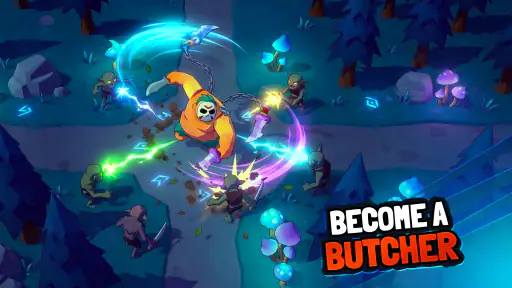
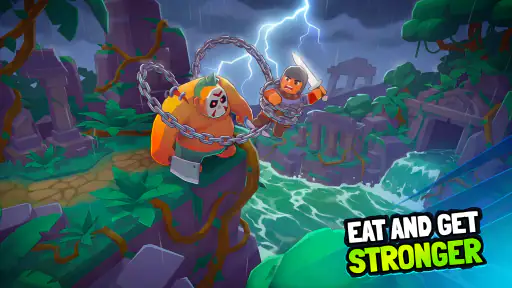
Analysis by Reviewed
I like role-playing games that give me a clear reason to make one more run, but I don’t always want a long quest or a complicated build to manage. Butcher Hero: Monster Idle RPG takes a more direct route: hook monsters in the sand, earn experience, and improve your gear. That loop gives the game an immediate goal, while its idle-action structure lets progress continue to matter even when I only have time for a short session.
That simplicity is both its best hook and the first thing to consider before installing. This is a free role-playing game from MULTICAST GAMES, rated Everyone 10+, with a 4.1 average from around 91,000 ratings and over 1 million installs. Those figures suggest a sizable audience, but they don’t tell me whether its rhythm will suit you. The real question is whether you enjoy repeating a focused combat-and-upgrade loop more than exploring a broad world or making a long list of tactical choices.
Small goals make the opening easy to read
A direct loop instead of a long setup
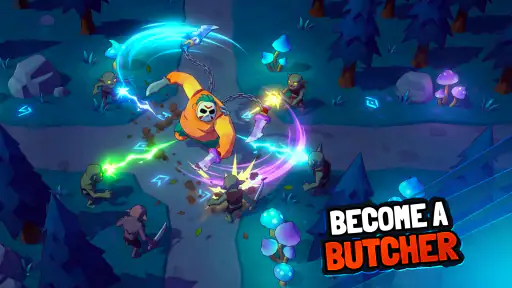
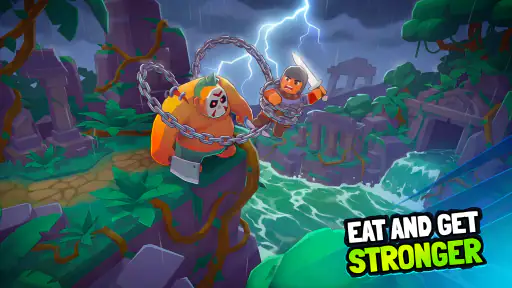
The central action is easy to grasp: catch monsters in the sand, turn that activity into XP, and use progress to upgrade gear. I appreciate that the game’s premise links its moment-to-moment action to character growth. The monster encounters aren’t presented as a separate minigame that leaves me wondering why I’m doing them; they feed the same progression that gives the next stretch of play its purpose.
That makes the opening especially approachable if you’re new to idle RPGs. You don’t need to start by comparing a pile of complicated systems. I can focus on the basic question of whether my current gear is helping me move forward, then decide when it is worth investing in an improvement. For a quick first session, that is more inviting than an RPG that asks me to learn a large map, several currencies, and a detailed party setup before anything feels rewarding.
There is a trade-off, though. A compact loop gives the game a recognizable identity, but it can feel repetitive if you want every battle to demand a different tactic. If your favorite role-playing games are built around branching quests, exploration, or a wide roster of characters, this is likely to feel narrower. I’d approach it as an action-focused progression game rather than a story-heavy adventure.
How I would use the early progress
For a newcomer, I’d treat each early session as a small experiment: play long enough to see how hooking monsters contributes to XP, check what a gear upgrade changes, and then return to the action. That helps you learn which part of the loop feels satisfying instead of tapping through upgrades without noticing their purpose. It also gives you a practical way to judge whether the game’s pace suits you before you commit to longer sessions.
A useful habit is to check your gear when progress feels slower, rather than assuming that more time in the same encounter is always the answer. The premise puts upgrading alongside earning XP, so the two are worth considering together. If a short burst of play has earned enough progress to improve equipment, make that decision before continuing; you’ll get a clearer sense of whether the upgrade changes the feel of the next stretch.
You May Like

Clash of Clans Is Won Between the Battles

Android Auto Makes the Case for Quieter Car Software

MobiOffice: Transforming Mobile Productivity with Seamless Integration

EA SPORTS FC™ Mobile Soccer: Redefining Mobile Sports Gaming

How Microsoft OneDrive Became a Mobile Productivity Giant

How Google Translate Breaks Language Barriers Effortlessly
This is also a good fit for brief gaps in the day. I can imagine opening it while waiting for a meal or taking a short break, focusing on a handful of monster encounters, and leaving before the loop becomes monotonous. It is less suited to someone looking for a deep evening session full of narrative reveals. The game’s appeal is the steady connection between action and growth, not a promise of a sprawling campaign.
Progress is easiest to judge through the gear loop
Upgrades give XP a practical purpose
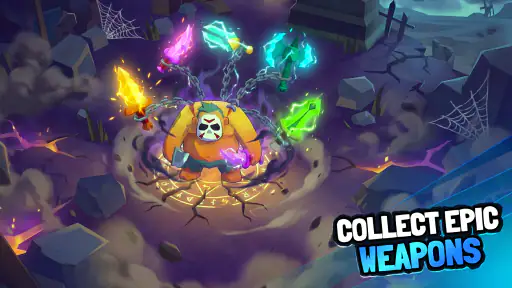
In many role-playing games, experience can feel abstract until a level-up unlocks something visible. Here, gear upgrades offer another way to make progress feel tangible. The important decision isn’t simply whether the XP number has gone up; it’s whether the improvements you can make help you handle the next part of the monster-catching loop more comfortably. That connection gives routine play a small, understandable payoff.
My advice is to avoid treating every available improvement as automatically urgent. In an idle RPG, the temptation can be to collect progress and spend it as soon as a button appears. A more satisfying approach is to pause when you notice friction, inspect what your current gear can be improved with, and use the next upgrade as a deliberate response. That turns progression into a choice, even if the underlying action remains straightforward.
It also helps set expectations about what kind of buildcrafting to look for. The confirmed core is hooking monsters, gaining XP, and upgrading gear; that is enough to recommend the game to players who like visible, incremental advancement. I wouldn’t pick it primarily for elaborate character theorycrafting. If your enjoyment depends on balancing many distinct skills or planning a party around specific roles, a more systems-heavy RPG will probably be a better match.
What to do when the pace dips
Repeated actions are a natural risk in a game centered on a clear combat loop. When the next improvement feels far away, the same activity can shift from satisfying routine to a chore. I’d use that moment as a cue to take a break rather than trying to force a long session. Because the game is designed around idle action and incremental growth, returning later with a fresh goal may feel better than grinding through a stretch that no longer holds your attention.
Another practical tip is to set a small target before opening the game. For example, decide that you’ll play until you’ve earned enough progress to assess an upgrade, then stop and see whether you want another round. This makes it easier to notice the difference between a loop that naturally pulls you forward and one you’re continuing only out of habit. It is a simple way to keep an idle game from taking over time you meant to spend elsewhere.
That approach won’t suit every player. If you want a game that constantly introduces new environments, objectives, or narrative stakes, the available description of this one points toward a tighter experience, not a sequence of elaborate surprises. Its strength is that the main activity and its reward are easy to understand. The cost is that players who need frequent changes of pace may tire of that focus sooner.
The challenge is in sustaining interest, not learning a maze of rules
A measured test of patience
The game’s appeal depends less on mastering a complicated control scheme and more on whether you enjoy gradually improving your ability to deal with monsters. I find that a useful distinction when choosing an RPG. Some games make difficulty engaging through intricate combat decisions; this one’s described loop makes progression itself the central motivation. If a stronger set of gear and continued XP gains are enough to make another session feel worthwhile, the structure can be pleasantly low-pressure.
But players who want every encounter to test quick reactions or careful tactical planning should be cautious. The action element is part of the identity, but the idle framing means the rhythm is not the same as a traditional action RPG built around demanding manual combat. It makes more sense to judge the game by the satisfaction of its repeated progression than by expecting a deep challenge curve. I’d recommend it to someone who likes steady advancement, not someone shopping chiefly for a punishing skill test.
Because the exact point at which difficulty changes is not something I can responsibly promise, I would avoid planning around a particular milestone. Instead, watch for your own signs of friction: whether encounters take more attention, whether your current equipment still feels adequate, and whether an upgrade gives you a reason to continue. Those observations are more useful than expecting a fixed sequence of difficulty spikes.
Choosing it over other RPG styles
Compared with a conventional quest-driven RPG, Butcher Hero puts less emphasis on following a story and more on repeating a focused action that feeds XP and gear growth. Compared with a pure idle game, its monster-hooking premise gives the progress loop a more active identity. That middle ground is where I see it working best: a player gets something to do, but doesn’t need to approach every session as a major campaign commitment.
If you already enjoy games where short sessions add up to gradual character improvement, this may be a better fit than a sprawling role-playing game that demands regular attention. If you prefer exploration, dialogue choices, party management, or a strong narrative through-line, the usual alternatives in those subgenres are likely to offer more of what you want. Neither preference is better; the useful distinction is whether you value a compact repeatable loop or a varied adventure.
Returning to the game without turning it into a chore
Idle pacing can help, but it cannot replace variety
The idle-action label makes the game easier to fit around everyday life, because the premise is built around gradual progress rather than a single long quest. I’d see that as a convenience, not a guarantee that every return will feel exciting. An idle structure can soften the need to stay constantly engaged, but it cannot make repetition disappear. If you enjoy checking in, making an improvement, and getting back to the action, that rhythm is a strength. If you want each visit to present a fresh puzzle, it may feel thin.
For a realistic routine, I’d keep it to a short break rather than leave it open whenever I have a spare moment. Play, check whether your XP or equipment gives you a meaningful next step, and close the game if you’re only repeating the same action without interest. That keeps the loop intentional and gives you a better basis for deciding whether the progression is rewarding. It’s particularly useful for people who like incremental games but don’t want their leisure time to become a series of obligatory check-ins.
There is also a spending consideration. The game is free to download, with optional in-app purchases ranging from $0.99 to $99.99 per item. That is a broad price span, so I’d decide in advance whether you want to spend at all and treat purchases as optional rather than necessary. For a game whose main draw is gradual progression, I’d first see whether the free loop holds my attention before paying to accelerate or supplement anything.
Who should give it a pass
I would skip it if you strongly dislike repetition, if gear upgrades feel like busywork to you, or if you want a role-playing game with a large narrative campaign. I’d also look elsewhere if your ideal game asks you to make frequent tactical decisions rather than return to a consistent monster-and-progression cycle. Those aren’t flaws that can be fixed by playing longer; they are differences in taste that shape whether the game feels relaxing or monotonous.
On the other hand, the accessible premise makes it a reasonable option for someone curious about idle RPGs who wants a straightforward point of entry. Its Everyone 10+ rating also gives families a useful age guide when considering whether it is appropriate, though I’d still make that decision based on the individual player. The current version is 2.0.4 and supports Android 7.0 or later, details worth checking against your device before installing.
A focused progression game with a clear audience
Butcher Hero: Monster Idle RPG is most appealing when I treat it as a compact loop, not as a replacement for a full-scale role-playing adventure. Hooking monsters, collecting XP, and improving gear form a clear chain of actions and rewards. That clarity makes it easy to understand what to do next, while also making variety the key question: do you enjoy repeating a recognizable action when progress gives it a purpose?
For me, its strongest use case is filling short stretches of downtime with a game that has a visible direction. The advice I’d give a friend is to try it with a modest goal, pay attention to how gear upgrades affect your motivation, and take a break when the loop starts feeling automatic. That way, the game’s steady pace stays a convenience rather than a demand.
My verdict is favorable for players who like incremental growth and uncomplicated action, but qualified for anyone expecting deep tactical combat or a story-led RPG. MULTICAST GAMES has shaped this one around a specific kind of satisfaction: seeing a small action contribute to a stronger character. If that is the part of role-playing games you enjoy, it is worth a look; if you need every session to bring a different kind of challenge, you’ll probably be happier elsewhere.
Butcher Hero: Monster Idle RPG Frequently Asked Questions
What kind of game is Butcher Hero: Monster Idle RPG?
Butcher Hero: Monster Idle RPG is an idle role-playing game built around fighting monsters, earning rewards, and strengthening your hero over time. Its idle systems are designed to help you make progress even when you are not actively playing, while active sessions let you take part in battles and manage upgrades. Expect familiar RPG progression rather than a story-focused adventure, with repeated encounters and character development at its core.
Can I make progress in Butcher Hero while I’m offline?
The game’s idle premise means that some rewards or progress may accumulate while you are away, so you can return to collect resources and continue improving your character. Offline gains are generally part of a progression loop, not a replacement for playing: checking in to claim rewards, upgrade your hero, and move through available content can still matter. The exact amount and limits may depend on the game’s current version and its systems.
Is Butcher Hero: Monster Idle RPG free to download, and does it include purchases or ads?
The game may be available to download without an upfront purchase, but free-to-play mobile RPGs can include optional in-app purchases, advertising, or both. These may offer extra resources, convenience, or faster progression; availability and pricing can vary by platform, region, and update. Before downloading or making a purchase, check the app-store listing for current details and review the payment settings on your device, especially if children may use it.
Does Butcher Hero: Monster Idle RPG require an internet connection?
Whether the game works fully offline can depend on its current version and which features you want to use. Idle games may allow some local play or offline reward collection, while functions such as account syncing, advertisements, events, purchases, or other online services can require connectivity. Check the store listing and the game’s notices for the latest requirements. If you plan to play while traveling, it is sensible to test access before relying on offline features.
Will Butcher Hero: Monster Idle RPG run on my phone, and is it suitable for children?
Compatibility depends on your device’s operating system, hardware, available storage, and the minimum requirements shown on the Google Play Store or Apple App Store. Check those details before installing, since requirements may change with updates. For suitability, review the store’s age rating and content descriptors, and consider any ads, in-app purchases, or online features. Ratings and purchase controls differ by region and platform, so use parental controls where appropriate.
Pros
- Idle progress lets you collect rewards even when you’re away.
- Simple controls make battles easy to pick up.
- Hero upgrades give you clear goals as you progress.
- Monster fights add variety to the routine of collecting rewards.
- A lightweight RPG format suits short play sessions.
Cons
- Idle gains may feel slow without frequent upgrades.
- Combat offers limited direct control over the hero.
- Progress can become repetitive after many similar battles.
- Some upgrades may require substantial time or resources.
- Ads or in-app purchases may affect the free-to-play experience.

- Category
- Role Playing
- Version
- 2.0.4