Bullet Heroes: TD RPG Shooter
- 841.00
- 4.3
- Installs
- 1.00M
- Price
- Free

Screenshots
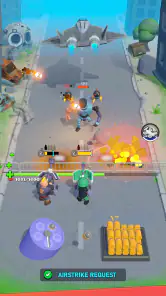
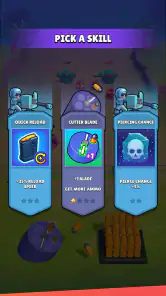
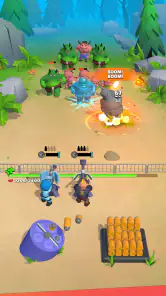
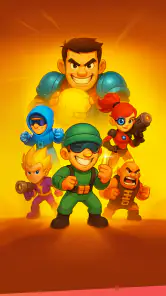
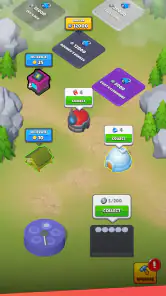
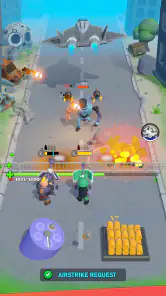
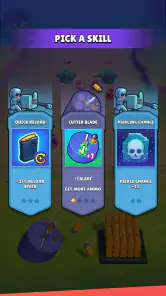
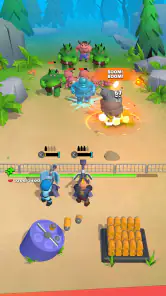
Analysis by Reviewed
I can see Bullet Heroes: TD RPG Shooter working best as a quick shared-device game: one person can hand over the phone, explain the immediate objective, and let the next player try a run. Its mix of tower-defense strategy and shooter action gives it more to discuss than a simple tap-to-pass arcade game. But it is still a game built around individual progress, so sharing the screen is not the same as sharing a save or coordinating a team. I’d treat it as a casual household option for people who enjoy action games and can take turns without expecting a deep co-op experience.
Taking turns without turning it into a project
The appeal for a shared phone or tablet is easy to understand: the action gives a new player something to do right away, while the defense element encourages them to think about what to improve next. That combination can make a short turn feel involving even if the person holding the device has never played before. A younger sibling might focus on shooting, while an older player pays more attention to progression and decisions between fights.
In a realistic everyday situation, I’d use it during a wait at a café or while a family member is occupied nearby. One person can play a section, then pass the device along and describe what worked. The useful ground rule is to agree on turns before starting, especially if progress is tied to the current player’s choices. That avoids the familiar shared-device argument about who gets to make the next upgrade or continue a run.
There is a meaningful distinction between taking turns on one device and playing together in a coordinated multiplayer session. The game’s premise supports discussing tactics, but I wouldn’t promise that two people can control the same action or join forces. If your household specifically wants co-op play, a game built around simultaneous teamwork is the safer pick. Bullet Heroes is easier to recommend when each person is happy to watch, advise, and then take their own turn.
Set expectations before someone starts
Because the game combines shooting with defense strategy, it may suit a player who likes action but also wants a reason to think beyond aiming. It is less likely to satisfy someone looking for a relaxed puzzle, a story-led adventure, or a purely social game. The central appeal is the push to improve and deal with enemies, so the experience can feel repetitive to a player who needs frequent changes in setting or activity.
For shared use, I’d establish whose progress matters before anyone gets invested. If the device is used by several people, a single ongoing game can blur personal boundaries: one player may prefer careful upgrades, while another may want to experiment. I would not assume that separate household members automatically get separate progress just because they take turns. If preserving individual play is important, check how the game handles profiles and saving on your device before making it the family’s regular pick.
That is also why it helps to distinguish a quick trial from a long-term shared game. A few turns are a low-pressure way to see whether everyone enjoys the rhythm. If one person becomes the main player, let them make the decisions that affect their progress, and use spectators as advisers rather than letting every turn become a group vote. That small boundary makes a strategy game more pleasant to pass around.
More From Our News Desk

Weather by Xiaomi Review: Clear at a Glance, Less Clear Up Close

X Under Pressure: Can It Recover When Posting Goes Wrong?

Clash of Clans Is Won Between the Battles

Android Auto Makes the Case for Quieter Car Software

MobiOffice: Transforming Mobile Productivity with Seamless Integration

EA SPORTS FC™ Mobile Soccer: Redefining Mobile Sports Gaming
How I’d coordinate play and spending
The progression angle gives spectators a practical role: they can talk through whether it seems wiser to improve before pushing ahead or to keep the action moving. That conversation is part of the fun, but it can also make people impatient if everyone wants a different approach. I’d keep advice brief and let the person holding the device decide. It preserves the feeling that each turn belongs to its player instead of turning the game into a committee.
The game is free to download, with optional in-app purchases ranging from $0.89 to $89.99 per item. That is a wide enough range that I would set a clear household rule before handing the device to a child: free play is fine, but purchases need an adult’s approval. This isn’t a criticism of the action itself; it is simply sensible device-sharing practice whenever a game offers paid items. Don’t rely on a child understanding the difference between earning progress in play and spending real money.
For adults sharing a device, I’d still avoid making purchase decisions in the middle of another person’s turn. Agreeing that the account owner handles any spending prevents confusion about who bought what and why. If you want a game with no purchase considerations at all, a paid game with a single upfront cost may be a better fit, although it will offer a different style of play.
Age, comfort, and trust
Bullet Heroes is rated Everyone 10+, so I’d use that as a starting point rather than a substitute for knowing the player. The action premise involves fighting enemies, which may be fine for many preteens and older players but still deserves a parent’s judgment. A rating can help frame the decision; it cannot tell you whether a particular child finds this kind of combat enjoyable or uncomfortable.
Homa is the developer, and the game has an average rating of 4.3 from around 12,000 ratings, with about 841 written reviews. It has passed one million installs, which suggests that it has found a sizeable audience, but popularity alone doesn’t establish that it suits every household. I’d pay closer attention to whether a child likes action-and-upgrade games and whether an adult is comfortable with the purchase options than to download totals.
For an adult sharing a phone with a child, a simple routine helps: let the child play only when the device owner is present, make the spending rule explicit, and keep the device’s account access under the owner’s control. I wouldn’t infer special parental tools or separate family profiles from the game’s basic description. If your household needs strong account separation or tightly managed play, choose a game and device setup that clearly support those needs rather than assuming this one does.
What it offers beside other action games
Compared with a straightforward shooter, the defense and leveling angle gives each bout a longer-term purpose: you are not only reacting to enemies but also thinking about how to become better equipped for what comes next. Compared with a traditional tower-defense game, the shooter side makes the experience feel more hands-on. That hybrid is its clearest reason to try it. If you want only precise lane planning and passive defenses, a conventional tower-defense title will likely be more focused; if you want a competitive shooter, this is not the choice I’d make.
The trade-off is that hybrid games can satisfy neither preference completely. A player seeking deep tactical planning may find the direct action takes too much attention, while someone who wants pure shooting may see progression and defense decisions as interruptions. I’d recommend trying it with the question, “Do I enjoy alternating between acting and improving?” If the answer is yes, the combination is the point. If you want one clean genre with no detours, choose a more specialized alternative.
The current version is 122.1, and the listed minimum operating-system requirement is 7.1. The game is free, but its in-app purchases are worth discussing in a household, and the age guidance is Everyone 10+. Those details make it easier to decide whether it belongs on a shared device without treating the download as an automatic yes. I’d also make sure the device meets the operating-system requirement before expecting it to run.
Who should give it a turn?
I’d recommend Bullet Heroes to players who enjoy energetic action but also like seeing progress build through upgrades. It can work well for siblings or friends taking turns, especially when one likes to shoot and another enjoys offering tactical suggestions. Its free entry point makes a trial easy, and the broad premise is simple to explain without asking everyone to learn a complicated set of rules first.
I’d skip it if your main requirement is shared co-op, private individual saves for several household members, a purchase-free experience, or a calmer game for a younger child. I’d also look elsewhere if you strongly prefer either pure tower defense or a conventional shooter. Those are not flaws so much as useful boundaries: the appeal comes from combining the two, and that blend won’t fit every player.
My household verdict
For my imagined shared-device routine, this is a promising pass-the-phone game rather than a family platform. It gives players something to act on and something to discuss, but smooth sharing depends on clear turns, sensible account boundaries, and an adult handling purchase decisions. I’d try it with one short session first, then see whether the group enjoys the mix enough to keep it installed.
Overall, Bullet Heroes is most convincing when one person plays and others cheer, advise, or wait for their turn. Homa’s action game has a clear niche in the space between shooting and tower defense, and that makes it more engaging for the right household than a basic reflex game. Just don’t mistake shared-device fun for separate accounts or co-op, and make sure the age and spending expectations suit the people who will use it.
A practical way to try it together
For a first session, I’d keep the test simple: let one person handle the device from start to finish, while everyone else watches and gives only occasional suggestions. That reveals whether the group enjoys the actual rhythm rather than merely liking the idea of a shared game. It also makes it easier to notice whether the action is comfortable for the youngest player and whether upgrade choices invite friendly discussion or arguments.
If the game becomes a regular option, a useful compromise is to separate “playing time” from “decision time.” The person holding the phone can make choices during their turn, while others save recommendations for the next pause. This is especially helpful when someone wants to experiment and another player is more cautious about progress. It keeps the game from becoming a debate over every move, without shutting out the people who enjoy thinking tactically.
What to check before making it a household staple
One question a family may still have is whether the game suits a brief break or asks for a longer commitment. I’d approach it as something to sample in a short window rather than promising that every session will end at a convenient moment. If your household needs games that can be interrupted at any second, test that in practice before relying on it during a busy wait or commute; don’t assume the shared-device format alone makes every session interruption-proof.
Another sensible check is whether the device itself is a comfortable fit. A phone is convenient to pass around, but a smaller screen can make shared watching less engaging than playing on a tablet. The person holding it may have a clear view while everyone else sees less. If the group mostly wants to watch together, a game designed for a larger shared display may suit better; if turns are short and individual, the phone can still work well.
There is also a useful distinction between spending and progression. The purchase range makes adult oversight worthwhile, but it does not mean anyone has to spend to try the game. I’d begin with the free experience and let the household decide whether it holds attention before discussing optional purchases. That avoids making a first impression depend on paid items, and gives the account owner a clear moment to review any purchase prompt rather than leaving that decision to whoever happens to be playing.
Who will get the most from the hybrid
The strongest fit is a player who likes switching attention between immediate action and longer-term improvement. That can make the game a better choice than a pure shooter for someone who wants progression to shape the next attempt, or a better choice than a passive defense game for someone who wants to be directly involved. The compromise is real, though: if either half sounds like an unwanted interruption, a more focused title will probably feel better after the novelty wears off.
I’d also be cautious about choosing it as a dependable distraction for a child simply because the premise is easy to explain. The age rating is a useful starting point, and the adult can judge the action and purchase context, but the child’s own reaction matters. A quick, supervised trial tells you more than assuming that a broad rating guarantees a good match. For a household that values calm play, extensive account separation, or simultaneous teamwork, a different kind of game is the more sensible choice.
As an action game from Homa, Bullet Heroes is free and has attracted over a million installs. It arrived on April 4, 2025, and its current version is 122.1. Those details make it a recent, established option to consider, but they don’t change the main decision: it works best when your household wants a turn-taking action game with a strategic layer, not a shared family account or a guaranteed co-op activity.
My household verdict
For my imagined shared-device routine, this is a promising pass-the-phone game rather than a family platform. It gives players something to act on and something to discuss, but smooth sharing depends on clear turns, sensible account boundaries, and an adult handling purchase decisions. I’d try it with one short session first, then see whether the group enjoys the mix enough to keep it installed.
Overall, Bullet Heroes is most convincing when one person plays and others cheer, advise, or wait for their turn. Homa’s action game has a clear niche in the space between shooting and tower defense, and that makes it more engaging for the right household than a basic reflex game. Just don’t mistake shared-device fun for separate accounts or co-op, and make sure the age and spending expectations suit the people who will use it.
Bullet Heroes: TD RPG Shooter Frequently Asked Questions
What kind of game is Bullet Heroes: TD RPG Shooter?
Bullet Heroes: TD RPG Shooter combines action shooting with tower-defense and role-playing elements. You control a hero, take on waves of enemies, and use attacks and defensive tactics to protect your position. As you progress, the game’s mix of combat and character development gives you reasons to improve your hero and adapt your approach. Expect more than a passive defense game: timing, aiming, and choosing how to handle incoming threats are central to play.
Is Bullet Heroes: TD RPG Shooter free to play?
The game may be available to download without an upfront purchase, but that does not necessarily mean every feature or item is free. Like many mobile games, it may offer optional in-app purchases, such as resources, upgrades, or other conveniences, and availability can vary by platform and region. Check the game’s store listing for current pricing and purchase details before downloading, and review your device’s purchase settings if you want to avoid accidental spending.
Does Bullet Heroes: TD RPG Shooter need an internet connection?
Whether an internet connection is required can depend on the version and the feature you want to use. Some mobile games allow parts of their campaign to be played offline, while other features may need a connection for account services, updates, events, or data synchronization. The store description does not always make every requirement clear, so check the listing and test the game’s behavior before relying on offline play, especially when traveling or using limited mobile data.
Is Bullet Heroes: TD RPG Shooter suitable for children?
Suitability depends on a child’s age, sensitivity to cartoon-style combat, and the presence of online or spending features. The game’s shooting and enemy battles may not appeal to every family, while optional purchases could make parental controls useful. Before letting a child play, check the age rating on the relevant app store, review the game’s current content and privacy information, and consider disabling or requiring approval for in-app purchases on the device.
What should I check before downloading Bullet Heroes: TD RPG Shooter?
First, confirm that your Android or iOS device meets the current system requirements and has enough free storage for the download and any later updates. Also review the app’s store page for its latest version, age rating, in-app purchases, and privacy disclosures. Features and availability can differ between regions or platform versions, so use the official app store listing and make sure the developer and title match before installing.
Pros
- Combines tower defense strategy with direct shooter combat.
- RPG progression gives heroes room to grow over time.
- Short stages make it easy to play in quick sessions.
- A range of heroes can suit different play styles.
- Mixing defenses and attacks keeps battles varied.
Cons
- The two gameplay systems may feel busy for new players.
- Progression can require repeated runs to strengthen heroes.
- Some stages may become difficult without careful upgrades.
- Managing heroes and defenses adds menus between battles.
- The shooter controls may take time to get used to.
- Category
- Action
- Version
- 122.1