BMX Playground
- 51.00
- 4.8
- Installs
- 1.00M
- Price
- Free
Screenshots
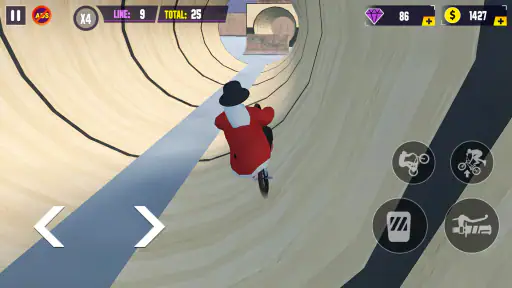
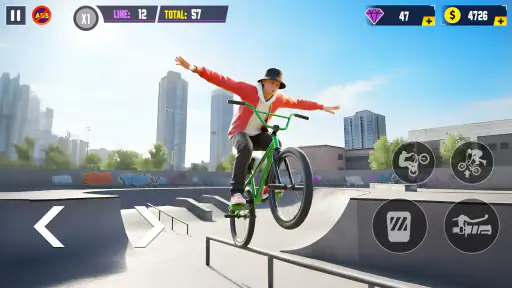
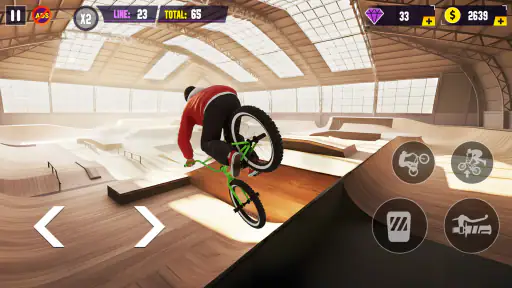
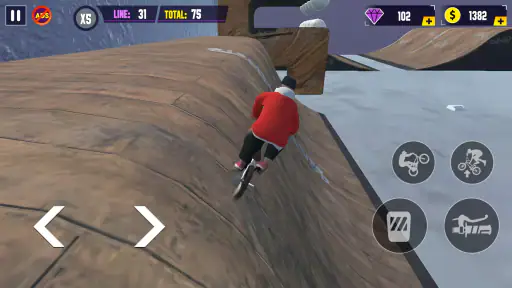
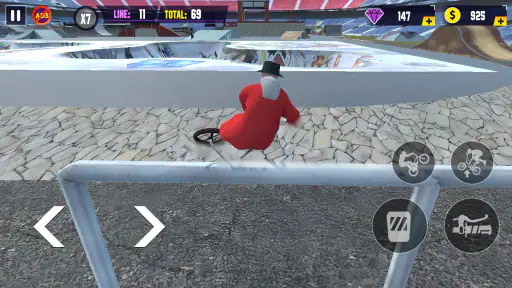
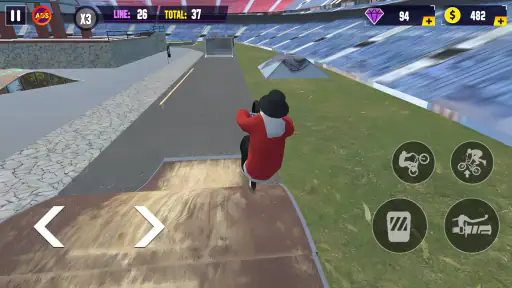
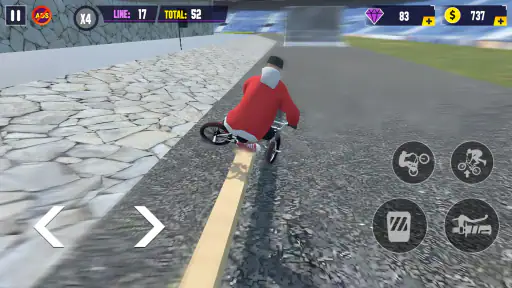
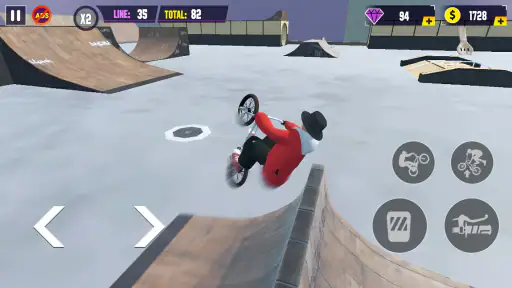
Analysis by Reviewed
I went into BMX Playground expecting a simple stunt-riding game, but its appeal became clearer after a few short sessions. The basic idea is easy to understand: ride a BMX, launch into jumps, try flips and other tricks, then repeat the attempt when the landing is not quite right. It is a sports game from Lemon Global, available for free, and it fits best into the kind of spare moment when I want something active without committing to a long match or a complicated career mode.
The game is aimed at Everyone, runs on Android devices starting with version 7.1, and has reached over a million installs. Its average rating is 4.8 from around 3.5 thousand ratings, which suggests that the straightforward stunt formula is connecting with a lot of players. After spending time with it, I can see why: the controls are approachable, the playground format encourages experimentation, and failure usually feels like an invitation to try the same move again rather than a reason to quit.
How the first ride sets up the whole experience
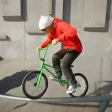
The first thing I noticed is that BMX Playground does not need much explanation before I can start riding. That is important for this type of game. A complicated tutorial would slow down the fun, while a completely unexplained control scheme would make the opening frustrating. Here, the attraction comes from immediately moving through the space, finding a ramp, and testing how much height and rotation I can get from it.
My first attempts were less about performing a perfect trick and more about learning the relationship between speed, takeoff, and landing. A jump can look impressive in the air and still end badly if I approach the ramp at the wrong angle. That made the playground feel more useful than a simple backdrop. I was not just moving from one challenge to the next; I was using the open space to understand what the bike would do.
The best way to begin is to resist the temptation to attempt the biggest stunt immediately. I found it more productive to ride around first, identify a reliable launch point, and use it for repeated practice. Once I knew how the bike behaved from that ramp, I could focus on rotation instead of guessing about every part of the jump. That small change in approach made the controls feel more precise.
This is also where the game separates itself from a conventional race. In a racing game, the track tells me where to go and the clock tells me whether I am doing well. Here, I create my own objective. One attempt might be about clearing a gap, another about completing a flip, and a third about landing smoothly after combining movement and rotation. The freedom is enjoyable, although players who need explicit goals may initially find the experience a little loose.
The open playground design works particularly well on a phone because it supports short experiments. I can start with one idea, test it, and stop without feeling that I have abandoned a long event. It also means the game is easy to share informally with someone nearby: handing over the phone after a successful stunt makes sense because the result is visible immediately.
Why the controls reward small adjustments
My most useful discovery was that dramatic tricks are built from ordinary corrections. A rider who only thinks about the moment of takeoff will miss the importance of the approach and landing. I began paying attention to how much speed I carried into a ramp, whether I was centered when leaving it, and how early I needed to prepare for the ground.
That creates a satisfying learning curve without requiring advanced knowledge of BMX riding. I did not need to memorize technical terminology. I only needed to notice patterns: too little speed produced a weak jump, too much made the landing harder to control, and a late correction often turned a promising trick into a crash. Those observations are simple, but they give each retry a purpose.
I also recommend treating the first few rides as setup rather than performance. Instead of chasing the most spectacular animation, I tried to produce a clean, repeatable jump. Once that worked, I added a rotation. Then I changed the approach. This workflow is more effective than randomly tapping through attempts, and it is one of the reasons the game can hold attention beyond its first impression.
There is a trade-off here. The freedom to experiment is the main attraction, but it can also make the game feel less structured than a level-based sports title. If you prefer clear missions, unlock paths, and a constant stream of objectives, this may not provide enough direction on its own. If you enjoy testing movement and improving through repetition, the same openness becomes the strongest part of the design.
The feedback rhythm: action, mistake, adjustment
The central rhythm is easy to describe: I ride toward a feature, launch, attempt a stunt, see the result, and decide what to change. The important part is that the feedback arrives quickly. I do not have to wait through a long race or a complicated results screen to understand whether the attempt worked. The landing itself tells me a great deal.
A successful jump gives me a clear reason to repeat it with a small variation. I might try to hold the rotation longer, approach from a different angle, or connect the movement with another ramp. A failed jump is useful when I can identify the mistake. That is why I found controlled experimentation more rewarding than frantic attempts. The game becomes a conversation between my input and the bike’s response.
For a realistic everyday example, I can imagine opening it during a short break while waiting for a coffee or public transport. I would not need to remember a story, assemble a team, or finish a full competition. I could spend a few minutes trying to improve one jump, close the game after a clean landing, and return later with a specific idea to test. That compact loop is more convincing than the promise of endless action by itself.
The feedback is also visual rather than dependent on complicated menus. A clean landing feels different from a near miss because the whole sequence has a visible cause and effect. I could tell when I had improved even before thinking about any reward. That is valuable in a stunt game, where the satisfaction comes from making a difficult movement look controlled.
Still, the same immediacy can expose the limits of a simple playground. Once I had learned a dependable route through one area, the next attempt could feel similar unless I deliberately changed my goal. Players who want a large variety of formal challenges may eventually find the self-directed structure repetitive. I think the game works best when I bring curiosity to it instead of waiting for the app to supply a new objective every minute.
What makes a successful stunt feel rewarding
The reward is not only the act of staying upright. It comes from turning a failed sequence into a repeatable one. My best moments were not necessarily the biggest jumps; they were the attempts where I understood why the previous landing failed and corrected it. That kind of progress feels personal because it comes from observation rather than simply moving to the next unlocked stage.
There is a useful distinction between spectacle and control. A wild stunt can be entertaining once, but a controlled stunt is what makes me want another attempt. When I could approach the ramp with confidence, perform the movement, and prepare for the landing, the game felt less like random button pressing and more like a small skill exercise.
I found it helpful to set narrow goals. “Do a better trick” is too vague. “Land this jump without drifting,” “repeat the same rotation twice,” or “use less speed and keep the landing stable” gives the session a measurable purpose without turning it into homework. These goals also make the open playground feel more varied because the same space can support different experiments.
That is one of the less obvious strengths of the game: its replay value depends heavily on how I frame the attempt. A player who only asks whether the stunt was spectacular may run out of interest quickly. A player who studies approach, airtime, rotation, and landing has more room to improve. The app does not need to change dramatically for every session if my objective changes in a meaningful way.
The free price lowers the risk of trying it, but there are in-app purchases priced from $2.99 to $3.99 per item. I would not decide whether I enjoy the core riding based on optional spending. My advice is to play the free experience first and only consider a purchase if it genuinely improves the way you want to use the game. The important question is whether the riding loop is satisfying before adding anything extra.
Resetting after a crash without losing momentum
Resetting is a major part of the experience, not an interruption. A stunt game needs failure to be quick enough that I can learn from it while the mistake is still fresh. BMX Playground benefits from that structure because a crash does not have to end the session. I can immediately reconsider the approach and try again with one adjustment.
I noticed that the most productive resets were not identical retries. Repeating the same input after a failed landing rarely taught me anything. Instead, I changed one variable at a time: less speed, a different takeoff position, or a more conservative rotation. That made the reset feel like a test rather than a punishment.
There is a practical reason this matters on mobile. Small screens and touch controls can make precision more demanding than it would be with a console controller. When a game asks for delicate timing, frustration builds quickly if restarting is slow or if every mistake forces me through several menus. The short-attempt format helps keep that frustration manageable, even when I am still learning.
On the other hand, players looking for a deep simulation should keep expectations realistic. This is designed around accessible stunt play, not the detailed training demands of a dedicated BMX simulator. It gives me enough control to feel responsible for the result, but it does not turn every physical detail into a technical system I need to master. That makes it friendlier for casual play, while reducing its appeal for someone seeking highly granular realism.
The reset loop also suits different moods. When I have only a few minutes, I can chase one clean jump and stop. When I have more time, I can explore the playground and build a sequence of personal challenges. I rarely felt forced to continue after a failed attempt, because the next try was available immediately and the decision to continue was mine.
Who will enjoy it, and who should choose another sports game
I would recommend BMX Playground to players who enjoy movement, stunts, and gradual improvement without a heavy competitive structure. It is especially suitable for someone who likes to experiment with ramps and tricks, or for a younger player who wants a sports game that can be understood quickly. The Everyone rating also makes it easier to consider for a broad household audience, though individual preferences about optional purchases still matter.
It is a good fit for short sessions because a single attempt can be meaningful. I can play while taking a break, focus on one movement, and leave without losing the feeling that I accomplished something. It also works for players who enjoy watching a friend try a difficult stunt, since the result is easy to understand even if the viewer has never played before.
I would skip it if my priority is organized competition, realistic team sports, or a detailed progression system with a clear campaign. A racing game is a better choice when I want lap times and direct opponents. A traditional sports title is better when I want scheduled matches, leagues, and recognizable rules. A physics-heavy simulator is better when I want every movement to demand technical precision. This game sits in a more relaxed space between arcade stunt play and freeform practice.
It may also be a poor match for anyone who dislikes repetition. The reason to begin another session is usually that one landing, rotation, or approach can be improved. If that sounds satisfying, the loop has staying power. If repeating a similar jump feels like doing the same task again, the open playground may seem thin after the novelty fades.
My advice for new players is to use a three-step routine. First, find a jump that you can reach consistently. Second, change only one part of the attempt, such as speed or rotation. Third, keep the adjustment that improves the landing and discard the one that makes control worse. This simple method reveals more of the game than chasing random stunts, and it helps answer the practical question of whether the controls suit you.
Version, accessibility, and everyday fit
The current version is 1.23, and the minimum Android requirement is 7.1. That makes the game accessible to many older Android devices rather than limiting it to recent hardware. I would still judge the experience on the specific phone in hand, because touch responsiveness and screen size can affect how comfortable repeated stunt attempts feel.
The game’s free entry point is another reason it is easy to test without much commitment. I can discover whether I enjoy its action-feedback-reset rhythm before deciding whether any optional item is worthwhile. Since the listed purchases fall between $2.99 and $3.99 per item, I would treat them as a personal choice rather than part of the basic reason to install it.
The developer, Lemon Global, has kept the concept focused enough that I never needed to learn a large collection of systems before riding. That focus is helpful for casual players, but it also means the game’s long-term appeal rests on the playground and the satisfaction of improving tricks. It is not trying to replace every other sports game on a phone; it is offering a specific kind of stunt session.
One useful habit is to stop after a genuinely good landing instead of playing until every attempt becomes careless. Ending on a successful run gives me a clear memory of what worked and makes returning later more appealing. It also prevents the common mobile-game problem where a short break turns into a frustrating string of rushed retries.
My verdict on the action loop
What keeps bringing me back is the compact sequence of action, feedback, reward, and reset. I ride toward a ramp, commit to a stunt, see immediately whether my timing was good, and either enjoy the landing or identify a change for the next attempt. The reward is a cleaner movement and a better understanding of the playground. The reset is fast enough to preserve that thought, which is exactly what a stunt game needs.
The strongest reason to try it is not the promise of one spectacular trick; it is the satisfaction of making a difficult jump repeatable. That makes the game more engaging than a one-time novelty, provided I enjoy self-directed practice. Its limitations are equally clear: the open format may lack structure for players who want formal goals, and the repetition will not appeal to everyone.
For me, BMX Playground works best as a free, pick-up-and-play sports game with enough control to make improvement feel earned. I would recommend it to anyone who likes BMX stunts, arcade physics, and short experiments, while pointing competitive racers and simulation fans toward more specialized alternatives. With its broad accessibility, current version 1.23, and focused playground design, it earns a place on my phone when I want a quick challenge that gives me a reason to try one more landing.
Overall, I think BMX Playground succeeds because it understands the value of a fast reset. Every attempt gives me something to notice, and every small correction can turn a messy crash into a controlled ride. That is a modest idea, but it is handled well enough to make another session feel natural rather than forced.
Pros
- Realistic BMX physics make tricks feel rewarding to master.
- Open playground areas encourage experimentation and free riding.
- Simple controls are easy to learn for new players.
- Trick variety keeps sessions engaging as skills improve.
- Runs well for short
- casual gameplay sessions.
Cons
- Advanced tricks can take time to perform consistently.
- Some areas may feel repetitive after extended play.
- Progression may seem limited for dedicated players.
- Touch controls can be less precise during complex combos.
- Performance may vary on older mobile devices.
- Category
- Sports
- Version
- 1.23