Bingo Diary
- 65.00
- 4.7
- Installs
- 10.00K
- Version
- 1.1.20

Screenshots





Analysis by Reviewed
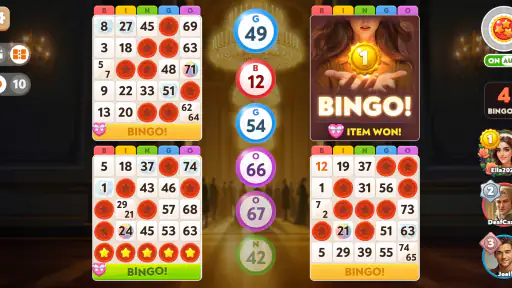
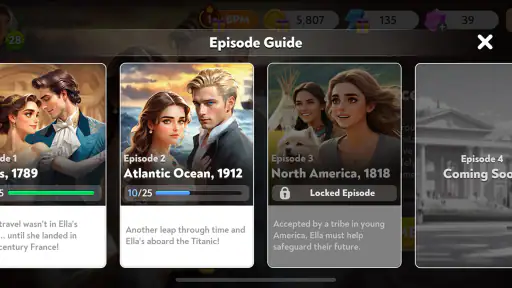
I approached Bingo Diary as a relaxed board game with a story wrapper, but it quickly became clear that its appeal depends on more than marking numbers. You play through Ella’s time-traveling journey, take part in bingo rounds, gather treasures, and gradually help reshape the past. That combination gives each session a little more purpose than a standard digital bingo match.
My first impression was that this is best understood as a casual game for short, repeat visits rather than a deep strategy board title. The bingo rules are familiar, so I did not need a long learning period. The extra layer comes from the collection and historical journey, which gives me a reason to return after a round instead of closing the game immediately.
It is a free game from PLAYDOG, listed in the Board category, and its audience is marked Mature 17+. That age label is worth checking before installing it for a younger player, even though the central activity looks approachable. The current version is 1.1.20, and the game runs on Android starting with version 6.0, making it accessible on many older devices as well as newer ones.
How Bingo Diary feels in everyday play
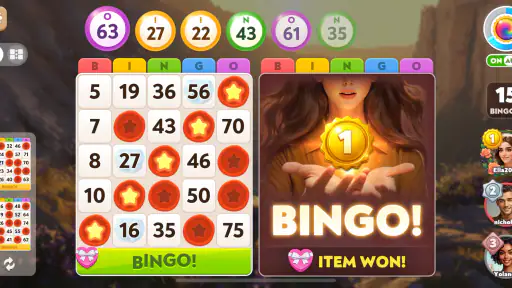
The core loop is easy to settle into: enter a bingo activity, watch the board develop, collect what the round gives you, and use that progress to continue the journey. I like that the time-travel theme gives the familiar format a visible direction. Instead of playing disconnected cards forever, I feel as if each session belongs to a larger trip with Ella.
A realistic use case is a short break during a commute, while waiting for an appointment, or at the end of the day when I want something more interactive than scrolling but less demanding than a large role-playing game. A single round can fit into that kind of spare moment. The game also works for players who enjoy collecting and revisiting progress, especially when a simple win is not enough motivation on its own.
What I would not expect is a highly competitive board-game experience built around long-term planning. Bingo still determines much of the moment-to-moment tension. I can make sensible choices about how I approach a round, but I cannot turn it into a fully controlled strategy match. Players who want chess-like decision-making, complex deck construction, or a serious multiplayer ladder should look elsewhere.
The time-travel layer gives familiar bingo a reason to continue
The historical setting is the feature that separates this game from a plain bingo utility. Ella’s journey creates a sense of movement between rounds, while treasures provide a collection goal that is easier to understand than an abstract score. I found that this structure changes how I judge a session: even when the bingo itself feels routine, the possibility of adding something to the journey keeps the result meaningful.
There is also a useful psychological balance here. Bingo is recognizable enough to be relaxing, while the surrounding progression prevents the experience from becoming completely passive. That makes it a good fit for someone who likes light games with a little narrative flavor, but does not want to memorize a large rulebook or manage a complicated team.
My practical advice is to treat the collection layer as the long-term attraction and the individual round as the short-term activity. If I focus only on winning every board, unlucky results can feel frustrating. If I view each play as one step toward the wider journey, the game feels more forgiving and easier to revisit.
What the current release says about its direction
The listed release date is September 17, 2025, so this is a relatively recent entry rather than a long-established board-game staple. Its current version, 1.1.20, suggests that PLAYDOG has already moved beyond the earliest launch build. I see that as a useful sign of ongoing refinement, but not as proof that every rough edge has disappeared.
For an existing player, a version update matters most when it makes returning to the game feel stable and comfortable. In this case, I would keep the game updated through the normal store process and judge new releases by how smoothly the bingo rounds, treasure collection, and time-travel progression fit together. Those are the parts that define the experience, so improvements there would matter more to me than cosmetic changes alone.
New users should also remember that a current version does not automatically mean a finished-feeling product. A newer game can still be finding its balance between generous progression and monetization. I would begin with the free experience, learn how quickly the journey advances, and only then decide whether optional purchases add enough value for my own habits.
Free to start, but the purchase model needs attention
The game is free to download, which makes it easy to test without committing money at the beginning. It includes in-app purchases ranging from $1.99 to $99.99 per item. That is a broad range, and it changes how I would recommend the game: casual players can sample the basic loop, but anyone prone to impulse spending should set a limit before playing regularly.
I would not buy anything simply because a round went badly. Bingo naturally includes disappointing outcomes, and spending to immediately correct every unlucky session can turn a relaxing game into an expensive habit. A better workflow is to play several sessions without purchasing, decide whether the journey and collecting remain enjoyable on their own, and treat any optional transaction as a deliberate choice rather than a solution to frustration.
This model may suit players who want a free entry point and are comfortable paying for convenience or extra progress. It is less suitable for someone looking for a completely self-contained premium board game with one predictable upfront cost. If that is your preference, a paid alternative without item purchases will probably feel more transparent.
How it compares with ordinary bingo and other board games
Compared with a basic bingo app, this game has a clearer reason to keep playing. The time-travel premise and treasure collection give the rounds context, while a plain bingo title may focus almost entirely on cards, numbers, and quick wins. I prefer Bingo Diary when I want a light adventure wrapped around the familiar activity.
Compared with a traditional board-game adaptation, it is more immediately accessible but less likely to satisfy players who enjoy rules-heavy decisions. There is no need to gather friends around a table or spend time learning a complex system, which is a strength during short breaks. The trade-off is that the experience may feel repetitive if the surrounding progression does not hold my attention.
It also differs from a story-driven adventure game. Ella’s journey provides a theme and a sense of continuity, but bingo remains the foundation. I would choose this when I want a gentle collection routine, not when I am looking for dialogue-heavy storytelling, exploration, or a large world to investigate freely.
Small habits that make the game more enjoyable
My first useful habit is to separate “a quick round” from “a progression session.” When I have only a few minutes, I focus on enjoying the bingo activity and accept that I may not move far through the wider journey. When I have more time, I pay closer attention to treasures and the way each result contributes to the ongoing trip. This prevents short sessions from feeling unsuccessful.
Second, I would avoid judging the game after one unlucky run. Bingo can make a single session feel more important than it really is, especially when I am hoping to collect a particular reward. Looking at several sessions together gives a fairer impression of whether the overall loop is enjoyable.
Third, I would keep an eye on how the collection goal affects my play. It is motivating when it gives ordinary rounds a purpose, but it can become pressure if I feel compelled to continue only to complete a set. The healthiest approach is to let the historical journey support the bingo, not dictate every spare moment.
Finally, I would check the age suitability before handing the device to someone else. The Mature 17+ classification should not be ignored just because the game belongs to the board category. Parents and shared-device users should make that decision independently rather than assuming that a familiar bingo format automatically makes it appropriate for everyone.
Where the experience still has limits
The biggest limitation is built into the concept: bingo can become repetitive. The time-travel setting helps, but it cannot completely replace variety in the underlying activity. If I already know that repeated number-based rounds lose their charm quickly, the collection layer may not be enough to keep me engaged for a long period.
The game is also not ideal for players who dislike chance-based progress. Even with a strong collection goal, I cannot control every outcome. That uncertainty is part of bingo’s appeal, but it can feel like a weakness when I want every session to reward careful decisions in a predictable way.
The purchase range is another point I would consider carefully. Free access lowers the barrier to trying it, yet the presence of items at very different price levels means the long-term experience may not suit every budget. I would recommend it more confidently to players who can enjoy the free loop without feeling pushed to spend.
There is a further trade-off in the theme itself. Players who enjoy historical fantasy and collecting will probably find the time-travel framing inviting. Those who want a pure, uncluttered bingo board may see the journey and treasures as distractions. Neither preference is wrong; it simply determines whether the extra layer feels like welcome context or unnecessary decoration.
Who should try it, and who should skip it
I would recommend this game to someone who wants a casual board title with a continuing objective. It is especially suitable for players who enjoy collecting virtual items, like stories that provide a reason to move from one activity to the next, and prefer sessions that can be picked up without a long setup.
It is also a reasonable choice for a bingo fan who has grown tired of playing isolated rounds. Ella’s time-travel journey adds a sense of destination, and the treasure system gives wins something to feed into. The combination is more distinctive than a standard number-card app while remaining easy to understand.
I would skip it if I wanted a fully strategic board game, a social tabletop simulation, or a one-time purchase with no item economy. I would also be cautious if chance-based rewards tend to make me overspend. In those cases, a traditional premium board game or a more skill-focused puzzle title would be a better match.
What I would watch as the game develops
Because the game is still a recent release with an active version line, I would watch how PLAYDOG expands the journey without weakening the simple appeal of bingo. The most valuable improvements would be ones that make returning players feel that their collected treasures and historical progress continue to matter.
I would also pay attention to the balance between free play and purchases. A good long-term experience should let players enjoy the central loop at their own pace, while making optional spending feel genuinely optional. If future updates add more reasons to play without turning progress into a constant payment decision, that would strengthen the game’s position among casual board titles.
For new users, the practical question is simple: does the combination of bingo, Ella’s journey, and treasure collecting remain enjoyable after the novelty of the first sessions fades? I would install it, play without spending, and make that judgment based on whether I look forward to the next historical step rather than merely chasing a lucky result.
The game currently has a 4.7 average from over 800 ratings, with more than 60 written reviews and over 10K installs. Those figures indicate encouraging early interest, although they should be read alongside the game’s recent arrival and its still-developing identity.
My final view is positive but measured. Bingo Diary is at its best when you want familiar bingo with a light sense of adventure, not when you expect a deep strategy game or a complete historical narrative. The free starting point makes it easy to explore, the collection structure gives short rounds a purpose, and the time-travel theme helps it stand apart from ordinary bingo apps.
I would recommend trying it during a quiet break, keeping spending optional, and giving the journey enough time to show whether it motivates you. For me, its strongest idea is the way it turns a simple board activity into a small ongoing trip with Ella. Its main question is whether that trip offers enough variety to remain interesting. If your answer is yes, this casual game is worth a place on your Android device; if not, a more strategic or premium board alternative will likely serve you better.
Pros
- Relaxing bingo gameplay suitable for short sessions
- Daily rewards encourage regular play
- Simple controls are friendly for beginners
- Bright visuals make cards easy to follow
- Works well for casual
- low-pressure entertainment
Cons
- Progress may feel slow without frequent play
- Some events can become repetitive over time
- Requires an internet connection for certain features
- Random number draws may frustrate competitive players
- Ads or optional purchases may interrupt the experience