Battery Run
- 530.00
- 4.4
- Installs
- 10.00M
- Price
- Free

Screenshots




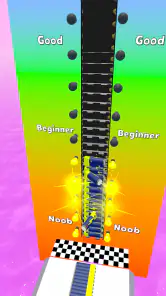
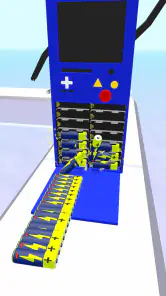


Analysis by Reviewed
Battery Run is the kind of action game I can open for a quick distraction and understand almost immediately. The central idea is simple: collect batteries while moving through a course, then try to finish with a stronger haul than the last attempt. That clarity is a real advantage on a phone, because I never need to spend several minutes learning complicated controls before the game becomes enjoyable.
After spending time with it, I see the appeal clearly. This is not built around a deep story, a large world, or a long tutorial. It focuses on short runs, quick decisions, and the satisfaction of watching a small objective develop in front of me. The best moments come when I stop treating each battery as an automatic pickup and start reading the route: which line is safer, which detour is worth taking, and when a tempting reward may expose me to a mistake.
Developed by VOODOO, this free action game has reached more than ten million installs and holds a 4.4 average from roughly twenty-four thousand ratings. It is suitable for Everyone, which matches its uncomplicated presentation and easy-to-understand premise. The current version is 8.5, and the game runs on Android 8.0 or later. Those details make it a practical choice for someone looking for a lightweight, accessible game rather than a demanding premium-style experience.
How the run becomes a small decision-making challenge
The first goal is clearer than it looks
At the beginning, my goal is obvious: collect batteries and keep the run moving. That direct objective works because it gives every moment a purpose. I am not wandering around waiting for something to happen. I am constantly deciding whether to stay on my current path or shift toward another group of batteries.
The early appeal comes from the fact that collecting is both the task and the reward. A battery on the route is not just decoration; it gives me an immediate reason to adjust my movement. This creates a useful rhythm. I look ahead, choose a direction, gather what I can, and then prepare for the next section. Even when a run is brief, that sequence makes it feel active rather than passive.
I also like that the game does not bury its main idea under unnecessary explanations. Someone who has never played it can understand the basic aim almost instantly. That makes it suitable for a short break, including those moments when I have only enough attention for a simple challenge. The trade-off is that players who need a rich opening narrative or a large collection of mechanics may find the introduction too bare.
What makes collecting more interesting than simply following a line
The useful trick is to stop looking only at the nearest battery. I found better results when I looked at the shape of the route and considered the next decision before committing to the current one. A small change in direction can help me reach a larger group, but it can also leave me poorly positioned for what follows.
This is one of the more important practical lessons in Battery Run: the best pickup is not always the closest pickup. A route with several easy batteries may be better than a risky move toward one attractive target. That distinction gives the simple collecting mechanic a little more thought than the store summary suggests.
For everyday use, I would play it while waiting for an appointment, during a short commute when I am seated, or between larger tasks. The runs are easy to approach without a long setup. I can play with a narrow focus, make a few choices, and stop without feeling that I have abandoned a complicated campaign.
Progress signals that keep a short game readable
Battery Run communicates progress through the run itself. I can see whether I am collecting effectively, whether I am losing the intended line, and whether my current approach is producing a satisfying result. That immediate feedback is more important here than a large menu of statistics would be.
The game’s strongest progress signal is the changing state of the collection goal. When I begin a run, the objective is modest and concrete. As I continue, the growing haul gives me a reason to protect what I have already achieved. This creates a mild tension: I want to gather more, but I also want to avoid turning a good run into a poor one through an impatient choice.
For me, the most useful way to judge improvement is not simply to ask whether I reached the end. I pay attention to how often I make avoidable detours and whether I can recognize a better route earlier. That turns repeated attempts into practice. The game does not need a complicated training mode for this to work; the course itself becomes the lesson.
Why repetition can feel rewarding, and when it stops doing so
Short action games depend heavily on the quality of their repeat loop. Battery Run benefits from being easy to restart. If I make a poor decision, I do not need to recover a long save or repeat a lengthy story section. I can try again while the previous attempt is still fresh in my mind.
That quick retry structure is especially useful for learning from mistakes. I can remember the point where I moved too aggressively, then approach the same kind of situation with more patience. The improvement is personal and immediate, which is a good fit for a casual mobile game.
However, the same simplicity can become a limitation. If I am looking for deep character development, a broad equipment system, or a long-term strategic plan, this is not the right destination. Its satisfaction comes from the run and the collection challenge, not from building a complex profile over many sessions.
Reading the difficulty curve without overplaying it
The difficulty feels most effective when it asks me to make better choices rather than simply move faster. Early play gives me room to understand the relationship between movement and collection. Later pressure matters because I have to apply that understanding while the route becomes less forgiving.
I prefer this kind of curve to one that overwhelms me immediately. A game aimed at quick sessions should teach through repetition, and Battery Run does that by making the basic action familiar before asking for more careful execution. When I fail, I generally understand the broad reason: I chose poorly, reacted late, or valued an immediate pickup too much.
That clarity is important for younger players as well as adults. The Everyone age rating reflects the game’s approachable nature, but approachable does not mean every run will be effortless. A child may understand the objective quickly while still needing practice to judge when a battery is worth pursuing. Adults who want a relaxing game should also know that the pressure can increase once they start chasing better results.
My practical advice is to use the first attempts to learn positioning rather than forcing the highest possible collection immediately. Watch how a movement choice affects the next opportunity. Once the route begins to feel familiar, focus on reducing wasteful changes in direction. This approach is more consistent than reacting to each battery at the last second.
The difference between a casual session and a challenge session
I can approach the game in two different moods. In a casual session, I simply collect what is comfortably available and enjoy the movement. In a challenge session, I treat every choice as part of a better route and try to improve the result of the previous attempt.
That flexibility is one of its better qualities. The same basic mechanics serve someone who wants a few relaxed minutes and someone who enjoys repeating a compact challenge until the decisions feel cleaner. The game does not require me to commit to a long session before it becomes worthwhile.
The limitation is that the challenge depends on my own willingness to pursue improvement. Players who need a strong external progression structure may not feel the same motivation. If the act of refining a route does not interest you, the simple collection loop may lose its pull sooner than it would for someone who enjoys small performance goals.
Unlocks and the question of lasting motivation
When I evaluate a game like this, I look for whether its progression adds meaningful reasons to continue or merely gives the player another layer of waiting. Battery Run works best when I treat each run as a compact test of judgment. The immediate objective is always understandable, so I am never confused about what I am trying to accomplish.
At the same time, I would not recommend it to someone who expects a large progression tree or a story-driven sequence of rewards. Its retention pressure comes from the desire to improve the next run and collect more effectively, not from a rich role-playing structure. That is a deliberate trade-off: less complexity makes the game easier to enter, but it also limits how much long-term variety the experience can provide.
A useful personal rule is to stop after a few unsuccessful attempts if I notice that I am repeating the same mistake without changing my approach. The game is better when I use each retry to test a different decision. Otherwise, repetition can become automatic, and the collecting objective loses its original appeal.
How it compares with the usual alternatives
Compared with a traditional arcade game, Battery Run feels less focused on a single high-score reflex test and more focused on collecting while navigating a route. Compared with a larger action game, it is far easier to start, but it offers much less narrative depth and fewer layers of customization. It sits comfortably between those extremes.
That middle position makes it useful for players who find endless runners too demanding but find story-heavy games too time-consuming. It is also a better fit than a complex strategy title when I want immediate interaction rather than planning across a long campaign. On the other hand, players who want multiplayer competition, detailed worlds, or extensive progression should choose a different category of game.
The absence of complexity is not automatically a weakness. On a phone, a focused mechanic can be more enjoyable than a crowded interface. Battery Run earns its place when I want a quick action challenge with a visible objective and fast restarts. It becomes less convincing when I expect every session to introduce a new system.
A realistic daily scenario
Imagine I am waiting for a train and have a few minutes before it arrives. I can open the game, begin a run, and focus on collecting batteries without remembering a complicated control scheme. If the first attempt goes badly, I can try a different route while the mistake is still clear in my mind. When the train arrives, stopping does not feel like interrupting a long mission.
That scenario explains the game’s strongest use case better than a list of features does. It respects short gaps in the day. I do not need to prepare a strategy guide or reserve a large block of time. The experience is compact, understandable, and easy to resume later as a fresh challenge.
It is less suitable when I am looking for something to occupy an entire evening with constant novelty. In that situation, I would choose a deeper action game or a title with a stronger campaign structure. The right expectation matters: this is a focused snack-sized game, not a replacement for a full console-style adventure.
Small habits that improve the experience
I found three habits particularly helpful. First, I look beyond the next battery and consider where my movement will leave me afterward. Second, I treat a failed run as information about route choice rather than as a reason to move faster. Third, I change one decision at a time when retrying, so I can tell which adjustment actually helped.
Another useful trade-off is knowing when to accept a smaller collection. Chasing every visible battery can be tempting, but a controlled route may produce a better overall attempt than an impulsive detour. This is where the game quietly rewards restraint. The collection goal encourages ambition, while the course encourages me to manage that ambition.
I also recommend playing with realistic expectations about repetition. The game can be satisfying in short bursts because its objective is so clear. If I keep playing after the decision-making has stopped feeling fresh, the simplicity becomes more noticeable. Taking a break and returning later works better for me than forcing a long session.
Who should play it, and who should skip it
I would recommend Battery Run to someone who enjoys short action games, route decisions, and the satisfaction of collecting a visible set of items during a run. It is especially approachable for casual players, younger users, and anyone who wants a free game that can be understood without a long tutorial.
I would be more cautious recommending it to players who need substantial unlock systems, a persistent narrative, or a wide range of activities. The game’s appeal depends on whether repeating a compact challenge feels rewarding to you. If you prefer every session to deliver a new environment, a new character ability, or a deeper strategic layer, this may feel limited.
The free price removes the biggest barrier to trying it, and the broad age rating makes it easy to share as a simple family-friendly option. Still, free and accessible do not mean universally compelling. The most important question is whether collecting batteries while refining movement sounds enjoyable enough to repeat.
My progression verdict
Battery Run succeeds because its early goal, progress feedback, and challenge are all connected to one clear action: collecting batteries while making better route choices. I never have to wonder what the game wants from me. That focus gives short sessions a satisfying shape and makes each retry useful when I approach it thoughtfully.
Its retention is modest rather than expansive. The game can keep me interested through improvement, cleaner decisions, and the urge to make the next run better. It is not designed to replace a deep action adventure, and I would not choose it for a long-form progression journey. Its strength is precisely its compactness.
My final recommendation is positive, with the right expectations. Battery Run is best when you want a quick, readable action challenge rather than a large game to live in. I would install it for short breaks, casual practice, and simple collection-focused play. If that sounds like your kind of session, the free entry point makes it easy to give the game a fair try; if you need extensive unlocks and lasting variety, another action title will serve you better.
Pros
- Simple one-touch controls make the game easy to pick up.
- Short levels are convenient for quick gaming sessions.
- Collecting batteries adds a clear goal during each run.
- Bright visuals and playful animations suit casual players.
- The game offers an entertaining challenge without requiring complex strategy.
Cons
- Gameplay can become repetitive after several runs.
- Frequent ads may interrupt the experience between levels.
- Later stages can feel more frustrating than skill-based.
- Progression may seem limited for dedicated players.
- The game may drain battery during longer play sessions.

- Category
- Action
- Version
- 8.5