Baseball Hits 26
- 1.21K
- 4.5
- Installs
- 500.00K
- Price
- Free

Screenshots
Analysis by Reviewed
I approached Baseball Hits 26 as a decision rather than a quick download: is this the right baseball game for the way you actually want to play? It is a free sports game from Ares Interactive, Inc., built around officially licensed MLB Players, Inc. content. That immediately makes it more appealing to fans who care about recognizable professional players than to someone looking for a purely abstract arcade game.
My first impression is that its strongest argument is focus. The game is not trying to be a general sports hub; it puts baseball at the center and gives the licensed player element a clear role in the experience. That matters when I want a short baseball session on a phone rather than a broad collection of unrelated activities. At the same time, the free entry point comes with optional purchases ranging from $0.49 to $99.99 per item, so I would decide how seriously I plan to play before spending anything.
How I would decide whether Baseball Hits 26 fits
I would begin with three questions. Do I want a baseball game that feels connected to the MLB player world? Do I prefer a focused sports experience over a large management simulator? And am I comfortable with a free game that offers optional purchases? Those questions are more useful than judging it only by its store summary.
The game is rated for Everyone, and it runs on operating systems from version 9 onward. That makes it a practical option for many players using older supported devices, although compatibility on paper is not the same as identical performance on every phone or tablet. I would still keep enough storage available and close demanding background apps before a longer session, especially on an older device.
Its audience is fairly easy to picture. A baseball fan who wants quick access to a licensed-player setting will probably understand the appeal immediately. A casual player can try it without paying at the start, while a more committed fan can decide later whether optional purchases add enough value. The important point is that the free download should be treated as an opportunity to test the fit, not as a promise that every part of the experience will remain completely cost-free.
The public response is encouraging: it carries an average rating of 4.5 from around 11 thousand ratings, with roughly 1.2 thousand written reviews. I see that as a useful signal that many players are enjoying the core idea, but not as a substitute for my own priorities. A strong average can tell me that the game has broad appeal; it cannot tell me whether its pace, spending model, or baseball depth matches my taste.
The practical test I would use during the first sessions
I would not make a purchase decision after one quick launch. I would play through several different sessions instead. First, I would test whether the basic baseball action feels satisfying when I have only a few minutes. Then I would return when I have more time and see whether the licensed-player presentation still adds interest after the novelty wears off.
More From Our News Desk

Clash of Clans Is Won Between the Battles

Android Auto Makes the Case for Quieter Car Software

MobiOffice: Transforming Mobile Productivity with Seamless Integration

EA SPORTS FC™ Mobile Soccer: Redefining Mobile Sports Gaming

How Microsoft OneDrive Became a Mobile Productivity Giant

How Google Translate Breaks Language Barriers Effortlessly
This two-session approach reveals something a store page cannot. Some sports games are excellent as short distractions but become repetitive when played for longer stretches. Others feel slow at first and reward players who enjoy building a longer routine. Baseball Hits 26 should be judged by which of those rhythms suits you, not simply by whether the first match looks attractive.
I would also watch how often the game presents opportunities to spend. The presence of purchases does not automatically make a game unfair or unpleasant, but it changes the way I plan to play. If I were reviewing it for a younger player, I would discuss spending boundaries before handing over the device. The Everyone rating describes the age suitability, while the purchase range is a separate practical consideration for families.
Where the licensed baseball identity helps
The biggest advantage is the connection to officially licensed MLB Players, Inc. content. For me, recognizable professional players can make a baseball game feel more personal than one filled with generic names. That connection gives the roster and presentation more meaning for fans who follow real baseball rather than just the mechanics of hitting and throwing.
This is also where I think the game can beat a basic arcade alternative. A generic baseball title may offer quick action, but it may not create the same sense of playing within a familiar professional baseball world. If I already follow MLB players, the licensed foundation gives me a reason to return that is separate from the simple act of completing another game.
That benefit has a limit, though. Licensing is valuable only if I care about the players and the baseball context. Someone who wants a highly technical simulation may still prefer a game designed around detailed strategy, roster management, or realistic season planning. Baseball Hits 26 earns attention through its licensed identity, but that alone does not make it the best choice for every baseball fan.
I also appreciate that the game is positioned clearly as a baseball experience rather than hiding behind a vague sports label. When I open it, I know what kind of session I am choosing. That clarity is useful on a phone, where I often have a short window between errands, during a commute, or while waiting for an appointment.
Three ways I would get more from it than a casual download
My first tip is to separate “testing the game” from “building a routine.” During the first few sessions, I would avoid spending and pay attention to what keeps me interested: the licensed players, the moment-to-moment baseball action, or the progression around it. That helps me identify what I am actually paying for if I later choose an optional item.
My second tip is to use different session lengths as a filter. I would keep one very short session for days when I only have a few minutes and another longer session for evaluating depth. If the game works only when I have plenty of time, it may not suit the way I normally play on mobile. If it remains enjoyable in both situations, that is a much stronger sign than a good first impression.
My third tip is to set a personal spending rule before purchases become tempting. I might decide to remain free-to-play, allow only a small occasional purchase, or wait until I have used the game consistently. This is not a judgement against the game; it is a way to keep the free starting point from turning into unplanned spending. The wide gap between the smallest and largest listed item makes that decision worth making early.
A fourth useful habit is to judge progression by enjoyment rather than by speed. If I feel pressured to acquire something simply to keep up, I would pause and ask whether the purchase improves the baseball experience or only shortens a wait. That distinction helps me compare it fairly with paid sports games, where the initial cost may be clearer but the entry barrier is higher.
Where other types of baseball games may fit better
I would choose a different category if my main goal were deep baseball management. A management-focused game is usually a better match for someone who enjoys lineups, long-term planning, trades, statistics, and the decisions surrounding a club more than direct mobile action. Baseball Hits 26 makes more sense when the player-facing MLB connection and accessible sports play are central to the appeal.
I would also look elsewhere if I wanted a strictly premium experience with no optional purchases. A paid game can be easier to budget because the cost is decided before play begins, even though the initial commitment is higher. Baseball Hits 26 is more flexible for trying first, but that flexibility comes with the need to make my own spending choices.
On the other hand, a generic arcade baseball game may be better for someone who does not follow professional players and only wants fast, uncomplicated action. In that case, the licensed MLB Players, Inc. element may not justify choosing this particular title. The right alternative depends on whether baseball fandom, simulation depth, or immediate simplicity matters most.
There is another trade-off with mobile sports games: convenience versus depth. A phone game can be easier to pick up than a console or computer title, but it may not satisfy a player who expects the breadth of a full season simulator. I would not install Baseball Hits 26 expecting it to replace every other kind of baseball game. I would install it for a more focused mobile experience tied to professional players.
What switching to it would actually involve
The cost of switching is not only financial. If I already play another baseball title, I would be giving up familiar controls, established progress, and a routine I may already enjoy. Even a free download has a time cost: learning its pace, understanding its progression, and deciding whether the licensed presentation changes the experience enough to justify returning.
That is why I would keep my old favorite installed during the trial period. I could use Baseball Hits 26 for short sessions and compare how often I voluntarily return to it. If I keep opening it because the MLB player connection adds something meaningful, the switch may be worthwhile. If I return only because it is new, my existing game may still be the better fit.
Purchases make switching more complicated. I would not spend immediately just to accelerate the learning process. First I would determine whether the basic version gives me enough enjoyment. If I later buy something, I would treat it as a deliberate decision rather than an entry requirement. That approach protects the main advantage of a free game: the ability to evaluate it with relatively little upfront risk.
Version 1.2.1 is the current version, so I would make sure the installed copy is up to date before judging stability or overall feel. Updates can affect how a game behaves, and reviewing an older build would not give me a fair impression of the current release. I would also remember that a supported operating system does not guarantee that every device delivers the same responsiveness.
For families, the decision is slightly different. The Everyone content rating makes the game broadly suitable from an age-label perspective, but I would still explain optional purchases to a child and use the device’s purchase controls. The game can be a reasonable shared baseball option, yet the free label should not be mistaken for unlimited access to every item without cost.
My recommendation for different players
I recommend trying Baseball Hits 26 if you want a free mobile baseball game with officially licensed MLB Players, Inc. content and you like the idea of playing around recognizable professional players. It is especially easy to recommend to fans who want a focused sports game that can fit into short breaks and who are willing to evaluate optional purchases carefully.
I would be more cautious if you are searching for a detailed baseball management simulator, a completely premium experience, or a game with no purchase decisions at all. Those needs point toward different categories, even if this game is well made for its intended audience. I would also skip it if professional-player licensing does not matter to me, because that is one of its clearest reasons to choose it over a generic alternative.
After considering its free entry, Everyone rating, supported operating system, current version, and optional purchase range, my advice is simple: install it, play without spending first, and judge whether the licensed baseball world keeps pulling you back. It has passed a meaningful popularity threshold with over 500 thousand installs, which supports the idea that it has found an audience, but the final decision should come from your own play pattern.
My clear recommendation is to try it for the licensed MLB-player experience, not merely because it is free. If that connection makes each session more engaging, Baseball Hits 26 can become a convenient baseball companion. If what you really want is deep management or a fixed-price game, choosing another category will save you time and frustration.
For me, that makes the game an appealing conditional recommendation rather than an automatic choice for every sports fan. Its identity is specific, its entry barrier is low, and its best qualities are easy to understand. The smart approach is to use the free start as a genuine test, keep spending intentional, and let the kind of baseball experience you want decide whether it earns a permanent place on your device.
Baseball Hits 26 Frequently Asked Questions
Is Baseball Hits 26 officially licensed, and what does that mean for players?
Baseball Hits 26 is an officially licensed MLB Players, Inc game, giving it an explicit connection to professional baseball. That licensing is likely to appeal to fans looking for a game presented around MLB players rather than a generic baseball theme. It is still a mobile sports game, so the licensing alone does not tell you how deep its modes or simulation features are.
What age group can play Baseball Hits 26?
Baseball Hits 26 has an Everyone content rating, so it is positioned for a broad audience, including younger players. The game is free to download, but it includes optional in-app purchases, so parents may want to review purchase settings on the device before children play. The age rating and purchase controls are useful considerations when deciding whether it suits your household.
What is Baseball Hits 26, and what kind of gameplay does it offer?
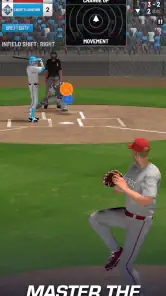
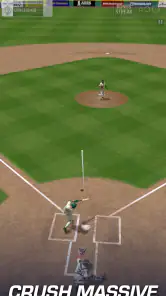
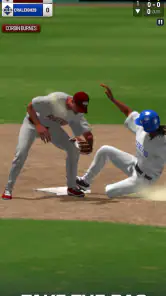
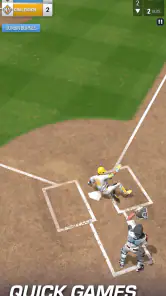
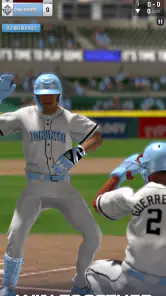
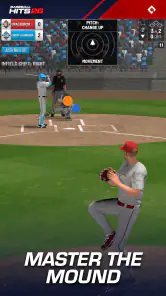
Baseball Hits 26 is a baseball-themed game focused on quick, accessible matches rather than a highly technical simulation. Players can expect to control key moments such as batting, pitching, and fielding while working toward victory in short sessions. Its appeal is mainly aimed at users who want straightforward sports gameplay, simple controls, and an experience that can be enjoyed casually on a mobile device.
Is Baseball Hits 26 suitable for beginners who are not familiar with baseball games?
Yes, Baseball Hits 26 should be approachable for beginners because its gameplay is generally built around easy-to-understand actions and responsive controls. You do not need extensive knowledge of baseball rules to start playing, although learning timing, pitch selection, and defensive positioning can improve your results. New players may need a few matches to become comfortable with the controls and game flow.
Does Baseball Hits 26 require an internet connection to play?
The connection requirements may depend on the specific version and features available on your device. Basic gameplay may be accessible offline in some versions, while online functions, advertisements, updates, leaderboards, events, or account-related features can require an internet connection. Before downloading, users should check the store listing and test the game with connectivity disabled if offline play is important to them.
Pros
- Quick matches make it easy to enjoy a short baseball session.
- Simple controls are approachable for casual players.
- Multiple game modes add variety beyond standard matches.
- Bright visuals make players
- pitches
- and hits easy to follow.
- Progression rewards regular play and encourages repeated matches.
Cons
- Some advanced features may require in-app purchases.
- Gameplay can become repetitive after extended sessions.
- Ads may interrupt the experience between matches.
- Limited strategic depth may disappoint serious baseball fans.
- Performance can vary on older Android or iOS devices.
- Category
- Sports
- Version
- 1.2.1