Astonishing Basketball Manager
- 1.01K
- 4.5
- Installs
- 1.00M
- Price
- Free

Screenshots





Analysis by Reviewed
I went into Astonishing Basketball Manager expecting a straightforward sports game, but its appeal is more specific than that. This is a basketball simulation from Studio Zero Games that lets me approach the sport from several angles: I can think like a coach, manage a franchise, or take the role of a player. That flexibility makes it more interesting than a game built only around quick matches, because the decisions away from the court matter just as much as the action itself.
The game is free to install and is rated for Everyone, which makes it easy to try without committing money first. It has reached over a million installs and holds a 4.5 average from around twelve thousand ratings, so there is clearly an audience for this particular style of basketball management. I would not treat those figures as proof that every player will enjoy it, though. The experience depends heavily on whether you like planning, gradual progress, and simulation outcomes rather than constant direct control.
After spending time with it, my honest view is that this is best approached as a compact basketball career and management hobby. It gives me something to check, adjust, and think about in short sessions, but it is not the ideal choice for someone who wants a polished console-style basketball match every time they open the app. Its strongest quality is the feeling that small decisions can shape a longer sporting story. Its main challenge is that the same slow-burn structure can feel demanding when progress becomes more important than immediate excitement.
How the basketball management loop feels in everyday play
A game for people who enjoy decisions more than button presses
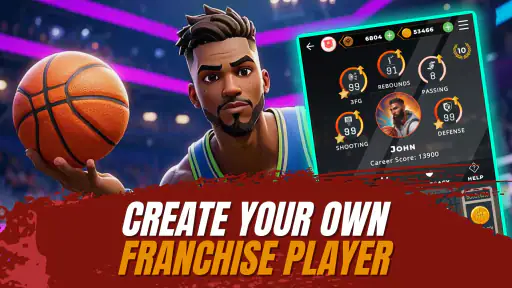
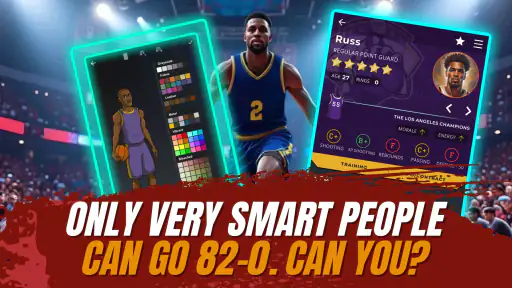
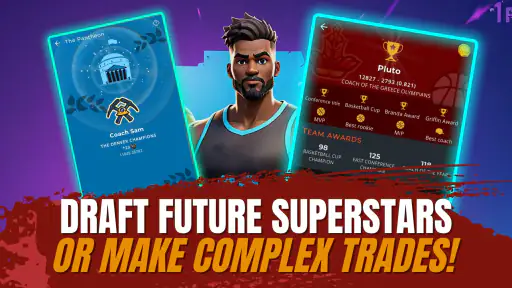
The first thing I noticed is that the game asks me to think about basketball as a system. The store summary presents it as a simulation where I can be an ultimate coach, general manager, or franchise player, and that description points to the central choice: do I want to guide the whole organization, or focus more personally on a player’s path? Those perspectives change the way I look at success. A coach is concerned with the team’s direction, a general manager has a wider responsibility, and a franchise player gives the experience a more personal angle.
That variety is useful because it prevents the game from feeling like one narrow career mode. If I am tired of making broad organizational decisions, I can think about the player-focused side instead. If I prefer long-term planning, the management perspective has more appeal. I would still recommend choosing one main approach at the beginning rather than constantly switching. Learning how the game represents progress is easier when I can see the consequences of one consistent style of play.
The simulation format also changes what I consider a successful session. In a conventional basketball game, I might judge a session by a dramatic win or a great scoring run. Here, a session can be worthwhile because I made a sensible adjustment, protected a longer-term plan, or understood why a result went differently than expected. That is satisfying for players who enjoy sports strategy, but it can feel quiet for anyone expecting nonstop action.
Why short sessions work well
I found the format suitable for the small gaps in a normal day. A realistic scenario would be checking the game during a commute, making a few management decisions during a lunch break, and returning later to see how the season or career has developed. It does not demand that every visit become a long play session. That makes it easier to fit around work, study, or family time than a traditional match-focused sports title.
More From Our News Desk

Clash of Clans Is Won Between the Battles

Android Auto Makes the Case for Quieter Car Software

MobiOffice: Transforming Mobile Productivity with Seamless Integration

EA SPORTS FC™ Mobile Soccer: Redefining Mobile Sports Gaming

How Microsoft OneDrive Became a Mobile Productivity Giant

How Google Translate Breaks Language Barriers Effortlessly
The trade-off is that the game may not deliver an instant reward every time I open it. Some sessions are about preparation rather than a dramatic result. I have to be comfortable with the idea that a good decision may only become meaningful later. This is one of the more important things to understand before installing it: the fun comes from following a sporting project, not just collecting quick victories.
My practical tip is to open the game with a specific purpose. I might check the current situation, decide what needs attention, and then stop instead of changing everything at once. That approach makes the simulation easier to read. If I make several major adjustments together, it becomes harder to understand which decision helped and which one created a problem. Treating each session like a small coaching meeting gives the game more structure.
Progress can feel personal, but it also creates pressure
The player and franchise perspectives give progress an emotional layer that a simple arcade basketball game usually lacks. I am not only chasing a single good result; I am trying to build a direction. That can make setbacks more memorable. A poor outcome feels like feedback about the plan I chose, rather than an isolated loss that disappears as soon as the next match begins.
This is also where the pressure starts. Long-term simulation games can make me feel responsible for every decision, even when the result is not immediately clear. Players who enjoy reviewing mistakes will probably find that motivating. Players who dislike uncertainty may find it frustrating, especially if they want direct control over every important moment. I think the game works best when I accept that not every outcome can be forced into the result I want.
A useful way to play is to separate short-term disappointment from long-term failure. One bad result should not automatically make me abandon a strategy. I prefer to look for a pattern: is the team repeatedly struggling in the same area, or was this simply an isolated turn in the simulation? That habit makes the experience feel more like management and less like repeatedly restarting until the game gives me a perfect outcome.
What the free entry point really means
The game is free, but it includes in-app purchases priced from $0.49 to $29.99 per item. That range is important for anyone who is careful about spending. The free entry point lets me test whether the management style suits me before paying anything, which is a genuine advantage. I would use that opportunity fully: play long enough to understand the basic rhythm, then decide whether optional spending adds value for my personal habits.
I do not see a reason to spend simply because the game presents a slow period. Simulation games are often more enjoyable when I learn their systems and make progress through planning. If a purchase is available, the sensible question is whether it removes a frustration I genuinely want to remove, not whether I feel pressured by a temporary setback. Setting a personal spending limit before playing is a simple way to keep the experience comfortable.
The purchase range also means the game may suit two different kinds of free-to-play players. Someone who wants a completely no-spend challenge can treat the free version as a long-term project. Someone else may prefer paying occasionally to reduce friction. My caution is that these are different experiences, and I would not assume that spending is necessary for enjoyment or that it will automatically make the strategy deeper. The value depends on how much patience I have and what kind of progression I want.
Fairness is difficult to judge without overclaiming
From a player’s point of view, the fairest approach is to distinguish the confirmed purchase structure from assumptions about its effect. The game has optional items within the stated price range, but I would not claim that those purchases guarantee wins, create an unfair advantage, or are required to advance. Those conclusions need evidence that is not available here, and guessing would give a misleading impression.
What I can say is that spending can change how I experience a free simulation, even when I do not know exactly how every purchase affects progress. A player who spends may be more willing to move quickly, while a no-spend player may enjoy the slower challenge. That difference does not automatically make the game unfair, but it does make personal boundaries important. I recommend playing for a while without buying anything, then deciding whether the core loop remains enjoyable on its own.
For competitive-minded players, I would be especially careful about expectations. This is primarily a simulation and management experience, so I would not install it assuming that purchases, rankings, or other players will define the entire game. If your main goal is a tightly controlled competitive environment where every participant has identical resources, a conventional sports title with a clearly standardized match format may be a better fit.
The unknowns I would keep in mind
There are a few questions I would want to answer through personal testing rather than confident claims. For example, the presence of purchases tells me that optional spending exists, but it does not by itself explain how strongly those items influence the pace of progress. I would also avoid promising that every management route has equal depth. The game supports coach, general manager, and franchise-player perspectives, but the best route will depend on which type of decision-making I find most rewarding.
This is not a criticism of the developer; it is simply a reason to approach the game honestly. Store descriptions are useful for identifying the concept, but the real test is whether the simulation holds my attention after the novelty wears off. I would give it enough time to see whether I enjoy reviewing outcomes and adjusting plans, rather than judging it after only a few minutes.
Another practical unknown is how well the game fits a particular player’s preferred pace. Some people enjoy checking a sports simulation several times a day, while others want a complete match whenever they play. I would skip it if I know I need immediate, hands-on action. The game’s identity is built around the broader basketball journey, and that is not interchangeable with direct-control gameplay.
Where it compares well with usual basketball alternatives
Compared with arcade basketball games, this one offers more room for thought and less emphasis on reflexes. I do not need to be the best virtual athlete to appreciate it. The appeal comes from deciding how to approach a career or organization and then watching that plan develop. That gives it a useful niche for players who like sports but prefer management to rapid controls.
Compared with full-scale console basketball simulations, it is easier to pick up in short bursts and less intimidating when I only have a phone available. The compromise is that I should not expect the same kind of presentation or moment-to-moment control. Its strength is convenience and strategic focus, not replacing a large living-room sports game.
Compared with spreadsheet-heavy management games, it appears more approachable because the basketball theme gives decisions a clear purpose. I can connect choices to a team, a franchise, or a player rather than dealing with abstract figures alone. Still, anyone who dislikes reading situations, accepting delayed results, or thinking several steps ahead may find even this more accessible format too demanding.
Who should install it, and who should pass
I would recommend it to basketball fans who enjoy imagining what happens behind the scenes. It is particularly suitable for someone who likes career progression, franchise responsibility, and the satisfaction of improving a plan over time. It also works for players who want a sports game that can be checked in short sessions instead of requiring a full uninterrupted match.
I would be more cautious recommending it to a person who wants licensed spectacle, constant physical action, or complete control over every possession. It may also be a poor choice for anyone who becomes annoyed when a simulation does not immediately reward effort. The game asks for patience, and no amount of enthusiasm for basketball can remove that basic requirement.
Age accessibility is another positive point: the content rating is Everyone. Families can therefore consider it as a broadly accessible basketball option, although I would still explain the in-app purchase range before letting a younger player use a device with purchasing enabled. That is not because the rating is a problem; it is simply sensible housekeeping for any free game that offers paid items.
My final trust verdict
After reviewing how the game positions itself, I see Astonishing Basketball Manager as a focused choice rather than a universal sports recommendation. Studio Zero Games has built its identity around the fantasy of guiding basketball from the management, coaching, or franchise-player side. That gives the game a clear reason to exist, and the strong average rating from its sizeable audience suggests that the concept connects with many players.
The current version is 6.4.5, and the minimum operating system is 7.1, so it is accessible to people using older supported Android devices as well as newer ones. I would still judge it by the experience on my own phone, especially if I rely on an older device, but the compatibility requirement is not especially demanding. The game is free to begin, which lowers the risk of finding out that its slower style is not for me.
My spending verdict is simple: try the free experience first, and only pay if the game already feels worthwhile without pressure. The presence of items from $0.49 to $29.99 means I would keep purchases deliberate rather than automatic. I would not describe the game as unfair based solely on the existence of those items, but I would also avoid assuming that spending has no effect. A careful player can enjoy the simulation while keeping control of the budget.
In the end, I would recommend it to a friend who says, “I want basketball strategy I can revisit throughout the day.” I would not recommend it to someone asking for a fast, action-heavy match game. Its best moments come from making a plan, living with the result, and gradually understanding the kind of coach, general manager, or franchise player I want to be. If that patient, decision-led rhythm sounds enjoyable, the free starting point makes it worth trying.
Astonishing Basketball Manager Frequently Asked Questions
What devices can run Astonishing Basketball Manager?
Astonishing Basketball Manager is available for mobile devices, and its minimum operating system requirement is 7.1. Before downloading, check your device’s software version and make sure you have enough storage for the game and any updates. Keeping the operating system current can also help with compatibility. The game is free to download, though optional in-app purchases are available.
What is Astonishing Basketball Manager?
Astonishing Basketball Manager is a basketball management simulation in which you take control of a team and handle the decisions normally made by a real coach or general manager. You can build a roster, set tactics, manage player development, make transfers, and guide your club through competitive seasons. It focuses more on strategy, planning, and team management than on directly controlling players during matches.
Can I play Astonishing Basketball Manager offline?
The game may allow some management features to be used without a constant internet connection, but online access can be required for account functions, updates, cloud synchronization, advertisements, competitions, or other live services. Availability may also depend on the version installed and the platform you use. It is best to launch the game once while connected and check which modes remain accessible offline.
Is Astonishing Basketball Manager free to download?
Astonishing Basketball Manager can generally be downloaded without paying an upfront purchase price, although the exact availability may differ between Android and iOS. Like many free management games, it may include optional in-app purchases, premium resources, advertisements, or faster progression systems. You can usually play without spending money, but careful resource management may be necessary if you want to avoid optional purchases. Optional in-app purchases range from $0.49 to $29.99 per item.
Does the game offer realistic basketball management and player development?
The main appeal of Astonishing Basketball Manager is its focus on long-term team building rather than simple arcade gameplay. Your decisions can involve recruitment, lineups, tactics, contracts, finances, and player growth. The level of realism is designed for an accessible mobile experience, so it should not be treated as a complete professional front-office simulator, but it provides enough depth for users who enjoy planning and making strategic decisions.
Pros
- Deep roster management with meaningful player development choices.
- Matches are quick to follow
- making it suitable for short play sessions.
- Scouting adds variety when building a competitive long-term team.
- Multiple tactical options let you adapt to different opponents.
- Clean interface makes most management tools easy to find.
Cons
- Progress can feel slow without frequent play or careful resource management.
- Some advanced features may take time for new managers to understand.
- Match outcomes can occasionally feel influenced by hidden calculations.
- The game may become repetitive once your team reaches a dominant level.
- Performance and content may vary depending on device and game updates.
- Category
- Sports
- Version
- 6.4.5