Archer Assassin Shooting Game
- 950.00
- 4.5
- Installs
- 10.00M
- Price
- Free

Screenshots


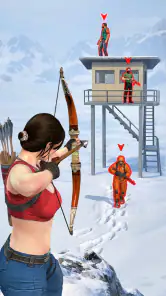
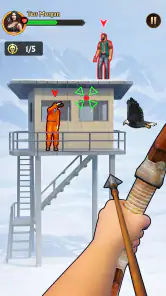
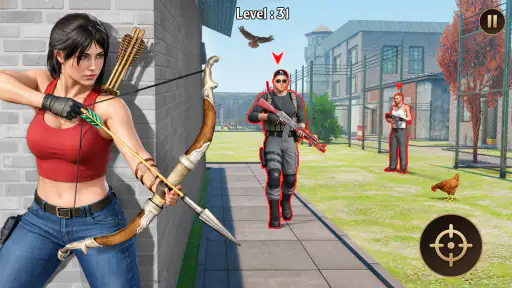



Analysis by Reviewed
I approached Archer Assassin Shooting Game as a quick strategy game rather than a deep, long-form tactics experience. Its central appeal is easy to understand: line up an archer, judge the path of a shot, and try to eliminate targets with careful timing. That sounds simple, but the difference between a satisfying attempt and a wasted one comes from how patiently you read each situation. I found it most enjoyable when I treated every level as a small puzzle instead of rushing through it like an ordinary action game.
The game is free to download and belongs to the strategy category, with a mature age rating of 17+. Team AS Studio Pvt Ltd is the developer, and the title has attracted a 4.5 average from around 152 thousand ratings, alongside more than 10 million installs. Those figures suggest that its quick archery format has reached a broad audience, but they do not automatically make it the right choice for everyone. The important question is whether you want short, focused shooting puzzles or a more elaborate strategy game with deeper planning systems.
What to consider before choosing it
The core decision is about pacing
My first test was simple: could I understand what to do without spending a long time learning menus or complicated rules? The answer was yes. The basic loop is immediately readable, which makes the game approachable when I have only a few minutes. I can open it, focus on a shot, and get a clear sense of whether my decision worked. That makes it a natural fit for a commute, a short break, or those moments when I want interaction rather than passive scrolling.
At the same time, its simplicity is also the first trade-off. Players who expect a campaign built around character development, extensive equipment management, or large tactical maps may find the experience narrow. This is not the sort of strategy game I would choose when I want to spend an evening planning a large operation. Its decisions are concentrated around positioning, timing, and the consequences of a shot, not around managing a broad collection of systems.
The store summary describes it as an offline twisty-arrow and crossbow archery game, and that framing matches the way I approached it. The offline angle is particularly useful for people who want a self-contained game without needing a dependable connection every time they play. I would still treat it as a compact mobile experience, not as a replacement for a full console-style archery adventure.
How the shooting feels in practice
The best moments come from slowing down before releasing an arrow. A hurried shot can feel careless, while a deliberate attempt gives the game its strategy identity. I learned to look beyond the nearest target and consider whether the angle of the shot would create a cleaner route through the scene. That small habit made the experience more interesting than simply tapping at whatever appeared first.
One useful approach is to separate observation from action. I first inspect the arrangement, identify the most troublesome target, and only then commit to a move. This is especially helpful when several possible shots look tempting. Choosing the obvious target may clear the immediate threat, but a less direct angle can sometimes produce a better sequence. The game rewards that kind of restraint more than frantic tapping.
I also found that short sessions work better than trying to force a long marathon. Because each challenge is built around a compact decision, repeated failures can become irritating if I keep replaying without changing my approach. When that happens, I put the game down for a few minutes and return with a different plan. That is a practical tip, but it also reveals the game’s personality: it is strongest as a focused mental break, not as an endlessly absorbing strategy sandbox.
Where the game wins against common alternatives
Compared with turn-based strategy games, this title gets to the decision faster. I do not need to arrange a team, study a large map, or wait through several phases before seeing the result of a plan. The appeal is immediate: aim, commit, and learn from the outcome. For a player who likes the satisfaction of a small tactical problem solved in seconds, that directness is a genuine strength.
It also has an advantage over many casual action games because the shot is not only about speed. I felt more involved when I considered the route and timing instead of relying on constant movement. That gives the game a slightly more thoughtful character without making it difficult to pick up. Someone who usually avoids complex strategy titles may find this a comfortable entry point.
The offline format is another practical advantage. I could think of several situations where that matters: travelling through a weak-signal area, waiting somewhere without reliable connectivity, or simply wanting a game that does not depend on other players being available. It is a better fit than competitive multiplayer when I want a private session with no pressure from a live opponent.
Its presentation also supports short play. I did not need to build a long routine around it to enjoy a few attempts. That makes it easier to recommend to people who prefer games that respect irregular schedules. A parent with a spare moment, a commuter, or someone who wants a brief change of pace can understand the attraction quickly.
Small techniques that make attempts more satisfying
My most useful adjustment was to stop treating every visible target as equally urgent. I started asking which target could interfere with the rest of the attempt and which one could safely wait. That changed the game from a reflex exercise into a priority exercise. Even when the level itself is compact, deciding what matters first gives each shot more weight.
Another tip is to use failed attempts as information rather than immediately repeating them. If a shot misses, I look at the reason: poor timing, a bad angle, or an assumption about the route. Repeating the exact move usually gives me the exact result. Changing one element at a time makes the learning process clearer and prevents the game from turning into random trial and error.
I also recommend playing with a steady rhythm. Rapid inputs can make a simple challenge feel more chaotic than it really is. Taking a moment before each action helps me notice details that I would otherwise overlook. This is not a hidden progression trick or a guaranteed solution; it is simply the play style that brings out the strategic side of the title.
Where another type of game may fit better
I would look elsewhere if my main goal were a rich long-term progression system. A traditional strategy game is likely to offer more room for planning across multiple units, resources, or territories. Those alternatives can provide a stronger sense of ownership and development, while this archery game keeps the focus on immediate shooting decisions.
Players who mainly want fast reflex challenges may also prefer an action-focused alternative. Here, patience matters as much as speed. The satisfaction comes from choosing a good shot, not merely reacting quickly. That distinction is important because someone expecting constant movement could interpret the deliberate pacing as slow rather than thoughtful.
Likewise, people who want social competition should not choose this as their first option. The experience suits solitary play, and its appeal is self-contained problem solving. A multiplayer game with rankings, team coordination, or direct matches would be a better choice for anyone who needs opponents and shared goals to stay engaged.
The mature rating is another point worth considering before installing it. I would not recommend assuming that a simple archery format automatically makes it suitable for every household. Parents should check the age guidance themselves, and younger players may be better served by a game designed specifically for them. The rating places this title in a different audience space from family-friendly puzzle games.
Free entry and the cost of staying with it
The free price makes trying the game straightforward. I could sample the basic experience without committing money first, which is helpful for a title whose appeal depends heavily on whether its short shooting loop matches my taste. In-app purchases range from $1.99 to $12.99 per item, so I would approach optional spending deliberately rather than treating it as part of the minimum cost of playing.
My advice is to decide what kind of player you are before buying anything. If you enjoy the default rhythm and only want occasional convenience, there may be no reason to spend. If you feel pressured to purchase in order to make the game enjoyable, that is a sign the format may not be a good match. The free starting point gives you enough opportunity to make that judgment for yourself.
The real switching cost is not financial; it is adjustment. Moving from a large strategy game to this one means accepting smaller decisions and a faster reset after failure. Moving in the other direction means learning more systems and investing more time before a plan pays off. I see this title as a low-commitment companion rather than a single game meant to replace every other strategy option.
Device expectations and version context
The current version is 9.5, and the game supports Android 7.0 or later. That broad compatibility makes it relevant to people using older Android devices, although I would still keep normal expectations about performance on aging hardware. A supported operating system does not guarantee that every phone will feel equally smooth, so I would avoid judging the game solely by its compatibility range.
Because the game is built around compact archery encounters, it does not need the same mental commitment as a large strategy campaign. That makes it easier to fit into a mixed gaming routine. I can use it for short sessions and keep a more involved title for times when I want deeper planning. In my experience, that division of roles is more realistic than expecting one mobile game to satisfy every mood.
Who should install it
I think it is a good choice for someone who enjoys aiming, timing, and small tactical puzzles. It is especially suitable if you like learning from mistakes and prefer an offline game that can be played in brief bursts. The straightforward structure also makes it a reasonable starting point for players curious about strategy but not ready for a complex management game.
I would skip it if I need a detailed narrative, a large world, extensive customization, or a strong social component. I would also skip it if I find repeated precision challenges frustrating. The compact design is a benefit when I want quick focus, but it can feel limited when I am looking for variety across a long session.
For an everyday example, I can imagine opening it while waiting for an appointment. I have enough time for several attempts, but not enough time to become invested in a long campaign. I can play with the connection unavailable, stop after a successful solution, and return later without needing to remember a complicated strategic state. That is where the game makes the most sense to me: as a focused pocket activity with a clear beginning and end to each attempt.
My recommendation after playing
Archer Assassin Shooting Game works best when I judge it on its own terms. It is not trying to be a sprawling strategy epic; it is a compact archery puzzle built around choosing the right moment and route. The offline format, free entry, and accessible shooting loop make it easy to test, while the mature rating and optional purchases are reasons to think about audience and spending before settling in.
I recommend giving it a try if you want a solitary strategy game for short sessions and enjoy improving through careful observation. Start without spending, play slowly enough to understand why shots succeed or fail, and decide whether the repeated format holds your attention. If you want deeper progression or multiplayer competition, choose a different category instead. For the right player, though, the strongest reason to keep it installed is its quick tactical satisfaction without a large learning burden.
Overall, I see it as a useful addition to a mobile gaming rotation rather than an all-purpose replacement for strategy games. Team AS Studio Pvt Ltd has centered the experience on a very specific pleasure: making one well-considered archery decision at a time. When that is what I want, the game delivers a clean and convenient break. When I want broader planning, richer development, or shared competition, I know to reach for another kind of game.
Pros
- Simple controls make aiming and shooting easy to learn.
- Short levels are convenient for quick gaming sessions.
- Stealth-focused gameplay adds variety beyond standard archery.
- Offline play is useful when you have no internet connection.
- Upgrades provide a clear sense of progress between missions.
Cons
- Precision aiming can feel awkward on smaller phone screens.
- Some levels become repetitive after extended play.
- Difficulty may increase suddenly in later stages.
- Ads can interrupt the flow between missions.
- Limited character and weapon customization reduces long-term variety.

- Category
- Strategy
- Version
- 9.5